

The first time I ordered la zi ji in Chongqing, the waitress set the plate down and I genuinely laughed: it looked less like a dish and more like an accident at a chili farm. A small mountain of deep-red dried chilies, stems and all, with the promise — somewhere underneath — of chicken. My local friend handed me her chopsticks and gave me one piece of advice that has stayed with me for years: don’t dig, hunt. Every cube of chicken you find feels like a small victory, which is exactly the point of this famously playful dish.
A treasure hunt disguised as dinner
La zi ji (辣子鸡), often translated as Chongqing chicken with chilies or spicy chicken with peppers, comes from the Geleshan (歌乐山) area on the outskirts of Chongqing. At its core it is simply bite-sized chicken, deep-fried until the edges turn crisp and mahogany, then flash-fried again in a wok absolutely loaded with dried chilies and Sichuan peppercorns. The finished plate is roughly seventy percent chili by volume, and every local will tell you that is the design, not a mistake.
The flavor profile is what Sichuan and Chongqing cooks call mala (麻辣): the slow burn of dried chilies layered over the tingling, citrus-like numbness of huajiao peppercorns. Underneath that double hit, a well-made version has real depth — soy and a whisper of sugar in the marinade, toasted sesame, the smoky sweetness that comes only from frying chicken skin until it shatters. The texture contrast is the real hook: crunchy coating, juicy interior, and the hunt through the chilies keeping every bite slightly different from the last.
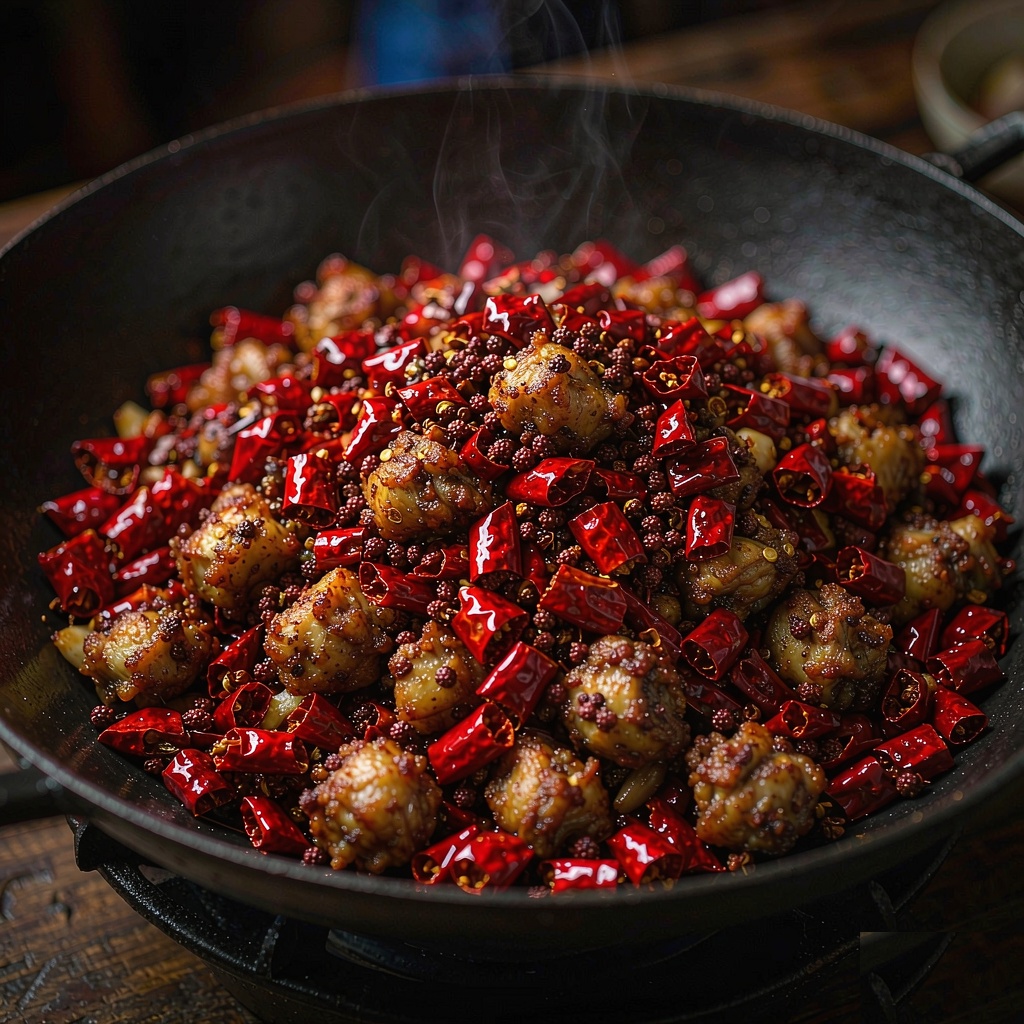
One honest warning from someone who learned the hard way: not every red pepper on the plate is fair game. Most restaurants use a mild, fragrant variety of dried chili (usually erjingtiao or chaotianjiao) for color and aroma, but a few hotter ones hide in the pile. Regulars eat around the whole chilies and let them season the chicken; newcomers who bite straight into one learn a memorable lesson about Chongqing hospitality.
What goes into it, in real quantities
This is a cheap, pantry-driven dish, which is why it spread from the mountains around Chongqing to every city in China. Here is the shopping list I use for four generous servings, scaled from watching Geleshan cooks work:
- Bone-in chicken thighs, 700 g — chopped into 2 cm cubes with the bone in. Thigh meat stays juicy after two rounds of frying; breast turns to sawdust.
- Dried red chilies, 80–100 g — yes, that much. Cut into 2 cm sections, seeds shaken out if you want to keep the heat civilized.
- Sichuan peppercorns, 2 tablespoons — the numb, floral huajiao. Use the red kind; green ones are sharper and read more modern.
- Ginger 20 g and garlic 5 cloves, both sliced, plus 2 scallions cut into short sections.
- Marinade: 1 tablespoon Shaoxing wine, 1 tablespoon light soy sauce, ½ teaspoon salt, ½ teaspoon white pepper, 1 teaspoon sugar.
- Cornstarch or sweet potato starch, 3 tablespoons — enough to give every cube a thin, crackly shell.
- Frying oil, about 500 ml, plus 1 tablespoon toasted sesame oil and 1 tablespoon white sesame seeds to finish.
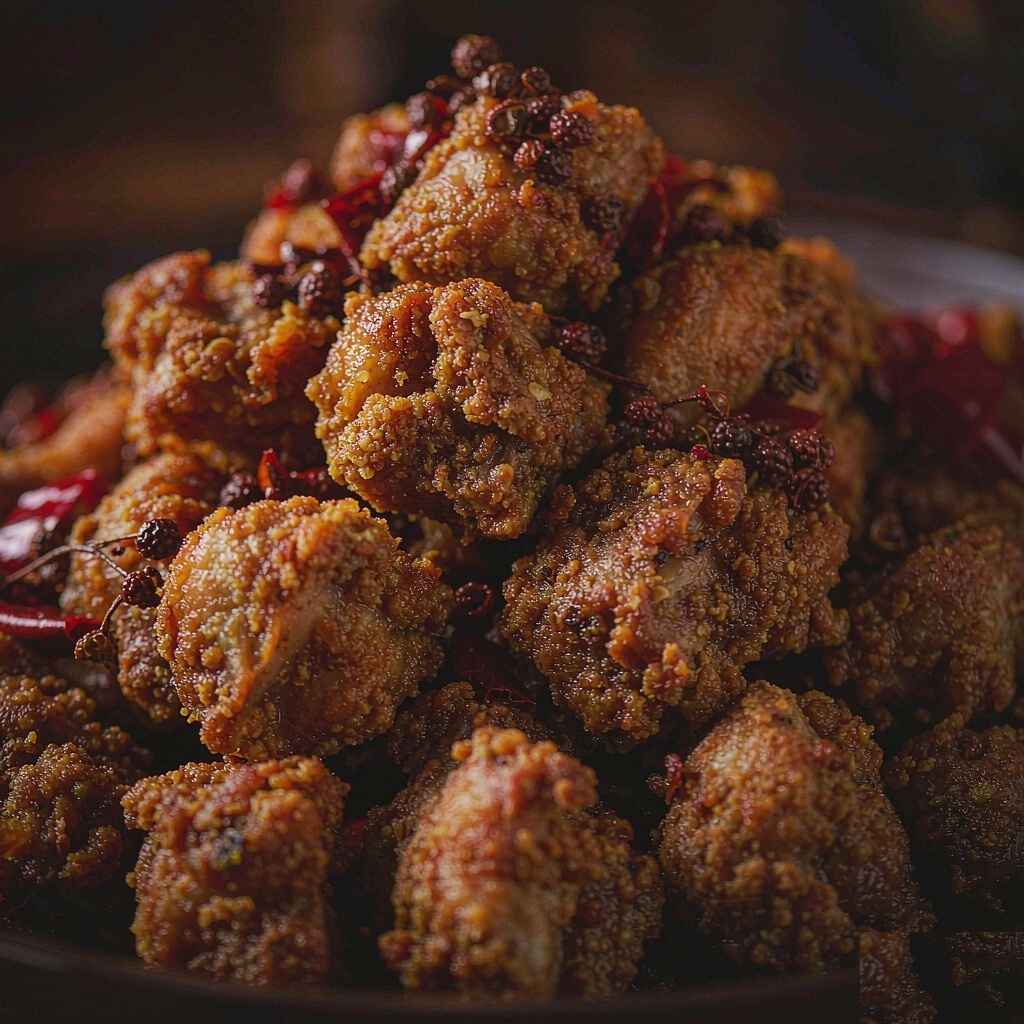
If you only change one thing about your shopping, make it the chicken. Street vendors in Chongqing use small, free-range birds with real bones, and the bones are not an obstacle — they carry flavor and force you to slow down, which suits the rhythm of the meal. Supermarket boneless breast is the fastest way to a disappointing plate.
Who should order it, and who should quietly pick another dish
La zi ji is made for a certain kind of eater. If you chase the pleasant sweat that comes from genuine Sichuan heat, if you love fried chicken but find KFC boring, if you enjoy food that makes you slow down and pay attention — this is your dish. It is also a natural group dish: a big platter in the middle of the table, beer alongside, everyone fishing for chicken. Anyone who eats spicy food regularly will find a well-balanced version warming rather than punishing.
On the other hand, be honest with yourself here. If you have a sensitive stomach, active gastritis, hemorrhoids, or you simply cannot tolerate chili, this dish will hurt you, and no amount of rice fully cancels it. People managing acid reflux should skip it entirely. Very young children and anyone on a bland post-illness diet belong at a different table. A useful middle path for mixed groups: order la zi ji for the heat-lovers and a gentler braise for everyone else, rather than asking the kitchen to dilute the dish — Chongqing cooks consider a toned-down la zi ji a personal insult.
The method, step by step, the way it actually works
The technique is simple but unforgiving about order and temperature. Total time is about 45 minutes, most of it active.
- Step 1. Chop the chicken into even 2 cm cubes, bone and all. Rinse briefly, drain very well, then mix with the marinade ingredients. Rest 20 minutes — no shorter, or the seasoning never reaches the bone.
- Step 2. Toss the marinated chicken with the starch until every piece wears a thin, wet coat. It should look shaggy, not batter-thick.
- Step 3. Heat the frying oil to about 170°C (a cube sizzles steadily, doesn’t race to the surface). Fry the chicken in two batches, 3–4 minutes, until pale gold and just cooked. Lift out and let it rest on a rack.
- Step 4. Raise the oil to 190°C and return the chicken for a second fry, 60–90 seconds, until deep golden and crisp at the edges. This double fry is the entire secret to the texture; skip it and you have ordinary fried chicken.
- Step 5. Pour off all but 2 tablespoons of oil. Over medium-low heat, fry the dried chilies and Sichuan peppercorns for 30–40 seconds until they darken one shade and smell fragrant. Burn them and the whole dish turns bitter — this is the step to hover over.
- Step 6. Add ginger, garlic and the white parts of the scallions, stir for a few seconds, then return the chicken. Toss over high heat for a minute so the chili perfume coats every piece.
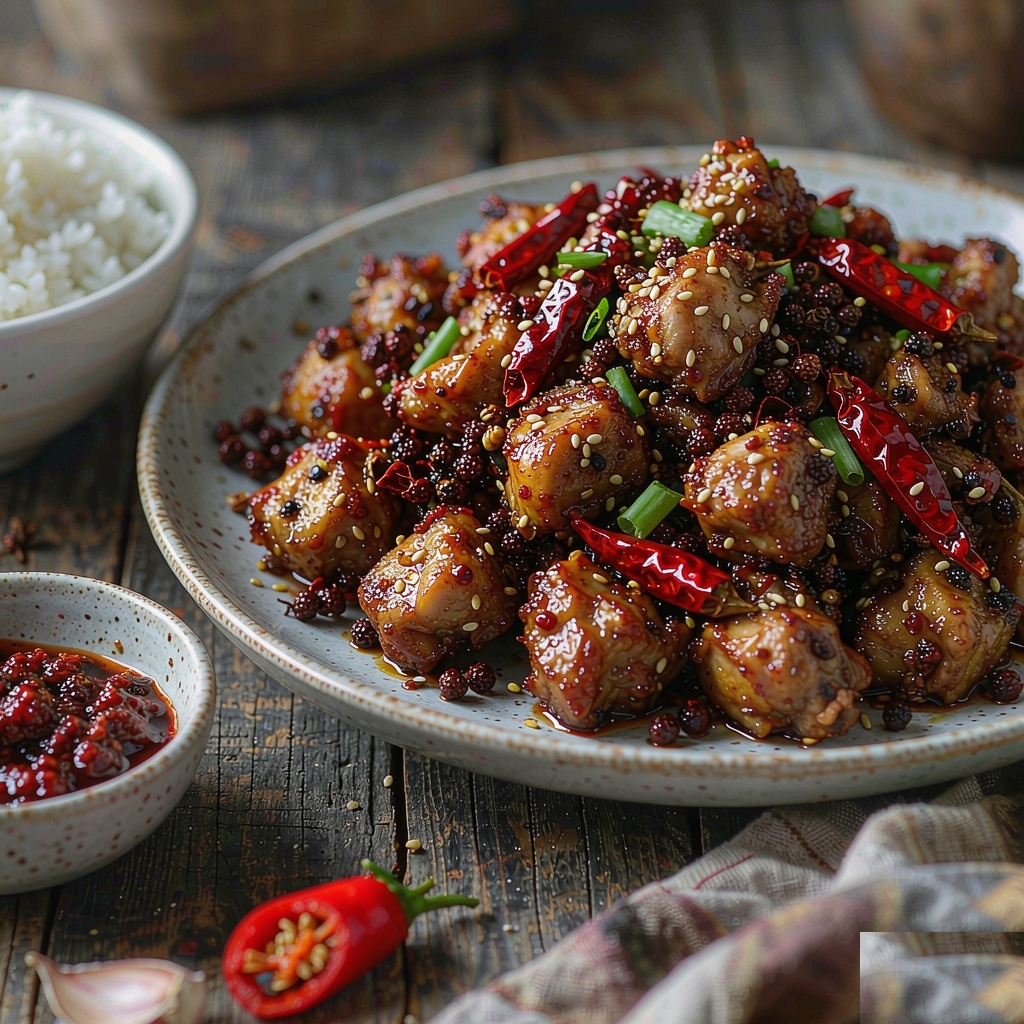
- Step 7. Off the heat, add salt to taste, the scallion greens, sesame oil and toasted sesame seeds. Toss once, plate it in a tall mound, and — this is tradition — leave the chilies in.
Tricks from batches I got wrong first
Cut the chicken smaller than feels reasonable. My earliest attempts used confident 3 cm chunks and the proportion of crust to meat was never right; at 2 cm, every piece gets three or four crackly faces. Second, vent your kitchen properly — frying chilies at high heat produces a cough-inducing haze that my smoke alarm discovered before I did. Third, taste your dried chilies before committing. Varieties vary enormously, and the same 80 g can be gentle in one batch and vicious in another.
The dish also has real regional cousins worth knowing. The original Geleshan version from Chongqing’s outskirts is the one described here: bone-in, aggressively fried, buried in chili. In Guizhou, la zi ji is often made with a paste of pounded fresh chilies (ciba lajiao), giving a softer, more fermented heat and a slightly sticky glaze. Sichuan restaurants closer to Chengdu tend to lighten the chili load and sometimes add a touch of sugar to round the mala edge. Home cooks across China do a drier, quicker stir-fry version that skips the second fry — faster, less dramatic, honestly still good on a weeknight. If you want to understand how this dish sits inside the wider canon, our Sichuan cuisine guide maps the difference between Chongqing fire and Chengdu restraint.
And once you have the frying rhythm down, the same template adapts: cubes of lotus root or potato fried alongside the chicken are a common and excellent addition, and the leftover chilies in the plate make a fantastic base for the next day’s stir-fry. Nothing goes to waste, which is very much the spirit of the dish’s mountain origins.
Finding the real thing
In Chongqing itself, the pilgrimage spot is still the cluster of la zi ji restaurants along the road up Geleshan, where kitchens fry in enormous woks and serve the chicken on platters the size of bicycle wheels. In any city, a reliable sign of a serious kitchen is chili oil that smells nutty rather than acrid, and chicken that stays crisp for fifteen minutes instead of going limp. If you are building a food itinerary, this dish pairs naturally with a broader Chongqing food guide — and if you fall for the numbing heat the way most first-timers do, a Chongqing hotpot guide is the logical next stop, since hotpot broth and la zi ji share the same mala DNA.
Make it once at home and you will understand why a plate of food that is mostly chili became a national favorite. The trick it teaches is bigger than the recipe: restraint is optional, aroma is everything, and a little hunting at the table makes people talk, laugh, and reach for just one more piece.