

My first time into Longyan was at the end of April, and the rain had only just stopped. I boarded at Xiamen North, reached Longyan station in a little over an hour, and stepped out onto a station front street that isn’t wide at all, with the hills already standing over it. I didn’t expect this prefecture in western Fujian to turn into one of the few places I kept turning back to afterwards. This Longyan travel guide tries to get the earth buildings, the old county town, the ridgelines and the Hakka table straight in one go — including the few mistakes I made along the way.
Longyan sits in the southwest corner of Fujian province, and most people just call it Minxi, west Fujian. To the north it borders Sanming, to the east it runs up against Quanzhou, and one range of hills to the west puts Jiangxi’s Ganzhou on the far side; southward the roads keep going toward Guangdong. Under the prefecture come Xinluo district and Yongding district, then Shanghang, Wuping, Changting and Liancheng counties, plus the county-level city of Zhangping. Walk its older streets and you won’t hear Hokkien the way you do further down the coast — you’ll hear Longyan dialect and Hakka, one soft but with hard edges, the other blunt, and the two accents used side by side on the same block. If you’re building your own things to do in Longyan list, write those six units down first, and you won’t walk away thinking the place is nothing but tall earth walls.
Yongding earth buildings: start at Tianluokeng, don’t just take one photograph
Most people’s picture of Longyan comes from the tulou. The spreads of big round houses in Yongding district are the body of Fujian’s earth buildings, and the whole group went onto the UNESCO World Heritage list in 2008; if you want the official wording, read the Fujian Tulou entry published by the UNESCO World Heritage Centre. Besides the famous Tianluokeng cluster, Chuxi, Gaobei and Hongkeng all sit inside Yongding too, anything from fifteen to thirty kilometres apart, and a hired car can string two or three of them together in one day.
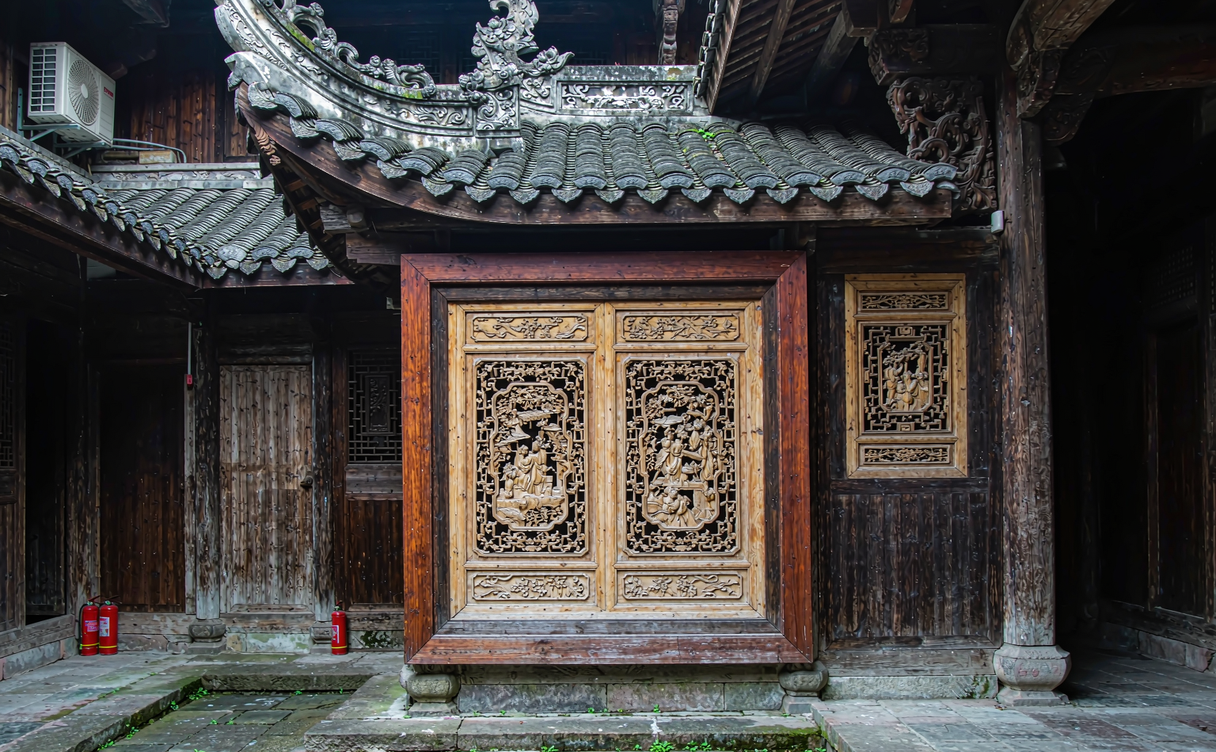
I spent one night in a square building in Hongkeng. The timber gallery on the second floor was so narrow that two of us had to turn sideways to pass each other, and every board in it complained underfoot. At night the insects came up from the courtyard in a steady column. People really do still live inside these houses: old photographs pinned over the living-room wall, laundry drying out in the central court, pickle jars lined up beside the stove. If you want the round courtyard empty for a frame, half past six in the morning is the reliable hour — the tour coaches don’t get into the village until about nine.
From the city out to Tianluokeng, the least fussy route is a coach from Longyan bus station to Shuyang town in Nanjing county, then a small van that starts climbing for half an hour of mountain track on top of that. This is what people mean by Longyan to Nanjing county transport: the departures aren’t frequent, and after four in the afternoon there is essentially nothing, so don’t leave it until dark. The back slope of the village loses the light early.
Put Yongding, Changting and Shanghang together as a three- or four-day loop and the pace lands right: one night inside a building, one day in the old town, and you are never rushing. Book the room at the weekend if you can, and ask the driver to take you back to the coach after dinner rather than trusting the timetable.
Changting: the old walls of Tingzhou and the newer lanes
Changting sits a little farther from the city than I’d have liked, but I’d give it a day on its own without hesitating. The Ting river cuts straight through town and the arcades and bluestone lanes run along both banks. The Shuidong street and the Diantou street in old Tingzhou town aren’t restored as one clean piece, and that is exactly what makes them read like a real old county seat rather than a set: stalls selling lampwick cake, a cobbler at his bench, a herbal cold-tea counter under a timber upper storey, all of it still trading. Changting gets called the red small Shanghai, which is a nickname history left behind, but the loudest thing in those lanes these days is the evening market.
Hakka ancestral halls in Longyan county both begin and end here in Changting. A few halls in the old Tingzhou city have gate towers with fine brick carvings, their door-stone bearings rubbed to a shine, and if you stand just outside the threshold and look in, you can hear somebody playing chess away in the courtyard.
Changting dried tofu is the town’s calling card — a stack of it, salty, with real chew to it. The Hakka rice wine of Tingzhou isn’t strong and is much better warmed. Then there’s white rice cake, soft tofu in a broth, and a mussel dish, each one better than the last. Hakka cooking runs heavy: a generous hand with salt and more wine than you’d guess, so carry a bottle of water with you.
Shanghang, Liancheng and Wuping: old houses and ridges in the hills
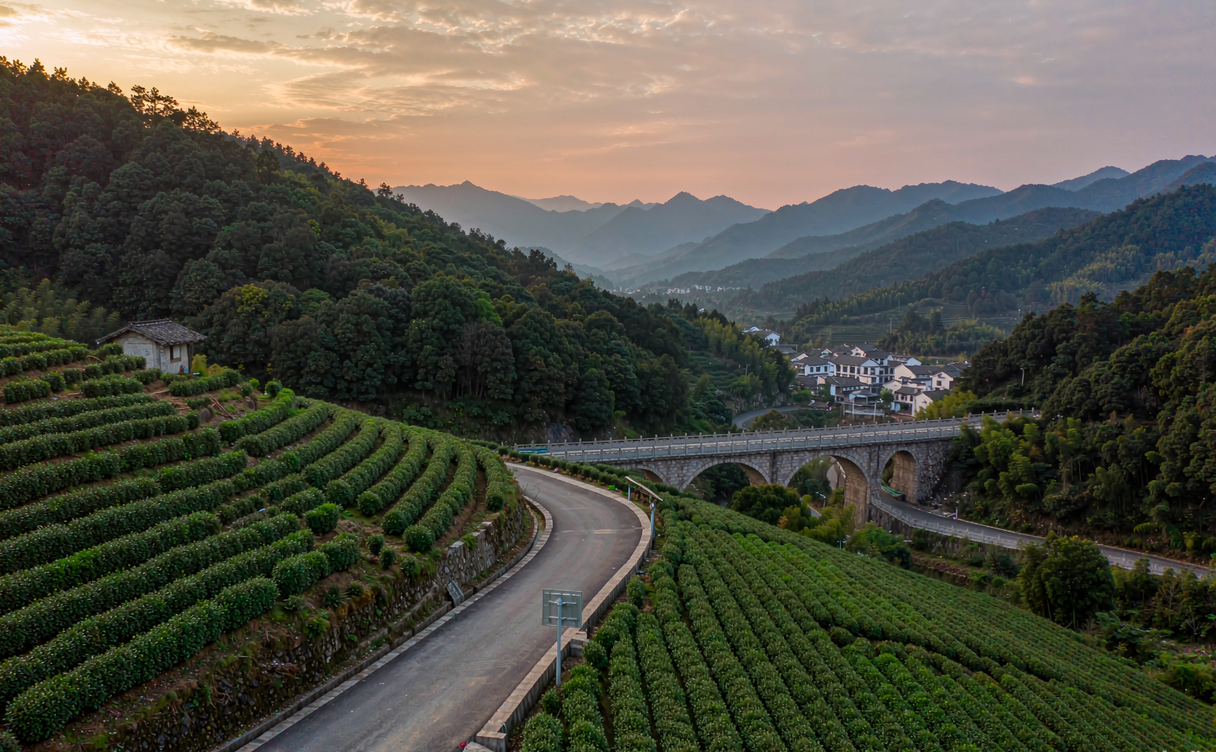
Shanghang holds runs of old Hakka houses, and the late-Qing ancestral hall compound in Gutian town is kept neat enough to be a half-day stop on most itineraries. I climbed Guanzhi Mountain in Liancheng once; the stone steps aren’t steep, and the red-bed lines of the ridge are at their best after four in the afternoon. Xiangdong Mountain in Wuping isn’t high, but the bamboo and the ravines are thick, and in July it runs two or three degrees cooler once you’re under the trees. The buses linking these three counties could be covered in half a day in total. Go with a group and hire a car instead, because the roads are narrow enough that meeting another vehicle means backing up a stretch.
If you want to walk in the Longyan earth buildings countryside air for a while, the Wuping stretch is the quietest of the three — few visitors, and you can pick up betel taro and wild mushrooms at the village mouth on your way past.
How to get around, and when to come
Longyan station is the door for the whole trip: both the Longyan–Xiamen railway and the Ganzhou–Longyan line stop there, and the run up from Xiamen by high-speed train takes about an hour while Fuzhou is a couple of hours and change. Out to Changting you can take a bullet train from the city, forty-odd minutes; out to the Yongding tulou you take a coach from the bus station bound for Yongding and then a township bus for the rest.
On the best time to visit Longyan, I’d still take April through June and September through November: less rain, the hills have layers in them, and rain running off a tulou eave is worth standing in the courtyard for. July and August run hot and the ground floor of a building gets close and still. From late November to New Year it’s damp, cold and foggy, and everything photographs soft. The National Day and Spring Festival golden weeks you should skip outright — the car queue backs up to the village gate.
Screenshot the Changting train timetable and the tulou bus times onto your phone before you leave. The mountain services get changed without notice in the afternoon and nobody back at the hotel will think to tell you.
Three days, how to lay them out
Day one belongs to Yongding: Tianluokeng in the morning, Gaobei or Chuxi in the afternoon, and one night asleep inside a building. Day two, an early coach to Changting, the old town and a stack of dried tofu, then a train back after dark. Day three, a hired car to Shanghang and on to Liancheng, with a bowl of Xiangdong chicken soup in Wuping on the way home. If you only have two days, drop Shanghang and give everything left to the earth buildings and Changting. Don’t reach for more than you can walk.
Practical notes
- Sleeping inside a tulou, ask up front whether the room has its own bathroom; most of the old buildings share one.
- The stairways are narrow and hauling a case up them is miserable. Travel light with a pack if you can.
- It’s mostly timber. Don’t smoke inside, and the floorboards at night are louder than you’ll expect them to be.
- Carry some cash. The payment codes at village stalls don’t always take.
- The Tianluokeng panorama is from the viewpoint across the road, and it’s best at sunrise and right after rain.
- After nine on weekend and holiday mornings the earth buildings get shoulder to shoulder. Getting there first is worth the early alarm.
A few guides you’ll use alongside this one
I had these open in another tab the whole time I was writing. Our Tianluokeng tulou walking guide covers how to walk the cluster and where to stand for the best shot, every earth building village in Fujian collects the other clusters in one read, and the Changting Hakka old town guide lines up with the section above. For Hakka cooking on the same trip, the Hakka food guide is the useful detour, because the pickling and stewing habits cross the border. And if you still have days left to plan across provinces, best things to do in China will give you the bigger frame. For a quick index of the things to do in Longyan — the tulou, the old town, the mountain villages and the chicken soup — that last collection is the useful cross-check when you’re weighing this corner of Fujian against the rest of the country.
Save this Longyan travel guide, and when you get to west Fujian walk it in three lines: earth buildings, old town, mountains. Eat slowly after that and the trip counts as done.