

Somewhere between the Pearl River delta’s factories and its golf courses there is a stretch of low hills where, at the turn of the twentieth century, returned emigrants built fortified towers out of German roof tiles,珊瑚 gravel and then-unusual cement. They were defensive, ridiculous and magnificent. This Kaiping travel guide is about those towers, about the town they belong to, and about how to see them properly instead of glimpsing three of them from a coach window on the way to somewhere else.
Kaiping is a county-level city under Jiangmen, in Guangdong, a couple of hours west of Guangzhou. It is one of the Sze Yup districts, the 四邑 region that fed so many Chinatowns in North America with money, architecture and returnees. The towers — diaolou — number roughly three thousand across the area, and in 2007 UNESCO inscribed them as a World Heritage site. Those Kaiping diaolou towers are the sturdiest versions of the type anywhere in China. That inscription is the reason foreign tourists now come, but the reason to stay longer is the story behind them.
If you are building a Guangdong trip around heritage rather than shopping malls, read our China travel guide for first-timers first — rural ticketed sites in China need a little planning and the right transport app.
Why Diaolou Look Like Nothing Else in China
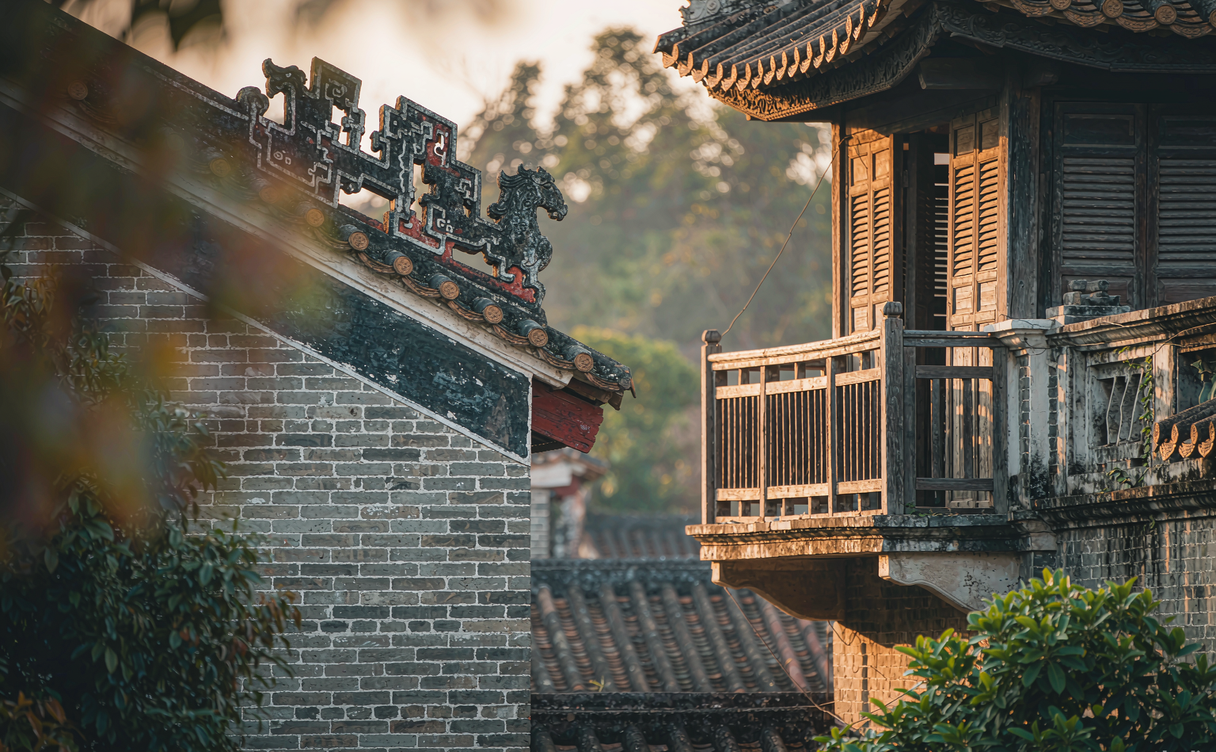
Look up close and a diaolou stops being a photograph. They are four to seven storeys, square or polygonal, with thick cement-rendered walls, narrow slit windows, and roofs borrowed from Chinese temple pavilions, Italian campaniles and Spanish missions. The mix was the point: a tower built by a man who had seen San Francisco and returned to Kaiping with a catalogue, a mortgage and a genuine fear of bandits.
Most were built between 1920 and 1937, then resumed in the 1980s by the same families reconnecting. They are not forts in any official sense. They are part farm granary, part family safe, part status statement, and part advertisement for a man who was away earning dollars. In several villages, the ground floor still has the shop counter and the accommodation is upstairs, exactly as it was designed to work.
Things to Do in Kaiping Beyond the Famous Towers
How to get to Kaiping determines how much of this you see, but the things to do in Kaiping are straightforward: three tower groups, one arcade town, one garden, one good lunch. Most people manage two of those in a day.
Zili village is the one everyone drives to, and it is worth it — a cluster of some fifteen surviving towers standing around a pond and a low green ridge. Go at opening hour. The site opens around 08:00, the light rakes sideways across the towers, and for the first forty minutes you will have the whole group to yourself before the coaches arrive from Jiangmen. A combined ticket covering Zili and Liyuan Garden has run around ¥100–130 in recent years, with individual sites cheaper; treat that as a guide, since ticket prices at these sites get quietly repriced.
Majianglong is my favourite and almost nobody goes there in the numbers Zili deserves. Five villages sit back against a narrow tree-lined ravine with about thirteen towers between them, the rice fields in front, and the whole composition readable in a single slow walk. There are no stage-managed inhabitants and no rooftop photograph sellers. Ask at the small office at the entrance and they will often unlock a tower for ¥10–20 to climb.
Chikan Ancient Town and the Clan Libraries
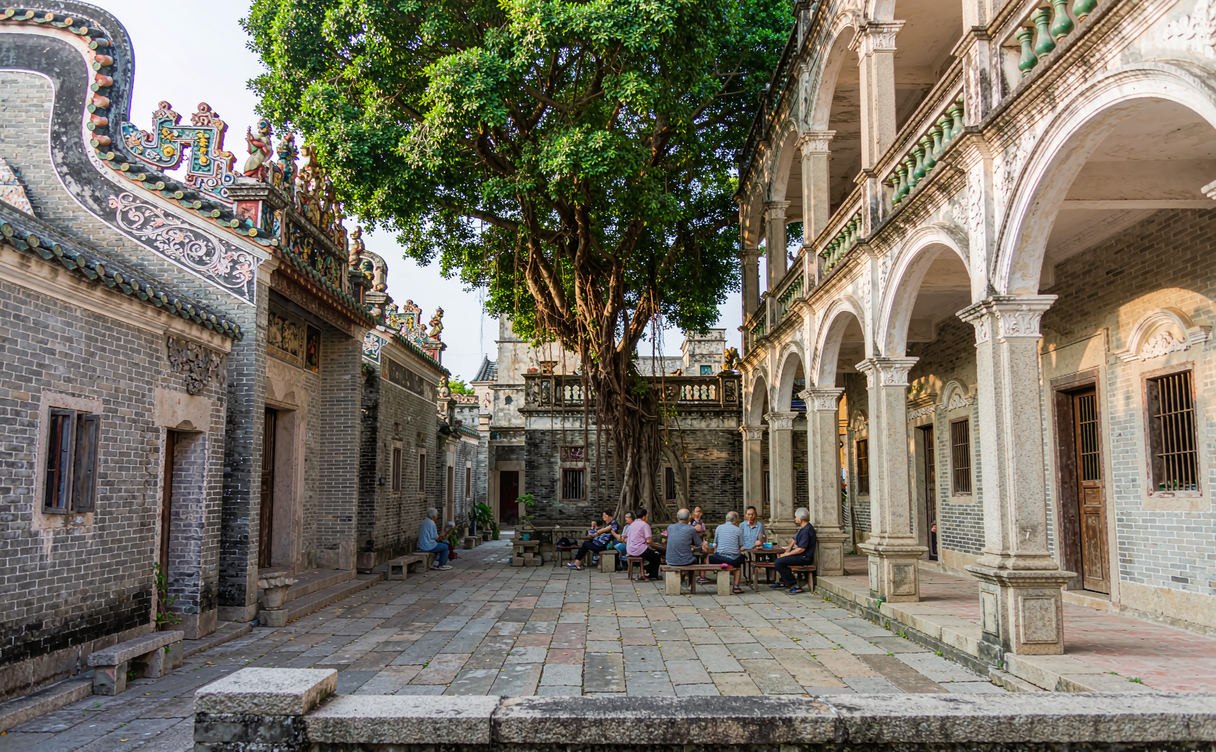
Half an hour from the tower villages lies Chikan, which is the part of Kaiping that surprises people. It is not built around towers but around arcades: a long run of 骑楼 shophouses where the arcade roof lets pedestrians walk the whole street dry in the wet season, and behind them the river, the old banks and the veranda houses of the returned families. Two clan buildings anchor it — the Situ library and the Guan library — each funded by one family’s overseas money and each a museum of how a village abroad paid for a building at home.
The Kaiping diaolou towers are the reason the World Heritage listing exists; Chikan is the reason to stay a second day.
Wander the side streets past the main drag. Chikan’s back lanes hold the granaries, the old salt warehouses and a lot of very good fruit-tart shops. If you only have half a day, I would send you to Chikan rather than to another tower group, because the arcade streets are still inhabited by families rather than converted to gift shops.
How to Get to Kaiping
By train, Kaiping South station on the Shenzhen–Zhanjiang line takes you from Guangzhou South in about 1.5 to 2 hours, with fares generally ¥70–110 second class; from Zhuhai the run is under an hour. The station is roughly 10 km from the city centre, and taxis there are plentiful but you should agree the fare before setting off, since drivers at rural stations sometimes quote foreign-looking prices to newcomers. Our guide to booking and boarding high-speed trains covers the passport-at-the-machine process that trips up first-time visitors.
By car from Guangzhou it is about 100 km and 1.5 hours via the 沈海 Expressway, and the tower villages are signposted once you leave the motorway. From Jiangmen, allow 45 minutes. The honest advice: hire a driver for the day or join a minibus group from Jiangmen, because Zili, Majianglong and Chikan sit in different directions and the local bus network across rural Kaiping is slow and unhelpful if you don’t read Chinese.
Best Time to Visit Kaiping
The best time to visit Kaiping is between October and April. Summer in the Pearl River delta is brutal — 33°C, 80 percent humidity, and the July to September window brings typhoons that close roads and flatten rice. Winter here is mild and grey with a damp that gets into your bones, and the tower villages are almost empty, which is when I would come.
Spring matters for a different reason: the fields turn green, the arcade shops put out their produce, and the overseas families return for the lunar new year, so Chikan looks closer to what it was in the 1930s. Avoid the week of Chinese New Year itself unless you want that; transport is jammed and small rural attractions run short hours.
Give this corner of Guangdong a full day rather than an afternoon. Three tower groups, Chikan and a long lunch is about as much as one person absorbs in a day, and rushing it is how you end up with photographs and no understanding.
A Kaiping Itinerary for One Long Day
The only Kaiping itinerary I would recommend starts at Zili at opening, walk the pond and the ridge, climb one tower. Mid-morning, drive to Majianglong and walk five villages at a slow pace. Lunch in Chikan — eel rice, a clay pot, something green. Afternoon in Chikan’s arcades and the two clan libraries, then out to Liyuan Garden on the way back toward Jiangmen if your train is late evening.
Liyuan is the outlier of the World Heritage listing: a garden made by an emigrant who spent four decades assembling it, with a Western-style tower planted in the middle of a classical Chinese pond. It is kitsch, generous and completely sincere. If the day has gone badly, skip it.
Eating and Sleeping
Kaiping food sits between Cantonese and the more earthy cooking of the Sze Yup villages. The dish to order is 黄鳝饭, eel baked with rice and ginger in a hot clay pot, which arrives with a crust on the bottom — expect ¥45–80 for one pot, enough for two. Alongside it, look for 煲仔饭, 碌鹅 (poached goose in dark sauce), and the dried seafood soups Chikan’s old shops still trade on.
Sleeping is the weak point and I would not pretend otherwise. There is one or two decent county-city hotels in Kaiping town around ¥250–400, and a scattering of boutique conversions in Chikan’s restored arcade houses at ¥300–600 that book out completely in spring. Rural guesthouses near Zili are thin on options. If you are travelling with family, base yourself in Jiangmen and drive in; if you want atmosphere, take the risk on Chikan and book months ahead.
Practical Notes and Traps
Diaolou inscriptions were made under the 2007 session of the World Heritage Committee, and the UNESCO entry for Kaiping Diaolou lists the component villages, which is the fastest way to check whether a site you have heard about is actually protected and therefore maintained. Ticketed sites charge entrance plus, at Zili and Liyuan, separate fees for climbing a specific tower.
Travelling with kids, or with anyone who wants one famous sight in a clean modern setting, Guangzhou Chimelong park is a better bet for a second day, and the high-speed link back east makes Kaiping a morning outing rather than a hard one. Later in a trip, a Shenzhen food guide gives you the coastal side of the same delta cooking.
Two things to watch. First, do not photograph people in the villages without asking — many inhabitants are descendants of the emigrants and some of them are still quietly furious about being treated as scenery. Second, don’t rely on a single afternoon for the whole inscription; the four components sit far apart. If you have time for only one, our round-up of the things most worth doing in China ranks these against the delta’s other heritage villages.
Train in from Guangzhou or Zhuhai, start early at Zili, end the day in Chikan’s arcades, and you will have seen both the towers and the town that built them.