

The first thing you notice at Red Stone Gorge is the temperature. You walk down a staircase into a slot in the rock and the air drops several degrees, the light turns the colour of rust, and a plank walkway carries you along a wall of purple-red sandstone with green pools below. It takes about an hour to walk through, and it is the single most photographed 1.5 kilometres in Henan province. This Yuntai Mountain travel guide covers that gorge, the 314-metre waterfall behind it, and how to work the shuttle-bus system that connects them without wasting half your day queuing.
Content Preview
- What Yuntai Mountain is and why it earned UNESCO Geopark status
- Season-by-season conditions, including the frozen waterfalls in winter
- Trains, buses and the one-ticket entry system, with a cost table
- Red Stone Gorge, the waterfall canyons, Zhuyu Peak and the macaque valley
- Where to stay, a two-day plan, and practical answers for foreign visitors
Where Yuntai Mountain Is and What Makes It Unusual
Yuntai Mountain (云台山) lies in Xiuwu County, about 30 km north of the city of Jiaozuo in northern Henan, where the Taihang range drops abruptly onto the North China Plain. That edge is the whole point. Rivers cutting back into the escarpment have carved a series of narrow, deep canyons through rock laid down more than a billion years ago, and the exposed sequence is complete enough that geologists come here to read it.
The site was named in the first group of UNESCO Global Geoparks in 2004 and is one of Henan’s busiest scenic areas. You can read the geological background on the Yuntai Mountain entry at Wikipedia. What matters on the ground is that the park is not one mountain but eight separate scenic zones spread over 190 square kilometres, linked by a fleet of shuttle buses.
Best Time to Visit
April to early June. The best window overall: 15–28°C, full waterfalls from spring rain, and comfortable walking. May holiday week (1–5 May) is the exception and should be avoided.
July and August. Hot on the plain, 30–36°C, but the canyons stay 5–8°C cooler and run at maximum flow. This is peak season for domestic families, so expect long shuttle queues. Storms can close gorge walkways at short notice.
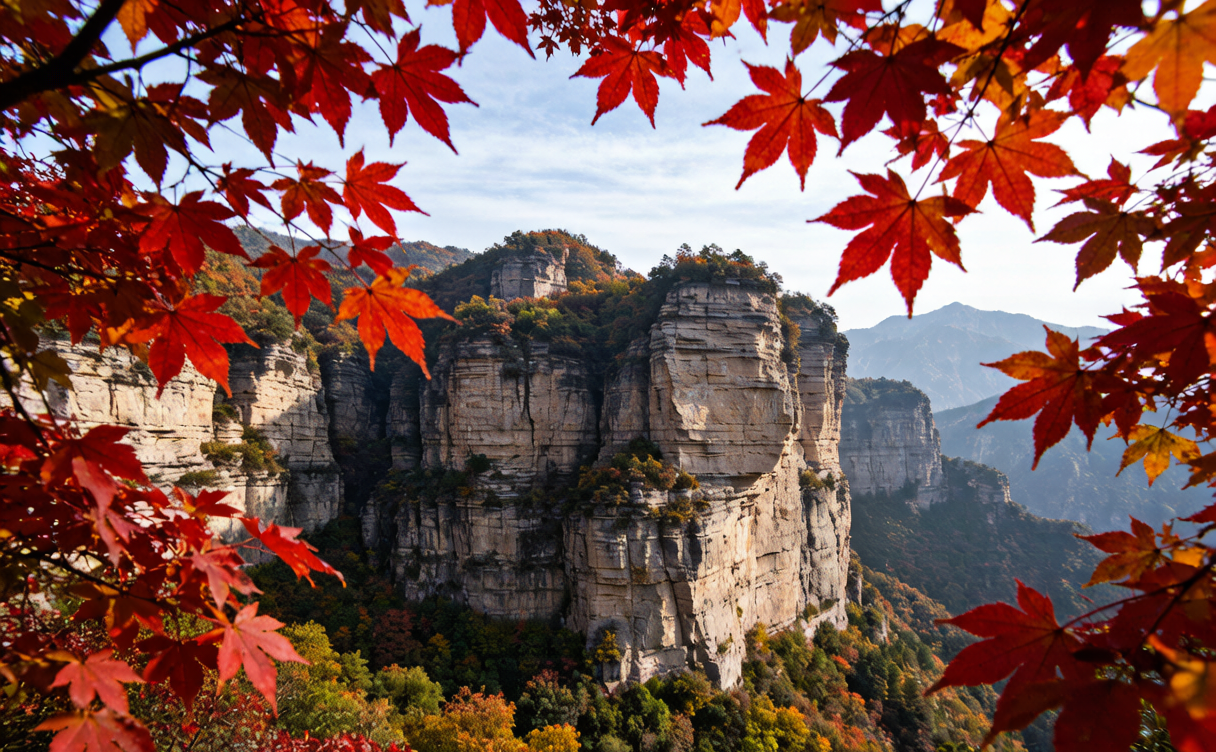
Late September to early November. Clear, dry, 12–24°C, with red maple and cotinus leaves peaking from around the third week of October. Photographically the strongest season.
December to February. Cold, 4°C to well below freezing at height, and the waterfalls turn to hanging ice. Some high trails and the upper canyon sections close. Ticket prices drop and the park is nearly empty, which is a fair trade if you dress for it.
Waterfall volume matters more than temperature here. After a dry spell the big fall can shrink to a thread.
How to Get There
Nobody flies to Jiaozuo. The practical answer to how to get to Yuntai Mountain is a train to Zhengzhou, then either a direct tourist coach or a fast train to Jiaozuo followed by a local bus.
| From | Mode | Duration | Approx. cost |
|—|—|—|—|
| Beijing West → Zhengzhou East | High-speed rail | 2 hr 20 min | ¥310 (US$44) |
| Xi’an North → Zhengzhou East | High-speed rail | 2 hr 10 min | ¥240 (US$34) |
| Luoyang Longmen → Zhengzhou East | High-speed rail | 40 min | ¥70 (US$10) |
| Zhengzhou → Jiaozuo | Intercity rail | 40 min | ¥30 (US$4.20) |
| Jiaozuo station → park visitor centre | Bus 12 or coach | 1 hr | ¥15 (US$2.10) |
| Zhengzhou coach station → visitor centre | Direct tourist coach | 2 hr | ¥60 (US$8.50) |
| Zhengzhou → visitor centre | Private car or Didi | 1 hr 40 min | ¥450 (US$63) |
Direct coaches from Zhengzhou leave in the early morning and return mid-afternoon, which makes a Yuntai Mountain day trip from Zhengzhou possible but tight. Once inside you use the green shuttle buses constantly; they run on colour-coded routes between zones, roughly every 10–20 minutes.
Yuntai Mountain Travel Guide to the Main Zones
Yuntai Mountain tickets and opening hours work on a single-pass system: one entry ticket of about ¥120 (US$17) plus a compulsory shuttle-bus fee of around ¥60 (US$8.50), covering all zones. The combined ticket is normally valid for two consecutive days, which is worth knowing — nobody sees everything in one. Gates open around 06:30 in summer and 07:00 in winter, with last entry mid-afternoon. Bring your passport; tickets are issued under your real name and checked at every zone gate.
Red Stone Gorge (Hongshixia)
The headline. A 1.5 km walkway loops down into a slot canyon of oxidised purple-red sandstone, past pools, small falls and a natural rock bridge, then climbs back out. Allow 90 minutes at a normal pace, longer if you stop to photograph.
Two things to plan around. First, it is one-way, so once you commit you finish the loop. Second, it has a daily visitor cap and a timed-entry queue in high season — arrive before 08:00 or after 15:00 to avoid a wait of an hour or more.
Tanpu Gorge and Quanpu Gorge
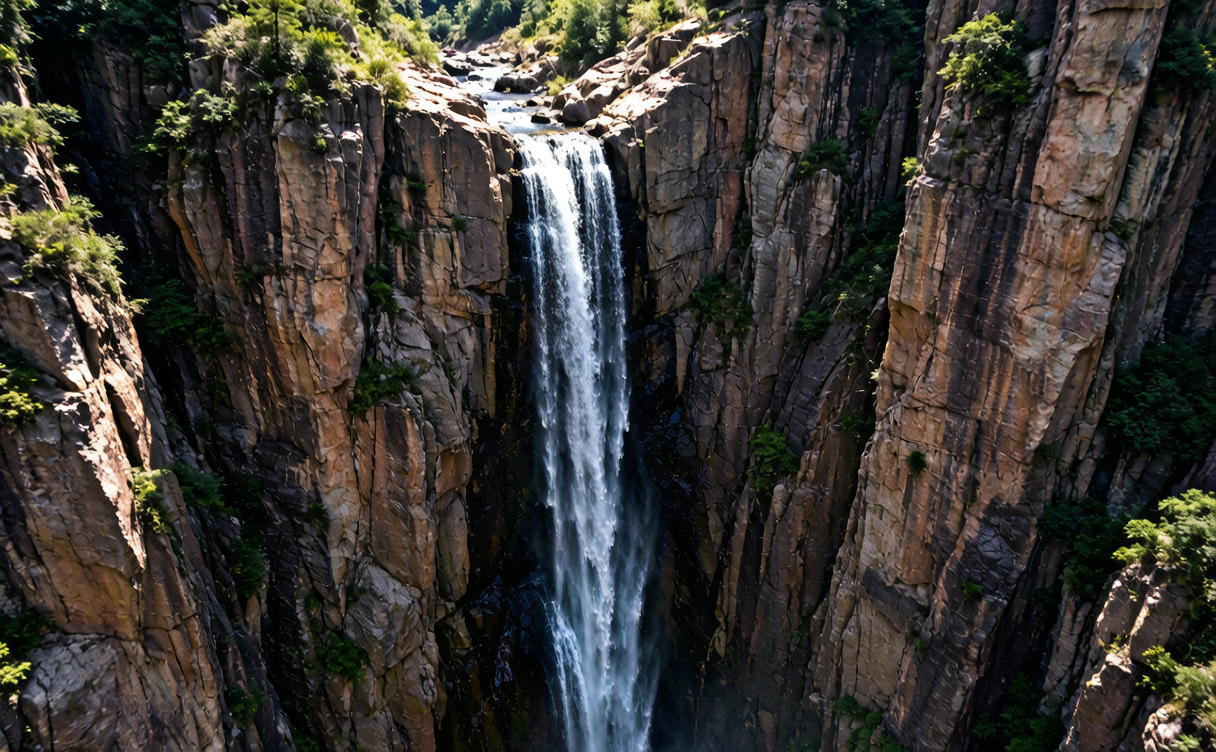
These two canyons sit in the same valley and are usually walked together. Tanpu Gorge (潭瀑峡) is a gentle 1.3 km stroll past terraced pools, curtain falls and the “Y-shaped waterfall”, shaded and easy on the legs. Quanpu Gorge (泉瀑峡) is longer at around 3 km each way and ends at the base of Yuntai Tianpu (云台天瀑), a 314-metre single-drop waterfall that ranks among the highest in China.
Be honest about the return walk: six kilometres of stone path with modest gradient, two to three hours in total. In dry months the fall is far less impressive, and park staff sometimes tell you the volume at the entrance. Ask.
Zhuyu Peak
The high point at 1,308 m, reached by a switchback road and then a stone staircase of roughly 1,700 steps to the summit temple. On a clear day you look out over the Taihang escarpment and the plain beyond. Near the base is Yaowang Cave, a long natural tunnel associated with Tang-dynasty herbalists, and the pines here were planted centuries ago.
Budget two hours up and down. If you only have energy for one hard climb in Henan, this or the trails in our China hiking and trekking guide will use it well.
Macaque Valley and the smaller zones
Wild Taihang macaques live in the park and are habituated to visitors along the Macaque Valley (猕猴谷) trail. Do not feed them and do not hold food in your hand — they will take it. Other zones, including Fenglin Gorge and Wanshan Temple, are quieter and best kept for a second day.
Where to Stay
Budget — ¥100–200 (US$14–28). Farmhouse guesthouses in Anshang, Gudang and the other villages at the park entrance. Simple rooms, home-cooked meals, and a five-minute walk to the first shuttle.
Mid-range — ¥300–600 (US$42–85). Resort hotels clustered around the visitor centre, plus solid chain hotels in Jiaozuo city if you prefer a proper town in the evening.
Splurge — ¥800–1,500 (US$113–212). A small number of high-end mountain resorts with spa facilities and valley views, mostly on the approach road. Book far ahead for October.
Staying at the gate is the right call. The first shuttle beats the coaches from Zhengzhou by two hours, and that is the difference between an empty Red Stone Gorge and a queue.
Sample Itinerary: Two Days
Day 1
- 07:00 First shuttle to Red Stone Gorge, walk the loop before the crowds
- 09:30 Shuttle to Tanpu Gorge, then continue into Quanpu Gorge
- 13:00 Late lunch at the valley canteen
- 15:00 Macaque Valley and the riverside paths
- 18:00 Dinner in the village; Henan noodles and stewed lamb soup
Day 2
- 07:30 Shuttle to Zhuyu Peak, climb before the heat
- 11:00 Yaowang Cave and the pine terraces
- 13:00 Coach back to Zhengzhou, or continue west
Practical Tips
- Passport at every gate. Buy online through the park’s WeChat mini-program or at the window, then carry the passport itself — zone gates scan it.
- Payment. Alipay and WeChat Pay work everywhere and now accept international cards. Keep ¥200 in cash for village guesthouses.
- Walking surface. Wet stone and metal grating throughout the gorges. Trainers with grip, not sandals.
- English signage. Main directional boards and shuttle stops are bilingual; interpretive panels often are not. Save the zone names in Chinese on your phone.
- Shuttle strategy. Ride to the furthest zone you want first thing, then work back. Everyone else does the opposite.
- Food. Canteens inside are functional and overpriced. Carry water and something to eat, especially for the Quanpu Gorge walk.
FAQ
Can I see Yuntai Mountain in one day?
You can see Red Stone Gorge and one waterfall canyon in a long day from Zhengzhou. You cannot add Zhuyu Peak as well. If the two-day ticket validity applies, stay overnight at the gate — it costs less than the time you lose.
How difficult are the Yuntai Mountain hiking trails and routes?
Almost everything is paved path, steps or plank walkway rather than rough trail. Red Stone Gorge and Tanpu Gorge suit most fitness levels. Quanpu Gorge is long, and Zhuyu Peak’s 1,700 steps are the only genuinely demanding section.
When is the best time to visit Yuntai Mountain for the waterfalls?
Late spring and mid-summer, when snowmelt and rain keep flow high. October is better for colour and comfort but the falls can be thin. Winter freezes them into ice columns, which is a different spectacle entirely.
Is it too crowded to enjoy?
At weekends and public holidays, honestly, yes — Red Stone Gorge can run to a shuffling queue. On a weekday outside holidays, arriving at opening time, it is a completely different place.
What else is nearby?
The Shaolin Temple is about two and a half hours south, covered in our Shaolin Temple guide, and the old Song capital sits an hour east of Zhengzhou — see our Kaifeng travel guide for that.
Written by Karl · Updated August 6, 2026