

I still remember the first time I stepped off the bus at Pudacuo National Park. The cold mountain air hit me at over 3,500 meters, pine resin filled my lungs, and a still, mirror-like lake unfolded in front of me. I had come expecting a scenic stop near Shangri-La, but what I found was something quieter and far more moving: a genuinely wild alpine world that China chose, back in 2007, to protect as its very first national park. If you are planning a trip to Yunnan and want a day that balances easy walking with real wilderness, Pudacuo should be high on your list.
Getting There
Most travelers reach Pudacuo from Shangri-La (formerly Zhongdian), the Tibetan-flavored town in northwest Yunnan. The park sits about 22 kilometers east of the town center, and the drive takes roughly 30 to 40 minutes. I arranged a private car through my hotel, but there are also shuttle buses and organized day tours departing from Shangri-La’s main square. The road itself is pleasant, climbing gently past prayer-flag-draped hills and small villages where yaks graze beside the highway.
Fly into Diqing Shangri-La Airport, which has regular connections from Kunming, Chengdu, and Lhasa. If you want the overland experience, the train and bus routes from Kunming are long but scenic. Once in Shangri-La, give yourself at least a full day: half a day for the park and the rest to acclimatize and explore town. Before heading out, I strongly suggest reading our Shangri-La Yunnan travel guide for altitude and logistics tips, and pairing your visit with the nearby Songzanlin Monastery, which I cover in a separate article.
What to See
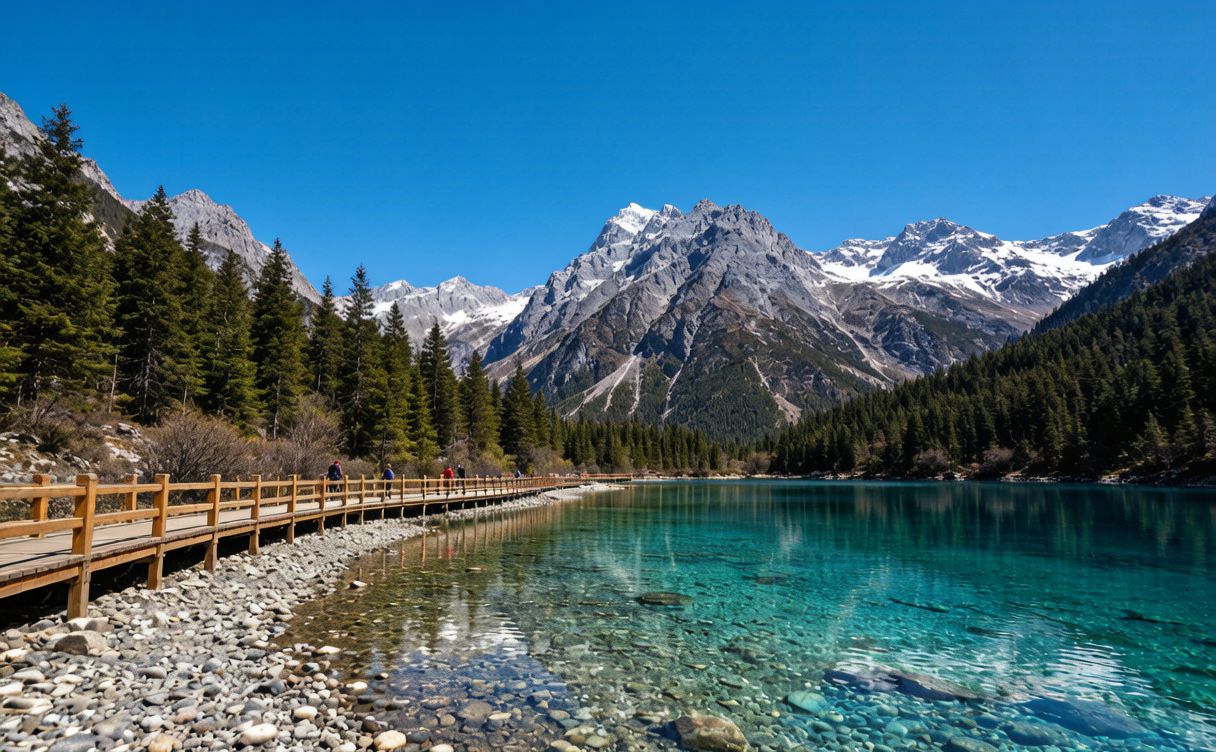
Pudacuo is built around two star lakes and the forests, meadows, and wetlands that connect them. The first I visited was Shudu Lake, a broad, calm body of water ringed by old-growth spruce and fir. In early morning the surface goes glassy and the surrounding peaks double themselves in the reflection. Local Tibetan herders still bring horses and cattle to the high meadows nearby, and you will likely spot yaks moving slowly through the mist.
The second lake, Bitahai, sits deeper in the park and is famous for its clear, jade-colored water and the “floating” tree roots that drift near the shore. A small island of rhododendrons sits in the middle, and in late spring the hills around it turn pink and white. Between the lakes lies a highland marsh where I watched a family of migratory birds settle for the night. The biodiversity here is real: musk deer, black-necked cranes, and countless orchids live in these protected valleys, which is exactly why the park was created.
If you want to extend your Yunnan lake itinerary, the park pairs naturally with Dali’s Erhai Lake to the south or the famous Lugu Lake further east, though none of them feel as raw and untouched as Pudacuo.
Hiking the Boardwalks
The genius of Pudacuo is its elevated wooden boardwalks. They keep you above the fragile wetland while letting you walk right to the water’s edge. I spent most of my visit simply strolling, stopping often, and letting the silence do its work. The main loop around Shudu Lake is about 3 kilometers of flat, well-maintained boardwalk, easily done in an hour at a relaxed pace. A longer section continues toward Bitahai, and a boat shuttle links the two lakes so you do not have to backtrack.
Wear good shoes even though the path is wooden; it can be damp and slippery at altitude. I found the boardwalk near Bitahai the most rewarding: the forest closes in, the air smells of wet moss, and every turn opens onto a new view of the water. There is a short, steeper spur to a lookout where I ate a packed lunch and watched clouds spill over the ridgeline. For a tougher leg-stretcher elsewhere in the region, trekkers love the Tiger Leaping Gorge trek, but Pudacuo is the place to come when you want nature without the exertion.
A Small Personal Moment
I want to share one moment that stuck with me. On my second loop around Shudu Lake, the wind dropped completely. A Tibetan woman was leading a horse along the shore, humming softly, and for maybe a minute the whole lake went perfectly still. No other tourists were in sight. I sat on a bench, let my breath slow, and felt the altitude, the quiet, and the scale of the place settle in. It was not a dramatic view or a photo I’ll frame; it was just a feeling of being somewhere genuinely untouched. That, more than any postcard scene, is why I tell friends to go.
Tips
- Acclimatize first. Shangri-La and the park sit above 3,200 meters. Spend a night in town before exerting yourself, and walk slowly on the boardwalks.
- Go early. Buses of day-trippers arrive mid-morning. I reached the first lake by 8:30 a.m. and had it nearly to myself.
- Dress in layers. Mountain weather flips fast. I started in a t-shirt, ended in a rain shell, and was glad for both.
- Bring cash and snacks. The park has a basic visitor center and a small buffet, but options are limited and card readers are unreliable.
- Respect the wetland. Stay on the boardwalk. The marsh recovers slowly from foot traffic, and the rules are there for a reason.
- Hire a local guide if curious. For a small fee, a Shangri-La guide enriched my walk with names of plants and Tibetan folklore I would never have known.
If your broader Yunnan plan starts in the provincial capital, our Kunming travel guide explains how to route north toward Diqing without wasting days.
Best Time
Pudacuo changes completely with the seasons, and each has a case. I visited in late May, when rhododendrons were blooming and the meadows were green. Spring (April to June) is my favorite: mild, floral, and good for birds. Summer (July to August) is lush and warm but brings afternoon rain, so start early. Autumn (September to early November) is spectacular, with golden larches and the clearest light for photography. Winter is cold and quiet, with possible snow on the boardwalks, but it offers the fewest crowds and a stark, silver beauty.
Avoid the week-long Chinese public holidays if you can; the park gets busy and the shuttle queues grow. For snow-capped backdrops beyond the park, the Meili Snow Mountain lies a few hours west and is best viewed in dry-season autumn and winter.
Good to Know
Entry fees and shuttle costs are included in the standard park ticket, which covers the bus from the gate to the lakes and the boat between them; prices shift slightly by season, so check the official tourism board before you go. The park opens in the morning and closes in the late afternoon, and the last shuttle leaves well before sunset. Facilities are basic: a visitor center, restrooms at trail heads, and a simple buffet near the entrance. Mobile signal is weak inside the valleys, so download maps and share your plans beforehand.
For the most current official information on opening hours, fees, and regional travel, consult the Yunnan Culture and Tourism department. I always check it the night before a trip, because mountain weather and seasonal maintenance can change access at short notice.
Pudacuo is not a thrill-seeking destination, and that is precisely the point. It is a calm, well-managed introduction to the Tibetan highlands of Yunnan, close enough to Shangri-La to do in a morning yet wild enough to feel like a real escape. I left lighter than I arrived, and I would go back tomorrow.