

The Morning Ritual That Starts With Breaking Bread
At half past seven in the Xi’an Muslim Quarter, the first thing you hear before you smell anything is the crack. Not a loud crack — a patient, fingernail-on-crust sort of break, repeated dozens of times, as a customer sits at a low laminate table tearing a round, dense flatbread into thumbnail pieces. Nobody rushes it. The bread goes into a metal bowl, and only then does the cook ladle over a broth that has been simmering since before dawn. That bowl is yangrou paomo, and the tearing is not decoration — it is the dish. This Xi’an mutton stew with bread is one of the most comforting bowls in northwestern China, and also one of the most misunderstood by first-time visitors.
Most people meet Xi’an through its noodles, but yangrou paomo is the city’s other signature, a winter soup of mutton and bread that warms you from the inside out. It is also one of the clearest windows into the local Hui Muslim food culture, and into a style of cooking where the carbohydrate is not a side but a co-author of the broth. If you want to understand Shaanxi beyond the biangbiang noodles, you start here.
What Yangrou Paomo Actually Is
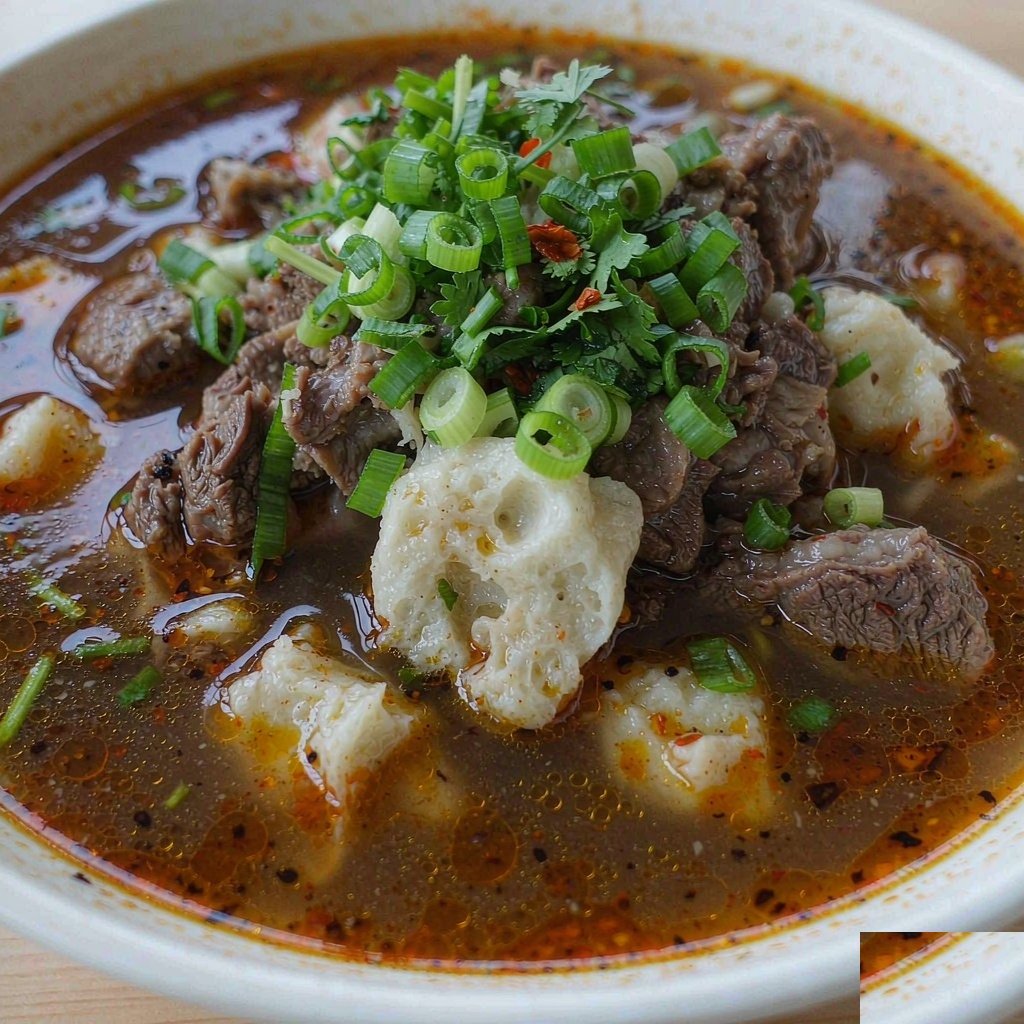
Yangrou paomo — literally “mutton broke(n) bread” — is a Shaanxi soup built from two parts: a long-simmered mutton broth and baijimo, a dense wheat flatbread that the eater breaks by hand into small pieces before the hot soup is poured over it. The pieces soften but never dissolve; they drink the broth and turn into something between a dumpling and a grain. The mutton is braised until it surrenders, the fat rendered into a clean, savory richness rather than a greasy film. The name 泡馍 just means “soaked bread,” and there are two main families: zhu paomo (bread soaked in boiling broth, the classic) and chao paomo (the bread stir-fried with egg and mutton). This article is about the soaked version, the one you eat with a spoon.
What does yangrou paomo taste like? The first note is the broth: deep, meaty, faintly sweet from the marrow and onion, with the clean warmth of ginger, star anise and a touch of cardamom or dried tangerine peel depending on the shop. The bread adds a wheaty, almost custardy body. Pickled garlic and a spoon of chilli paste cut through the fat. It is hearty without being heavy, and it tastes like a meal you could walk ten kilometres after.
A Bowl Built on Two Things: the Mutton and the Bread
Good yangrou paomo ingredients are short and unforgiving — there is nowhere to hide a weak broth. Here is what goes in, with rough home amounts for four servings:
- 500 g bone-in mutton shoulder or leg, plus 300 g meaty mutton bones for the stock
- 1 round baijimo per person (about 120 g each), or substitute a firm, dense flatbread
- 1 large onion, quartered
- 30 g fresh ginger, sliced
- 2 whole star anise, 1 cinnamon stick, 4 green cardamom pods, 1 small piece of dried tangerine peel
- 1 tablespoon salt, adjusted at the end
- To finish: 2 spring onions, a handful of cilantro, pickled garlic, and chilli oil
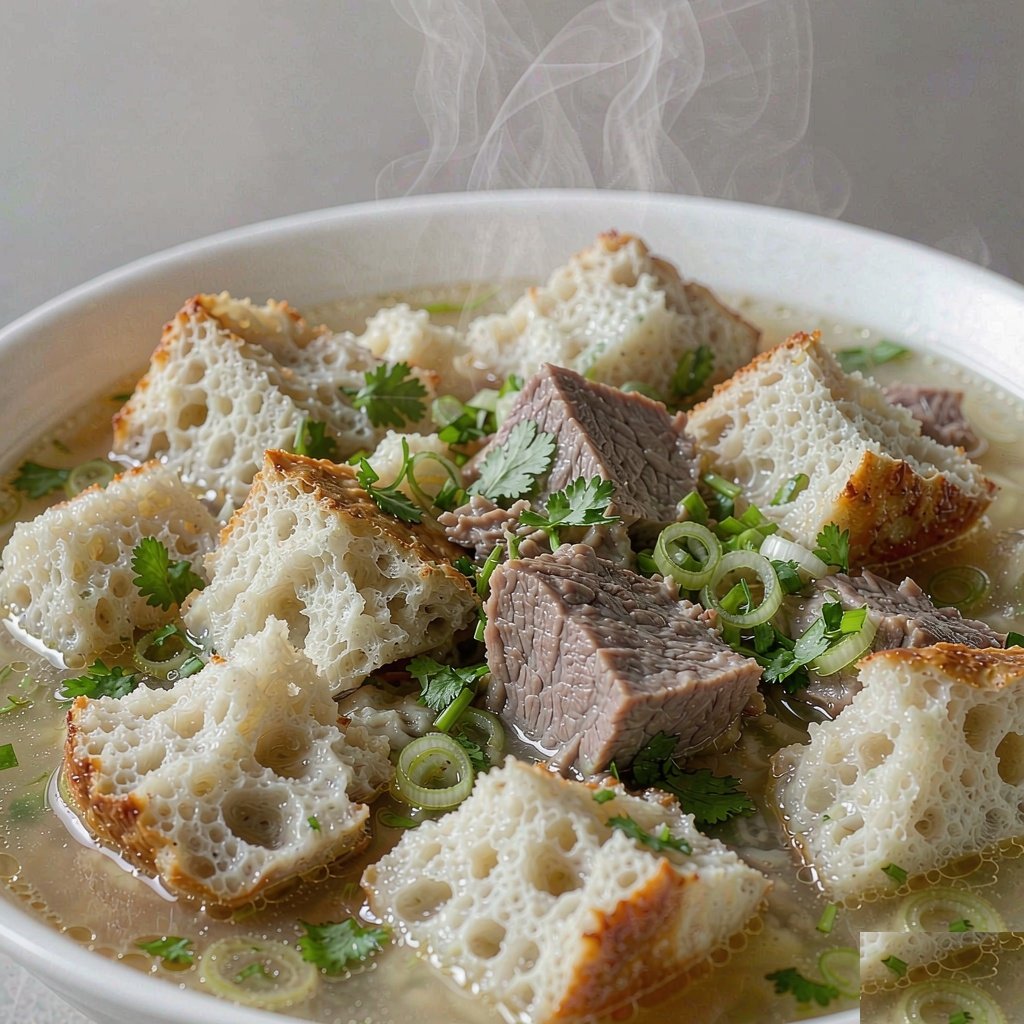
The baijimo matters more than people expect. A soft sandwich loaf turns to paste; a proper baijimo is tight-crumbed and chewy, so it holds its shape against the broth. If you cannot find it, a day-old ciabatta with the crust trimmed is a tolerable stand-in — but understand it is a compromise, not a substitute. Some home cooks bake a simple unleavened round themselves, which is closer to the real thing than any supermarket bread.
How to Make Yangrou Paomo at Home — Step by Step
The honest version of a yangrou paomo recipe takes time, but most of it is waiting. This is the yangrou paomo step by step method I use when I want the real thing without a flight:
1. Build the stock. Cover the bones and mutton with cold water, bring to a boil, skim the grey foam, then drop in the onion, ginger and spices. Simmer gently for two to three hours until the meat is fork-tender and the broth is pale gold and clear.
2. Cook the mutton. Lift the meat out, let it cool, and slice it thin against the grain. Return the bones to keep simmering; keep the sliced meat aside.
3. Break the bread. This is the part people skip, and it is the whole point. Tear each baijimo into pieces roughly the size of a fingernail. Smaller pieces soften faster and carry more broth; larger pieces stay chewy. Aim for consistency, not tidiness — uneven tearing gives you a bowl with two textures at once, which is exactly what you want.
4. Assemble the bowls. Divide the bread among four bowls and lay the sliced mutton on top. Some shops ask whether you want it “dry broken” (small, soupy) or “mouth-broken” (larger, more texture) — request your preference if you are ordering in Xi’an.
5. Ladle the broth. Bring the stock to a rolling boil and pour it over each bowl until the bread is just submerged. The heat should be high enough that the bread begins to swell immediately.
6. Rest and finish. Let the bowl sit two minutes, then top with spring onion, cilantro, a few cloves of pickled garlic and a dab of chilli oil. Serve at once, while the broth is too hot to be polite about.
Who Should Order It — and Who Might Want to Pass
Yangrou paomo is a near-perfect travel meal for cold-weather sightseeing, and it sits squarely in the world of halal food in China — the Hui Muslim community that runs most of Xi’an’s paomo shops observes halal practice, so the mutton is slaughtered and handled accordingly. That makes it an easy, safe choice for Muslim travellers, and a reliable one for anyone who wants to avoid pork entirely.
It is also rich. A full bowl runs roughly 500–700 calories depending on the fat and the bread, so anyone watching saturated fat or sodium should treat it as a meal, not a snack. The bread makes it filling in a way plain noodle soups are not, which is a plus for hungry walkers and a minus for light eaters. There is no pork and usually no alcohol in the broth, but the mutton fat is substantial — ask for “lean” (shou) if you want less of it. People with a strong aversion to lamb gaminess should order it where the broth is well-spiced, since the aromatics tame the mutton better than a bare stock does.
How to Eat Yangrou Paomo the Xi’an Way
How to eat yangrou paomo is half the experience. You do not wait for it to arrive broken — you break it yourself, and locals judge the bowl by how evenly you tore. Once it comes, eat it with a spoon, not chopsticks alone, because the small bread pieces slip through the sticks. The pickled garlic (suan) on the side is not optional; it is the foil to the fat, and yangrou paomo with pickled garlic is the only way regulars eat it. A dollop of chilli oil brightens the whole thing, and a few shops bring a small dish of sweet garlic or pickled chilli to layer in.
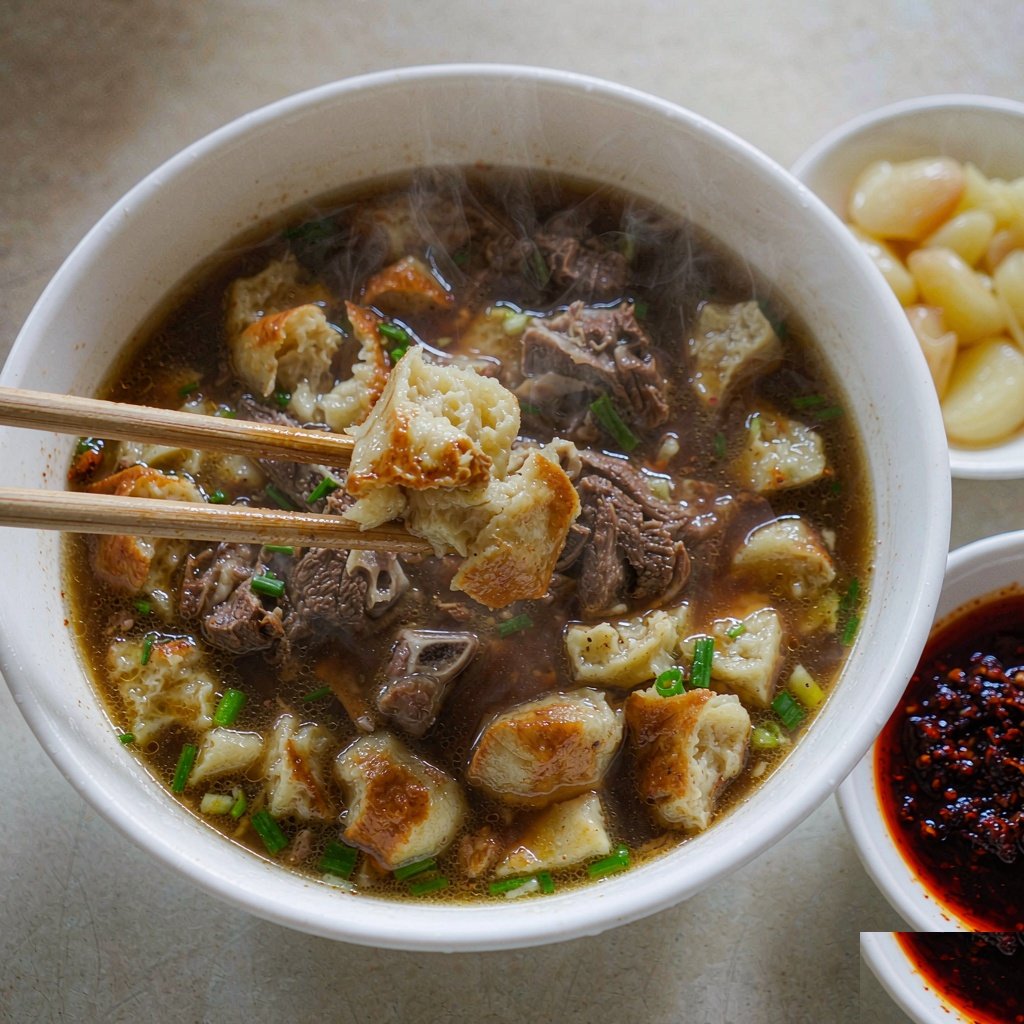
Order it “with soup” or “dry” depending on mood — the soupy version is the classic, the drier “small stir-fried” style (chao paomo) fries the soaked bread with egg and mutton for a different texture entirely. Either way, eat it hot and eat it slowly; the bowl is built for a cold morning, not a rushed lunch.
Where to Find the Best Yangrou Paomo in Xi’an
If you are chasing the best yangrou paomo in Xi’an, the old Hui quarter behind the Bell Tower is the obvious start, but the most devoted shops are scattered through the city’s Muslim neighbourhoods rather than the tourist front row. Look for places where locals arrive with their own baijimo, or where the broth pot has clearly been going since dawn. The Xi’an Muslim Quarter is the easy entry point; the side streets off it are where regulars eat. Around Shaanxi more broadly, paomo appears in smaller cities too — Xi’an sets the standard, but Hanzhong and Baoji each have their own loyal shops.
Yangrou Paomo vs Roujiamo — and the Authentic Xi’an Version vs Western
Two comparisons come up constantly. First, yangrou paomo vs roujiamo: roujiamo is the “Chinese hamburger,” braised meat stuffed into a baked bread pocket — dry, handheld, portable. Paomo is the opposite — bread broken into a soup, eaten with a spoon, sedentary and warming. Same mutton, opposite format, and you will often see both on the same Shaanxi menu.
Second, the authentic Xi’an paomo vs western versions you occasionally meet abroad. Outside China, “mutton soup with bread” is often a thin broth with cubed toast dropped in at the end. The real thing is denser, the bread integral, the broth built from bones over hours. If the bread floats untouched on top, it is not paomo — it is bread in soup, and there is a world of difference.
A Short History of the Dish
The yangrou paomo history runs back more than a thousand years, with roots in the foodways of Silk Road travellers and the Hui communities who settled in Chang’an, today’s Xi’an. The practical story is simple: travellers needed a way to carry durable flatbread across long, cold journeys, and a pot of mutton broth was the logical companion. Breaking the bread into the soup stretched both ingredients into a meal that fed many from little. Over centuries it moved from roadside necessity to city institution, and today it is as much a symbol of Xi’an’s identity as the city wall or the bell tower.
Frequently Asked Questions
What does yangrou paomo taste like?
Savory, meaty and clean, with a wheaty body from the soaked bread and a warm spice background of ginger, star anise and cardamom. Pickled garlic and chilli oil add sharpness and heat. It is rich but not greasy when made well, and the broth should taste of mutton, not of salt alone.
Can I make yangrou paomo at home without baijimo?
Yes. Use a dense, day-old flatbread with a tight crumb — ciabatta with the crust trimmed works in a pinch, and a simple homemade unleavened round is even closer. Avoid soft sandwich bread, which collapses into paste. The bread should hold its shape against hot broth for a few minutes.
How many calories are in a bowl of yangrou paomo?
A standard restaurant bowl lands around 500–700 calories, driven mostly by the mutton fat and the bread. Ask for lean meat and go easy on the chilli oil if you want to keep it lower, and remember the pickled garlic adds almost nothing.
Is yangrou paomo halal?
In Xi’an it almost always is. The dish comes from the city’s Hui Muslim community, and the mutton is handled under halal practice. If it matters to you, confirm at the shop, since a few secularised chains may not follow the full rules.
What is the difference between yangrou paomo and roujiamo?
Paomo is bread broken into a mutton soup and eaten with a spoon; roujiamo is braised mutton stuffed into a baked bread pocket, eaten by hand. Same region and similar meat, completely opposite eating experience.
Where can I find good yangrou paomo near me?
Outside Xi’an, look for northwestern Chinese (Shaanxi or Gansu) halal restaurants, often run by Hui families. In a Western city, search for “Shaanxi food” or “northwestern Chinese halal” rather than a generic “Chinese restaurant,” since most Cantonese or Sichuan places will not serve it.