

I came to Xinjiang, China expecting grilled meat and left understanding a whole cuisine. The kebabs are real, but they are the loudest part of a table that also holds hand-pulled noodles, golden rice pilaf, flaky flatbreads, and dumplings steamed in a clay oven. This is my Xinjiang cuisine guide, written after eating my way from Urumqi’s night markets to the corner skewer stalls of Kashgar, with notes on what to order, what it costs, and how to sit down without embarrassment.
Xinjiang, China sits on the old Silk Road, and you can taste the route: Central Asian noodles, Persian-style rice, Chinese woks, and Russian dairy all meet here. The Uyghur kitchen leads, but you will also find Hui, Kazakh, and Han dishes on the same street. Below I focus on the Uyghur core, because that is what makes the region’s food distinct.
Xinjiang Hand-Pulled Noodles (Laghman)
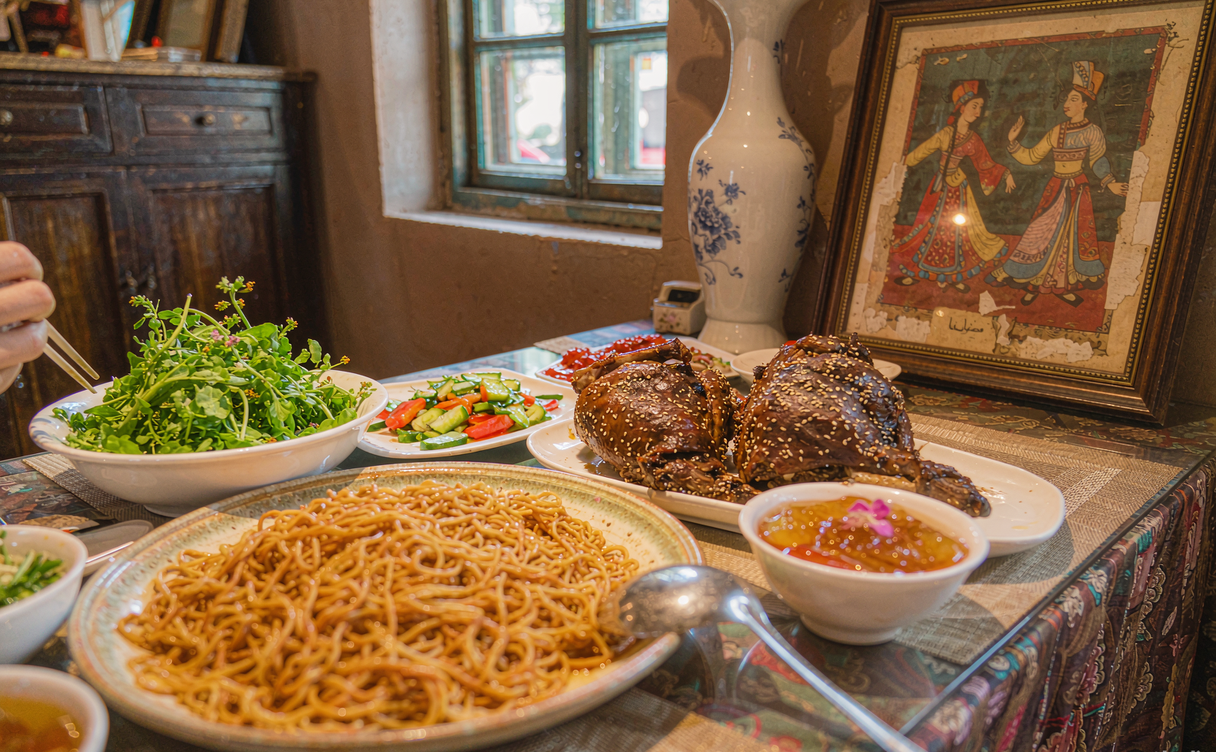
The dish I ate most was laghman — hand-pulled noodles in a stir-fried sauce of tomato, green pepper, onion, and usually beef or lamb. The cook pulls the dough into long ribbons at the moment you order, so it arrives chewy and fresh. A plate in a Urumqi noodle house runs RMB 18–35; in Kashgar a smaller bowl is RMB 15–25.
Look for “zuo mian” (pulled noodles) on the sign and watch the window if there is one — the pulling is half the show. I once waited at a stall in Kashgar’s old town where the man pulled the dough so fast it sounded like clapping. Order it “lazi” (with chili oil) if you like heat, or plain if you want the vegetable sweetness. Laghman is a meal alone; do not add sides unless you are very hungry.
Xinjiang Kebabs (Kawap)
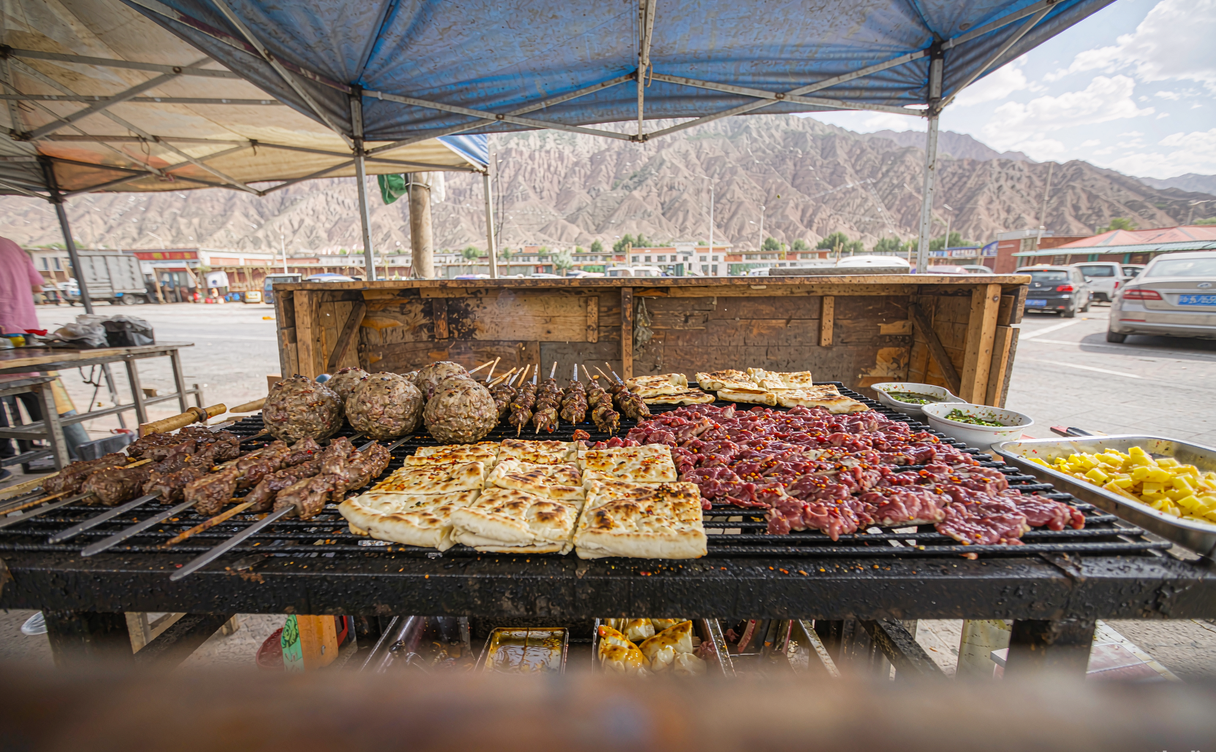
Xinjiang kebabs are lamb, skewered and grilled over charcoal with cumin, chili, and salt — no sauce, no marinade needed. The classic is “yangrou chuan” (lamb skewer), RMB 3–6 each on the street, more in restaurants. In Urumqi’s International Bazaar area I have paid RMB 5–8 for a fatter skewer; in Kashgar’s night market the small ones go three for RMB 10.
Two tips from a repeat eater: ask for “nao nang” (on naan) if you want the meat served on flatbread, and try “kaoyu” (grilled fish) if you are near the south. The cumin is the signature — if a place skips it, it is not the real thing. A safe order for two people is ten skewers plus a naan plus a plate of laghman to share.
Xinjiang Uyghur Dishes: Pilaf, Naan, and More
Beyond noodles and skewers, the everyday Uyghur plate has a few staples:
- Polo (pilaf) — rice cooked with lamb, carrot, and onion in oil until golden. A plate is RMB 20–35. It is theSunday dish across Xinjiang, China, and the carrots make it sweet.
- Naan — the round flatbread baked in a tandoor-like oven (tonur). Plain is RMB 2–5; sesame or onion versions a bit more. Buy one warm from a roadside oven and eat it walking.
- Samsa — meat-filled pastries baked in the oven, RMB 4–8 each, hotter and denser than a samosa.
- Dapanji — “big plate chicken,” a wok of chicken, potato, and belt noodles in a spicy sauce. RMB 48–88 for a plate that feeds two to three; it is Han-influenced but now everywhere in Xinjiang, China.
- Shorpa — mutton soup, clear and restorative, RMB 15–25.
For a deep dive on the region’s food map, the Xinjiang food guide lists city-by-city stalls and the dishes each is known for.
Best Xinjiang Food and Where to Eat It
The best Xinjiang food is where locals queue. My short list:
- Urumqi — the International Grand Bazaar (Erdaoqiao) for the show, but better everyday eating is in the Hui and Uyghur restaurants around Nanmen and the northwest suburbs. Laghman and polo lunches here are cheap and excellent.
- Kashgar — the old town and its night market (Weekend Bazaar area) are the kebab capital. The Xinjiang Pamir Plateau and Kashgar guide covers how to reach Kashgar and pair the food with the Karakoram-edge scenery.
- Turpan — smaller, hotter, famous for raisins and the sweetest naan; a good half-day food stop between Urumqi and the west.
One habit I picked up fast at these tables: tea is poured for others before yourself, and topping up a neighbor’s cup is normal, not intrusive. The default is milky salted tea (sut chay), filling rather than fancy; if you want plain, ask for “kara chay”. Sharing a pot is how conversations start, and it is the easiest way to meet the people whose kitchen you are enjoying.
Best Time to Visit Xinjiang for Food
You can eat well any month, but the best time to visit Xinjiang for markets and fruit is June through October. Summer brings melons, grapes, and apricots that are frankly better than anything I have had elsewhere, and the night markets run late. Our best time to visit China guide flags the northwest’s short sweet window before winter locks the roads at altitude.
Winter is harsh and some mountain routes close, but Urumqi and Kashgar stay open and prices drop. I went in September and the grapes in Turpan were still on the vine — that alone was worth the timing.
A Xinjiang Food-Guide Day Plan
If you want one eating day in Urumqi:
- 09:00 — Breakfast: naan fresh from the oven plus milk tea (RMB 8–15).
- 12:30 — Lunch: laghman at a pulled-noodle house (RMB 20–30).
- 15:00 — Snack: samsa and a pomegranate juice in the bazaar (RMB 10–20).
- 19:30 — Dinner: dapanji shared, plus naan (RMB 50–80 for two).
- 21:30 — Night market kebabs and melon to finish (RMB 30–50).
Total for a full day of eating: about RMB 120–200 per person, excluding drinks beyond tea. Transport within cities is DiDi or cheap fixed-route buses; between cities, the high-speed line reaches Urumqi, Turpan, and west toward Kashgar, and our China high-speed train guide for foreigners explains booking those long hauls.
For the cultural background of the table, the Wikipedia page on Uyghur cuisine is a useful, sourced read on where laghman, polo, and naan come from and how they sit in the wider Central Asian kitchen.
If this is part of a first China trip, our China travel guide for first-timers covers permits for the west, payments, and how Xinjiang, China fits a national route, and the best things to do in China collects the headline sights from the region.