

At the southern edge of Hebei, where the North China Plain finally lifts into the Taihang range, Xingtai is the city that stands between the fields and the mountains. A Xingtai travel guide has to stretch in two directions at once: down into the old market towns and spring fed parks of the plain, and up into the red quartzite gorges where the Taihang Mountains fall away in shelves of rock. It is a base for Hebei canyon trips that most foreign visitors never hear about.
The city itself is ancient, one of the earliest settlements in the region, but the real draw is the countryside around it. If you are tired of capital scale tourism and want the Hebei that tourists miss, Xingtai gives you gorges, waterfalls and walled towns within a short ride of a high speed station. The Xingtai to Beijing run is long enough that an overnight makes sense, but the contrast is worth the track time.
Getting to Xingtai
Trains from Beijing West reach Xingtai East in around two hours on the high speed line, with connections also running from Shijiazhuang in under an hour. Our China high speed train guide for foreigners explains the ticketing and ID rules that apply to this route, and the same app you used for Beijing works here. From Xingtai East, buses and taxis fan out toward the old town and the mountain gates to the west.
For a wider plan, the Shijiazhuang travel guide covers the provincial capital just north, an easy add on, while the Beijing first time travel guide handles the capital you likely start from. The Handan travel guide points to the ancient capital further south, which pairs naturally with Xingtai as a two city sweep of old Hebei.
The Taihang gorges
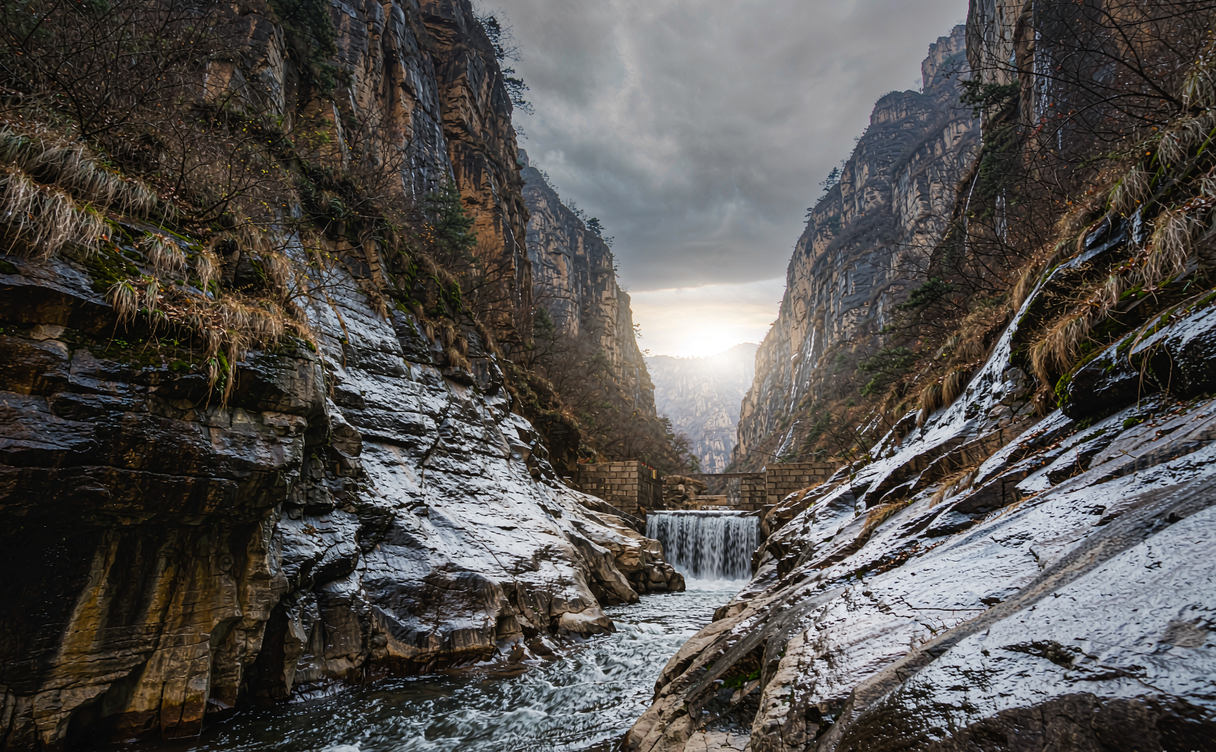
The headline for outdoor travelers is the Xingtai Taihang Mountains, a stretch of the range where the rock turns a deep red and the valleys cut sharp. Tianhe Mountain, on the western fringe, is the best known: a gorge threaded with waterfalls, plank walks pinned to the cliff, and a love legend that earns it the local nickname of China’s Valentine mountain. Summer weekends get busy with domestic visitors, but a weekday morning is all yours.
Further into the range, the canyon trips run from easy riverside strolls to proper hikes along ridge lines, with villages tucked into the folds where old stone houses cling to the slope. The geology is the star, and you can read about the range’s formation on the Wikipedia page for the Taihang Mountains, which explains how the fault block rose to separate the Loess Plateau from the plains. If you want the iconic cliff road and the tunnel village, our Guoliang village Taihang guide describes the famous hang road just south across the provincial line, an easy extension for the same traveler.
The mountains are cooler than the plain by several degrees, which makes them a summer escape as much as a sight. Bring proper shoes, water, and a respect for sudden afternoon storms in July and August. The views are the reward, and the empty trails are the bonus. Below the cliffs, the villages of the Xingtai Taihang Mountains keep a rhythm that tourism has barely touched. Old women sit at doorways stripping corn, and the school run is still a walk up the stone path; staying a night in one of these hamlets, even a basic one, turns the gorge from a photo stop into a glimpse of rural Hebei that the high speed stations never show.
Old towns, springs and local life
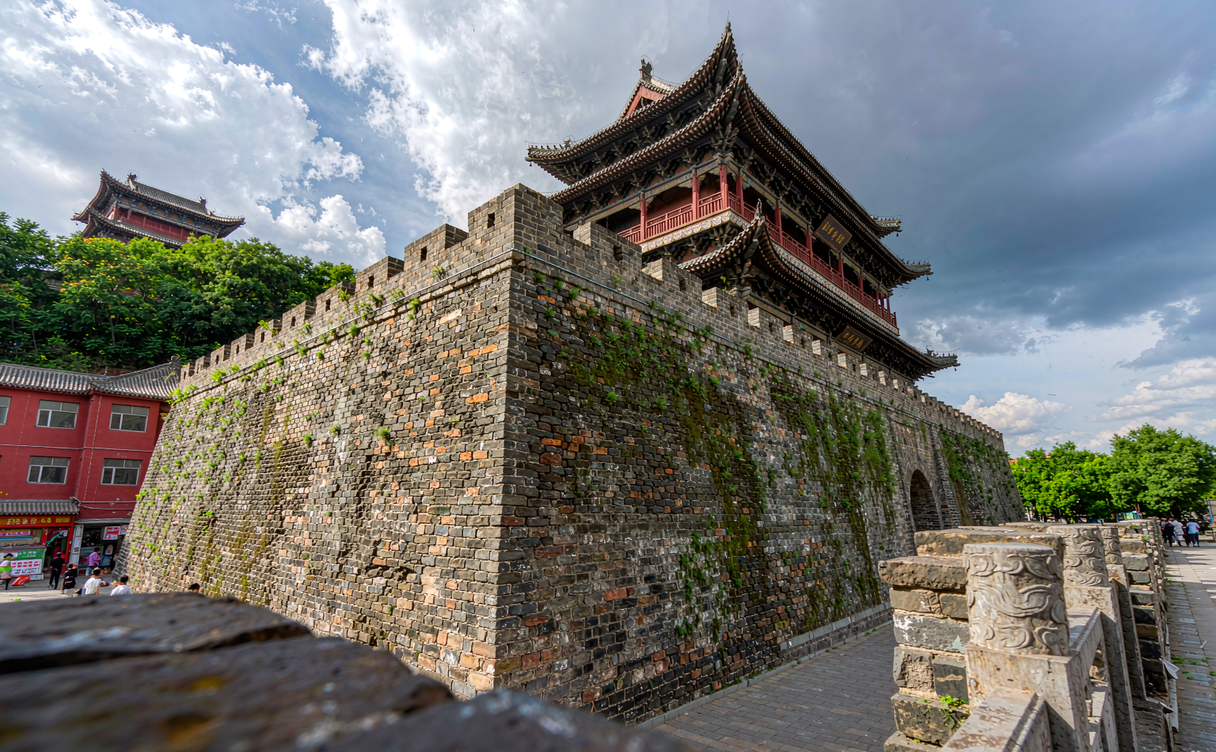
Back on the plain, Xingtai’s own old quarters reward a slow wander. The city is woven with spring fed pools, the Baiquan springs that have watered the settlement for millennia, and a few temples and lanes that survived the modern rebuild. It is not a headline destination like a former capital, but the everyday texture, the morning markets, the noodle stalls, the elderly playing cards by the water, is exactly what many travelers come to China to feel. In early summer the lotus spreads across the spring pools and the locals come out to walk the causeways after dinner, which is the best time to see the city as residents do.
A short hop south brings you to Handan, one of China’s ancient capitals and home to the Guangfu walled town, a Ming era garrison city with intact ramparts and a strong tai chi tradition you can watch practiced at dawn. The Handan travel guide covers that stop in depth, and it makes a natural second night on a southern Hebei loop. Together, Xingtai and Handan show the plain’s older layer beneath the factories and the highways.
Xingtai food is northern and unfussy: hand pulled noodles, steamed buns, and the sour cabbage that cuts through the richer dishes, with the mountain counties adding foraged herbs and dried mushrooms in autumn. The old town has reliable hole in the wall spots where a full meal costs less than a drink in a capital bar, and the morning markets are the place to watch the day start. Hotels in the city are modern and inexpensive, while the gorge areas offer family guesthouses where dinner is whatever the kitchen bought that morning and breakfast is corn porridge and pickles.
The best time to visit Xingtai is spring, from April to May, and autumn, from September to October. Spring brings the mountains green and the orchards in bloom, with the Baiquan springs at their fullest; autumn gives clear skies and the red rock at its most photographic, and the plain cools enough for comfortable walking. Summer is the lush, stormy season good for waterfalls but risky for exposed ridges, so watch the forecast before any cliff walk; winter is cold and quiet, with the gorges stripped bare but the old towns calm and easy to read.
A workable Xingtai travel itinerary runs three days. Day one: arrive from Beijing or Shijiazhuang, walk the old town and the springs. Day two: Tianhe Mountain gorge, with a village stop on the way back. Day three: continue to Handan or loop north to the capital. With more time, the Chengde travel guide points to the imperial summer capital far to the northeast for a completely different face of Hebei.
Food in the region is northern and hearty: wheat noodles, stuffed buns, and a sour cabbage that cuts the richness. The mountain counties add wild herbs and mushroom dishes in season. Hotels in Xingtai city are modern and inexpensive, while the gorge areas offer guesthouses where the dinner is whatever the kitchen bought that morning.
Xingtai suits travelers who like their scenery a little raw and their towns a little unpolished. The gorges are the headline, but the plain’s old life is the quiet prize, and the two sit close enough to sample both in a single trip. Pack for walking, bring a map app, and keep expectations loose; the best moments here are the unplanned ones.
For visitors who thought Hebei was only the wall and the capital, Xingtai is the deeper answer. The Taihang gorges, the old stone villages and the spring fed town together make a stop that is geologic, historic and genuinely calm. Ride down from Beijing, climb into the red cliffs, and let the mountains do what the cities cannot.