

Alxa League sits in the far west of Inner Mongolia, where three great deserts meet in a silence broken only by wind. For travelers who have already ticked off Beijing and Xi’an, an Alxa travel guide opens a different China: a land of singing sand dunes, deserts pierced by freshwater lakes, and Silk Road ghost towns swallowed by sand. This corner of Inner Mongolia is remote, but it rewards the effort with scenery you will not see anywhere else in the country.
Most visitors reach Alxa through Yinchuan, the capital of neighboring Ningxia. The drive from Yinchuan to Alxa Left Banner, also called Bayanhot, takes about two hours, and that makes the Alxa to Yinchuan connection the easiest way in. Flights also run to Bayanhote Airport, and a smaller airport serves Ejina near the northern sights. If you prefer rails, the Yinchuan to Alxa railway has shortened the journey considerably in recent years. Many travelers combine the region with a broader Inner Mongolia desert tours plan, looping through Baotou and Ordos before pushing west.
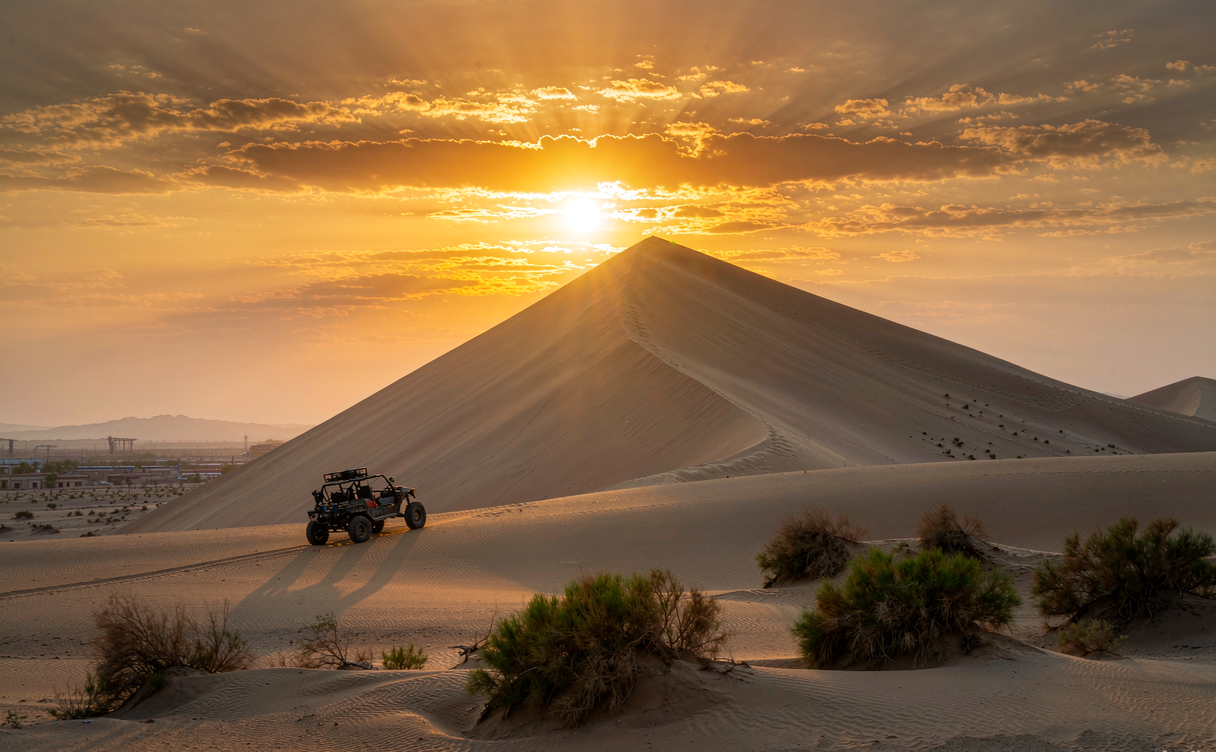
The highlight of any Alxa travel itinerary is the Badain Jaran Desert, the most dramatic of the three. Its dunes are the tallest stationary sand dunes on Earth, some rising more than five hundred meters. What makes the Alxa Badain Jaran desert strange and beautiful is water: more than a hundred spring fed lakes sit between the dunes, some fresh, some colored, some ringed with reeds and birds. Locals name the highest dune Bilutu, and climbing it is a serious workout, but the view over a sea of red gold sand and blue water is unforgettable. The desert is also famous for its singing sands, a low hum that rises when wind moves the grains across the crest.
Getting around Badain Jaran means hiring a four by four with a local driver, because the sandy tracks are not for ordinary cars. Most trips start from Alxa Right Banner, where you organize permits, fuel, and a guide. A typical loop runs two or three days, sleeping in simple guesthouses or camping under extraordinary stars. Our Badain Jaran Desert guide covers the practical details of entering the reserve and choosing which lakes to visit.
The lost cities of this Alxa travel guide sit in Ejina Banner, far to the north. Khara Khoto, the Black City, was a thriving Tangut Western Xia settlement on the Silk Road until it was abandoned in the fourteenth century and buried by drifting sand. Today you can walk the crumbling walls and broken stupas and imagine the caravans that once passed through. Nearby, the ruins of Juyan Lake and scattered watchtowers tell the same story of a green oasis that turned to desert.
Getting to the Black City is part of the adventure. Most travelers join a day tour from Ejina town, a drive of roughly an hour across flat Gobi studded with ruins. A small on site museum displays Tangut scriptures and pottery recovered from the site, and a walking path circles the outer wall so you can see how the sand has climbed the western ramparts. Go in the late afternoon if you can, when the low sun turns the mud brick a deep terracotta and the silence of the place is most apparent.
The same corner of Ejina holds one of China’s great autumn spectacles, the Populus euphratica forest. For about three weeks in early to mid October the drought resistant poplars turn the oasis a furious gold against the blue sky. It is the single best reason to time your Alxa travel itinerary for autumn, and the crowds reflect it.
Visiting the forest is straightforward once you reach Ejina town. A dedicated shuttle bus runs from the county seat to the main scenic zone, where a raised boardwalk keeps you above the fragile root system. The light is softest in the early morning and again just before sunset, when the water reflects the trees in copper and gold. Bring a telephoto or a wide lens, because the groves stretch for kilometers and the scale is hard to capture. During the festival the zone is busy, so arrive at the gate when it opens to have the best groves to yourself.
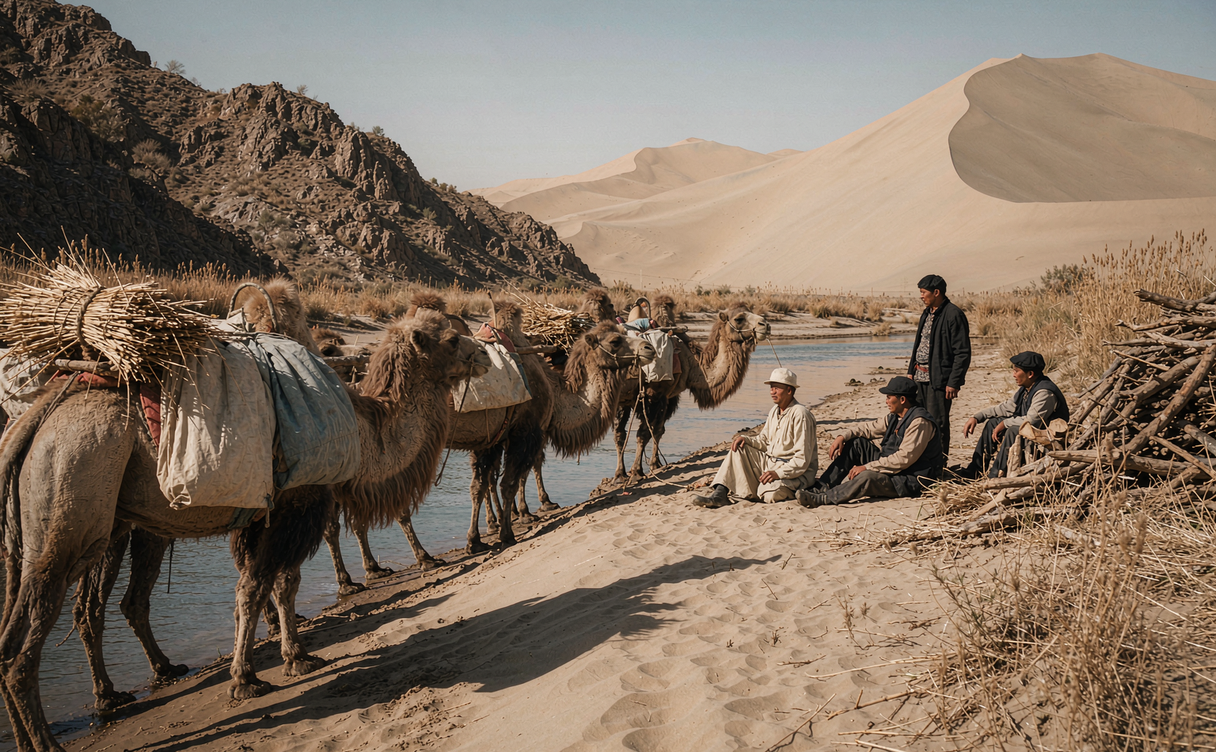
Beyond dunes and ruins, things to do in Alxa Inner Mongolia include camel trekking on the Tengger Desert, visiting Moon Lake, a crescent shaped lake inside Tengger, and exploring the Alxa Museum in Bayanhot, which explains the region’s Mongol, Tibetan, and Tangut layers. Adventure travelers can try sandboarding, desert off roading, or multi day jeep crossings toward the Gobi.
Food is a quiet highlight. This is lamb country, and a hotpot of locally grazed lamb with wild herbs is the meal to seek out. Our Inner Mongolia lamb guide walks through the dishes and where to find them across the league.
Because Alxa is dry and remote, a little preparation goes a long way. Pack a refillable bottle and drink constantly, since the desert air dehydrates you faster than you expect. A basic medical kit, lip balm, and moisturizer are worth the space in your bag. Cash is still useful in small towns and at desert guesthouses where card readers fail, so carry a few hundred yuan in small notes. Mobile coverage is good near the banners but patchy deep in Badain Jaran, so download offline maps before you leave Bayanhot.
The best time to visit Alxa depends on what you want. For the Ejina poplars, come in early to mid October and book everything well ahead, since this is peak season and accommodation is limited. For desert scenery without the crowds, late September and May are excellent, with comfortable temperatures and clear skies. Winters are brutally cold and summers ferociously hot, so both are best avoided unless you have a specific reason to go.
A realistic Alxa travel itinerary runs four to six days, two in Badain Jaran, two in Ejina for the ruins and forest in season, and a day or two around Bayanhot. Because distances are large and public transport thin, a private car or a spot on a small group tour is the practical choice. If you are driving yourself, our China road trip guide covers permits, navigation apps, and tips for remote stretches of western China.
Most international travelers fly into Yinchuan Hedong Airport, or into Lanzhou and transfer, and then make the Alxa to Yinchuan hop by car or train. Inside the league, distances between Bayanhot, the Badain Jaran entrance, and Ejina are long; Ejina is roughly a five hour drive from Bayanhot, so plan rest days. Fuel up whenever you can, because service stations thin out fast once you leave the banners.
For background on the desert’s geology and its remarkable lakes, the Wikipedia entry on the Badain Jaran Desert is a useful read before you go. It explains why so many spring fed lakes survive in such an arid place.
Bayanhot has the best range of hotels, from comfortable business properties to quiet courtyard guesthouses. In Ejina, lodging is basic but adequate, and during the October poplar festival prices spike and rooms fill, so reserve early. Inside Badain Jaran, expect guesthouses or tents. Meals center on lamb, boiled, roasted, or in hand pulled noodle soups, plus dairy snacks like dried curd. A night market in Bayanhot is the easiest place to sample several dishes at once.
An Alxa travel guide would be incomplete without a word on climate and sun. The league sits high and dry, days are intense, and nights are cold even in shoulder season. Bring layers, strong sunscreen, and more water than feels necessary. With the right timing and a patient driver, Alxa delivers a China that few foreigners ever see, one where the map runs out and the sand takes over.