

I still remember the first time I stepped off the bus at Huaqing Palace, about 30 kilometers east of Xi’an’s city wall. Steam was drifting off the warm pools, cypress trees lined the slopes of Mount Li, and for a moment I understood why Chinese emperors kept coming back here for more than two thousand years. If you want a side of Xi’an that is quieter and more intimate than the Terracotta Army crowds, this Tang imperial bath complex is the place.
Huaqing Palace, also called Huaqing Hot Springs or Huaqing Pool, sits at the foot of Mount Li in Lintong District. It has been a royal spa since the Western Zhou dynasty, but it reached its golden age under the Tang emperor Xuanzong, who built lavish bath halls for himself and his beloved consort Yang Guifei. Today you can walk the same marble channels where heated mineral water once flowed, then watch one of China’s most spectacular outdoor shows after dark.
In this guide I’ll share how I got there, what I saw, what the hot springs are actually like, and the practical tips that made my visit smooth.
Getting There from Xi’an
Huaqing Palace is roughly 30 km east of central Xi’an, in the same Lintong area as the Terracotta Army. The easiest and cheapest way I found is the Xi’an metro. Take Line 9 (the “Jiuzhouliang” line) all the way to Huaqing Pool Station (华清池站), then walk about five minutes to the entrance. The whole ride from the city center takes around 50 to 70 minutes and costs only a few yuan.
If you prefer, many tourists join a combined bus tour that links the Xi’an Terracotta Warriors visit with Huaqing Palace in a single day. That makes a lot of sense because the two sites are only about 10 minutes apart by car, and doing both on one ticket-bus saves you a lot of back-and-forth.
A taxi or ride-hailing car from downtown Xi’an costs more, usually 80 to 130 yuan depending on traffic, and can take anywhere from 40 minutes to over an hour at rush hour. I recommend going early in the morning, seeing the Terracotta Army first, and arriving at Huaqing Palace by mid-afternoon so you have daylight for the gardens and still catch the evening performance.
For broader planning, my Xi’an travel guide covers where to stay, how many days to spend, and how to string together the main sights without wasting time.
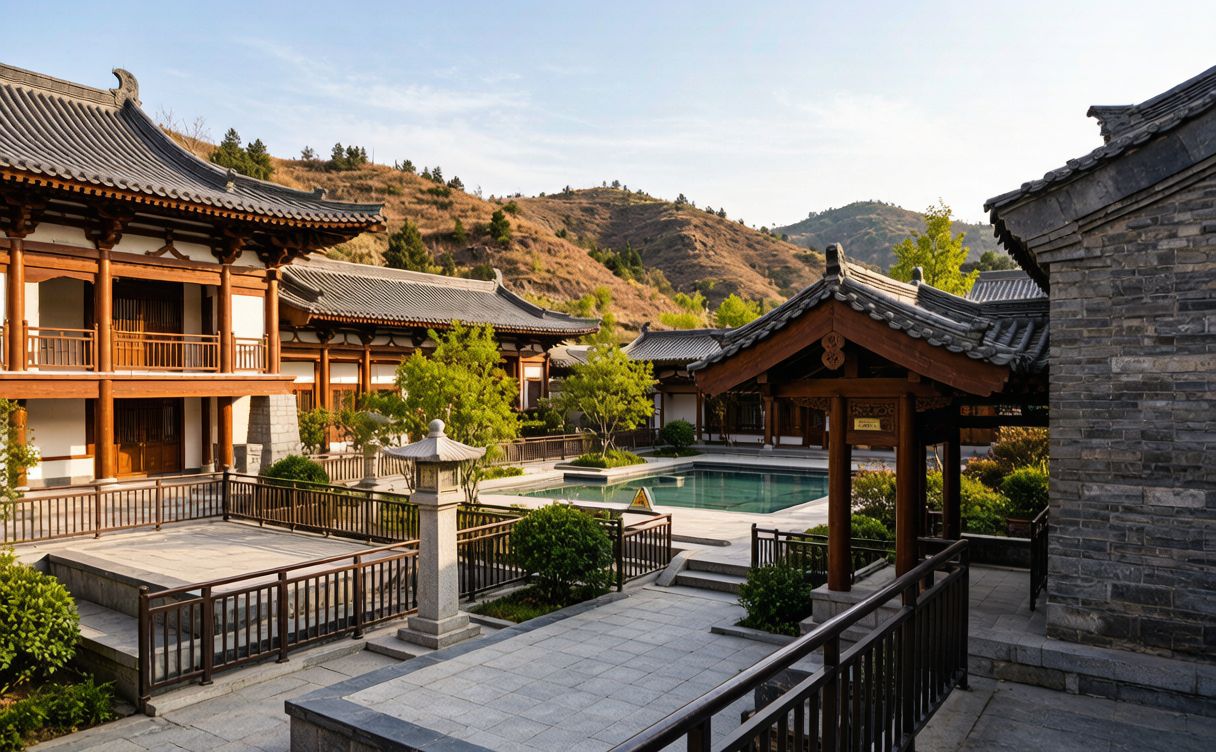
What to See
The site is a large walled garden complex, and I’d budget at least two to three hours to wander it properly. Here are the highlights that stayed with me.
The Tang Imperial Bath Relics. This is the archaeological heart of the palace. Behind glass you can see the stone foundations of the bathing pools built for Emperor Xuanzong and Yang Guifei, including the famous “Lotus Pool” shaped like a blooming flower. Standing there, I could picture the Tang court at its most opulent.
The Five-Room Hall (Wujian Ting). This modest building has a serious modern history: it was where Chiang Kai-shek stayed in 1936, and the windows still show bullet marks from the Xi’an Incident. It’s a quiet, slightly eerie corner that connects the spa’s imperial past to twentieth-century Chinese history.
The Nine-Dragon Lake. A calm artificial lake surrounded by pavilions and willows. I sat here for a while in the late afternoon; the light on the water is lovely and it’s a good spot to rest your legs.
Mount Li cable car. If your legs allow, ride up toward the summit for a panoramic view over the whole Lintong basin. On a clear day you can see the terraced hills rolling away, and the air is noticeably cooler than down in the courtyards.
The complex is well signed in both Chinese and English, and the paths are mostly flat and stroller-friendly, which made it easy for me to move at my own pace.
The Hot Springs
Now to the part everyone asks about: can you actually bathe in the hot springs? The original Tang imperial bath halls are preserved as relics and are not for soaking. However, the mineral spring water is still flowing, and the modern spa attached to the scenic area lets visitors enjoy it.
The water here emerges at around 43°C and is rich in minerals like fluoride and radon, which locals believe are good for the skin and joints. I booked a private indoor pool session at the on-site hot spring hotel for about two hours. The water was silky and warm, the steam rose gently around me, and after a long day of walking it was exactly the reset I needed. Public outdoor pools are also available and cheaper, but they get busy on weekends and holidays.
A few honest notes: the spring water has a faint sulfur smell, which is normal. Bring your own swimsuit and a quick-dry towel, because rentals are limited and the on-site shop prices are higher. If you want the most peaceful soak, go on a weekday morning rather than a Saturday night.
Tips
These are the small things I wish I’d known before my first visit.
- Buy tickets online in advance. During Chinese holidays the gate queues can be long. I booked through a Chinese travel app the night before and scanned straight in.
- Get the combined logic right. Huaqing Palace and the Terracotta Army share the Lintong zone, so plan them on the same day. Start with the warriors in the morning, then Huaqing in the afternoon and evening.
- Wear comfortable shoes. The gardens are large and you’ll do a lot of walking, plus some steps if you take the Mount Li cable car.
- Bring layers. Daytime can be warm, but the evening show is outdoors and the mountain air gets cool, especially in spring and autumn.
- Don’t skip the evening show. The performance “Song of Everlasting Sorrow” (长恨歌) is staged right here on the palace grounds, using the real mountainside and lake as a backdrop. I’ll say more about it below because it genuinely surprised me.
- Avoid the hard-sell shops. The corridor near the exit has souvenir stalls; polite but firm “no thanks” works fine.
If you enjoy mountain scenery, the Xi’an Hua Mountain hike is another unforgettable day trip from the same city, though it’s far more strenuous than a relaxed afternoon at Huaqing.
Best Time
Spring (April to May) and autumn (September to October) are my favorite windows. The weather is mild, the gardens are green or golden, and the evening show is comfortable to watch outdoors. Summer is hot and crowded but the hot springs feel refreshing after dark; winter is cold but far quieter, and soaking in the warm mineral water while cold air hits your face is a special experience.
I’d avoid the first week of October (National Day holiday) and the Chinese New Year period if you can, because domestic crowds are at their peak. A normal weekday in late April gave me short lines and plenty of space to enjoy the pools.
Good to know: For official opening hours, ticket prices, and the current performance schedule, check the Xi’an Culture and Tourism Bureau’s visitor information at https://www.xian-tourism.com before you go, since times shift by season and the evening show sells out on busy nights.