

The Sound of a Wok That Tells You It’s Right
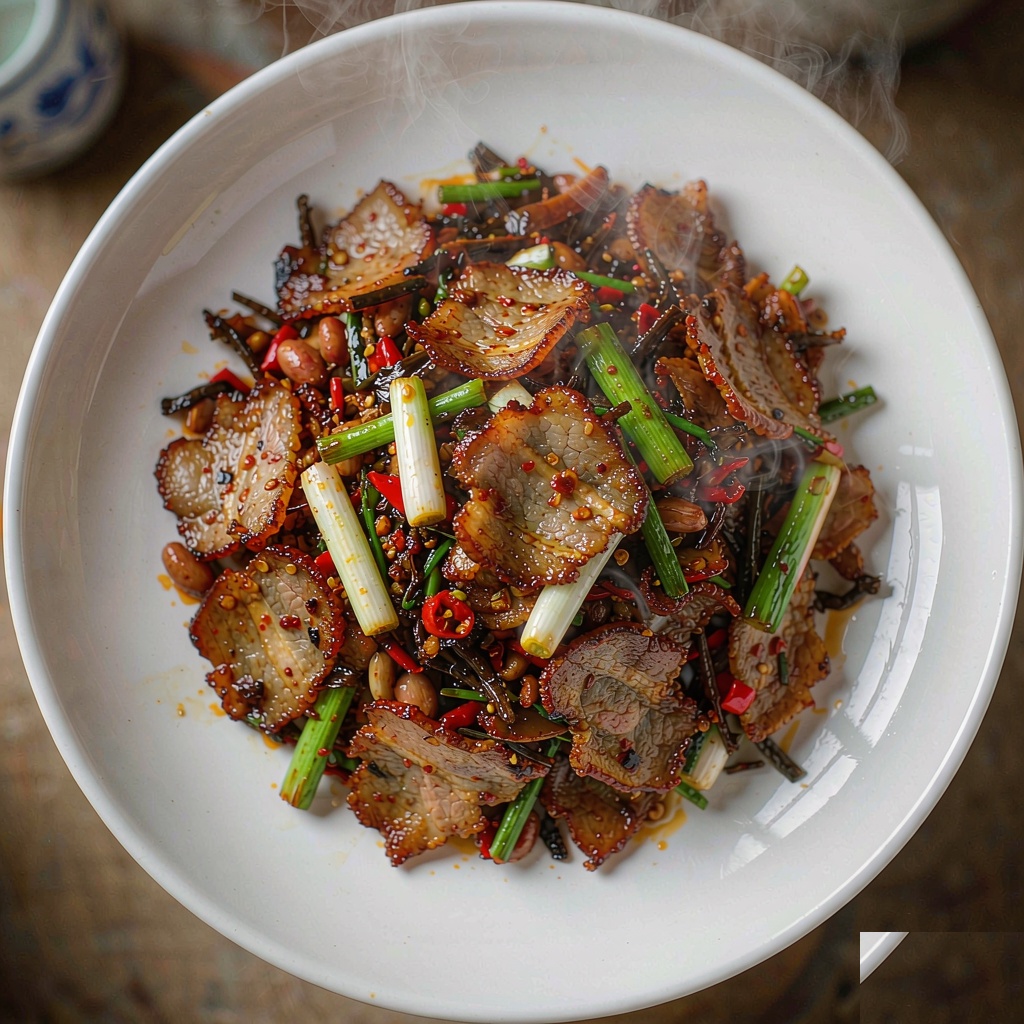
There is a moment, about forty seconds into the second frying, when the pork slices stop lying flat and begin to curl into little oil lanterns. The fat has rendered, the lean has tightened, and the edges start to sing against the hot iron. That sound — a dry, crisp sizzle rather than a wet boil — is how you know the twice-cooked pork, or 回锅肉 (huí guō ròu), is becoming itself. I have cooked this dish probably two hundred times over the years, and I still wait for that sound. Everything before it is preparation; everything after it is rescue.
If you have ever eaten in a serious Sichuan restaurant, you have almost certainly met huiguorou. It is one of the few dishes that appears on both farmhouse tables and polished city menus without changing much. The name is literal: the pork is cooked once in water, cooled, sliced, then cooked again in a wok with fermented chili bean paste, fermented black beans, and garlic sprouts. The result is not delicate. It is smoky, salty, deeply savory, and quietly spicy — the kind of food that makes rice disappear faster than you intended. What I love most is that it looks rustic but is actually a small lesson in technique. Get the first boil wrong and the meat is tough. Rush the second fry and the sauce turns soupy. Nail both, and you have a plate that any Sichuan cuisine guide would be proud to lead with.
Why Two Cooks Are Better Than One
The genius of the dish is in the name. Boiling the pork belly first does three things. It removes some of the raw pork smell, it firms the meat so you can slice it paper-thin without it falling apart, and it partially renders the fat so the second cook is about crisping and flavor rather than sweating out grease. Skipping the first cook and simply stir-frying raw pork belly gives you a completely different dish — greasier, chewier, and missing the characteristic curl that makes huiguorou instantly recognizable.
After the first cook, the pork must rest. I usually let it cool to room temperature, then chill it in the refrigerator for an hour if I have time. Cold pork slices cleanly. Warm pork smears. The ideal slice is two to three millimeters thick — thin enough to curl, thick enough to keep a little bite. I cut against the grain, which gives the finished dish that tender, almost layered texture when you bite through a curl.
What You Actually Need in the Kitchen
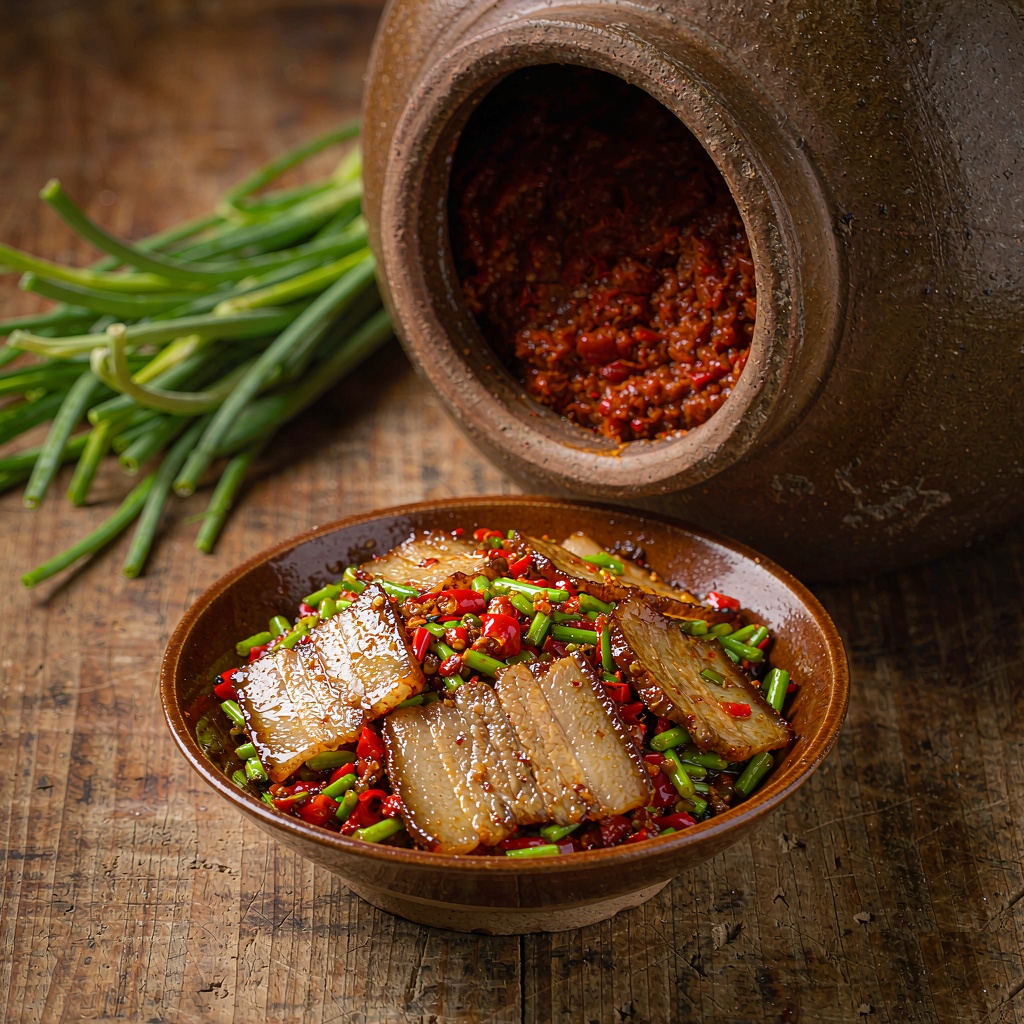
This is not a dish that demands rare ingredients, but it does demand the right ones. The two non-negotiables are Pixian doubanjiang — the fermented broad-bean chili paste from Pixian, Sichuan — and garlic sprouts (蒜苗, suàn miáo). Without them, you are making something else entirely. You can find Pixian doubanjiang in any decent Chinese grocery; look for a red label with whole fermented beans still visible. The cheap smooth versions work in a pinch, but the chunky, aged ones give a deeper color and flavor.
- 500 grams pork belly, skin-on, in one piece
- 2 tablespoons Pixian doubanjiang
- 1 tablespoon fermented black soybeans (豆豉, dòuchǐ), rinsed and lightly crushed
- 2 stalks garlic sprouts, cut into 5-centimeter sections, white and green parts separated
- 1 mild green chili or 1 small green bell pepper, cut into strips
- 2 cloves garlic, sliced
- 2 slices fresh ginger
- 1 tablespoon Shaoxing cooking wine
- 1 teaspoon dark soy sauce
- 1 teaspoon sugar
- 1 tablespoon neutral oil for frying
- Water and a little salt for the first boil
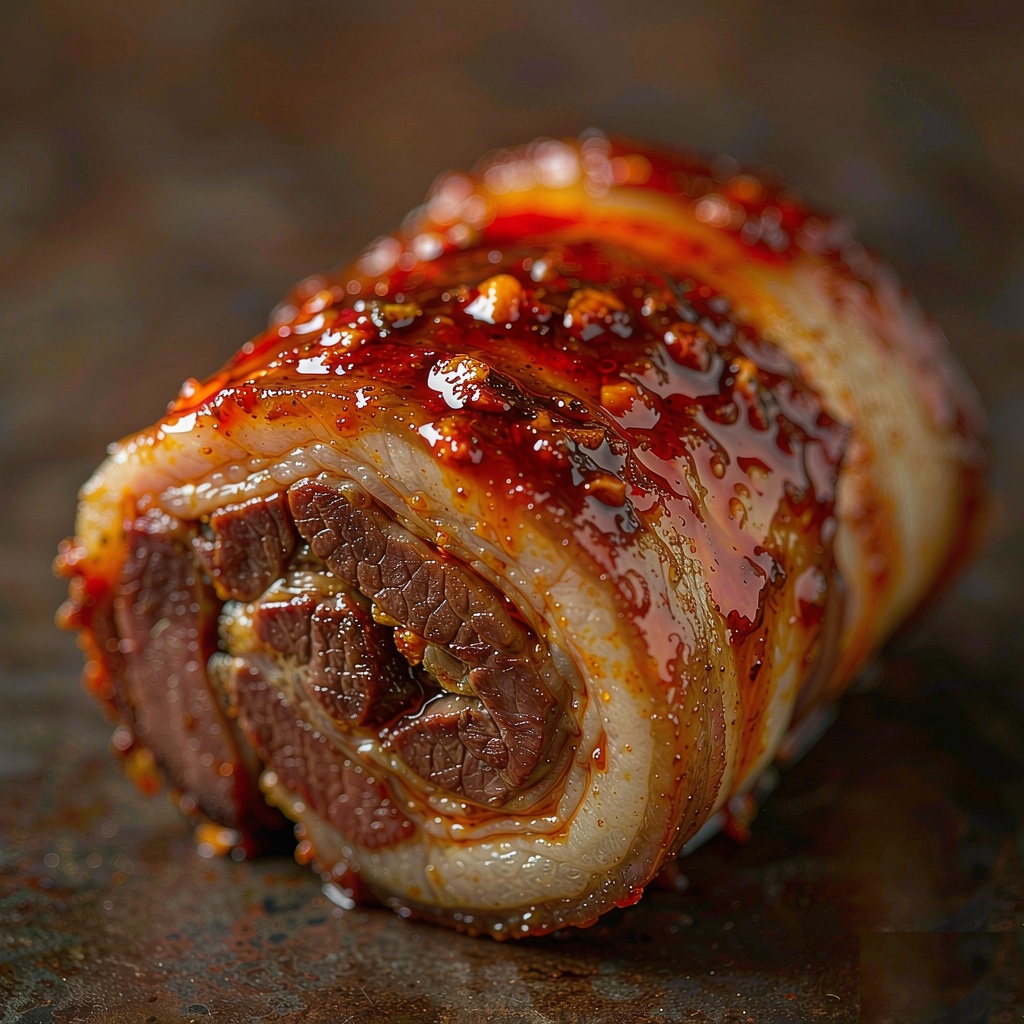
The pork belly is the star, so buy the best you can. A piece with even layers of fat and lean will curl more beautifully and eat more pleasantly than a slab that is mostly fat or mostly meat. The skin holds the slice together during both cooks, so leave it on until the end; if you strongly dislike skin, you can remove it after boiling but before slicing.
The Method, Step by Step
Read the whole sequence before you start. The second cook moves fast, and you will not have time to measure ingredients while the wok is screaming.
1. Boil the pork belly. Put the whole piece of pork belly into a pot of cold water. Add two slices of ginger and a small pinch of salt. Bring the water to a gentle boil over medium heat, then reduce to a low simmer. Skim off the gray foam that rises in the first few minutes. Let it simmer for 20 to 25 minutes, depending on thickness, until a chopstick can pierce the center with only slight resistance. You want it just cooked, not falling apart. Lift it out and let it cool completely. If you have an hour, refrigerate it. If not, let it sit until at least lukewarm.
2. Slice the pork. Once cold, cut the belly into slices two to three millimeters thick. Cut against the grain so the slices hold their curl. Lay them out on a plate and set them near the stove.
3. Prep the aromatics. While the wok heats, rinse the fermented black beans briefly to remove excess salt, then crush them lightly with the back of a spoon. Cut the garlic sprouts, keeping the white bulbs separate from the green leaves because they take different times to cook. Slice the garlic and ginger.
4. Render the pork. Heat one tablespoon of oil in a well-seasoned wok or a large carbon-steel pan over medium-high heat. Add the pork slices in a single layer and let them sit for fifteen seconds before stirring. As the fat renders, the slices will begin to curl and the edges will brown. This should take three to four minutes. You are not deep-frying; you want color and curl, not crisp chips. Once the oil has turned slightly red and the pork looks shrunken, push the meat to one side of the wok.
5. Build the sauce. In the cleared space, add the doubanjiang. Fry it for thirty seconds until the oil separates and turns a deep brick red. Add the crushed black beans, garlic, and ginger. Stir them into the paste for another fifteen seconds. The aroma should hit you now — fermented, spicy, and warm.
6. Add vegetables. Toss the pork back through the sauce, then add the white parts of the garlic sprouts and the green chili. Stir-fry for thirty seconds. Add the Shaoxing wine around the edge of the wok, then the dark soy sauce and sugar. Finally, add the green parts of the garlic sprouts. Stir-fry for fifteen to twenty seconds more, just until the green parts wilt slightly but still have color. Do not overcook them; they are supposed to stay bright and crisp.
7. Serve immediately. Pile the pork onto a warm plate. The slices should be glossy, curled, and mixed with bright green garlic sprouts. There should be very little pooled liquid. If there is, your heat was too low or you added too much wine at once.
How to Know You’ve Nailed It
A good huiguorou announces itself before you taste it. The slices curl like small cups, the fat is translucent and tender, and the lean is just firm enough to offer resistance. The sauce clings rather than pools. The garlic sprouts still snap a little between your teeth. The flavor should be salty first, then savory from the fermented beans, then warm from the chili, with a faint sweetness from the sugar rounding off the edges. It should not be overwhelmingly spicy unless you have deliberately added extra chili. Traditional huiguorou is more about fragrance and depth than raw heat.
Who This Dish Is For — and Who Should Skip It
Huiguorou is for people who want big flavor without restaurant-level technique. It suits home cooks who are comfortable with a hot wok and who appreciate the funk of fermented ingredients. It is ideal for anyone learning Sichuan cooking at home because the skills transfer directly to mapo tofu, dry-fried green beans, and several other classics. If you are putting together a Chengdu food guide for visiting friends, this is the dish I would tell them to order first.
That said, it is not for everyone. Because it is pork belly, the fat content is high. People with gallbladder issues, those managing cholesterol, or anyone on a very low-fat diet should avoid it or eat only a small portion. The doubanjiang and douchi are both salty, so anyone watching sodium intake should be careful. It contains gluten only if your particular brand of fermented paste includes wheat, so celiac diners should check the label. It is also pork-based, so it is not suitable for Muslim, Jewish, Hindu, or vegetarian diets. If you are sensitive to spice, use a mild doubanjiang and remove the seeds from the green chili.
A Few Real Variations Worth Trying
In Sichuan itself, the argument over the “correct” green vegetable is serious. Purists insist on garlic sprouts. Others prefer qing suan jiao, a flat green Sichuan pepper leaf that is hard to find outside the province. Some home cooks use cabbage or celery when garlic sprouts are out of season. I have eaten excellent versions with all three, though garlic sprouts remain my favorite.
In some Chengdu restaurants, chefs add a small spoonful of tianmianjiang, sweet wheat paste, to deepen the color and add a dark caramel note. This is not traditional everywhere, but it is delicious. In Hunan, a similar dish appears with more fresh chili and less fermented paste, leaning hotter and less savory. If you want to understand how huiguorou fits into the broader story of the regional cuisines of China, comparing Sichuan and Hunan pork stir-fries is a useful place to start.
One more practical note: if you cannot find skin-on pork belly, pork shoulder with a good fat cap works, though it will not curl as dramatically. And if your finished dish is too salty, reduce the doubanjiang next time and compensate with a little extra sugar and soy sauce. Fermented pastes vary enormously in saltiness, so the first time you use a new brand, treat it as a calibration batch.
Why I Still Cook It
Twice-cooked pork is not a showpiece. It will never be plated with tweezers or served as a single bite. But it is one of the most honest dishes I know. It rewards patience, punishes carelessness, and tastes like the place it comes from. If you get the boil right, the slice right, and the second fry right, the wok will tell you. The slices will curl, the sauce will cling, and the first bite will remind you why Sichuan cooking has lasted so long. Serve it with plain white rice, a small bowl of clear soup, and nothing else. It does not need anything else.