

I still remember the morning I first walked through the gate of Hanshan Temple. I had spent two days in Suzhou chasing gardens — the grand ones, the famous ones — and I was beginning to feel like I had seen every polished rock and every crooked bridge the city could offer. Then I heard a bell. It was low and unhurried, the kind of sound that seems to land somewhere behind your ribs before you even understand what it is. That bell pulled me toward Hanshan Temple (寒山寺), and it is the reason I tell every traveler I meet to put this place on their Suzhou list.
Getting There
Hanshan Temple sits on the western side of Suzhou, just outside the old city walls near the Fengqiao (Maple Bridge) area, about 5 kilometers from the historic center. I took a taxi from Pingjiang Road, and it was a smooth twenty-minute ride that cost less than a fancy coffee back home. If you prefer public transport, Suzhou’s buses are frequent and cheap; several lines stop within a short walk of the temple, and the ride gives you a nice window into everyday Suzhou life — older neighbors heading to morning markets, students on scooters, the slow hum of a city that knows how to take its time.
Coming from elsewhere in the region is easy too. Suzhou connects to Shanghai by high-speed train in under half an hour, and once you are in the city, Hanshan Temple is a natural half-day stop alongside the canals. I often pair it with a slower afternoon wandering the old streets. If you are building a longer route through the region, our Suzhou travel guide lays out how to chain these spots together without wasting a single hour in transit.
One practical note: the temple is popular, but the crowds thin dramatically if you arrive right at opening. I learned this the hard way on a later visit when I showed up at noon and shared the bell tower with a tour group that had clearly all read the same guidebook. Go early, and you get the silence the place was built for.
What to See
The first thing you notice is that Hanshan Temple is not one postcard-perfect hall but a cluster of them, layered around courtyards and small gardens. I wandered without a plan and that turned out to be the right move. The main hall, the Hall of Heavenly Kings, and the scripture library each have their own quiet character.
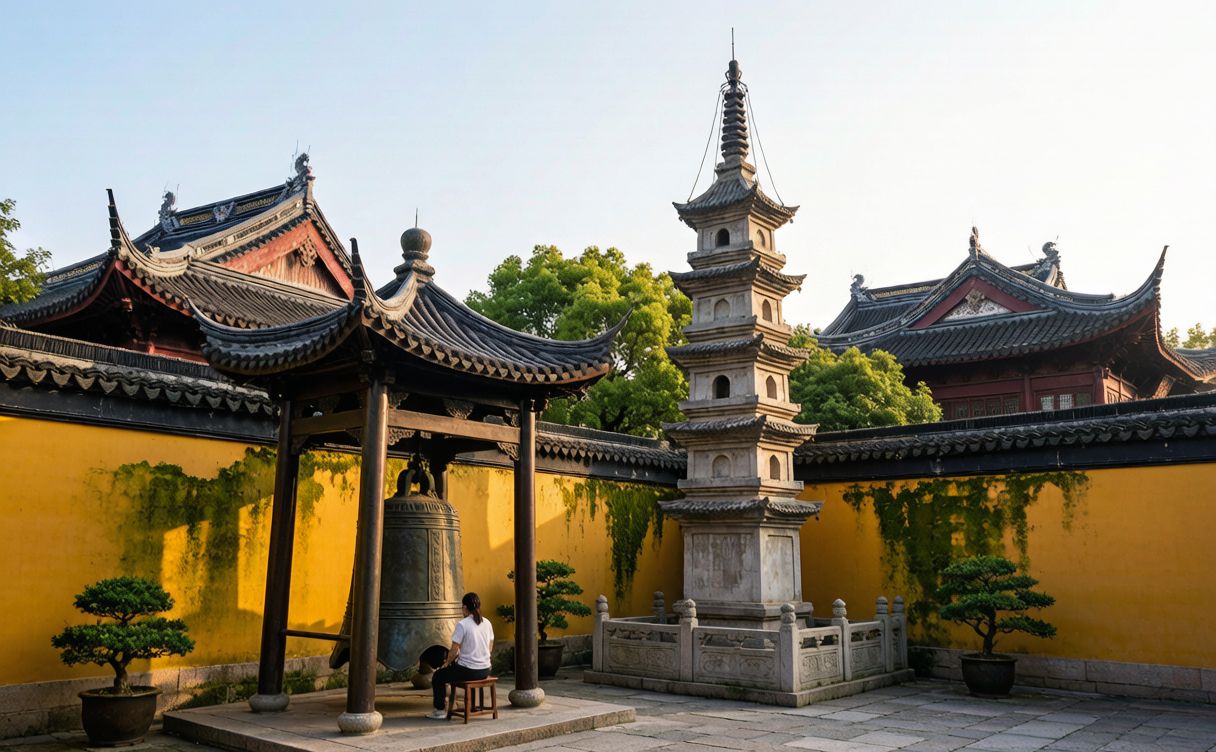
What surprised me most was the scale of the bell culture here. There is a giant cast bell in its own tower, and the sound carries across the temple grounds in a way that makes even a casual visitor stop and listen. Beyond the bell, the temple keeps a collection of stone steles — carved stone tablets — including famous inscriptions of the poem that made this place legendary. I am no calligrapher, but standing in front of those worn characters gave me a real sense of how many centuries of visitors have stood exactly where I was standing.
The gardens are smaller and more intimate than Suzhou’s headline classical gardens, but that is part of the charm. Where the Humble Administrator’s Garden overwhelms you with sprawling beauty, Hanshan Temple offers pockets of calm — a pond, a rockery, a bench in the shade where you can simply sit. I sat there for a long time, and nobody hurried me.
If you enjoy this style of temple-and-garden pairing, the Suzhou Lion Grove Garden is close enough to fill the same day without feeling like a checklist.
The Bell & The Poem
Here is the story that makes Hanshan Temple more than just another pretty temple. In the Tang dynasty, a poet named Zhang Ji spent a night moored near the Maple Bridge. He could not sleep — perhaps the journey, perhaps the loneliness of travel — and he wrote a short poem. In it, he hears the bell of Hanshan Temple striking in the night. That poem, “Night Mooring at Maple Bridge” (枫桥夜泊), became one of the most beloved works in Chinese literature, and it turned a local temple into a name known across the country for over a thousand years.
I had read the poem in translation long before I came, but standing there, I finally understood why it stuck. The bell is not just noise; it is a marker of stillness, of a traveler pausing in the dark and finding something to listen to. The temple leans into this beautifully. There are exhibits explaining the poem, and the bridge itself is a short walk away if you want to see the water Zhang Ji described.
The bell also has a living tradition. On New Year’s Eve, the temple rings its bell 108 times, a custom many visitors travel specifically to witness. I have not yet made it for that night, but it is high on my list, and locals told me the atmosphere is unlike anything else — cold air, lantern light, and a bell counting down the year.
Tips
- Arrive at opening for the quietest experience and the best light for photos.
- Wear comfortable shoes; the grounds are flat but you will do a fair bit of wandering.
- Bring small cash or a payment app for incense and small offerings, though entry is straightforward.
- Pair it with a nearby garden or the canal streets to make a full, relaxed day.
- Read the poem before you go. Even a quick translation changes how you hear that bell.
- If you want deeper context on Suzhou’s temple-and-garden culture, our China travel guide for first timers covers etiquette and what to expect at religious sites.
Best Time
Suzhou has four real seasons, and each gives Hanshan Temple a different mood. I visited in spring, when the light was soft and the courtyard trees were just leafing out — perfect. Autumn is arguably the best, with clear skies and comfortable temperatures that make the walk to the Maple Bridge genuinely pleasant. Winter is cold but uncrowded, and there is something fitting about hearing the bell on a crisp morning. Summer is hot and humid, so go early and bring water.
If your trip overlaps New Year, the New Year’s Eve bell ringing is the signature event. Otherwise, a weekday morning in spring or autumn is my personal sweet spot.
Good to Know
Hanshan Temple is an active Buddhist temple, so dress modestly and keep your voice low in the halls. Photography is generally fine in the open courtyards, but be respectful where signs ask otherwise. Allow two to three hours if you want to read the steles, sit in the gardens, and soak up the atmosphere rather than rushing through.
For official visiting information, hours, and any seasonal events, check the temple’s own site: Hanshan Temple. I found it useful for confirming the bell-ringing schedule before planning a return trip.