

In a narrow Shanghai kitchen, the scallions go into cold oil, not hot. That is the first thing anyone who grew up in the city will tell you, and it is the detail that separates a real bowl of cong you ban mian from a plate of greasy noodles with a few green bits scattered on top.
I learned it from a neighbor in a longtang lane house off Huaihai Road, a retired teacher who kept a chipped enamel pot on the lowest flame for what felt like half an hour. She cut a whole bundle of scallions into lengths, slid them into cool oil, and then did almost nothing — just nudged them every few minutes until they turned the color of dark tea and went crisp. The smell climbed the stairwell. By the time the noodles were boiled, half the building knew what was for lunch.
Scallion oil noodles are the opposite of impressive cooking, which is exactly why they work as a test. Four ingredients, one pan, and nowhere to hide. Get the oil right and you have something quietly addictive; rush it and you have a bowl of oil with a burnt aftertaste.
What Cong You Ban Mian Actually Is
Cong you ban mian — usually written as scallion oil noodles in English — is a Shanghainese dish of boiled thin wheat noodles tossed with scallion-infused oil and a soy-based sauce, then finished with the crisp fried scallions themselves. The word ban means “to toss” or “to mix,” and that is the whole technique: no wok, no stir-fry, no ladle of stock. The noodles go into a bowl, the oil and sauce go on top, and you mix until every strand is glossy.
It belongs to Shanghai’s benbang cuisine, the home-grown cooking of the city rather than the banquet traditions imported from elsewhere. Benbang food is sweet, soy-forward and frugal, built on the idea that a handful of good ingredients handled patiently beats a long shopping list. Scallion oil noodles are the purest expression of that idea, and for much of the twentieth century they were ordinary lane-house food — a cheap, fast lunch that cost almost nothing because scallions were the one thing every household had.
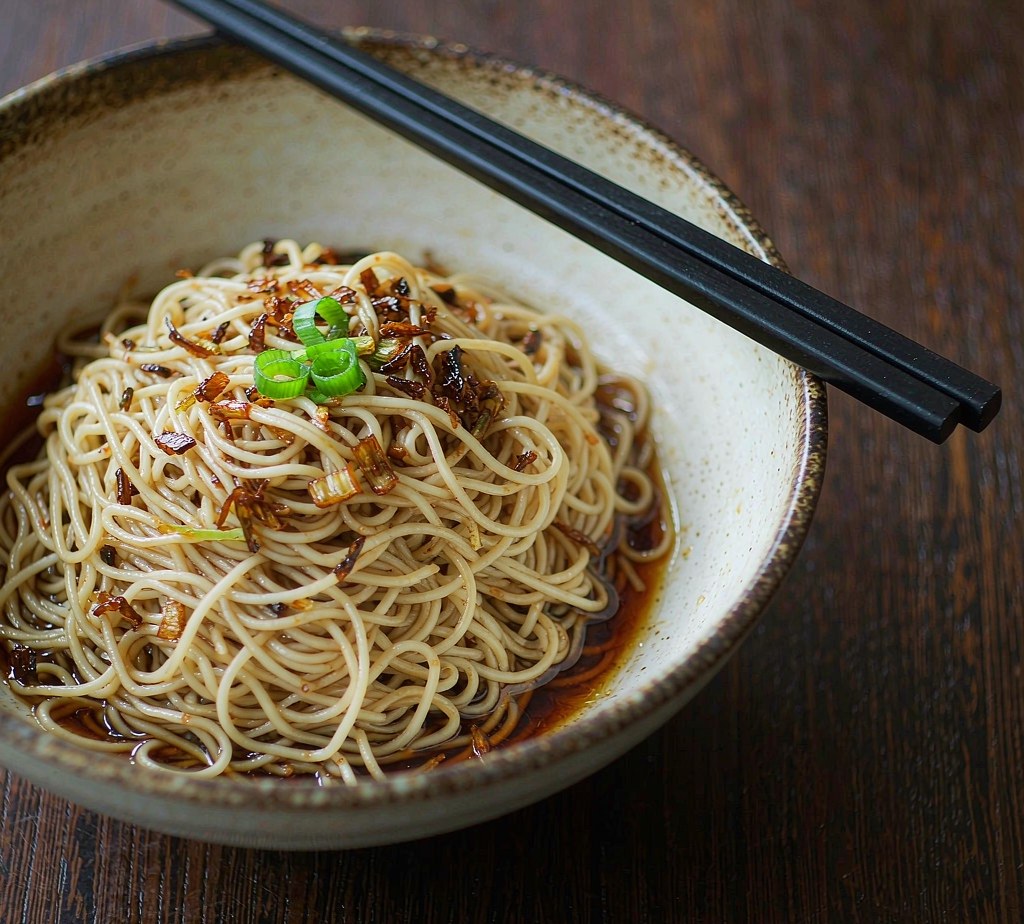
What surprises most first-timers is how much flavor comes out of so little. The scallions are not a garnish here; they are the entire point. Frying them slowly pulls their sweetness into the oil and turns the green stalks into something crunchy and almost caramelized. The soy and sugar round it out, and the noodles carry it. There is no chili, no garlic, no ginger — and it does not need any.
What Scallion Oil Noodles Taste Like
The first impression is aroma, not heat. Scallion oil has a deep, roasted, almost nutty sweetness that hits before the noodles are even in your mouth, and it lingers in the back of the throat in a way that plain sesame oil never does. Then comes the soy: savory, faintly sweet from the sugar, and just salty enough to make you want the next bite. The noodles themselves are springy and slightly alkaline, so they push back a little when you chew.
It is a rich dish, but not a heavy one. The oil coats rather than drowns, and a good bowl leaves the bottom of the bowl nearly dry once you have finished tossing. If your noodles are sitting in a puddle, the ratio was off.
Scallion Oil Noodles Ingredients (and the Amounts That Matter)
The quantities below make two generous bowls. Everything is scalable, and the only thing worth measuring carefully is the scallion-to-oil ratio — roughly equal weights of scallion and oil is the traditional starting point, and it is far more scallion than most recipes suggest.
- Fresh thin wheat noodles — 300 g (about 150 g per person). Shanghai-style thin noodles are ideal; dried thin wheat noodles work if fresh are unavailable.
- Scallions — 150–200 g, about 8–10 fat stalks. Use the whole thing: white parts for the oil, green tops for the finish.
- Neutral oil — 150 ml. Soybean, rapeseed or corn oil all work. A tablespoon of lard added to the pan gives the older, richer taste.
- Dark soy sauce — 2 tablespoons, for color and depth.
- Light soy sauce — 2 tablespoons, for salt and freshness.
- Sugar — 1 to 2 teaspoons, to taste. This is not optional in the Shanghai version; it is what makes the sauce taste round instead of flat.
- Optional: a small handful of dried shrimp (kaiyang), soaked and fried with the scallions, or a single star anise dropped into the oil for a warmer aroma.
That is the entire shopping list. No stock, no wine, no aromatics beyond the scallion itself. If you are used to cooking Chinese food with a dozen bottles on the counter, this will feel suspiciously bare — and that is the point.
Who Scallion Oil Noodles Suit — and Who Should Skip Them
This is a near-perfect weeknight bowl. It takes about twenty-five minutes, most of which is hands-off frying, and it costs very little. It suits anyone cooking for one, anyone feeding children who do not want heat, and anyone traveling in China who wants to eat like a local rather than order from a picture menu.
It is also naturally vegetarian and can easily be vegan: use a neutral oil instead of lard, skip the dried shrimp, and check that your soy sauce has no animal derivatives (most do not). For a meat-free meal that still feels rich, it is hard to beat.
Who should skip it? Anyone on a gluten-free diet, because the dish is built on wheat noodles and there is no convincing substitute — rice noodles change the texture completely. Anyone watching sodium should halve the soy and taste as they go. And anyone counting calories should know that the oil is not a light drizzle; it is the sauce. This is not a low-fat dish, and pretending otherwise misses what makes it good.
How to Make Scallion Oil Noodles at Home, Step by Step
The method is simple but the order matters. The oil takes the longest, so start it first and boil the noodles only when the scallions are nearly done.
- Step 1 — Prep the scallions. Rinse and dry them thoroughly; water in hot oil spits. Cut off the roots, then slice into 5 cm lengths. Keep the white and pale-green parts separate from the dark green tops.
- Step 2 — Start cold. Put the oil and the white and pale-green scallion lengths into a cold saucepan or small wok. Turn the heat to low. Starting cold is what lets the scallions release their moisture slowly instead of scorching.
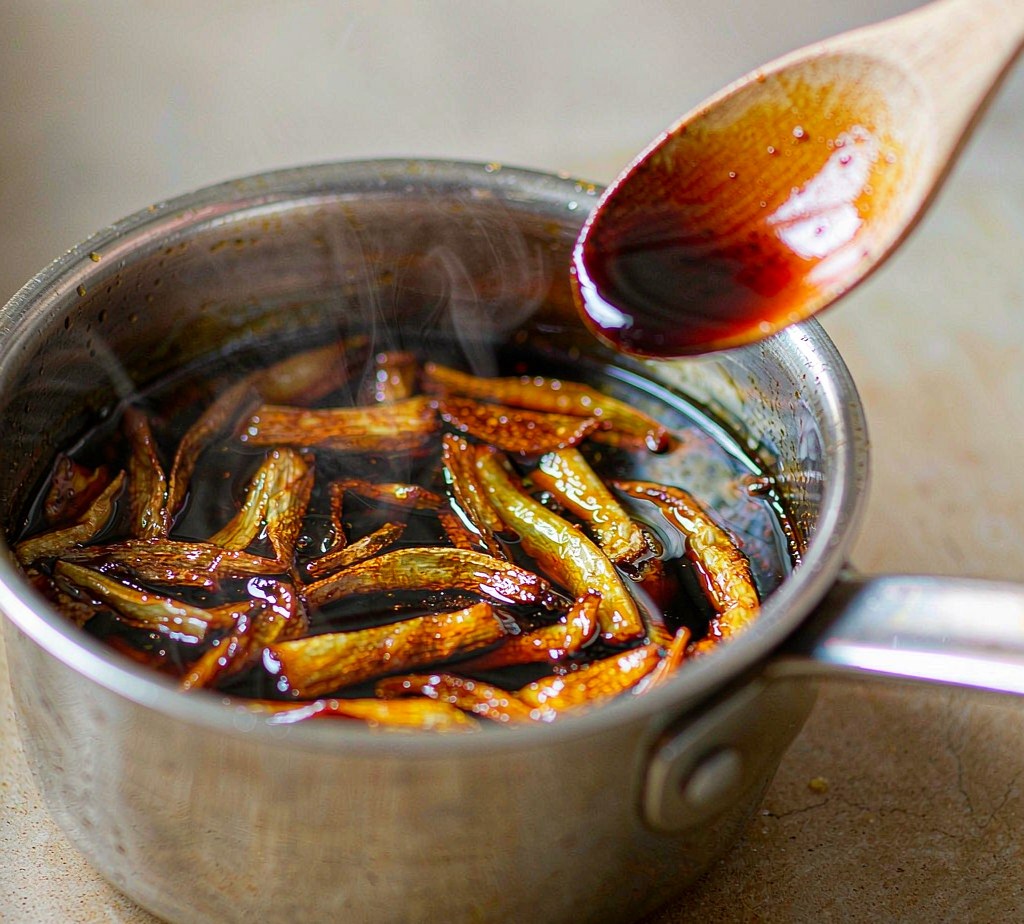
- Step 3 — Fry low and slow. Let them bubble gently for 10 to 15 minutes, nudging occasionally. They will shrink, darken to a deep tea-brown, and turn crisp. If they are browning in under five minutes, the heat is too high — pull the pan off, lower the flame, and continue.
- Step 4 — Add the green tops. In the last two minutes, add the dark green lengths. They need only a brief fry; they will crisp faster than the whites.
- Step 5 — Lift out the scallions. Scoop the crisp pieces onto a plate with a slotted spoon and keep them for the topping. Pour the hot oil into a heatproof bowl, leaving any grit behind.
- Step 6 — Mix the sauce. In a small bowl, stir together the dark soy, light soy and sugar until the sugar dissolves. Taste it: it should be savory with a clear sweet edge. Add a splash of the hot scallion oil to loosen it.
- Step 7 — Boil the noodles. Bring a large pot of water to a rolling boil. Cook the noodles according to the packet, usually 2 to 3 minutes for fresh thin noodles. Do not overcook them; they should still have a little bite.
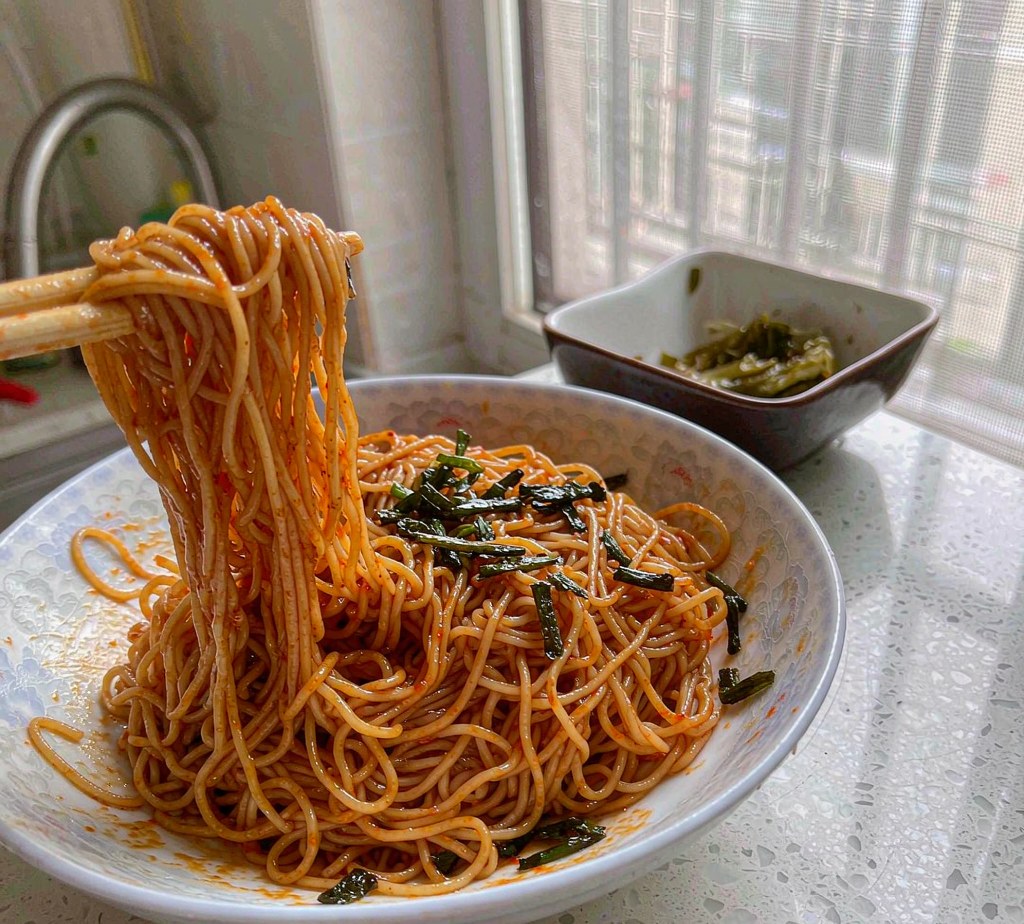
- Step 8 — Drain and toss immediately. Drain well, shake off excess water, and divide between warmed bowls. Add 2 to 3 tablespoons of scallion oil and 2 tablespoons of sauce per bowl, then toss hard with chopsticks until every strand is coated. Top with the crisp scallions and a few fresh green rings, and eat at once.
A note on the sauce-oil ratio: start with slightly less than you think you need. You can always add another spoonful of oil, but you cannot take it out. The goal is a bowl that looks glossy and smells like a scallion field, not one that leaves a slick on your lips.
Scallion Oil Noodles Tips and Regional Variations
The single biggest mistake is frying the scallions too fast. High heat browns the outside before the inside has given up its sweetness, and the oil turns bitter. Low and slow is not a suggestion; it is the recipe. The second mistake is skimping on scallions. If your pan looks crowded, that is correct.
Noodle choice matters more than people expect. Shanghai-style thin wheat noodles are slightly alkaline, which gives them a firm, springy bite that holds up to the oil. Wider or thicker noodles absorb too much and go soft. If you can only find dried noodles, choose the thinnest wheat noodles you can and cook them a shade under.
Across the region, the dish shifts in small ways. In Suzhou and parts of Zhejiang, dried shrimp are fried with the scallions for a brinier, more luxurious version, and some cooks add a little lard for body. In Taiwan, scallion oil noodles tend to use thicker noodles and a touch more sugar. At home, a pinch of chili flakes in the oil is a common modern shortcut, though purists will tell you it turns the dish into something else entirely.
For travelers, this is one of the great cheap meals in China: a bowl at a neighborhood shop in Shanghai typically runs 12 to 25 yuan, and it is often eaten as a quick Chinese breakfast or a mid-morning snack rather than a formal lunch. If you want to eat your way through the noodle map of the country, it sits comfortably alongside the regional Chinese noodles that define each province.
Scallion Oil Noodles: Common Questions
What do scallion oil noodles taste like?
They taste roasted and savory first, then faintly sweet, with a deep scallion aroma that is closer to fried shallots than to raw onion. There is no chili heat. The overall impression is rich, glossy and comforting rather than spicy or sour.
Are scallion oil noodles vegetarian or vegan?
Yes, in their basic form they are vegetarian, and they are vegan if you use a neutral plant oil instead of lard and leave out the optional dried shrimp. Check your soy sauce label if you are strict, but most Chinese soy sauces contain only soybeans, wheat, salt and water.
How many calories are in a bowl of scallion oil noodles?
A typical restaurant bowl lands around 550 to 650 calories, most of it from noodles and oil. A home version with a lighter hand on the oil can come in closer to 500. It is a carbohydrate- and fat-forward dish with modest protein unless you add egg or meat.
Can I make scallion oil noodles gluten-free?
Not authentically. The dish depends on wheat noodles for its springy texture, and gluten-free substitutes tend to go mushy under the oil. You can make a pleasant rice-noodle version, but it will not taste like cong you ban mian.
What is the difference between scallion oil noodles and lo mein?
Lo mein is Cantonese: thicker egg noodles, stir-fried in a wok with sauce and usually vegetables or meat. Scallion oil noodles are Shanghainese: thin wheat noodles, tossed rather than fried, with scallion oil as the dominant flavor. The scallion oil noodles vs lo mein comparison really comes down to toss versus stir-fry.
How much do scallion oil noodles cost in Shanghai?
At an ordinary neighborhood noodle shop, expect 12 to 25 yuan for a bowl — often less at a breakfast stall. Tourist-area restaurants charge more, but the dish is fundamentally cheap food, and the best versions are rarely the most expensive.
What makes this bowl worth learning is that it refuses to be faked. There is no sauce to hide behind and no stack of ingredients to distract. Just scallions, oil, soy, sugar and noodles, handled with a little patience. Once you have made it properly, the smell of scallions slowly darkening in a pan will stop being a recipe step and start being a signal that dinner is nearly ready.