

I visited Sanya Nanshan Temple (南山寺) in December 2025 because I wanted a calm, cultural half-day away from the beach clubs, and because a 108-meter bronze Guanyin standing in the sea is hard to resist photographing. The site is a large coastal cultural park on the west end of Sanya, built around a working Buddhist temple and a seaside promenade. This Sanya Nanshan Temple guide is from a full morning I spent there, with the ticket I paid and the shuttle I rode, written for travelers who want the architecture, gardens, and sea views more than a sermon.
How to visit Nanshan Temple
The park sits about 40 kilometers west of Sanya city center, near the town of Yazhou, on a headland facing the South China Sea. I took a DiDi from Yalong Bay and it ran about 50 minutes and cost RMB 110 to 140; cheaper is the tourist shuttle bus that leaves from Sanya city for around RMB 20 to 30 per seat. There is no metro this far west, so a car or bus is the realistic option. If you drive yourself or hire a driver for the day, the coastal road west is scenic and an easy add-on to a Nanshan-plus-end-of-island loop. The Sanya beach travel guide places Nanshan as a half-day cultural counterpoint to the sand, and I used it to break up three beach days with one temple morning.
The Sanya Yalong Bay guide covers where I stayed, and the temple is an easy morning trip from there before the afternoon heat builds.
Best time to visit Nanshan Temple
Winter (November to March) is the best window: Sanya sits at 22 to 28°C then, dry and sunny, and the sea is calm for the coastal walk. I went in mid-December and it was a perfect 26°C at 09:00. Spring (March to May) is also good before the summer humidity. Summer (June to August) is hot, often above 33°C, with afternoon thunderstorms, and the open park has little shade, so go early. The park opens around 08:00 and closes at 17:30; I arrived at opening and was ahead of the tour buses, which roll in after 10:00. Our China beaches guide notes Sanya’s year-round swim season, but for the temple the cool dry months are clearly kinder.
The ticket and the shuttle carts
The base ticket for Nanshan Buddhist Culture Park was RMB 129 in 2025, and I paid it at the gate with Alipay in a minute. Children under 1.2 meters enter free, and seniors with valid ID get a discount. The park is huge — several kilometers end to end — so I bought a shuttle cart pass for an extra RMB 30, which let me hop the internal electric carts between the temple, the gardens, and the sea statue. Without the cart you walk a lot on exposed paths, and in December sun that is fine but in summer it is rough. A small battery train also loops the main sights for the same add-on. The on-site vegetarian restaurant near the temple courtyard serves a buffet lunch for about RMB 58, which I tried and found simple but filling.
Things to do at Nanshan Sanya
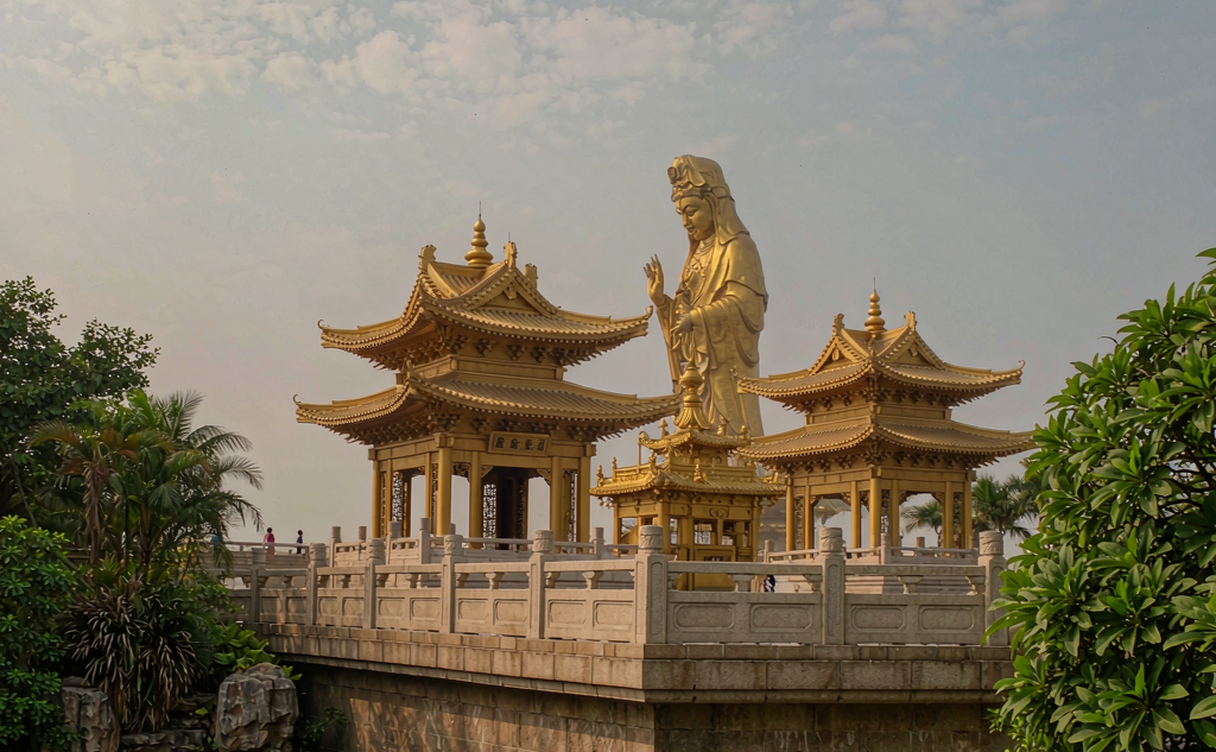
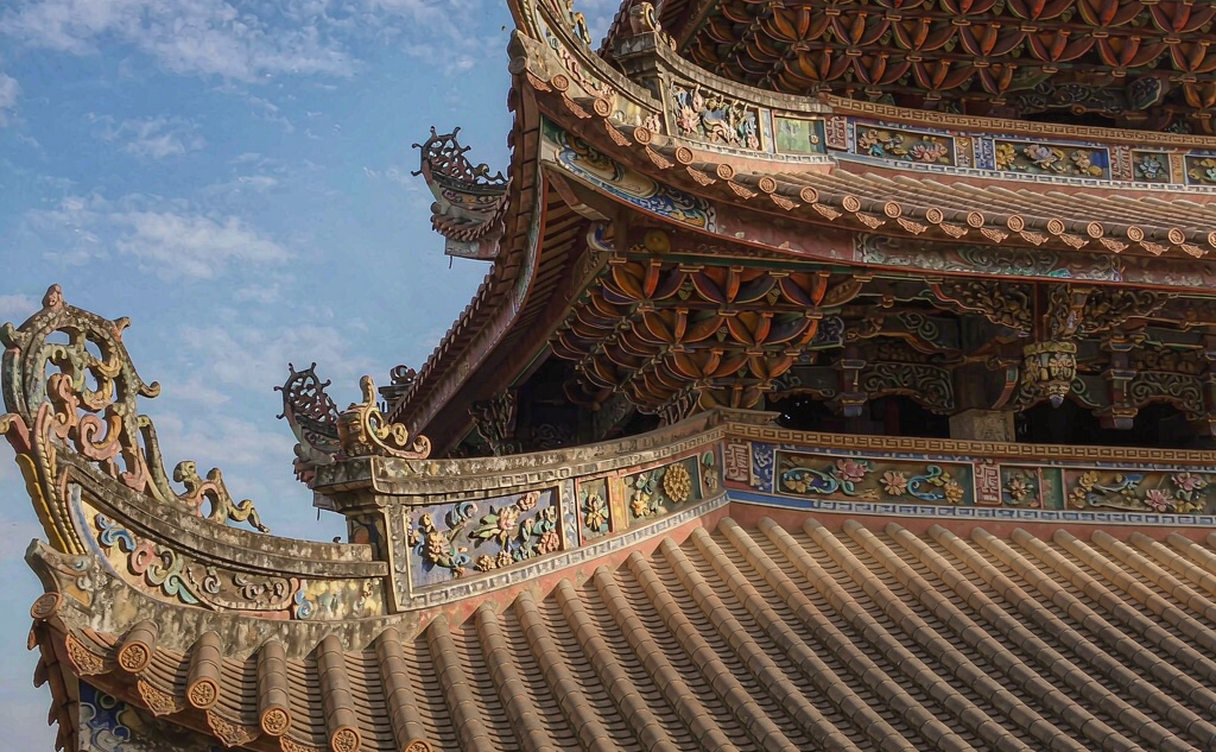
The things to do Nanshan Sanya list is longer than I expected for a “temple.” There is the main temple hall with its courtyards and golden roofs; the seaside promenade out to the Guanyin statue, crossing a bridge onto a small island; the themed gardens with lotus ponds, bonsai, and stone lanterns; and a “Buddhist culture” exhibition hall near the entrance. I spent about three hours: 40 minutes at the temple, 40 minutes walking the sea bridge to the statue base, 30 minutes in the gardens, and the rest at a tea pavilion watching the water. The park is respectful and well kept, and even as a non-Buddhist I found the scale and the sea setting quietly impressive. Visitors are asked to dress modestly and to keep voices low near the halls, which most people did.
For official hours, maps, and the current ticket price, the Nanshan Culture Tourism Zone site is the park’s own page and the most reliable source before you go.
The Nanshan Guanyin statue
The Nanshan Guanyin statue is the headline: a 108-meter bronze figure on a man-made island just off the coast, with three faces — one looking out to sea, the others facing the land — said to represent the Bodhisattva of compassion in different aspects. It was completed in the late 2000s and is among the tallest seated-statue forms in the country. You reach it by a long causeway bridge from the shore, and at the base there is a small hall where visitors can walk around the pedestal. I climbed the viewing deck for the wide sea panorama and found the statue far larger in person than any photo suggests. The seashell-and-wave motif in the surrounding plaza ties the religious art to the coast, which is what makes Nanshan distinct from inland temples.
How to visit Nanshan Temple with nearby stops
How to visit Nanshan Temple fits best as a west-coast day. After the temple, the same driver can continue to the ends of the island for quieter beaches, or you can loop back to Yalong Bay for the afternoon. The China temple stay guide explains the etiquette and the limited overnight options at working monasteries, though Nanshan itself is a day park rather than a place to lodge. If you want to soak after the walking, the China hot springs resorts guide lists resorts near Sanya where I soaked for RMB 128 to 198 an entry the evening after my temple morning. For where to sleep, the best hotels in Sanya has the Yalong Bay and Dadonghai picks I compared before booking a bay-front room for RMB 480 to 900 a night.
A Sanya temple for the curious, not the devout
As a Sanya temple, Nanshan is built for visitors: polished, spacious, and easy to read even if you know little about the faith. I appreciated that the signs explained the architecture and the sea symbolism in plain Chinese and English, so I learned without a guide. It is commercial in places — the vegetarian buffet, the souvenir stalls, the cart fees — and it is not a silent mountain monastery. But the coastal setting, the golden roofs against the blue water, and the sheer height of the Guanyin make it a genuinely memorable stop, and a cooler, calmer one than the beach at noon.
Is Nanshan worth it?
For the RMB 129 base ticket plus a RMB 30 cart, yes, if you like architecture, gardens, and big sea views and you go early. It is not worth it if you want rough wilderness or a party, and in summer heat the walk can be miserable. I came for one statue and left liking the whole park, especially the sea bridge at open. The Sanya Nanshan Temple guide I would hand a friend says: go in winter, ride the cart, and skip the afternoon. Done that way, it is one of the more unusual coastal-cultural sites in south China, and a calm break from the sand.
Nanshan Temple is Sanya’s quiet surprise: a working temple and a seaside sculpture park in one, where golden roofs meet the South China Sea. Standing on the causeway with the 108-meter Guanyin behind me and the water on both sides, I got the calm I came for without a single sermon. The Nanshan Buddhist Culture Park rewards a slow morning and a light schedule, so let the sea set the pace and the cart save your feet. Bring water, a sun hat, and a respect for the halls, and Nanshan will give you a different Sanya than the brochures show.