

Few cities on earth wear their appetite on their sleeve quite like Qingdao. Here, the sea is not a backdrop but a pantry, a rhythm, and a religion. Locals measure the seasons by the arrival of fat clams, by the first sweet prawns of the warm months, and by the frosty clink of a green bottle of Tsingtao pulled fresh from the brewery a few streets away. If you want to understand Qingdao, you do not need a museum ticket. You need a plastic stool, a steaming pot, and a cold beer.
This guide walks you through the best seafood restaurant in Qingdao, the neighborhoods that matter, the markets where the catch lands before dawn, and the simple art of Qingdao beer and seafood pairing that turns a meal into a memory. Whether you are a first-time visitor or a returning regular, the city’s boiling pots and briny plates will pull you back.
Why Qingdao Is a Seafood City First
Qingdao sits on the coast of Shandong Peninsula, where the Yellow Sea meets a long, curving shoreline of piers and coves. The cold current that runs along this coast keeps the water clean and the seafood sweet. Unlike the heavy, sauced cooking you might find inland, Qingdao’s kitchen leans on restraint: a quick boil, a light steam, a brush of garlic, a dip of vinegar. The point is to taste the ocean, not to hide it.
The cultural engine behind all of this is beer. Qingdao is home to the Tsingtao brewery, founded by German settlers more than a century ago, and the city still drinks like it remembers the recipe. Seafood and lager are not paired here so much as married. A plate of clams and a cold bottle of local beer is the closest thing Qingdao has to a national dish.
For travelers building a broader food journey across the country, our China seafood dining guide maps the regional styles from north to south, and Qingdao is one of its brightest stars.
Where to Eat: The Neighborhoods That Matter
The easiest place to start your hunt for the best seafood restaurant in Qingdao is the old town near the water. The streets around Zhanqiao Pier are tourist-friendly but genuinely good, with decades-old establishments that have fed generations of locals and visitors alike. If you are asking where to eat seafood near Zhanqiao, the answer is simple: walk outward from the pier, follow the smell of garlic and the sound of clinking bottles, and trust the crowds.
The Zhongshan Road area, just inland from the pier, mixes heritage architecture with humble seafood joints. Many of these are family-run, with tanks of live stock at the door and handwritten menus that change by the hour depending on what the boats brought in.
Then there is the Taidong night market district, a louder, younger scene where skewers of squid and clams in broth compete with the chatter of students and workers unwinding after dark. It is less polished but more alive, and the prices are gentle on a travel budget.
For a calmer, more scenic meal, head toward the areas featured in our Qingdao May Fourth Square guide, where modern waterfront promenades host upscale restaurants with sea views and polished service.
The Markets: Buy It Before You Eat It
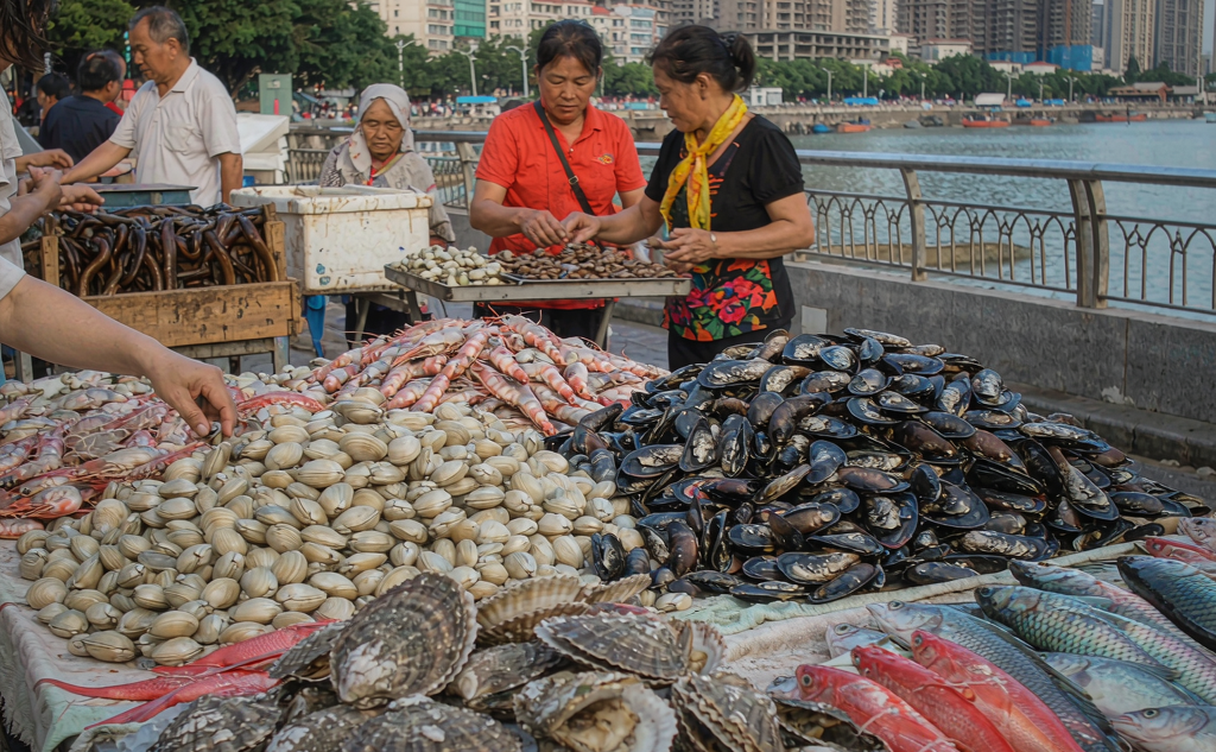
No serious Qingdao seafood restaurants conversation is complete without the markets. A proper Qingdao seafood market guide starts at morning, when the catch is freshest and the bargaining is friendliest. The largest and most famous is the Taidong and nearby coastal wet markets, where vendors lay out glistening piles of clams, prawns, crabs, sea cucumbers, and oysters on beds of ice.
The ritual most travelers love is the “buy and cook” model. You pick your live seafood from the market tanks, weigh it, pay the market price, then carry it a few doors down to a neighboring restaurant that will cook it for a small processing fee. This gives you control over freshness and price while sparing you the work of a kitchen.
Our Qingdao seafood market guide advice is straightforward: go early, bring cash, learn the approximate price per jin, and never be shy about asking the vendor to weigh it twice. The clams should smell of clean seawater, not of stagnation. The prawns should curl tightly and snap when bent.
Prices: What to Expect
One of the joys of eating here is value. A fresh clams prawns Qingdao price can be surprisingly modest compared with coastal cities in the West. A generous plate of steamed clams often costs less than a sandwich back home, and a portion of local prawns, depending on the season, lands in a mid-range bracket that still feels like a steal.
That said, Qingdao has a tourist tax in disguise. Restaurants sitting directly on the pier or with English menus sometimes mark up double. The trick is to walk two or three blocks inland, where the same meal drops in price and rises in authenticity. Locals eat where the parking lot is full of scooters, not tour buses.
For comparison shoppers, our Sanya seafood guide and Ningbo seafood food guide both show how southern and eastern Chinese coasts price their catch differently, which helps you appreciate Qingdao’s particular value.
The Beer and Seafood Pairing
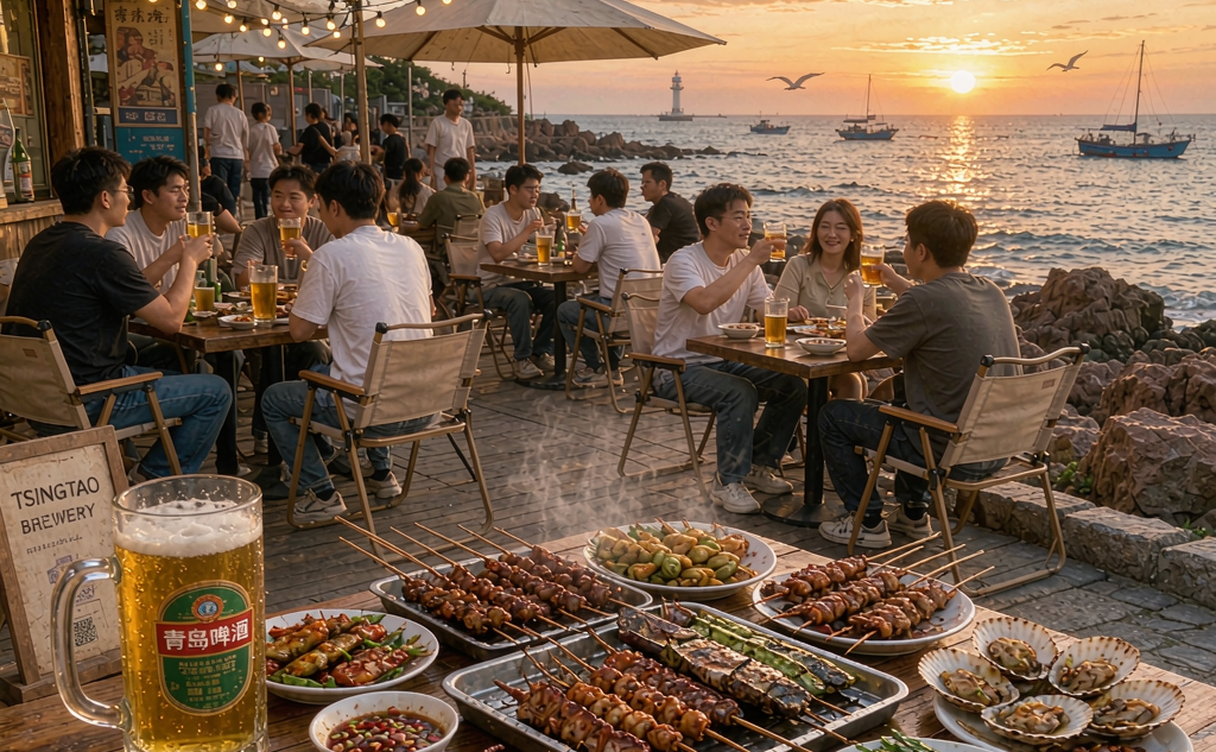
Now to the heart of it: Qingdao beer and seafood pairing. The local lager is light, crisp, and mildly bitter, brewed with the same spring water that has fed the city for over a hundred years. Its job at the table is to cut through the salt and sweetness of the sea.
The classic pairing is clams with a cold bottle of draft Tsingtao. The beer’s carbonation lifts the briny broth off your tongue, and the broth, in turn, makes the beer taste rounder. Prawns, especially the sweet local variety, pair beautifully with the same draft, while richer items like sea cucumber or crab benefit from a slightly colder, fresher pour.
Do not overthink it. In Qingdao, the pairing is cultural, not ceremonial. You do not swirl or sniff. You tip the bottle, you lift the shell, you laugh at something a stranger said, and you order another round.
The Tsingtao Brewery Food Tour
For travelers who want the full story, the Tsingtao brewery food tour is a must. The brewery museum sits in the original German-built structure and walks you through the brewing process, the history of the city, and the role beer played in shaping local identity. At the end, most tours hand you a complimentary fresh draft poured straight from the source, colder and softer than anything in a bottle.
Pair the tour with a late lunch at one of the restaurants nearby, where you can put the tasting into practice. Many visitors combine the brewery stop with a seafood dinner, making for a perfect day of education and indulgence. If you enjoy connecting food with place, our Weihai food guide covers a nearby coastal city with a quieter but equally rewarding seafood scene worth adding to a Shandong itinerary.
Dishes You Should Not Miss
Start with the clams, steamed simply with a little garlic and scallion. Then order the prawns, preferably the local variety, either boiled or quickly stir-fried with peppers. Sea cucumber is a Qingdao specialty, prized for its texture more than its flavor, often braised in a rich brown sauce. Oysters are best raw or lightly grilled with cheese. And do not skip the small fried fish, caught that morning and tossed in salt and flour until crisp.
The cooking style here rewards simplicity. When the stock is live and the water is clean, the kitchen’s hardest job is restraint. That is why even humble stalls can produce a meal that rivals fine dining elsewhere.
Practical Tips for Visitors
Timing matters. The seafood peaks in the warmer months, but the markets run year-round, and winter brings its own crab harvest. Bring an appetite and a loose schedule, because the best meals are rarely rushed.
Language can be a small barrier, but pointing at tanks works in any tongue. Many restaurants now have picture menus or staff who use translation apps. Tipping is not expected. Cash helps at markets, though mobile payment is widespread.
Hygiene standards vary, so favor busy places where the turnover is high. A full room is the surest sign the stock is fresh and the kitchen is clean.
[CTA] Plan your Qingdao food trip and book a waterfront stay near the old town seafood strips today [/CTA]
A Meal by the Boiling Sea
There is a moment, late on a Qingdao evening, when the pots are boiling, the beer is cold, and the pier lights flicker across the water, that the city feels less like a destination and more like an invitation. You are not a tourist here. You are a guest at a very long, very loud, very generous table.
The seafood of Qingdao is not about luxury. It is about immediacy, about the distance between the ocean and your plate being measured in minutes rather than miles. That is the secret the locals guard without meaning to, and the one this guide hopes to pass along.
So come hungry, come curious, and come ready to raise a green bottle to the boiling sea.
[CTA] Download our free Qingdao seafood neighborhood map and market cheat sheet before you fly [/CTA]
For the history, brewing process, and visitor details behind the local pint, the official Tsingtao Brewery site is the most authoritative source to confirm museum hours, tour schedules, and the brewery’s heritage story.
Final Word
Qingdao teaches a simple lesson that good travel always repeats: the best food is the food that knows where it comes from. Here the answer is never far. It is in the tide, in the tank, in the bottle, and in the hands of the cook who has done this a thousand times and will do it a thousand more. Find your stool, order the clams, and let the sea do the rest.
[CTA] Join our newsletter for monthly China food destination guides and insider restaurant picks [/CTA]