

Tucked into the rugged mountains of northwest Yunnan, Pudacuo National Park is one of China’s most remarkable protected landscapes. Established in 2007, it was among the country’s first national parks and remains a showcase of the Tibetan Plateau’s fragile alpine ecology. For travelers building a Pudacuo National Park Yunnan guide, the appeal is simple: a chance to walk among mirror-still lakes, ancient conifer forests, and wetlands that sit well above 3,000 meters in elevation.
This Pudacuo National Park Yunnan guide covers everything you need to plan a visit, from transport and tickets to the best season and the trails that make the park so special.
Where Is Pudacuo National Park?
The park lies about 22 kilometers east of Shangri-La county town in Diqing Tibetan Autonomous Prefecture. It spans roughly 1,300 square kilometers, protecting a section of the Hengduan Mountains where the Qinghai-Tibet Plateau meets the Yunnan-Guizhou Plateau. The landscape is defined by high-altitude lakes, peat bog meadows, and old-growth spruce and fir forests.
Pudacuo sits inside the broader Three Parallel Rivers region, a UNESCO World Heritage area where the Yangtze, Mekong, and Salween all run roughly north to south through deep gorges. The park itself protects important habitat for black-necked cranes, Yunnan snub-nosed monkeys, and countless alpine plant species.
How to Get to Pudacuo from Shangri-La
Understanding how to get to Pudacuo from Shangri-La is the first step in any plan. The most convenient option is a taxi or private car, which takes around 40 minutes from the county town. Many visitors also join a half-day group tour that includes round-trip transport and a guide.
Public transport exists but is less frequent. In peak season, minibuses sometimes run from Shangri-La bus station to the park entrance. If you prefer independence, renting a car with a driver is the most flexible choice, since the road winds through scenic pastureland and small Tibetan villages.
Most trips to the park begin with a flight or overland journey into Shangri-La. From there, the park is an easy morning excursion. If you are mapping a wider Yunnan route, pair this stop with the detailed Shangri-La travel guide for logistics on where to stay and what else to see nearby.
Pudacuo Best Season to Visit
Timing matters because the park’s weather shifts dramatically through the year. The Pudacuo best season to visit is generally late spring through early autumn, from May to October, when temperatures are mild and the meadows burst with wildflowers.
Spring brings fresh green growth and migrating birds. Summer is lush and cool, though afternoon showers are common. Autumn, from late September to early November, is many travelers’ favorite: the forests turn gold and red, the air is crisp, and the lakes are calmest for reflections.
Winter is cold and sometimes snowbound, but it offers a quiet, stark beauty and the chance to see frost on the boardwalks. No matter the season, mornings are clearest, so aim to enter the park early.
Things to See in Pudacuo Park
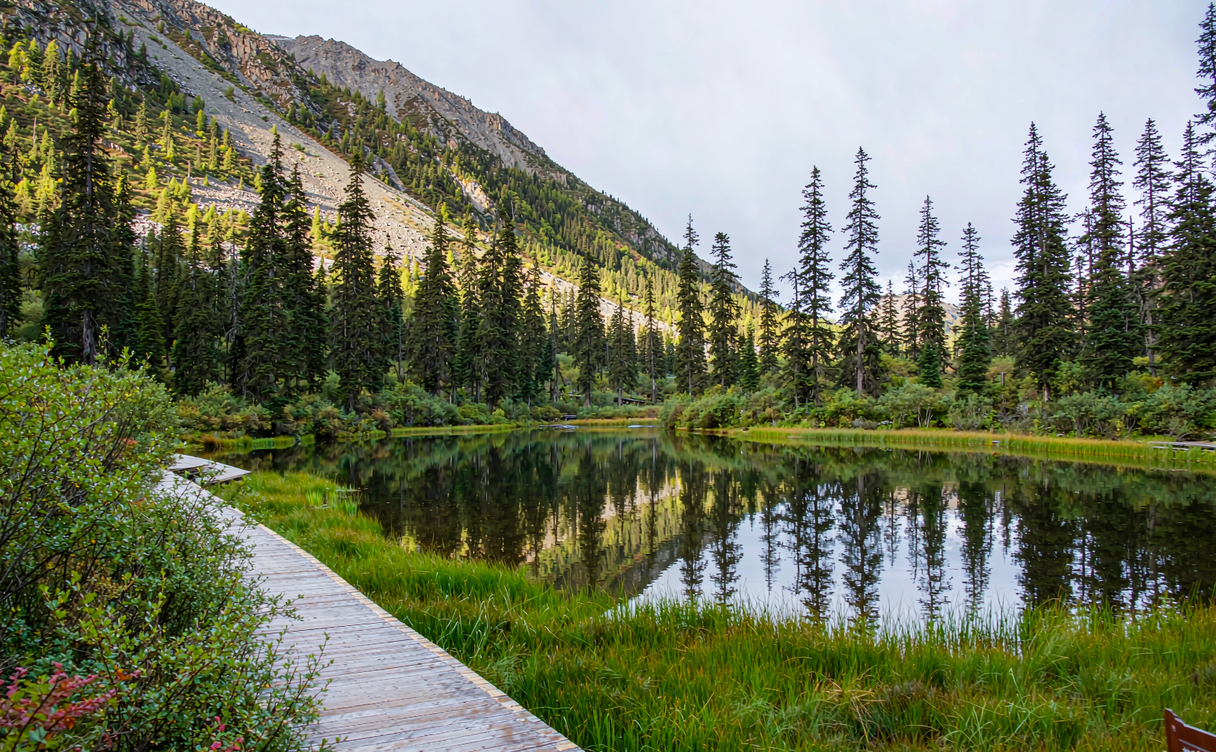
The headline sights are the two main lakes, Bitahai and Shudu Lake, connected by forest and wetland. Bitahai is the larger and deeper of the two, ringed by forest and known for its turquoise water. Shudu Lake sits at about 3,700 meters and is surrounded by meadows where yaks graze.
Between the lakes, the park protects bog ecosystems that are rare and ecologically vital. Wooden boardwalks keep visitors above the fragile peat, and viewing platforms offer calm spots to watch birds and photograph the scenery.
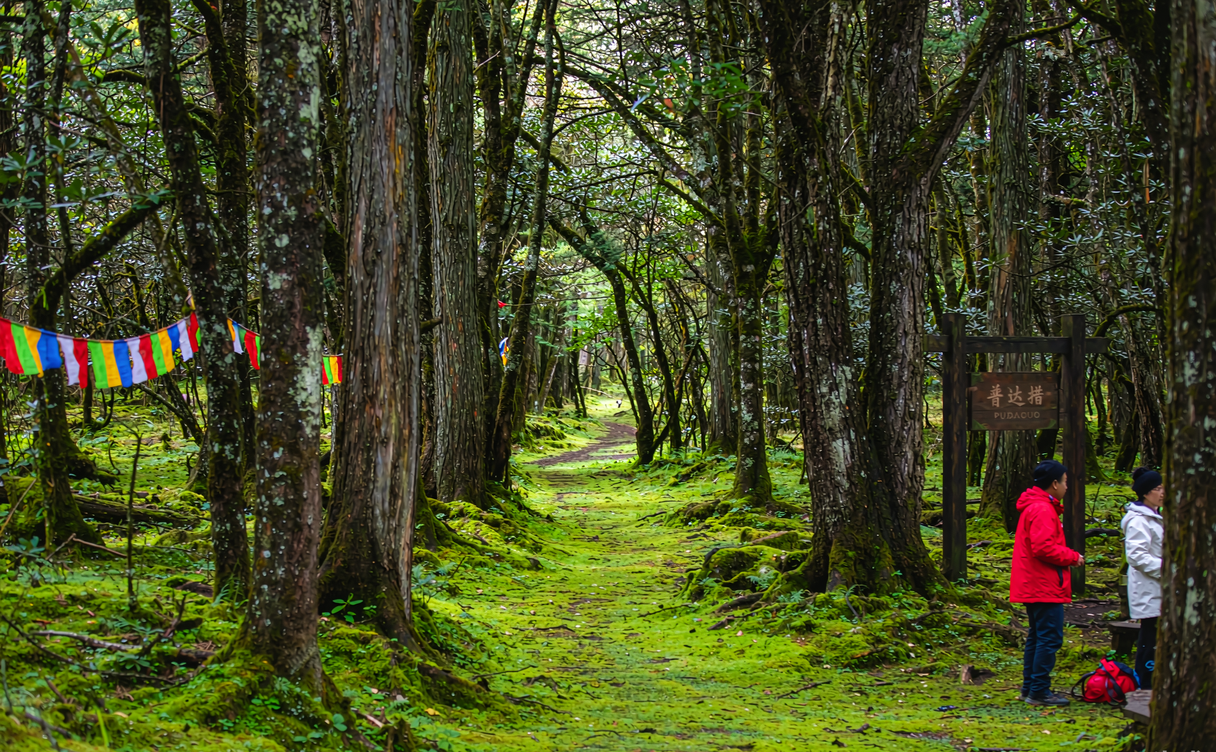
Other things to see in Pudacuo Park include the Tibetan villages near the entrance, where you can learn about local herding culture, and the dense moss-covered forests that feel primeval after rain. The combination of water, forest, and open sky is what makes the park unforgettable.
Pudacuo Hiking Trails and Boardwalks
Hiking here is gentle rather than strenuous, which makes the park accessible to most fitness levels. The Pudacuo hiking trails and boardwalks are designed as loop routes around the lakes, with flat wooden paths and occasional short climbs through the trees.
The Shudu Lake loop is the most popular walk, taking roughly an hour at a relaxed pace. Interpretive signs along the way explain the local ecology in Chinese and English. The Bitahai area offers longer routes with more elevation change and better chances for wildlife spotting.
Because the paths are raised boardwalks, you do not need special footwear, though sturdy shoes help on the unpaved sections. The trails are well maintained, and rangers monitor conditions daily. Staying on the boardwalk is both a safety rule and a conservation measure, since the underlying peat bog is easily damaged.
Pudacuo Tickets and Altitude Tips
Planning your budget and health is as important as planning your route. Pudacuo tickets and altitude tips should be on every visitor’s checklist. Entry includes a mandatory shuttle bus that carries you between the entrance, Shudu Lake, and Bitahai, since private cars are not allowed inside the core zone.
Tickets are priced higher in peak season than in winter, and combination tickets that include the bus are the standard option. Children, students, and seniors usually qualify for discounts with valid ID. Buy at the official entrance window or through authorized sellers to avoid scams.
Altitude is the real consideration. The park ranges from about 3,500 to 4,200 meters, and many visitors feel mild breathlessness on arrival. To adjust, spend a night in Shangri-La before entering, walk slowly, drink plenty of water, and avoid heavy meals beforehand. If you feel dizzy or nauseous, rest and descend if symptoms persist. The shuttle bus reduces the amount of walking required, which helps first-time high-altitude travelers.
Planning a Yunnan Route Around Pudacuo
Pudacuo works best as one stop on a longer Yunnan journey. Most travelers reach Shangri-La from Lijiang by road or the new railway, then spend a day or two in the park before heading elsewhere.
If you are coming from the east, the Lijiang travel guide explains the old town, the Jade Dragon Snow Mountain, and how to make the overland transfer to Shangri-La. Combining Lijiang and Shangri-La gives you both cultural townscape and raw alpine nature in a single trip.
For a softer, lower-altitude contrast after the mountains, consider the Erhai Lake guide around Dali. Erhai sits at a gentler elevation and pairs well with Pudacuo if you want both a highland lake and a warm lowland one on the same itinerary.
Conservation and Responsible Visiting
Pudacuo is a living ecosystem, not a constructed attraction. The park limits daily visitor numbers to protect the lakes and wetlands, so arriving early or booking ahead in peak season is wise. Carry out all trash, stay on marked boardwalks, and keep noise low to avoid disturbing wildlife.
The park’s management follows national protected-area standards, and its location inside a UNESCO-listed landscape reflects its global ecological value. Visitors can read more about China’s protected tourism and heritage policies through the Ministry of Culture and Tourism of China, which oversees the country’s national parks and cultural sites.
Photography is encouraged, but drones are restricted near the lakes and forests. Always check current rules at the entrance, since regulations shift with seasonal wildlife protection needs.
Final Thoughts
A visit to Pudacuo National Park is a highlight of any Yunnan trip. The blend of high-altitude lakes, mossy forests, and wide open skies delivers a sense of wilderness that is hard to find elsewhere in the province. With the right season, a sensible altitude plan, and a relaxed pace on the boardwalks, almost anyone can enjoy it.
Use this Pudacuo National Park Yunnan guide to build your route, and let the park’s quiet beauty be the calm center of a busy Yunnan adventure.
Read our full Shangri-La travel guide to plan where to stay and what else to see near the park.
Explore the Lijiang travel guide for tips on reaching Shangri-La and the old town highlights along the way.
Discover the Erhai Lake guide for a lower-altitude lakeside escape to balance your highland journey.