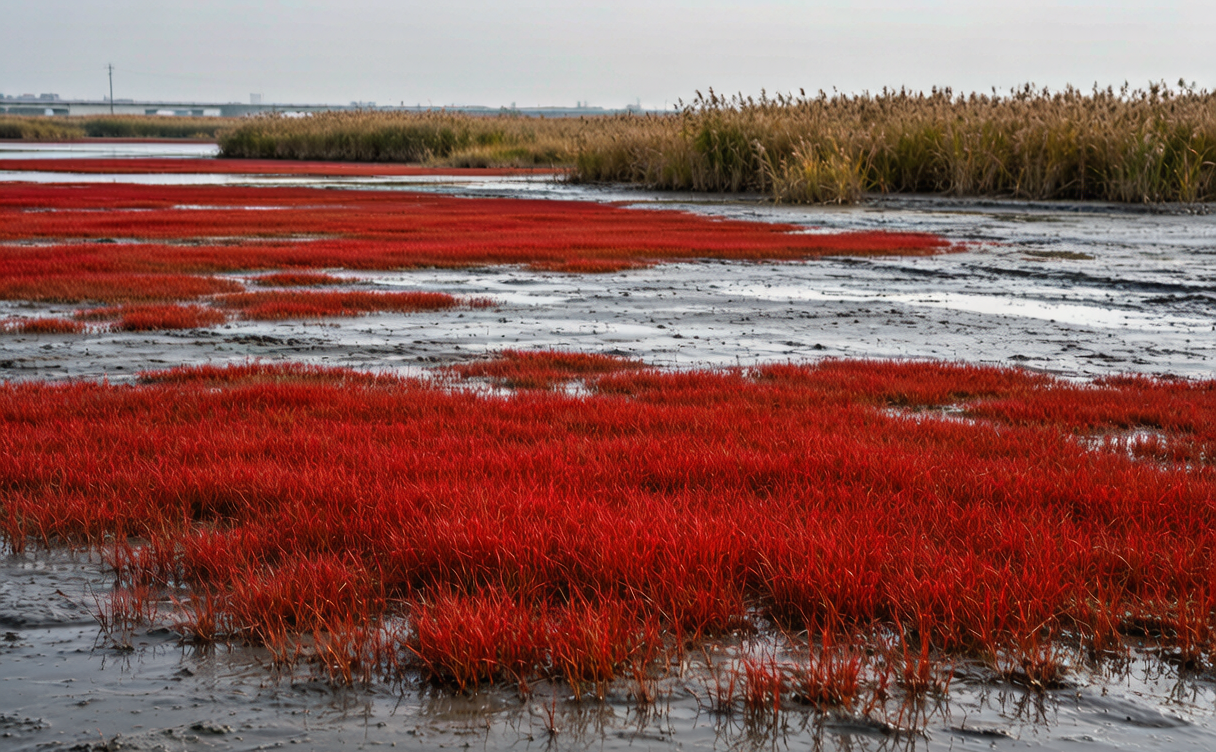
A Panjin travel guide usually opens with one image: a coastal wetland painted the colour of red wine by a plant called Suaeda salsa. Panjin, in Liaoning province at the mouth of the Liaohe River, is best known for this Red Beach, but the city is really a working wetland that feeds much of Northeast China’s rice and an astonishing share of its crabs. Spend two days here and you get two very different trips in one flat, low-stress stop — a quiet morning on the boardwalk among red reeds and migrating birds, and an evening bent over a pile of steamed river crabs with cold beer. It is an easy place to slot between Shenyang and the coast.
Why Panjin deserves a place on your Northeast China itinerary
Most foreign visitors fly into Shenyang and rush straight to Dalian, skipping the farmland in between. That is a mistake. Panjin rewards slow travel: no crowds, cheap seafood, and a wetland so productive that it is protected under the Ramsar Convention on Wetlands (https://www.ramsar.org/), the international treaty for safeguarding estuaries and swamps. The Liaohe River Delta here is one of the most important stopover points on the East Asian–Australasian Flyway, which means bird numbers can be extraordinary in the right season.
If your wider plan leans toward the region’s big cities, our Shenyang travel guide explains how to use the provincial capital as a base, while our Dalian travel guide covers the seaside end of the same loop. Panjin sits neatly between them, about two hours from each by train or car.
Panjin Red Beach best time to visit
The single most asked question in any Panjin Red Beach best time discussion is simply when the colour peaks. The red comes from Suaeda salsa, a salt-tolerant seepweed that stays green through spring and summer, then turns crimson and purple from late September through early November as the weather cools. Go in August and you will see more green than red; go in mid-October and the tidal flats glow.
That said, the wetland changes character through the year. Spring, from April to May, brings returning migratory birds but little red. Summer is lush and green, good for boat rides but not for the iconic colour. Autumn is the headline season for both the red and the crab harvest. Winter is quiet, cold, and largely closed for boardwalk maintenance. For a broader seasonal picture of the region, our best autumn destinations in China guide ranks Panjin among the top low-effort colour trips in the northeast.
Things to do in Panjin
The list of things to do in Panjin is shorter than in a big city, and that is the point. The genuine highlights:
- Red Beach National Scenic Corridor — the main boardwalk through the seepweed fields, with wooden paths built out over the mudflats so you can walk above the red without sinking.
- Shuangtaihekou Wetland — the wilder, less developed reserve where cranes, geese, and rare spotted seals gather; best reached with a local driver.
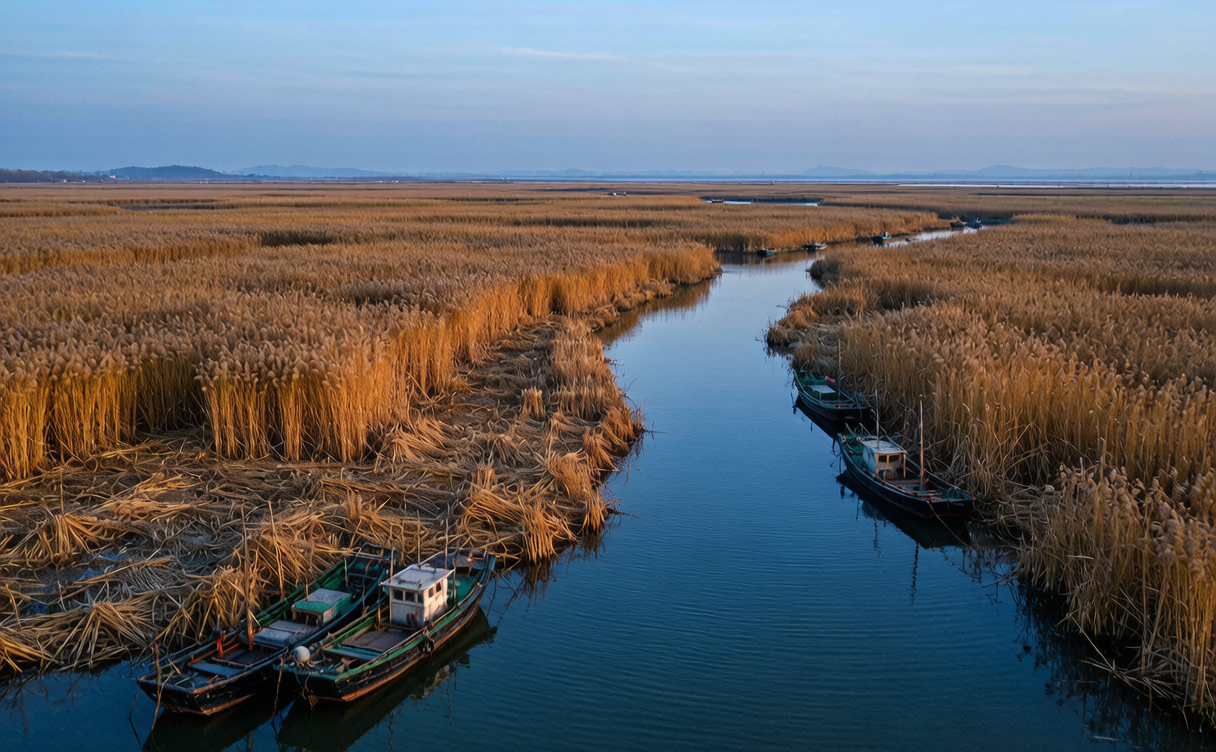
- Liaohe River mouth and reed sea — in autumn the reeds turn gold and you can take a small boat through them.
- Panjin Wetland Museum — a modest but useful introduction to the ecology, with English panels on the flyway.
- Evening crab market — not exactly a sightseeing stop, but the working docks where the day’s catch is sold are the real heart of the city.
These are the standout things to do in Panjin, and two full days covers them at a relaxed pace without a single museum marathon. Families do well here: the boardwalk is stroller-friendly, the boat rides keep children busy, and the crab dinner is a novelty that survives even a tired toddler. Photographers should note that the light on the flats shifts fast, so budget a second short visit if the first session is flat or hazy.
Panjin wetland boardwalk tips
A few Panjin wetland boardwalk tips will save you real discomfort. First, the boardwalk is long and entirely exposed — there is no shade, so a hat and water matter more than you think in October sun. Second, the red is best photographed in the morning when the light is soft and the tide is lower, revealing more of the coloured flats. Third, wear closed shoes; the approach paths are sandy and the wind off the Bohai Sea is sharp.
The corridor is built on stilts over living mud, which means you walk directly above the ecosystem rather than through it — good for the plants, good for your shoes. Binoculars are worth packing, because the channels between the reeds are exactly where egrets and the occasional red-crowned crane feed. For travellers building a wider nature plan, our China national parks guide explains how wetland reserves like this fit alongside the country’s mountain and forest parks.
Panjin crab season and where to eat
Panjin crab season runs from roughly September to November, peaking in October when the river crabs are fattest. The local specialty is the Liaohe hairy crab, sweeter and smaller than its Yangcheng Lake cousin, steamed plain and eaten with a dab of ginger-vinegar. A typical dinner is a heaping plate of crabs, a bowl of rice grown in the same wetland, and a local beer.
Seafood here is cheap by foreign standards, and the restaurants around the Wetland Plaza area are used to visitors. Point at what you want, agree a price by the jin (500 grams), and let them steam it. For context on the wider regional table, our Dongbei Northeast cuisine guide walks through the hearty, pickled, meat-forward food culture that Panjin’s crab feasts sit alongside.
How to get to Panjin from Shenyang
The how to get to Panjin from Shenyang question has a simple answer: by high-speed train. Trains leave Shenyang’s stations for Panjin North several times a day and take about 70 to 90 minutes. From Panjin North station a taxi to the Red Beach corridor is another 40 minutes and costs little. Driving is also easy — the expressway is flat and well signed — if you have rented a car, but most visitors find the train plus local taxis simpler.
Once in the city, distances are short and Didi works fine. The Red Beach corridor is the one place you should plan transport ahead, because buses are infrequent and a driver waiting for you saves the long walk back to the gate. If you are continuing east, our Qiqihar travel guide covers the next wetland-and-crane stop deeper into the northeast.
Practical notes for foreign visitors
Panjin is not a classic tourist city, so English is limited and few signs are bilingual — download offline maps before you arrive. Hotels near the train station are modern and inexpensive; the ones closer to the wetland are quieter but farther from dinner options. Carry cash as a backup, since small seafood spots sometimes struggle with foreign cards. The wetland is flat and wheelchair-accessible along the main boardwalk, a rare bonus in China’s often hilly scenic areas.