

Forty minutes southwest of Nanjing’s city center, two low peaks rise side by side like the horns of an ox — which is exactly how Niushou Mountain Nanjing earned its name, “Ox Head Mountain” in Chinese. For most of its 1,500-year history this was a quiet Buddhist retreat on the southern edge of the Yangtze floodplain, dotted with small temples and hermit caves. That changed in 2015, when a vast underground complex called the Foding Palace opened beneath the western peak, built to enshrine a sacred relic that believers associate with the Buddha’s parietal bone. The result is one of the most surprising cultural attractions in eastern China: half tranquil hillside temple, half subterranean architectural spectacle that draws both pilgrims and architecture fans.
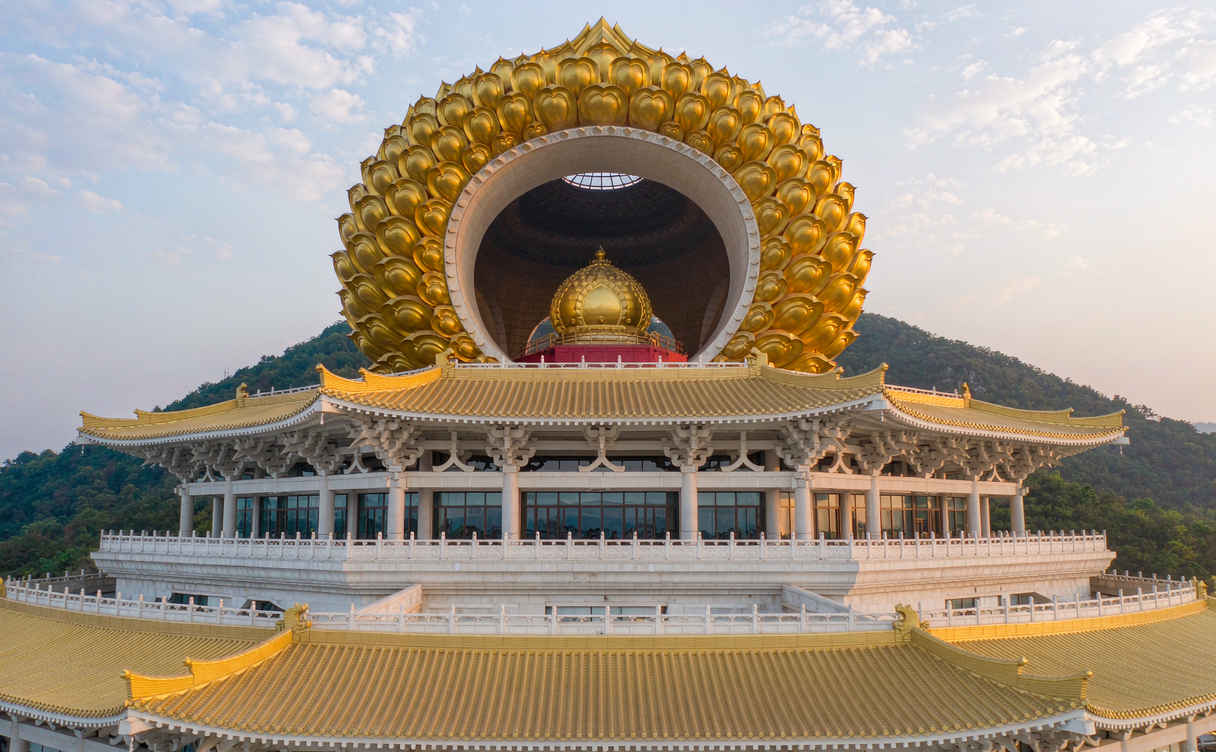
We’ve sent travelers to Niushou Mountain Nanjing on the same day they tour the Ming tombs, and the contrast is the whole point. Where the open-air imperial sites feel expansive, the Niushou Mountain Foding Palace pulls you downward into a climate-controlled world of marble, gold leaf, and slowly rotating scripture wheels. On our last visit, a French couple we were hosting spent nearly two hours in the underground hall alone, partly because the scale is hard to absorb in a single glance and partly because the cool, hushed space is genuinely calming after Nanjing’s summer heat.
A mountain with two thousand years of devotion
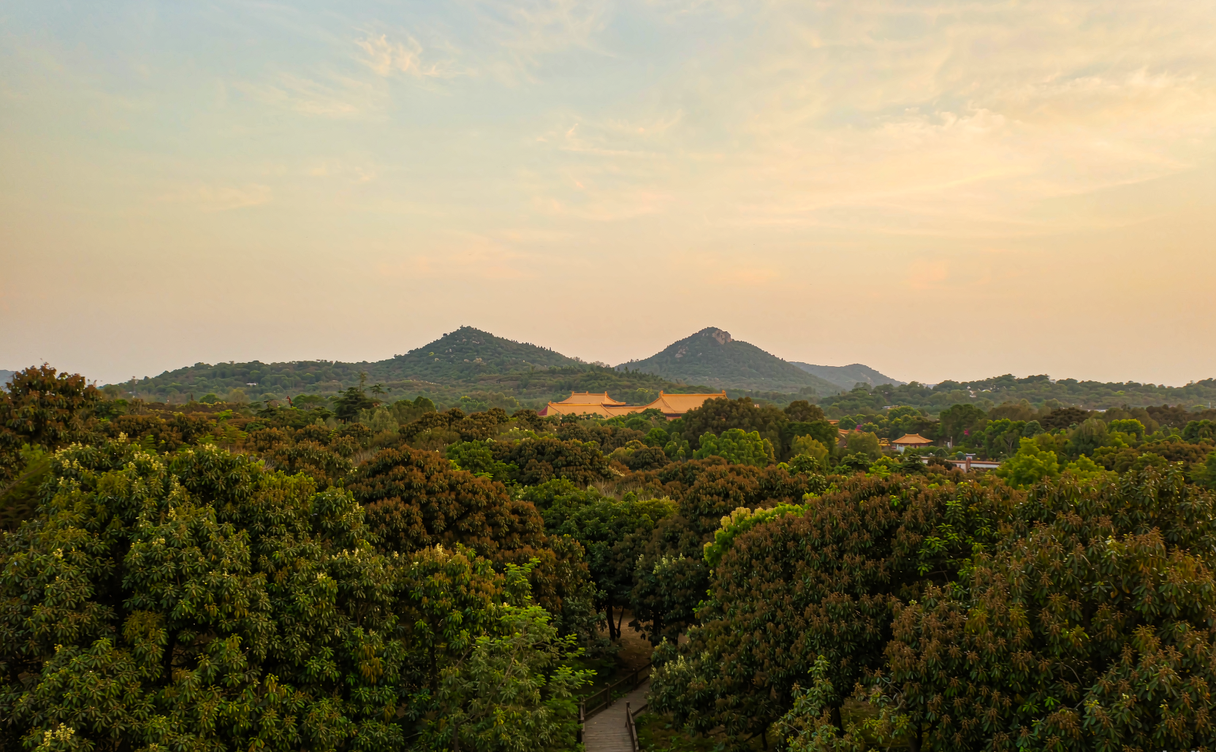
Buddhism reached this corner of the Yangtze delta in the early centuries of the common era, and by the Southern Dynasties period (4th–6th centuries) the hills south of Jiankang — as Nanjing was then called — were already dotted with monastic settlements. The name Niushou is said to come from a Tang emperor who ordered a second peak built to mirror the first so the mountain would resemble an ox’s head; whether legend or fact, the twin-summit silhouette is the mountain’s signature. Through the Song and Ming dynasties, Hongjue Temple stood on the eastern peak, and the leaning stone pagoda from that era still leans today, a favorite photo frame for visitors.
The modern revival began in the early 2010s, when Nanjing invested heavily in turning the site into a cultural tourism zone rather than a working temple alone. The Foding Palace was the centerpiece: a structure meant to house and display a relic that had, for centuries, been kept elsewhere in the city. The construction took several years and a reported multi-billion-yuan budget, and the finished complex is unapologetically grand.
What makes the Foding Palace special
The above-ground portion is a domed structure sheathed in bronze-gold panels that catch the late afternoon light and read as a single clean curve against the sky. Descend the long ramp and you enter a three-level underground palace carved into the mountain itself. The central relic hall holds a miniature stupa of silver and mother-of-pearl, displayed inside a climate-sealed vault that visitors view from a circular gallery one level up. Around it, a worship hall is paneled in white marble with a coffered ceiling inset with tens of thousands of tiny Buddha images, lit so softly that the whole room seems to glow.
We tell first-time visitors not to rush the descent. The ramp is long by design, slowing your heartbeat before you reach the relic. On our last guided trip, the group collectively went quiet somewhere around the second flight — not from instruction, but because the space does that to people. It is opulent without being gaudy, and the engineering (the dome alone weighs hundreds of tons) is as much the attraction as the devotion.
Things to do at Niushou Mountain
Beyond the palace, things to do at Niushou Mountain fill a relaxed half-day. The eastern peak carries the ruins of Hongjue Temple, including that leaning Song-dynasty pagoda you can photograph against the skyline, and a short hiking loop connects both summits through pine and metasequoia groves. A chairlift runs on the western side for travelers who would rather not walk the ridge, and we usually suggest it for older guests or hot days.
The Zhenghe Cultural Park at the base commemorates the Ming admiral Zheng He, who is buried on the mountain’s southern slope; his tomb is a modest, often-overlooked stop that we recommend to history-minded travelers, precisely because most crowds skip it. Tea houses near the west gate serve Jiangsu green tea and lotus-root snacks, and the lakeside walk below the palace is stroller-friendly and shaded — a good choice for families with young children, who may tire of the long palace descent.
Best time to visit Niushou Mountain
The best time to visit Niushou Mountain is spring (late March to May) and autumn (October to early November). Spring brings new leaves and comfortable 18–24°C days; autumn gives clear skies and the lowest humidity of the year. We generally steer clients away from the first week of May (Labor Day) and the first week of October (National Day), when domestic crowds can triple wait times for the palace elevator and the viewing gallery gets congested. Summer is workable but hot and humid, with midday temperatures often above 35°C; winter is cold but uncrowded, and the bare-branch silhouettes of the pagoda photograph well after a light snow.
How to get to Niushou Mountain
Figuring out how to get to Niushou Mountain is easier than the remote location suggests. From Nanjing South Railway Station, take Metro Line S1 toward Konggangxincheng and alight at Fochengxilu Station, then a 10-minute taxi (about RMB 15 / USD 2) or the dedicated tourist shuttle to the west gate. A direct taxi from the station runs roughly RMB 50–70 (USD 7–10) and takes 25–40 minutes depending on traffic. If you arrive in Nanjing by bullet train, the same Metro S1 also links the airport, so the mountain fits neatly into a city-and-transit day without renting a car.
Tickets, hours, and money
Admission to the cultural zone is RMB 98 (about USD 14) in peak season, with a reduced RMB 78 (USD 11) off-season ticket that we’ve seen offered through the official WeChat channel and some hotel concierges. The relic hall and Foding Palace are included; the chairlift is an optional RMB 30 (USD 4) each way. Opening hours run 09:00–17:30, with last entry at 16:30. Allow at least three hours, and bring a light layer — the underground palace is kept cool year-round, which surprises visitors in July.
A useful planning reference is our Nanjing travel guide, which maps the mountain alongside the city’s other highlights. Travelers who want a fuller day often pair the site with the Nanjing Sun Yat-sen Mausoleum, a 30-minute drive northeast, and readers arriving by rail should skim our China high-speed train guide for foreigners for booking and station tips.
Photography and quiet corners
The golden dome is best photographed from the east ridge around 16:00, when the low sun rakes across the bronze panels. Inside, tripods are not allowed and flash is forbidden near the relic, but phone cameras handle the soft lighting well. For a quieter moment, walk five minutes past the main crowd to the small lotus pond behind the palace, where locals practice tai chi at dawn — we’ve started two early-access visits there, and the stillness is the best argument for arriving at opening.
Accessibility and small comforts
The palace is fully step-free from the west gate via elevator, which makes Niushou Mountain one of the more wheelchair-friendly heritage sites near Nanjing. An audio guide in English costs RMB 20 (USD 3) and is worth it for the relic’s backstory. A vegetarian buffet at the temple restaurant runs RMB 48 (USD 7) and is genuinely good; we send travelers there when they want a calm meal away from the gate-side snack stalls.
Food and a half-day plan
The mountain’s restaurants are tourist-priced, so we usually send clients to the Jiangning district streets just outside for better-value local dishes. A half-day plan we use: start at the west gate at 09:30, ride the shuttle to the palace, spend 90 minutes below ground, then walk the ridge to the east peak pagoda for lunch at a nearby noodle shop. By 14:00 you’re back in the city with the afternoon free.
Who should go
Niushou Mountain Nanjing suits culture-focused travelers, Buddhist heritage enthusiasts, and photographers more than thrill-seekers. Whether you search for Niushou Mountain Nanjing or Nanjing Niushou Mountain, the name points to the same cultural zone in Jiangning District, an easy half-day from the city center. It is also a strong rainy-day option, since most headline sights are under cover. The mountain’s modern development is documented by the local tourism authority, and you can read the official background on the Nanjing municipal government page.