

Anhui has Huangshan, Xidi and the Huizhou villages that fill every photograph of the province. Thirty kilometres south of Xuancheng, Ningguo gets almost none of that traffic, and that is exactly the argument for going. This Ningguo travel guide covers the limestone cave halls that half-bury themselves in a forested hillside, the bamboo raft channels that run through the town’s eastern edge, the reservoir camps that fill with tents every summer, and the mountain hickory nuts that locals eat by the kilogram between September and November.
Ningguo is a county level city under Xuancheng, with a population near 380,000 and a landscape of low karst hills, bamboo, tea terraces and reservoirs. It works as a stop between Xuancheng and the Zhejiang border, or as a two day detour if you areheading from Hangzhou into southern Anhui and want somewhere quiet. Practical Ningguo guide material is thin online, so this one leans on distances, prices and the mistakes real visitors make.
[CTA] If Huangshan is the anchor of your Anhui trip, read our Huangshan Yellow Mountain guide first and then work Ningguo in below it. Tell us how many days you have and we will tell you honestly whether this detour fits.
Cave boots and a head torch take up barely any space in a backpack and save the day.
[/CTA]
Taiji Cave and What You Are Actually Walking Through
Taiji Cave is the headline, and it has been sold since the Ming dynasty as the first cave south of the Yangtze. It is a karst system cut into the limestone of the hills east of town, and the tour takes you through a series of halls — some enormous, with walls that rise forty metres above your head — connected by walkways and stairways rather than straight passages. The limestone runs grey, gold under lights, and near white where water has redeposited it.
Taiji Cave Ningguo tickets generally land between 60 and 90 RMB for the main circuit, with a combined ticket covering the garden and the additional halls. Allow two hours. The temperature inside stays cool through summer, which is the reason half of the visitors in July are families hiding from the heat, and it is about fifteen degrees colder than outside, so bring a layer even in August. Bring shoes with grip; some of the boardwalk sections are wet.
The Bamboo Rivers and Why People Call Them That
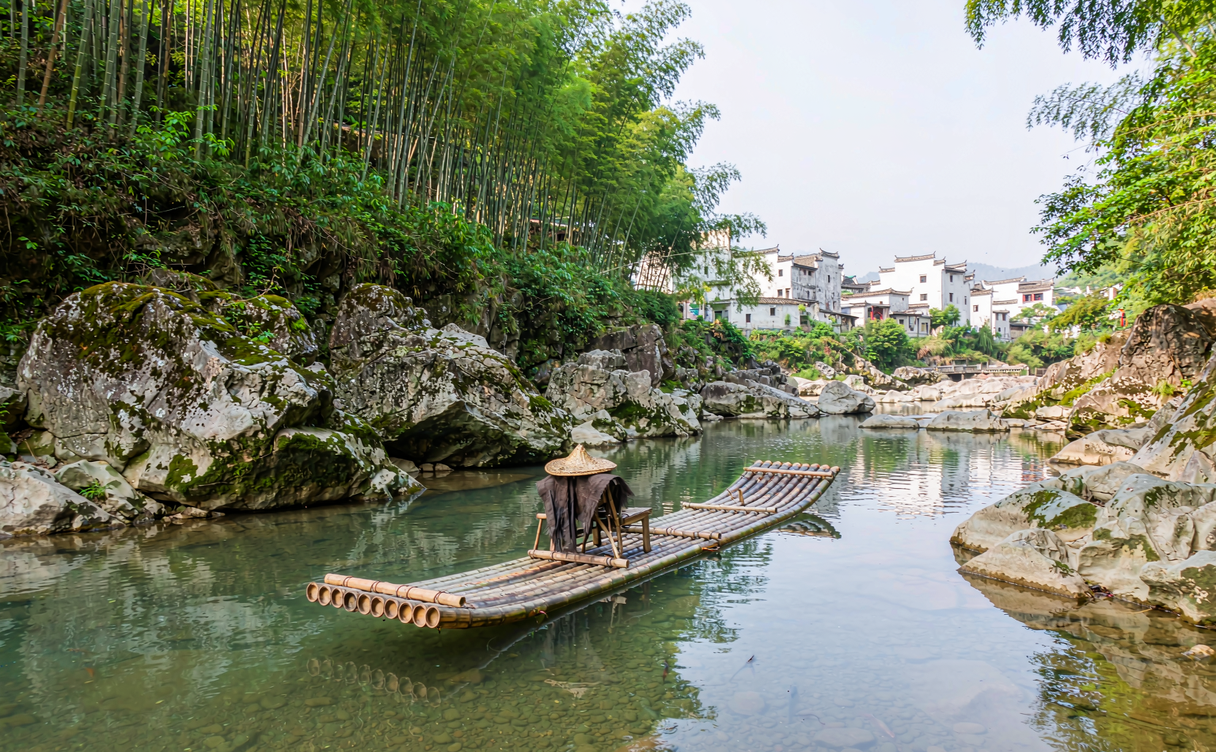
The Ningguo bamboo sea river image is not marketing. Rivers leaving the hills on the eastern side carry bamboo roots and leaf litter down through shallow channels, and the banks are planted with moso bamboo in near continuous stands. You will see bamboo rafts — flat, low, and poled by men standing at the stern — carrying tourists on short stretches where the current is gentle.
A raft ride costs roughly 60 to 120 RMB depending on the stretch and the season, and lasts thirty to forty minutes. Go in the morning: the mist off the water clears by ten, and by midday the light is flat and the tour boats queue at the same landing. The rafts are genuinely comfortable in summer once you are wet from the spray.
Qinglong Lake, Chujiatan and the Camps
Ningguo’s reservoir, known locally by the villages along its shore, is the place the weekend crowd drives to. Chujiatan on the lake’s western arm has turned into a camping ground — fixed tents, fire pits, a small number of cabins, and a restaurant row that stays open through the warm months. On a July weekend the shoreline is a field of canvas. On a Tuesday in October you will have the whole waterfront to yourself and a lakeside walk that runs for kilometres without a single shop.
The water here is clean enough that people swim at the designated beach, and the fishing is the reason the morning boats go out before five. If you are travelling with children, Chujiatan is easier than it looks: the camp has hot showers and the lake beach is shallow for a good stretch.
The Wuyue Ancient Path and Other Things to Do in Ningguo
The Wuyue Ancient Path is the best reason to come if you walk. It climbs from the Ningguo side of the Zhejiang border ridge, an old trade route linking the two districts before roads existed, and the restored stone staircase now runs for several kilometres with views down into deep valleys on both sides. The name means the path between the states of Wu and Yue, and the wooden rafts and inns that served it are long gone.
Go early, take a head torch if the weather has been wet, and expect the worn stone steps to be slick. The higher sections have no shade at all. Allow three hours up and two down, and take the bus out to the trailhead rather than trying to find parking at the bottom on a Sunday.
A Ningguo Day Trip from Xuancheng
A Ningguo day trip from Xuancheng works well and does not need a car if you plan it. Take the morning train or coach from Xuancheng to Ningguo, roughly forty kilometres and fifty minutes, drop your bag at the station or the hotel, then run the loop: Taiji Cave in the late morning, lunch in town, the raft channel and bamboo walk in the afternoon, and the reservoir for sunset.
If you are short on time, cut the reservoir and keep the cave and the raft. If you have two days, add the Wuyue path on the second morning and the tea terraces on the southern hills in the afternoon. For the transport details and the Xuancheng end of the trip, the Xuancheng travel guide covers the stations, the bus connections and where to change.
[CTA] Off the map by design? Read the China off the beaten path guide for how to build a route around small cities like this one — and for what to pack for a cave, a reservoir and a mountain path in the same weekend.
You can cover all three in forty eight hours if you start the raft before nine.
[/CTA]
Best Time to Visit Ningguo
The best time to visit Ningguo is late April to early June, or September into the first half of November. Spring gives you the tea on the terraces and the bamboo in full leaf after the rain. November gives you the hickory nuts on the stall, the ginkgo turning in the older village lanes, and cold clear water on the reservoir when the camps are shut.
July and August are hot and humid, with the caves full and the camps full. The truly bad months are the plum rain weeks of late June, when the roads to the trailhead can flood. Winter is quiet and the food is better for it, but the river rafts often shorten their season.
Tea, Hickory and What to Eat
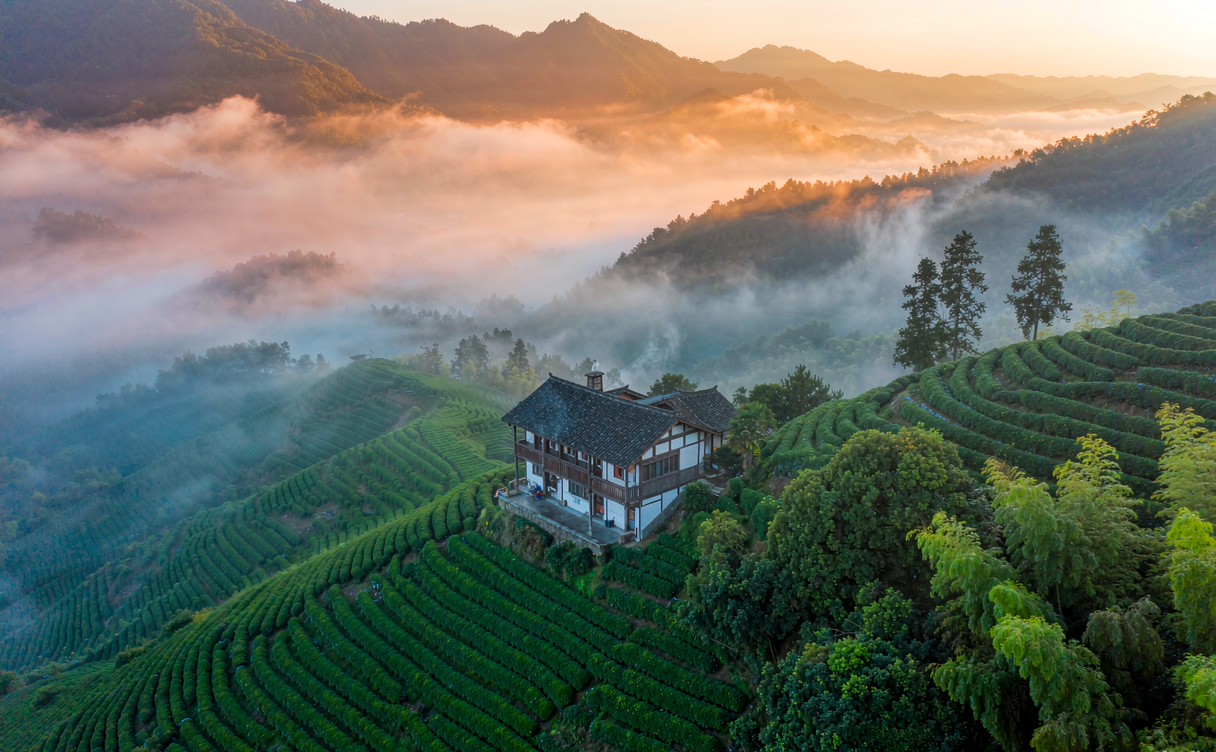
The hills behind the town grow green tea picked in the first weeks of spring, and the small tea houses on the southern lanes sell it cheaper than anything in the cities. Ask for it roasted rather than steamed if you want the nuttier local style.
The real local product is the mountain hickory nut, harvested by beating the trees in September and November and roasted with salt. You will see them in paper bags at the market for far less than the packaged version. Also look for bamboo shoots, cured duck, and freshwater fish from the reservoir. For a wider picture of Anhui cooking, cook the same dishes you see here in the cities to the west, and ask the restaurant staff to hold the chilli if your palate is not ready for the local version.
Where to Stay and How Long to Stay
Two nights is right. The town has mid range hotels around 160 to 300 RMB, and a handful of small guesthouses in the older lanes that are worth the extra ten minutes’ walk. Chujiatan has cabin and tent accommodation at a premium in summer, roughly double the town price on a July weekend.
Most people combine this with the Huizhou villages. Our Xidi ancient village guide pairs naturally with a Ningguo stop, since the two sit in the same corner of the province, and the Shexian travel guide fills in the other side of the same valley. The best things to do in China list puts small Anhui cities in a category of their own, and Ningguo is one of the best value entries on it.
[CTA] Tell us your dates and we will draft the Ningguo days around the cave, the raft and the ridge, including the train times and where to change.
We will also flag if the camps will be closed on your dates, because that changes where you sleep.
[/CTA]
The lower Wuyue path and the old stone bridges of the district appear on the UNESCO World Heritage listing for the Ming and Qing villages of southern Anhui, which is worth reading before you decide how far into the province to push.