

The “Is Nayuki Japanese?” mix-up, and why it matters
Walk into a Nayuki store in a Shenzhen mall and you’ll notice something odd: for years, first-time visitors assumed the brand was from Tokyo. The old logo read “奈雪の茶,” the romanization “nayuki” looked like a Japanese name, and the minimalist wood-and-cream interiors could have sat on a Tokyo side street. I once watched a friend from Chengdu order a cheese-cap strawberry tea and say, “I love this Japanese chain.” She wasn’t alone — the confusion was common enough that the company eventually changed course.
Here’s the real story: Nayuki (奈雪的茶) is about as Chinese as it gets. It was born in Shenzhen in November 2015, and in 2022 the brand deliberately dropped the Japanese-style “の” and switched its English name to the pinyin “naixue” to make its Chinese identity unmistakable. So if you’ve ever wondered is Nayuki a Chinese or Japanese brand, the answer is firmly Chinese — a Shenzhen original that briefly wore Japanese-inspired clothes. That backstory matters because it tells you what the brand always wanted to be: a premium, design-led face of modern Chinese tea, not an import.
How Nayuki started: a Shenzhen love story and a “tea + bread” bet
The brand was founded by Peng Xin (彭心) and Zhao Lin (赵林), a married couple, in Shenzhen in 2015. The name “Nayuki” reportedly came from Peng Xin’s online nickname. What set it apart from the start wasn’t just the aesthetic — it was the “tea + soft European bread” (茶饮+软欧包) dual-category model. Most tea shops sold you a drink and sent you on your way. Nayuki built big, sit-down stores where you’d pair a fruit tea with a slice of pillowy “soft欧包” bread, the kind of space designed for lingering.
That bet paid off early. In June 2021, Nayuki listed on the Hong Kong Stock Exchange as the “first stock of new-style tea” (新式茶饮第一股), beating rivals to a public listing. At its peak it carried the highest average ticket in the industry — roughly 43 RMB a visit in 2018–2020 — and was nicknamed the “Starbucks of tea.” By the end of 2025 it ran around 1,600 stores, mostly company-owned, with a smaller franchise wing opened in 2023. The Nayuki history is therefore a story of first-mover premium prestige, followed by the hard reckoning every high-end chain faces when Chinese consumers decide value matters more than ambiance.
What to order first at Nayuki
If it’s your first time, don’t overthink the menu — go for what made the brand famous. The trick with Nayuki what to order first is to pick one fruit tea with a cheese cap and one bread to share.
The “Bawang” fruit tea series
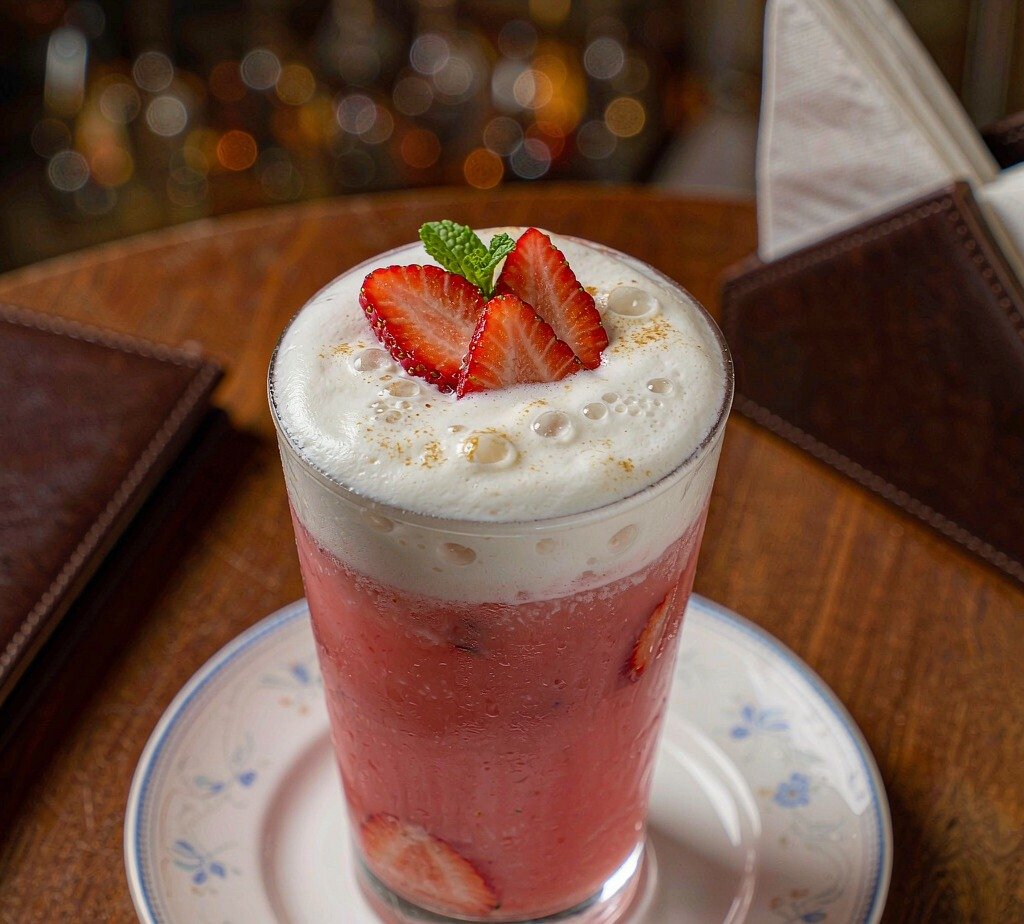
Nayuki’s signature line is the “霸气” (Bawang, loosely “Domineering”) fruit tea series — whole-fruit, barely-sweetened infusions built on a real tea base rather than syrup. The Nayuki strawberry cheese tea (霸气草莓) is the one most people picture: fresh strawberries pressed over a green or oolong tea, finished with a salty-sweet cheese foam cap you sip through. Seasonal stars like oily kan (油柑) and grape rotate through, so the “best” drink quietly changes with the calendar.
Cheese foam caps and the duck-shit oolong
The cheese cap is Nayuki’s signature texture — a whipped, lightly salted cream cheese layer that sits on top of the tea and softens the bitterness. One sleeper hit worth naming is the “鸭屎香宝藏茶” (duck-shit aroma treasure tea), built on a fragrant Dancong oolong. The name is a genuine tea-world joke about a prized but oddly named leaf; the drink itself is smooth, floral, and far less strange than it sounds.
Soft European bread — the half that makes it Nayuki
Ordering only a drink misses the point. The soft European bread (soft欧包) is the other half of the model: large, chewy, lightly sweet loaves sliced and sold by the piece. A common move is to grab one cheese-cap tea and one bread and call it an afternoon. If you want a single recommendation, ask the staff for the day’s fruit-topped loaf — it pairs with whatever tea you picked.
Nayuki prices and how to order on the app
The Nayuki price range sits at the premium end of the market. A fruit tea or cheese-cap drink typically runs about 22–35 RMB, and a slice of soft European bread adds another 15–25 RMB. That’s noticeably above the value chains, though the brand cut prices in recent years as competition tightened.
Ordering is app-first. The how to order Nayuki flow is simple: download the Nayuki app (or use the mini-program), pick a store, choose your drink, and pay ahead. The app is also where Nayuki app customization toppings happens — you can adjust sugar and ice, add cheese foam or extra fruit, and sometimes switch the tea base. Stores stock toppings like pearl (boba), coconut jelly, and cheese cap; not every drink supports every topping, so the app’s options are your source of truth. A membership program and frequent coupons soften the price if you order through it rather than at the counter.
Where you’ll actually find Nayuki (and a travel tie-in)
Because it began in Nayuki in Shenzhen, the deepest store network is still in Guangdong and China’s tier-one cities — Shenzhen, Guangzhou, Shanghai, Beijing. If you’re building a Shenzhen food guide, Nayuki’s early stores are part of the city’s modern café story, and the brand’s HQ and first flagships are right there.
For travelers, the practical move is to treat Nayuki as a reliable, air-conditioned pause point in a shopping mall rather than a destination in itself. You’ll find it in major malls across the big cities, airport terminals, and tourist districts. Abroad, the brand has pushed into Southeast Asia (Singapore, Thailand) and opened US locations, including New York’s Flushing and the Silicon Valley area — so searching Nayuki stores near me works best inside a major Chinese city or a Chinatown-adjacent district overseas. If you’re mapping China’s bubble tea and milk tea scene, Nayuki is the premium, sit-down counterpoint to the grab-and-go stands on every corner.
Nayuki vs Heytea vs Mixue: which Chinese milk tea chain?
The honest way to understand Nayuki is to place it against the two chains it’s most compared with. Searches for Nayuki vs Heytea and Nayuki vs Mixue are constant, because the three represent three different Chinas of tea.
| Chain | Positioning | Typical drink price | Store scale (end 2025) | Signature |
|---|---|---|---|---|
| Nayuki (Nai Xue) | Premium, sit-down “tea + soft bread” | ~22–35 RMB | ~1,600 stores | Cheese-cap fruit tea, Bawang series |
| Heytea (喜茶) | Premium-to-mid, cheese fruit tea pioneer | ~18–30 RMB | Several thousand stores | Cheese grape, multi-fruit tea |
| Mixue (蜜雪冰城) | Ultra-value, high-volume | ~4–8 RMB | Over 45,000 stores | Ice cream, lemonade, sweet milk tea |
In plain terms: choose Nayuki when you want a comfortable place to sit, a real tea base, and a cheese-cap fruit tea with a bread on the side. Choose Heytea when you want a similar premium drink at a slightly lower price and faster turnover. Choose Mixue when you just want something cold, sweet, and cheap — often under 10 RMB. For the question of best milk tea brand in China, there’s no single winner; it depends on whether you’re paying for experience, flavor, or price. Nayuki wins on the experience-and-bread combination, which is exactly the niche it invented.
This is also the clearest lens on Nayuki’s recent struggles. The big, beautiful stores that built its reputation are expensive to run, and as Chinese consumers shifted toward value, the brand’s store count and market value fell well behind Mixue and others. Nayuki has responded with smaller store formats, lower prices, and a health-focused push (lighter fruit teas, yogurt drinks, and a “Green” light-meal concept). So the chain you meet in 2026 is leaner than the one that went public in 2021 — worth knowing before you judge it by old reputation.
Is Nayuki worth trying?
For a visitor to China, yes — once. It’s the cleanest window into the “new-style tea” boom that reshaped Chinese cities in the 2010s, and the cheese-cap fruit tea is genuinely good. Go in with the right expectation: you’re paying for a calm, design-led cafe moment and a real Chinese tea house ingredient base, not for the cheapest cup on the block. Order one Bawang fruit tea with cheese foam, add a slice of soft bread, and you’ve had the Nayuki experience exactly as it was designed.
FAQ
Is Nayuki a Chinese or Japanese brand?
Chinese. It was founded in Shenzhen in 2015 by Peng Xin and Zhao Lin. The old “奈雪の茶 / nayuki” styling borrowed Japanese-looking design, which caused widespread confusion, but the company rebranded to the pinyin “naixue” in 2022 to emphasize its Chinese identity.
What is Nayuki’s signature drink?
The “Bawang” (霸气) whole-fruit tea series with a salty-sweet cheese foam cap — especially the strawberry cheese tea — is the signature. The duck-shit aroma oolong treasure tea is the sleeper favorite for oolong lovers.
How much does a Nayuki drink cost?
A fruit tea or cheese-cap drink usually runs about 22–35 RMB, with soft European bread adding 15–25 RMB. Prices dropped from the brand’s premium peak as competition intensified, and app coupons bring the effective cost down further.
Does Nayuki have an app, and can I customize toppings?
Yes. The Nayuki app (and mini-program) lets you pick a store, adjust sugar and ice, add a cheese cap or extra fruit, and choose available toppings like pearl or coconut jelly. Ordering through the app is the standard, queue-skipping way to buy.
Nayuki vs Heytea — which should I try?
Both are premium cheese-fruit-tea pioneers. Nayuki leans into the sit-down “tea + soft bread” experience and slightly higher prices; Heytea is typically a bit cheaper with faster turnover. If you want a place to linger with a snack, pick Nayuki; if you want the drink and move on, Heytea is the better fit.
Where can I find Nayuki outside mainland China?
It began overseas in Singapore, expanded into Thailand, and has opened US stores including New York’s Flushing and the Silicon Valley area. Outside major Chinese cities and a few Chinatown-adjacent districts, coverage is still limited, so check the app’s store locator before you count on finding one.