

Spend a slow morning in Taipa Village Macau and you quickly understand why this low-rise grid of pastel townhouses has become the most walkable, human-scale corner of Macau, China. Set on the slender Taipa islet just south of the Cotai casino belt, the village preserves the Portuguese-Macanese character that the mega-resorts have scrubbed away — tiled azulejo facades, church bells at noon, and the scent of egg tarts drifting from family bakeries that have operated here for three generations. I first stopped by on a six-hour layover, expecting to give it an hour, and stayed the whole afternoon.
How to get to Taipa Village
The first thing any visitor asks is how to get to Taipa Village, and the answer depends on where you are staying. From the Macau Peninsula, public buses 11, 22, 28A, 30, 33, and 34 cross the Friendship Bridge and set you down within a five-minute walk of Rua do Cunha, the village’s pedestrian spine. The fare is a flat MOP 6 (about US$0.75), paid with a Macau Pass tap card or exact coins — there is no onboard change, so keep small bills handy. If you are already on Taipa for the casinos, the free hotel shuttles from the ferry terminal or the airport drop you a 10–15 minute walk away, and ride-hailing through the local apps costs roughly MOP 30–50 from the Cotai Strip. The village itself is flat and compact, so once you arrive everything is on foot.
The Macau Taipa houses
The single best reason to come is the architecture. The Macau Taipa houses — a row of pastel green, blue, and yellow mansions along Avenida da Praia — were built by wealthy Portuguese and Macanese families in the early 1900s, when Taipa was still a quiet fishing and farming islet. Today they hold small museums: the House of Islands, the House of Tea, and the Exhibition Gallery of Taipa and Coloane History and Culture. Entry to most is free, and the cool tiled interiors are a genuine relief in the humid summer months. Stand at the water end of the row and you get a postcard view across the lagoon to the Cotai skyline, the old world and the new world in a single frame.
Taipa Village Macau food
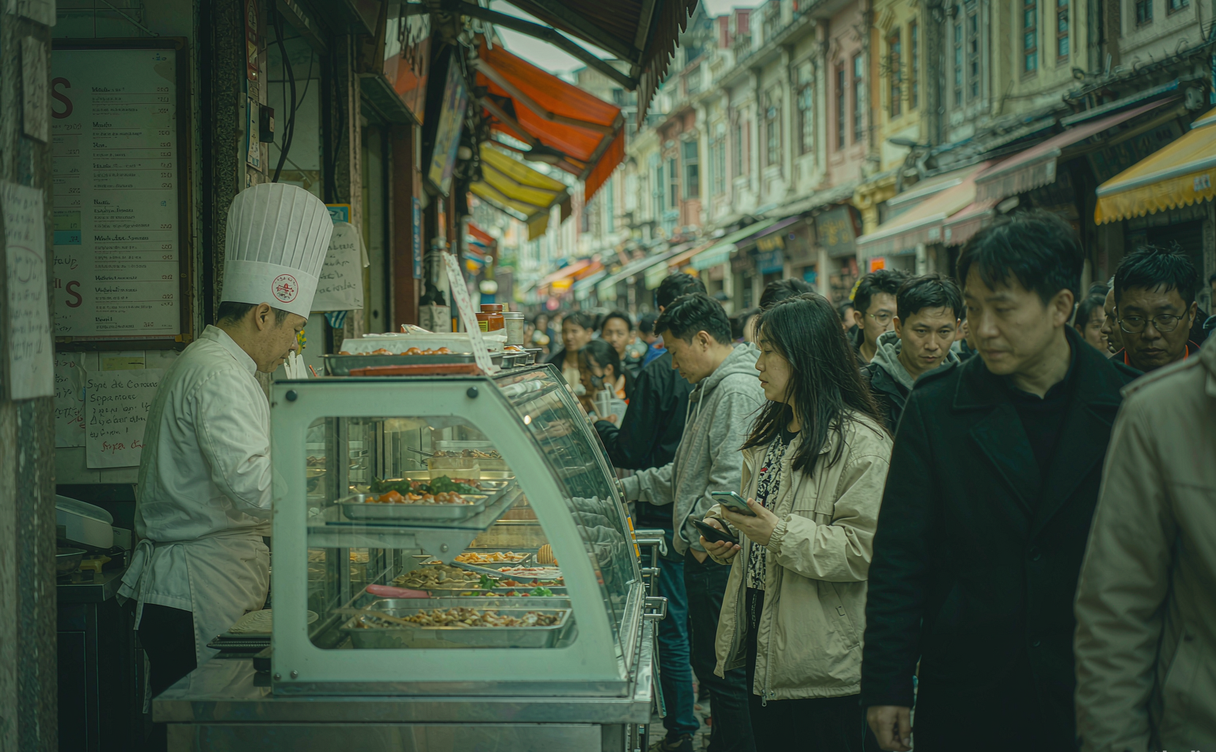
Taipa Village Macau food is the other great pull, and it is the rare Macau experience that does not cost casino money. Lord Stow’s Bakery popularized the Macanese egg tart, and the Taipa branch on Rua do Cunha keeps a constant queue, with a warm tart running about MOP 10. A few doors down, Mok Yi Kei sells the famous durian ice cream (MOP 28 a cup) alongside more approachable peanut-and-ginger frozen treats. For a proper sit-down meal, the cluster of Portuguese restaurants around Rua da Cunha and Rua dos Clérigos serves honest bacalhau and African chicken at MOP 120–200 per head. If you want the local-Chinese side of the menu, the congee and noodle shops near the old market serve a bowl for MOP 25–40. The pleasure here is not any single restaurant but the fact that within a three-block radius you can graze for hours without ever sitting down twice.
Things to do in Taipa
The things to do in Taipa start on Rua do Cunha and fan outward. The Pak Tai Temple at the top of the street dates to 1844 and is still active, with coiled incense spirals hanging from the ceiling during festivals. Climb the short flight of steps beside it to the Taipa Grand Stage, a restored 1920s auditorium that hosts weekend performances. From the village, the Taipa Waterfront Promenade is a flat 20-minute walk and gives you an uninterrupted view back at the Cotai towers, especially good at dusk. If you enjoy photography, the blue-and-white tiled alleyways between Rua dos Negociantes and Rua de Sao Joao are empty by late morning and make the cleanest shots.
Best time to visit Macau
The best time to visit Macau is October through early December and again in March and April, when the humidity drops and the streets are comfortable for walking. I would avoid mid-summer (July–August), when the heat and the typhoon risk make the open lanes unpleasant, and late December to February, which is cool but crowded with holiday-weekend visitors from the mainland. Taipa Village is busiest on Saturday afternoons; a weekday morning between 10 and 11:30am gives you the streets almost to yourself, with the bakeries fully stocked before the lunch rush.
Festivals worth timing
If your dates are flexible, the village comes alive during the Taipa Village Festival in November, when temporary stages and food stalls fill Largo do Cunha, and during Chinese New Year, when the temples are draped in red and the lion dances wind through the lanes. Mid-Autumn sees families picnic on the waterfront with lanterns. None of these are advertised heavily outside Macau, which is precisely why they feel authentic rather than staged.
Beyond the village on a Macau itinerary
A Macau itinerary that skips Taipa misses the contrast that makes the city interesting. From here it is a short bus or taxi to the Ruins of St. Paul’s in Macau, China, the iconic stone facade on the peninsula, and the A-Ma Temple, the oldest shrine in the territory, named for the sea goddess who reportedly gave Macau its name. If you want the opposite extreme, the Venetian Cotai resort is a ten-minute walk away and makes for a surreal comparison with the village you just left. Across the water, the Victoria Harbour in Hong Kong, China is an easy ferry hop if you are stringing the two cities together.
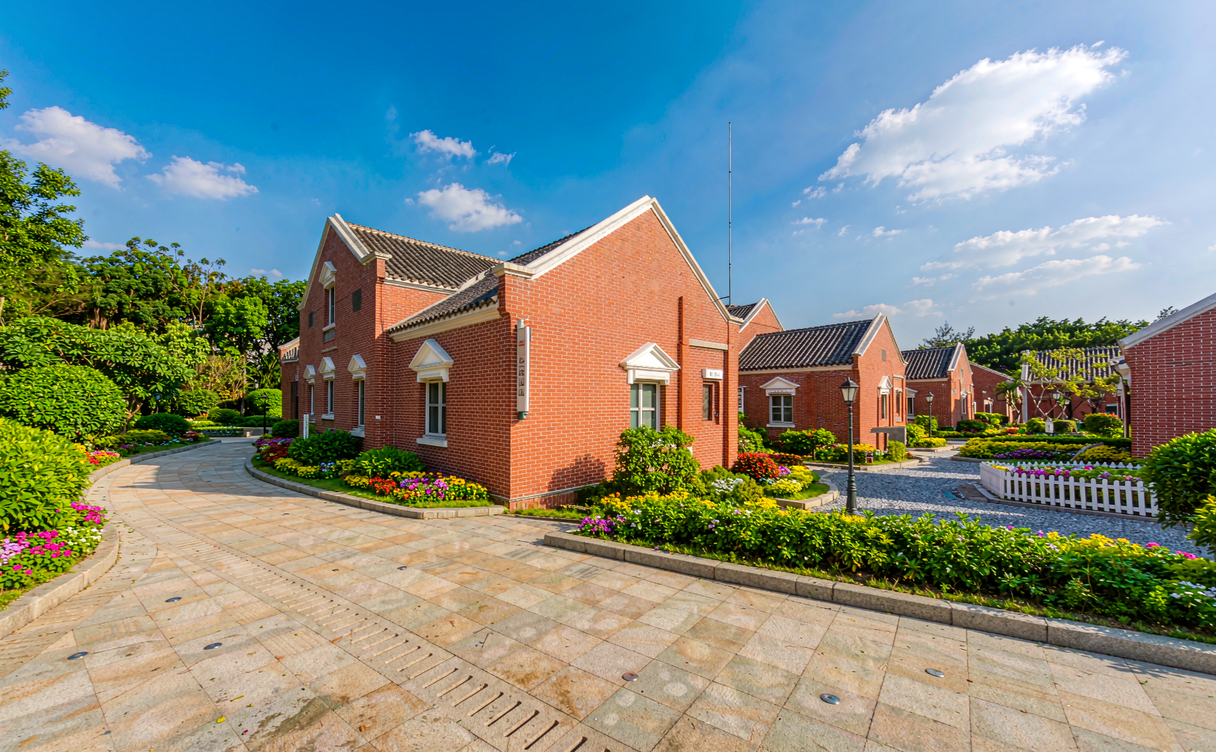
The village also sits inside the buffer zone of the UNESCO-listed Historic Centre of Macau, which recognizes how Portuguese and Chinese building traditions merged here over four centuries. That designation is why the low-rise skyline is protected — you will not find a single high-rise intruding on the rooftops, a rare thing in any Asian city.
Practical notes before you go
Most shops open around 10am and wind down by 8pm; the temples keep their own hours, with Pak Tai Temple usually open 8am to 6pm. ATMs are plentiful on Rua do Cunha, and the village is flat and largely step-free, which makes it one of the easiest Macau neighborhoods to navigate with a stroller or a rolling bag. Free public toilets are signed near Largo do Cunha and by the Taipa Houses. If you are building a Macau itinerary around food and history rather than gaming, Taipa Village is the anchor — spend your morning here, cross to the peninsula for the Ruins of St. Paul’s and A-Ma Temple, and reserve one evening for the Cotai light show if you must see it.
Final thoughts
Taipa Village rewards the traveler who slows down. There is no single monument you must photograph; the pleasure is cumulative — a tart, a shaded lane, a church bell, a bowl of congee, the cool tiles of a 1920s house. In a city often reduced to its casinos, this is the version of Macau, China I always come back for, and the one I send first-time visitors to before anything else.