

Luohe rarely appears on foreign itineraries, and that is precisely why we like sending curious travelers there. Sitting almost dead-center in Henan province, where the Shahe and Lihe rivers meet, Luohe is a small, tidy city best known inside China for two things that could not be more different: a 9,000-year-old Neolithic site that rewrote what we thought we knew about early Chinese music and rice, and a modern meat industry that supplies supermarkets across the country. This Luohe travel guide shows how a half-day at the riverfront and a morning at the archaeological park add up to one of the most surprising stops on a central-Henan rail line.
A Luohe Henan travel plan works best as a deliberate detour rather than a destination in itself. The city is about 50 minutes by high-speed train from Zhengzhou and roughly two hours from Wuhan, so it drops neatly into a Wuhan–Zhengzhou journey. Most visitors stay one night, see the Neolithic park and the riverside, and move on — but the locals’ evening river walk is genuinely lovely and worth slowing down for.
The Shahe Riverfront
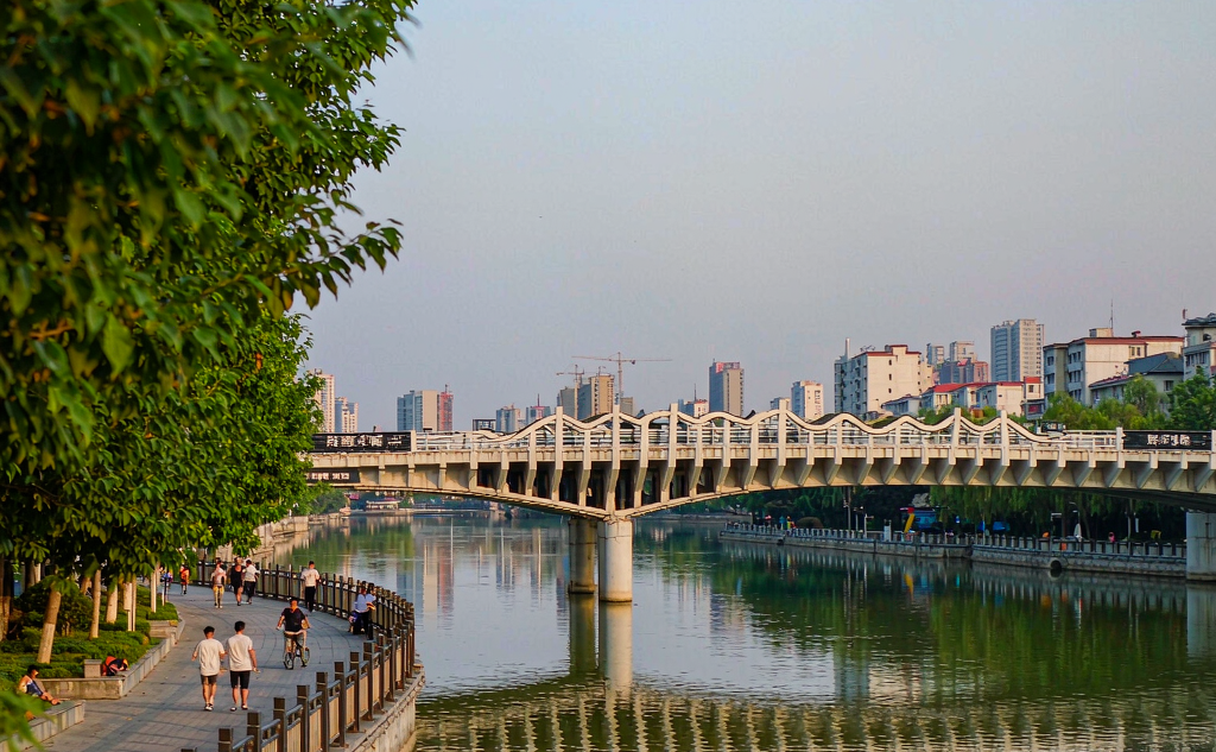
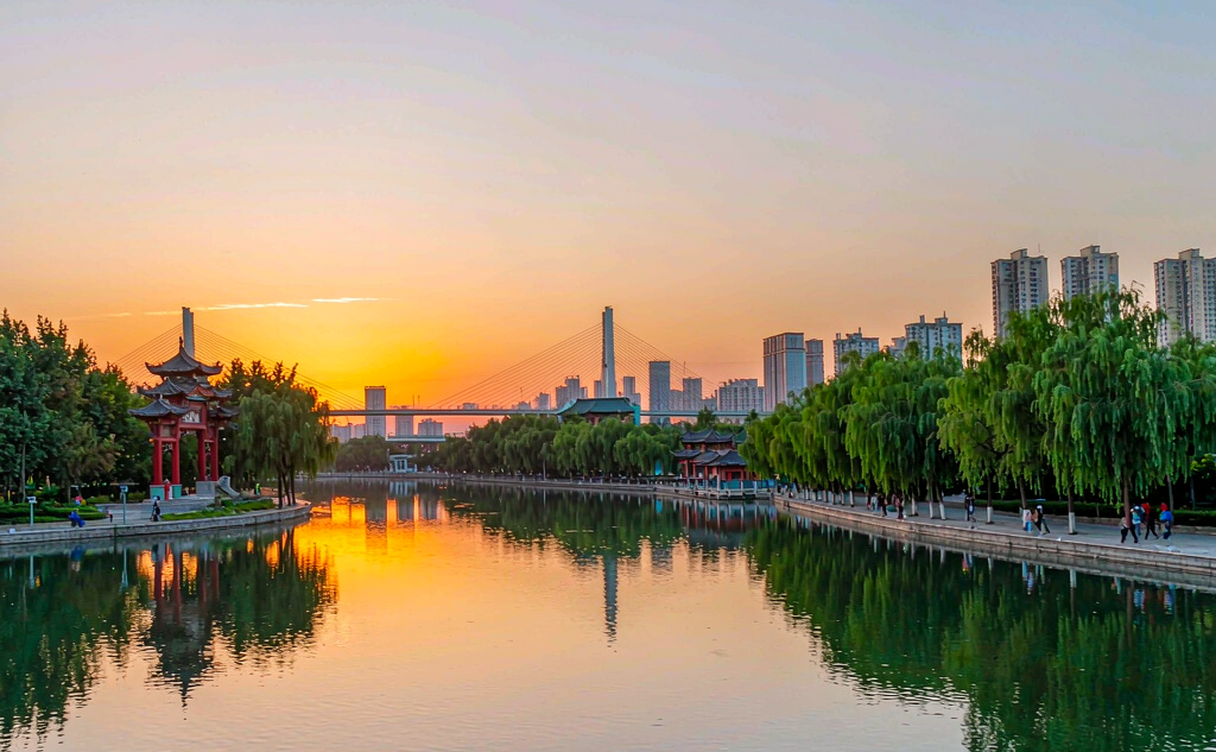
Start with the obvious: the Shahe riverfront Luohe is proud of. The city has built a long, landscaped belt along the Shahe and Lihe confluence, with lit bridges, exercise decks, and a nightly crowd of walkers, dancers, and fishermen. We tell clients to come at dusk, when the pedestrian bridges glow and the water reflects the skyline — it is the kind of ordinary Chinese evening that guidebooks never mention but that travelers remember. A rented paddle boat or a simple stroll costs almost nothing (¥10–¥30), and the riverside snack stalls sell the local “beiwu” pepper soup, a fiery breakfast broth that Luohe shares with the wider Henan tradition.
The Luohe Neolithic Park: Jiahu
The headline sight is the Jiahu archaeological site, marketed locally as the Luohe Neolithic park. Jiahu, in Wuyang County on the city’s western edge, dates to around 7,000–5,800 BCE and is one of the most important early settlements of the Peiligang culture. The finds here are staggering: carved bone flutes that still play a scale, the earliest evidence of fermented beverage in the world, early cultivated rice in the north, and inscribed tortoise shells that some scholars read as proto-writing. The site museum (about ¥40–¥60 with the park shuttle) displays replicas and a few originals, with a calm, well-labeled route through the excavated house foundations and burial pits. We usually advise clients to hire the museum’s English-speaking guide if available, or to read up beforehand, because the labels are mostly Chinese. Allow two to three hours.
Xu Shen and the First Dictionary
Luohe also claims the scholar Xu Shen, the Eastern Han author of the Shuowen Jiezi, the first comprehensive dictionary of Chinese characters. His Xu Shen Culture Park, in the Yancheng district, is a calm walled compound of courtyards, steles, and a small museum explaining how the dictionary organized some 9,000 characters by radical — the system still taught today. It is more of interest to language lovers than casual sightseers, and entry is modest (around ¥30). For most travelers we treat it as an optional add-on if the morning at Jiahu finishes early.
Luohe’s Surprising Modern Side
What the guidebooks skip is that Luohe is the headquarters of one of the largest meat-processing companies in the world, and the city’s clean, almost sterile industrial parks sit oddly beside the Neolithic silence of Jiahu. The local ham and vac-packed sausages are genuinely good and cheap, and the central market sells fresh cuts by the kilogram for picnic prices. We sometimes build a “past and present” half-day: the 7,000-year-old bone flutes in the morning, the gleaming meat counters in the afternoon, which makes the point that Henan feeds modern China as surely as it nurtured its earliest villages. It is an odd couple of sights, but travelers who like contrast enjoy it.
Luohe to Zhengzhou and Getting Around
The key transport fact is the Luohe to Zhengzhou link: high-speed trains run roughly every half hour, take about 50 minutes, and cost ¥60–¥90 second class. From Wuhan it is about two hours (¥120–¥160). Luohe West Railway Station is modern and easy, and the city center is a 20-minute taxi (¥20–¥30) away. For the Jiahu site, budget a 40-minute car ride west; a hired driver for the day runs ¥400–¥600. DiDi works in the city but not reliably to the outer counties, so we book a car in advance for clients who want the Neolithic park without stress.
If you are building a Henan route, the Zhengzhou travel guide is the usual hub, the Kaifeng travel guide adds the Song water city northeast, and the Xinyang travel guide covers the tea hills to the south. Farther afield, the Shangqiu travel guide describes another under-visited Henan county-level city, and the China Grand Canal travel guide explains the waterway history that shaped towns like this one.
When to Go and What It Costs
Spring and autumn are best; summers are hot and sticky, and the open excavation park has little shade. A realistic day budget is low: park entries ¥40–¥60 each, a riverside snack ¥15–¥30, a decent hotel ¥200–¥380. Luohe is cheap by any standard, and the value is in the quiet, un-touristed pace.
Where to Stay and Eat
Mid-range chains (Atour, Vienna, local brands) cluster near Luohe West Station and the river, ¥200–¥380 a night. Food is the highlight: beyond the pepper soup, Luohe is the headquarters of one of China’s largest meat processors, and the local ham and sausage stalls are unusually good. The night market by the river is the best cheap eat, with skewers, noodles, and sweet tofu for ¥20–¥50 a person.
A Sample 1-Day Plan
- Morning: Train in from Zhengzhou; driver to Jiahu Neolithic park (2–3 hours).
- Afternoon: Xu Shen Culture Park if interested; check into a riverside hotel.
- Evening: Shahe riverfront walk and night-market dinner.
The broader China off the beaten path guide lists similar under-visited county towns if you want to extend the theme beyond Henan.
For an independent, scholarly overview of the site that draws visitors here, the Jiahu page on Wikipedia covers the flutes, the rice, and the fermented beverage in detail.
Practical Tips
The things to do in Luohe are spread out, so resist the urge to “just walk” to Jiahu — it is far, and a pre-booked car saves the day. Carry cash for the park and the market, even though the city takes mobile pay. And time your river walk for dusk; the lit bridges are the single best photo in town, and the local evening crowd is the most authentic show Luohe offers. We also remind clients that the Jiahu museum replica flutes are sometimes played at festivals, so checking the local event calendar before you come can turn a quiet site into a small concert. Winter brings grey cold but almost no visitors, which photographers sometimes prefer for empty shots of the lit bridges.