

What liangpi really is (and why “cold noodles” is the wrong translation)
I first met liangpi on a July afternoon in Xi’an when the thermometer on the corner shop read 39°C and the only thing anyone on the street seemed to want was something cold. A woman behind a bicycle cart pulled a shallow bowl from a foam box, flicked in two spoonfuls of pale sesame sauce, a streak of brick-red chili oil, a handful of shredded cucumber, and slid it across the counter without a word. The noodles were wide, pale, faintly translucent ribbons that looked nothing like the wheat noodles I’d been eating all week. One bite and the heat of the city simply stopped. That bowl is the best argument I know for understanding Shaanxi food before you ever order the famous hot noodles.
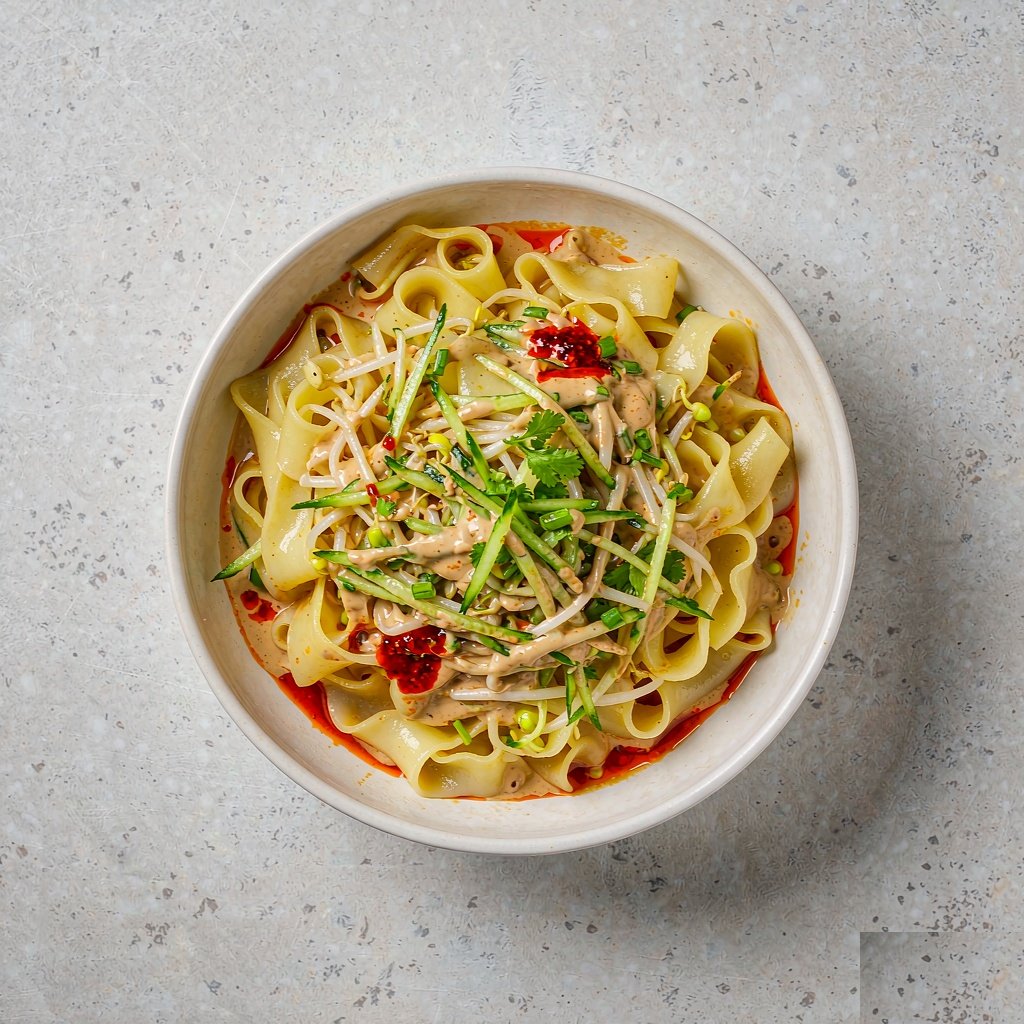
Liangpi — written 冷皮 and pronounced “lyang-pee” — translates literally as “cold skin.” The name is not poetic. The noodle is a sheet of cooked wheat starch that has been cooled, rolled, and cut into ribbons, then served cold. This matters because most English menus file it under “cold noodles,” which makes people expect something like chilled lo mein. It isn’t. There is no boiling of a dough strand. The base is pure starch, washed free of gluten, which gives liangpi its signature chew: slippery, springy, with a faint resistance before it yields — closer to a good Vietnamese phở sheet than to pasta. If you want to read more about the wider regional picture, our Shaanxi food guide covers the surrounding dishes.
How liangpi is made the traditional way
The honest version begins with a ball of wheat dough and a lot of patience. You knead flour and water into a firm dough, let it rest, then knead it submerged in cold water. The water turns milky as the starch bleeds out; what’s left in your hands is a tight lump of gluten. You pour off the starchy water, let it sit overnight so the starch settles to the bottom, pour off the liquid on top, and ladle the wet starch slurry into a shallow oiled plate. Steam that plate for a couple of minutes, drop it in cold water, and the sheet lifts away as a coherent, jellied skin. Stack, cool, roll, slice. The whole process is less cooking than alchemy — you are separating one grain of wheat into its two personalities.
The gluten that gets left behind (mian jin)
Nothing is wasted. The gluten lump, called mian jin, is steamed separately into a spongy, chewy slab, sliced, and dropped right back into the liangpi bowl. In parts of Gansu and across the northwest this combined version — noodles plus gluten nuggets — is the default, and aficionados will tell you the springy mian jin is the best bite in the bowl. It also means a bowl of liangpi carries more protein than its delicate looks suggest.
What does liangpi taste like?
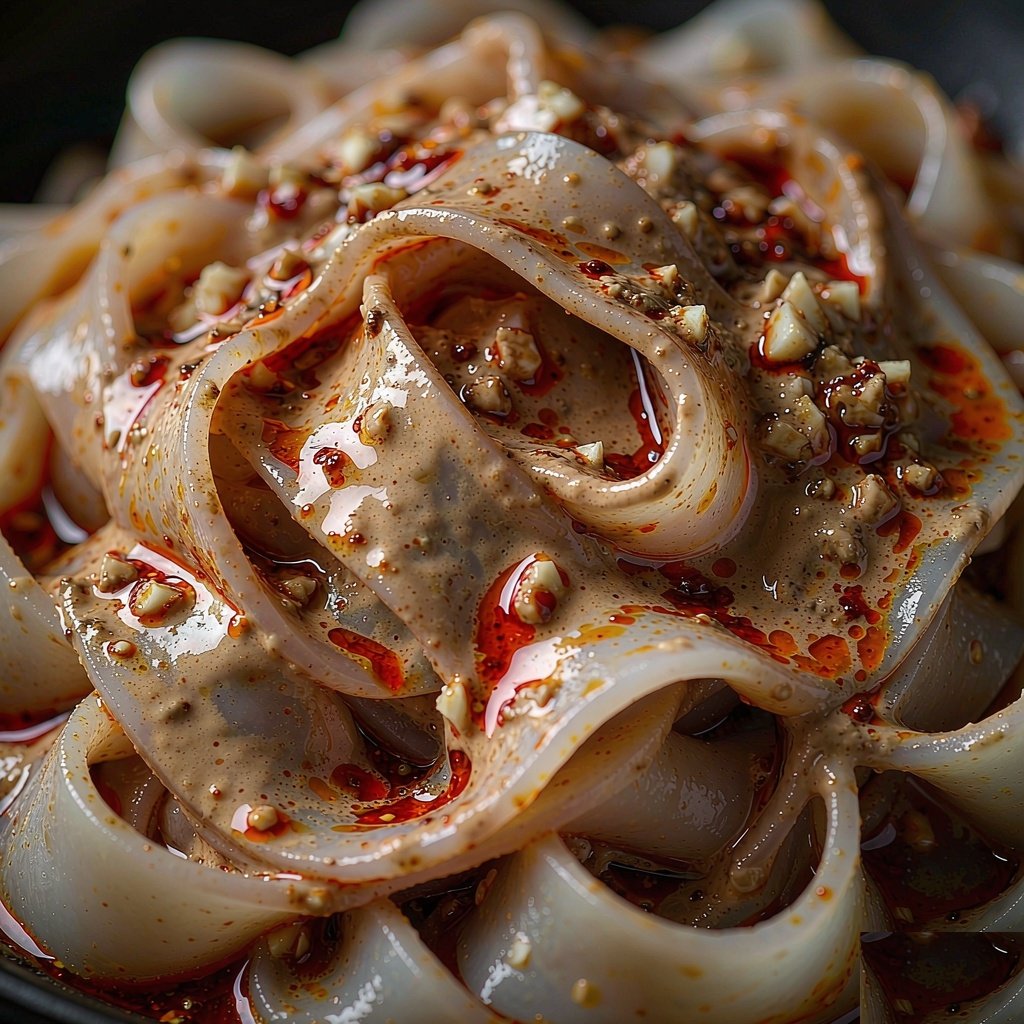
Cold first, then sour, then nutty, then heat. The base flavor is built on three things: a garlic-water (mashed raw garlic steeped in cold water), a sharp aged vinegar, and a pale sesame paste that reads more like tahini’s quieter cousin than peanut sauce. On top goes youpo lazi — Shaanxi’s cumin-tinged chili oil — which is aromatic rather than brutally hot, plus salt, sometimes a little soy, and a shower of blanched mung bean sprouts and shredded cucumber for crunch. The texture does most of the work: each ribbon is cool and slick, then catches on your teeth with a snap of elasticity. It is savory, refreshing, and genuinely addictive in the way only a cold dish on a hot day can be.
The many faces of Shaanxi liangpi
Order “liangpi” in Shaanxi and you’ve asked an open question, because the province alone produces several distinct versions:
- Qishan ganmianpi (崇山戴面皮): from Baoji’s Qishan county, hand-rolled thicker, steamed, then cut — denser, chewier, with a louder sour-vinegar punch.
- Niangpi (醁皮): the sesame-paste-heavy version popular in Lanzhou and across Gansu, saucier and paler.
- Hanzhong mipi (汉中米皮): made from rice, not wheat — softer, whiter, almost custardy, and a different dish that simply shares the name.
- Cufen (醋粉): a vinegar-residue starch sheet, tangy and rustic, found in smaller towns.
Knowing these names saves you from ordering the wrong bowl when you travel, and it explains why two “liangpi” in different cities can taste like cousins rather than the same dish.
Liangpi ingredients you’ll need
For two generous bowls:
- Wheat starch: 120 g (sold as “wheat starch” or “wheat flour starch”; this is the shortcut that skips the dough-wash)
- Cold water: 240 ml for the slurry, plus more for cooking
- Mung bean sprouts: 80 g, blanched
- Cucumber: 1 small, shredded
- Garlic: 3 cloves, made into garlic-water
- Aged vinegar: 2 tbsp
- Sesame paste (or tahini loosened with water): 2 tbsp
- Chili oil (youpo lazi style): 1–2 tbsp
- Salt, a little light soy, to taste
If you want the authentic mian jin, add 150 g bread flour and wash it by hand (see the method below). The starch shortcut keeps the liangpi recipe doable on a weeknight.
How to make liangpi at home, step by step
This is the weeknight method using wheat starch, the practical way most home cooks outside China actually make it. The result is nearly identical to the washed-dough version for eating.
- Make the slurry. Whisk wheat starch with cold water until completely smooth; rest 20 minutes and whisk again — any lumps become rubbery spots in the sheet.
- Prepare the plates. Lightly oil two shallow heatproof plates. Have a big pot of boiling water and a basin of cold water ready.
- Steam the sheet. Ladle a thin layer of slurry into a plate, swirl to cover, steam covered 2–3 minutes until opaque and set, then float the plate in cold water and peel the sheet off.
- Stack and cool. Lay sheets on a lightly oiled surface, repeat until the slurry is gone, then refrigerate them rolled or flat.
- Slice. Roll a sheet and cut into 1–2 cm ribbons — wider than you think; they shrink as they sit.
- Make garlic-water. Mash garlic with a pinch of salt, add 3 tbsp cold water, strain.
- Assemble. Pile ribbons and mian jin in a bowl, add sprouts and cucumber, then sauce: garlic-water, vinegar, sesame paste, chili oil, salt, soy. Toss hard for 30 seconds so every ribbon glistens.
- Rest and eat cold. Let it sit two minutes, then eat cold. Don’t let it warm up — the charm is the chill.
The sauce is half the dish — liang pi sesame sauce and chili oil
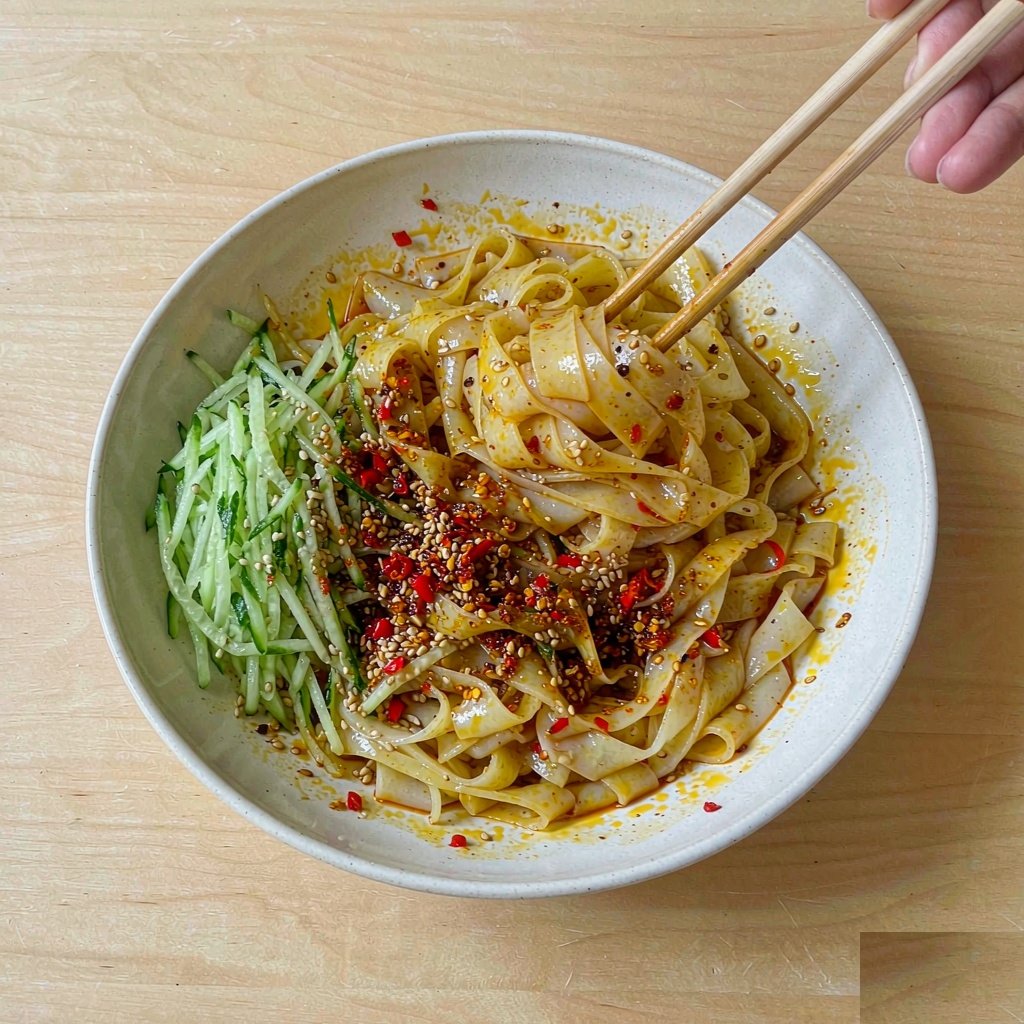
If there’s one thing that separates a forgettable bowl from a great one, it’s the sauce balance. The liang pi sesame sauce must be loosened with warm water to a pourable cream; straight from the jar it clumps and coats unevenly. The chili oil should be made by blooming cumin, Sichuan peppercorn, and dried chili in hot oil, then cooled — this is youpo lazi, and it carries the dish’s only real heat. Taste as you go: the goal is glossy, tangy, and just loud enough that you reach for the next bite. Many home cooks also keep a little crushed peanut or toasted sesame for texture, and a few drops of the starchy cooking water can help the sauce cling.
Who should eat liangpi, and who should go easy
It’s an easy yes for vegetarians (the standard bowl is fully plant-based), for anyone avoiding heavy fried food, and for travelers fighting the summer heat. It’s a light yes with caveats for: people with sensitive stomachs, since cold food plus raw garlic can unsettle digestion; anyone watching sodium, because the sauce is salty; and those avoiding gluten — note that wheat-starch liangpi still contains trace gluten from processing, while the Hanzhong rice version (mipi) is the safer bet, though you should still confirm the kitchen. The mian jin gluten nuggets add protein but also more chew and calories.
How to eat liangpi in Xi’an (and what to order)
In Xi’an the classic move is liangpi as a breakfast or late-afternoon snack — for the morning angle, our China breakfast guide maps how cold noodles fit a local zao fan routine — often paired with a rou jia mo (the local stuffed bun) so you get cold noodles and warm meat in one sitting. When you order, say how you like it: “shao la” (少辰, less chili), “duo cu” (多醋, extra vinegar), or ask for the Qishan ganmianpi if you want more chew. The Xi’an street food and biangbiang noodle scene serves it pumped out by the second, but the small back-alley shops away from the bell tower often make it fresh each morning. For a broader Shaanxi eating plan, see our Xi’an food guide.
Liangpi calories and what’s actually in the bowl
A typical street portion runs roughly 300–450 kcal: most of it from the starch sheet and the sesame paste, with the chili oil adding another 40–80. It’s lighter than a loaded noodle soup and has almost no added sugar, but the sodium can climb past 800 mg once the sauce goes in. Treat it as a refreshing side or light meal rather than a calorie-free health food — the sesame paste is calorie-dense even in small spoonfuls, and it’s easy to be generous.
A short history of Shaanxi cold noodles
Liangpi’s roots sit in the wheat belt of the Guanzhong plain, where cool starch sheets were a practical way to preserve the harvest and eat something refreshing without lighting a fire in summer. Local lore ties the Qishan version to the Three Kingdoms-era strategist Zhuge Liang, though the dish as eaten today settled into its current form through centuries of street vendors. What’s certain is that by the Republic period liangpi was already a Xi’an staple, and migration carried it — and its regional cousins — across northwest China and, eventually, into Chinese restaurants worldwide. The history of Shaanxi cold noodles is really a story of wheat, water, and patience.
Frequently asked questions about liangpi
Is liangpi gluten free?
Wheat-starch liangpi is not strictly gluten free; trace gluten remains from processing. The Hanzhong rice version (mipi) is closer, but still verify the kitchen if celiac is a real concern. Choose the rice-based sheet when in doubt.
Can I make liangpi without washing dough?
Yes. Using store-bought wheat starch skips the dough-wash entirely — you go straight to the slurry. The texture is nearly identical for home eating, and you avoid an hour of rinsing. The only thing you lose is the fresh mian jin gluten nuggets, which you can buy separately or simply skip.
How long does homemade liangpi last?
The steamed sheets keep 2–3 days refrigerated, lightly oiled and covered. Once sauced, eat within a few hours — the noodles absorb liquid and go soft. Unsauced sheets also freeze well for about a month; thaw in the fridge before slicing.
What’s the difference between liangpi and rice noodle rolls?
Liangpi is a wheat-starch sheet served cold with a savory sesame-chili sauce; rice noodle rolls (cheung fun) are a rice batter steamed into soft rolls, usually warm, with a thin soy or hoisin-style sauce and often a filling. Different grain, different temperature, different sauce family — the only overlap is the ribbon shape.
How spicy is liangpi?
Mild to medium by default — the chili oil is aromatic more than fiery, and you control the amount. Ask for “shao la” to keep it gentle, or “jia la” for more. The heat builds slowly rather than hitting all at once, which is why even chili-shy travelers usually finish the bowl.
Where can I find the best liangpi in Shaanxi?
The honest answer is everywhere, but Xi’an’s Muslim Quarter and the small shops along the Xi’an food guide routes, plus Qishan county for the chewy ganmianpi, are the strongest starting points. Freshness matters more than fame — look for shops steaming in the morning rather than scooping from a day-old stack.
Liangpi is one of those dishes that sounds plain on paper and then quietly rewires what you expect cold noodles to be. Once you’ve had it properly sauced on a hot day — the cool, nutty, chili-glossed bite — the memory tends to outlast the summer, and the next time you see it on a menu you’ll know exactly which version to point at.