

A river in northeast China ran into a wall of cooled lava about ten thousand years ago, backed up behind it, and made a lake forty-five kilometres long. That is Jingpo Lake, or Mirror Lake, in southern Heilongjiang, and the geology is not a footnote here: it is the whole attraction. The dam is basalt, the shoreline is black rock, the forest floor collapses into volcanic craters a few kilometres north, and the lake’s outflow drops over a lava lip as the widest waterfall in the country. This Jingpo Lake guide covers when the water actually runs, how the boats work, what to do about the craters, and how to reach a place that sits four hours from the nearest city most travellers have heard of.
Why Visit Jingpo Lake
Northeast China gets skipped. Travellers do Harbin in January for the ice festival and leave. Jingpo Lake is the argument for staying longer: a national park-grade landscape of water, birch and volcanic rock with a fraction of the crowding you would find at an equivalent site further south. It is part of the Jingpo Lake Global Geopark, recognised for its lava-dammed lake system, and its two headline sights sit within an hour of each other.
The first is Diaoshuilou Waterfall (吊水楼瀑布), where the lake’s outflow drops about 25 metres over a horseshoe of dark basalt up to 300 metres wide in flood. The second is the underground forest craters Heilongjiang is known for — a cluster of ten collapsed volcanic calderas, forested to the rim and down inside, so you stand on a boardwalk looking down into a bowl of old-growth trees. Together with the boat routes on the lake itself, that is a comfortable two days.
If you are assembling a northeast route, this slots in beside Mudanjiang, the nearest base city, and pairs with Harbin’s Central Street at the start or end of the trip.
Diaoshuilou Waterfall Best Season
This is the question that decides your trip, because the falls are seasonal in a way that catches people out.
Late June to September — full flow. The Diaoshuilou waterfall best season for volume. Summer rain fills the lake, the sheet of water goes wide, and spray reaches the viewing platforms. July and August are peak: 20–28°C, green forest, and the highest domestic visitor numbers of the year.
Late September to mid-October — the best compromise. Flow is still respectable, birch and larch turn gold, and the crowds thin. Temperatures sit at 5–18°C. For anyone following our best autumn destinations in China, this window is the pick.
May to mid-June. Snowmelt gives moderate flow and the forest is greening. Cool, 10–20°C, and quiet.
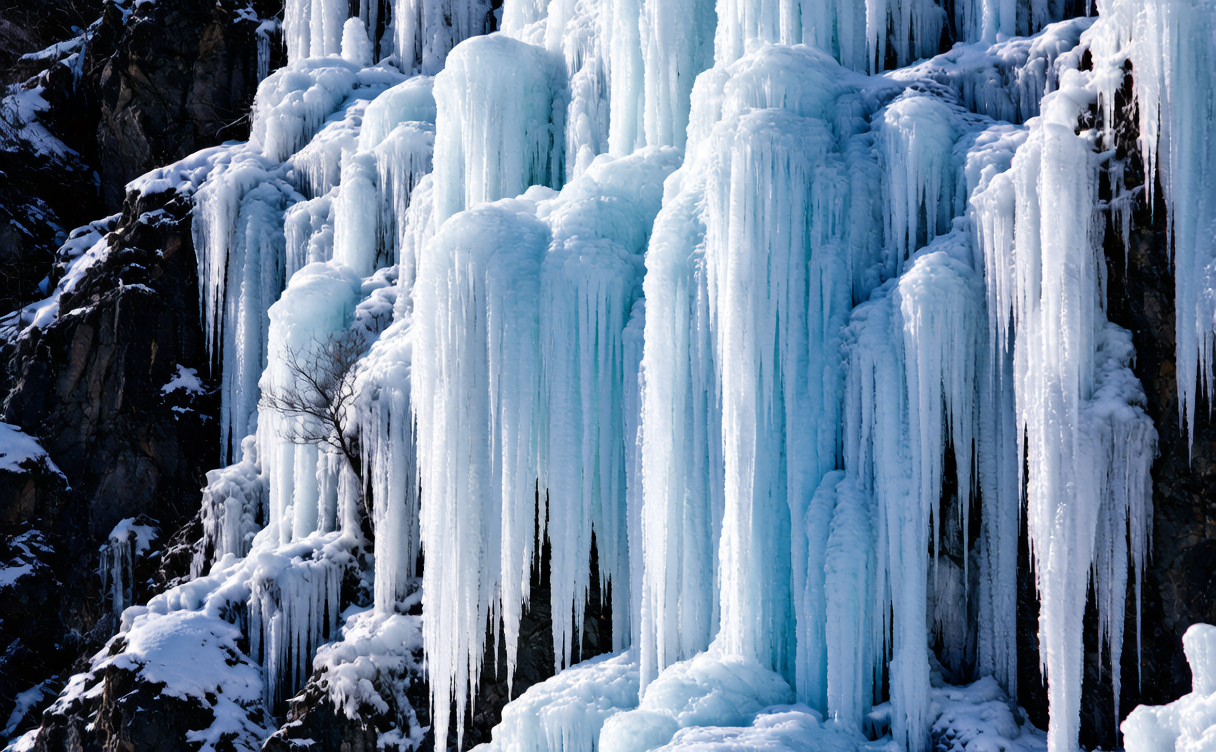
November to April — Jingpo Lake winter ice. The lake freezes hard and the waterfall becomes a wall of blue-white ice, which is genuinely spectacular and completely different. Boats stop entirely. Expect −15 to −25°C in January. Come for the ice, not the water, and dress for real cold.
How to Get to Jingpo Lake
The short answer to how to get to Jingpo Lake is: high-speed train to Mudanjiang, then road. There is no rail station at the lake.
| From | Mode | Typical duration | Approx. cost |
|—|—|—|—|
| Harbin → Mudanjiang | High-speed rail | 1 hr 20 min – 2 hr | ¥90–160 (US$13–22) |
| Mudanjiang → Jingpo Lake | Bus or car | 2 hr – 2 hr 30 min | ¥40 bus / ¥350–500 car (US$6 / US$49–70) |
| Harbin → Jingpo Lake | Private car, direct | 4 hr – 4 hr 30 min | ¥800–1,100 (US$112–154) |
| Dunhua (Jilin side) → lake | Car | around 1 hr 30 min | ¥300–450 (US$42–63) |
Buses from Mudanjiang’s long-distance station run a few times daily in summer and thin out badly in winter, so a car with driver is the standard choice for foreign visitors. Confirm the return leg before you set off; getting stranded at the gate at 17:00 is a real possibility off-season.
Jingpo Lake Boat Tour
A Jingpo Lake boat tour is the only way to see the lake’s scale, since the road hugs just one end. Boats leave from the wharf near the north gate.
- Large tour boat. 60–90 minutes, covers the northern basin and the eight main scenic islets, ¥80–120 per person (US$11–17). Runs on a schedule from roughly 08:30 to 16:00 in summer.
- Speedboat. 20–30 minutes, ¥100–150 per boat, for people short on time.
- Charter. ¥400–700 for a small boat, useful if you want the far shore and its basalt cliffs.
Service is suspended from freeze-up to thaw, broadly late November to late April. In deep winter the same water hosts ice activities instead.
The Underground Forest Craters
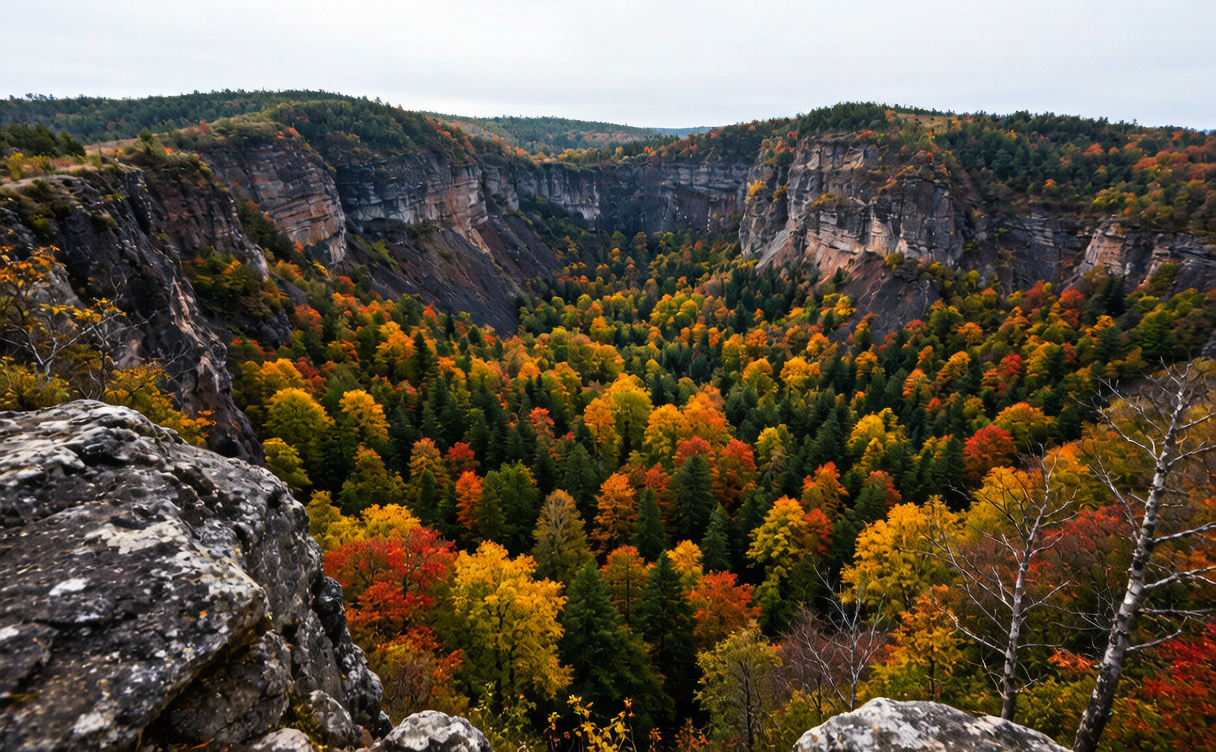
About 50 kilometres north of the lake, the Underground Forest (地下森林) is the site’s quiet masterpiece and the reason to give the area two days. Ten craters, remnants of eruptions from the Laoheishan volcanic field, have collapsed inwards and filled with mature Korean pine, birch and spruce. Boardwalks and stone stairs run along the rims with two descents into the larger bowls. Reckon on two to three hours of easy walking, some of it on steps.
Crater No. 3 is the deepest accessible one at roughly 130 metres, and the temperature drop as you descend is noticeable. Bring a layer even in July. Serious walkers can add the Laoheishan cone itself, a straightforward climb with a crater-rim loop at the top; our China hiking and trekking guide sets out what to expect from trail signage and gear in this part of the country.
Tickets and Opening Hours
Entry is bundled by zone rather than sold as one pass, which surprises people.
- Jingpo Lake scenic area: roughly ¥80–110 (US$11–16), plus a compulsory internal shuttle of about ¥30.
- Underground Forest: roughly ¥60–90 (US$8–13), separate ticket, separate gate.
- Boat trips: extra, as above.
Gates generally open 07:30–08:00 and stop selling around 16:00–16:30 from May to October, with shorter winter hours. Bring your passport; it is checked at the ticket window. Background on the geology and protected status is published through the UNESCO Global Geoparks programme, which lists the Jingpo Lake site among China’s designated geoparks.
Where to Stay
At the lake gate — ¥200–450 (US$28–63). A cluster of hotels and guesthouses inside and just outside the scenic area. Convenient for a dawn start at the falls, limited in food choice, and some cannot register foreign passports. Confirm before booking.
Mudanjiang city — ¥150–350 (US$21–49). Full range of chain hotels, reliable passport registration, but a two-hour drive each way.
Jingpo Lake resort hotels — ¥500–900 (US$70–126). Larger state-run properties by the water, dated but comfortable, with the advantage of being inside the gate.
Two nights at the lake is the sweet spot: falls and boat on day one, craters on day two.
Practical Tips
- Passport for train tickets and every gate.
- Cash matters here. Alipay and WeChat Pay work at the main windows, but small vendors and some drivers prefer cash. Carry ¥300–500.
- Mosquitoes are aggressive from June to August. Repellent is not optional.
- Layers. Crater floors and morning spray zones run 8–10°C colder than the car park.
- No English. Save place names in characters; drivers rarely speak any English.
- Food. Freshwater fish from the lake, wild mushrooms, and northeastern stews. A meal for two is ¥120–200.
- The high-diving show. A diver plunges from the falls’ lip several times daily in summer. It is a spectacle, and it draws the biggest crowds of the day.
FAQ
Is Jingpo Lake worth visiting?
Yes, if you want serious landscape without serious crowds and you are comfortable with a long drive. The combination of the widest waterfall in China and a set of walkable volcanic craters does not exist anywhere else in the country.
How many days do I need?
Two. One day for the lake, the falls and a boat trip, one for the Underground Forest. A single rushed day is possible but you will drop the craters, which are the more unusual half.
Can I see the waterfall in winter?
Yes, frozen. Jingpo Lake winter ice turns the falls into a still blue cascade, and the scenic area stays open, but boats do not run and you need serious cold-weather clothing.
How does it compare to Changbai Mountain?
Different scale. Changbai Mountain is a bigger, higher volcano with a summit crater lake and far more infrastructure. Jingpo is lower, gentler and quieter. Many travellers do both on one northeast loop, and both appear in our China national parks guide.
Written by Karl, China Travel Places — updated August 2026.