

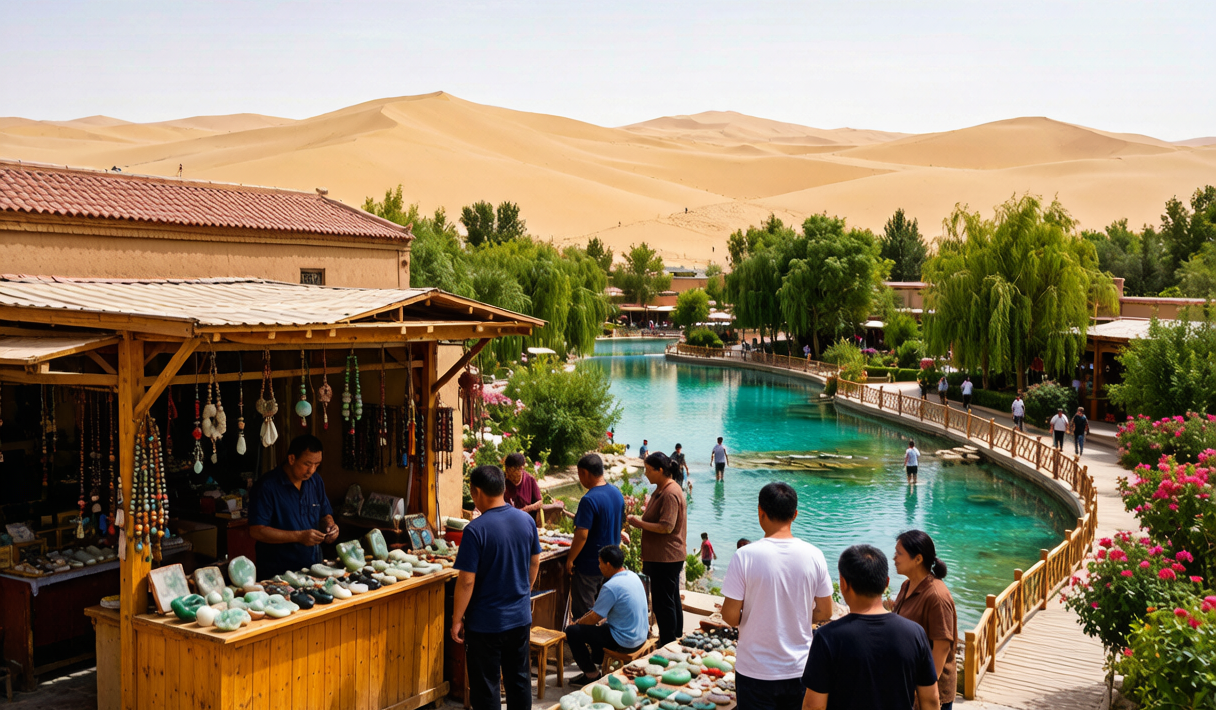
Hotan, China, sits at the southern edge of the Tarim Basin in Xinjiang, China, where the Hotan River fans out into a green oasis ringed by the Taklamakan Desert. This Hotan travel guide covers the best time to visit, how to get there, the top things to do, where to stay, what to eat, and a practical itinerary for this remote but deeply rewarding Silk Road city. Famous for its creamy nephrite jade, handwoven atlas silk, and dense Uyghur bazaars, Hotan offers travelers a slower, more traditional side of southern Xinjiang than the big northern hubs. It is a place where the desert and the river still shape daily life, where workshops hum with wooden looms, and where the morning air carries the smell of baking naan.
Best Time to Visit Hotan
The best time to visit Hotan is spring (April–May) and autumn (September–October), when daytime temperatures sit comfortably between 18–28°C and the desert air is dry, clear, and easy to travel in. Spring brings blossoming apricot and mulberry trees across the oasis, while autumn is harvest season for the region’s famous seedless grapes and melons. Summers are extremely hot — daytime highs often exceed 35°C — so sightseeing is best done in the early morning or after sunset, and the midday sun can be genuinely punishing. Winters are cold but sunny, with frosty nights and thin tourist crowds, and the bright low light is excellent for photography.
Sandstorms can roll in from the Taklamakan on windy spring days, briefly reducing visibility, so pack a light scarf and flexible plans. Because Hotan is far from China’s coast, the climate is strongly continental: huge day-to-night temperature swings mean you should carry a layer even in warm months. If you want the liveliest atmosphere, time your visit to a weekly market day, when the surrounding villages pour into the city. For season planning beyond Hotan, our best time to visit China guide maps out the whole country month by month.
How to Get There
Hotan is far from China’s eastern cities but well connected within Xinjiang by air and rail. Train and bus schedules can be checked on China Railway’s official portal, China Railway (12306).
- By air: Hotan Airport (HTN) has daily flights from Urumqi and Kashgar, with seasonal connections to Xi’an and other hubs. The airport sits about 15 minutes from the city center by taxi, and fares are modest.
- By train: The railway from Urumqi to Hotan runs straight through the Taklamakan Desert on a remarkable engineered line — a journey worth taking for the scenery alone. The trip from Kashgar takes roughly 9–11 hours, and from Urumqi around 20+ hours, so many visitors fly one way and take the train the other.
- By road: Long-distance buses and private drivers link Hotan with Kashgar and the southern desert highways. The road trip across the Tarim is long but scenic, passing oasis towns, poplar groves, and endless dunes.
Top Things to Do in Hotan
The Jade Market (Hotan jade market)
The Hotan jade market is the city’s signature sight — a sprawling bazaar where vendors sort raw nephrite by the riverbank and haggle over pale green and white stones. Even if you don’t buy, watching the trade is fascinating; arrive early morning when the freshest stones come in and the light is soft. For context on the wider region, our Xinjiang travel guide explains how jade has shaped the Silk Road for millennia, and why Hotan stone is so prized.
Karakax (Black Jade) River
A short drive from the city, the Karakax River is where locals wade in to pan for jade after floods and where you can still see the traditional search for the “black jade” that gives the river its name. The riverside is a calm spot for a walk and a window into a livelihood that hasn’t changed in centuries.
Hotan Silk Workshop (Atlas silk)
Hotan is one of the last places in China where Uyghur atlas — tie-dyed silk — is still woven by hand on wooden looms. A workshop visit shows the full process from silkworm cocoon to brilliant, swirling patterned cloth, and the scarves and dresses make meaningful, lightweight souvenirs that carry the story of the city home with you.
The Old Town and Weekly Bazaars (Hotan things to do)
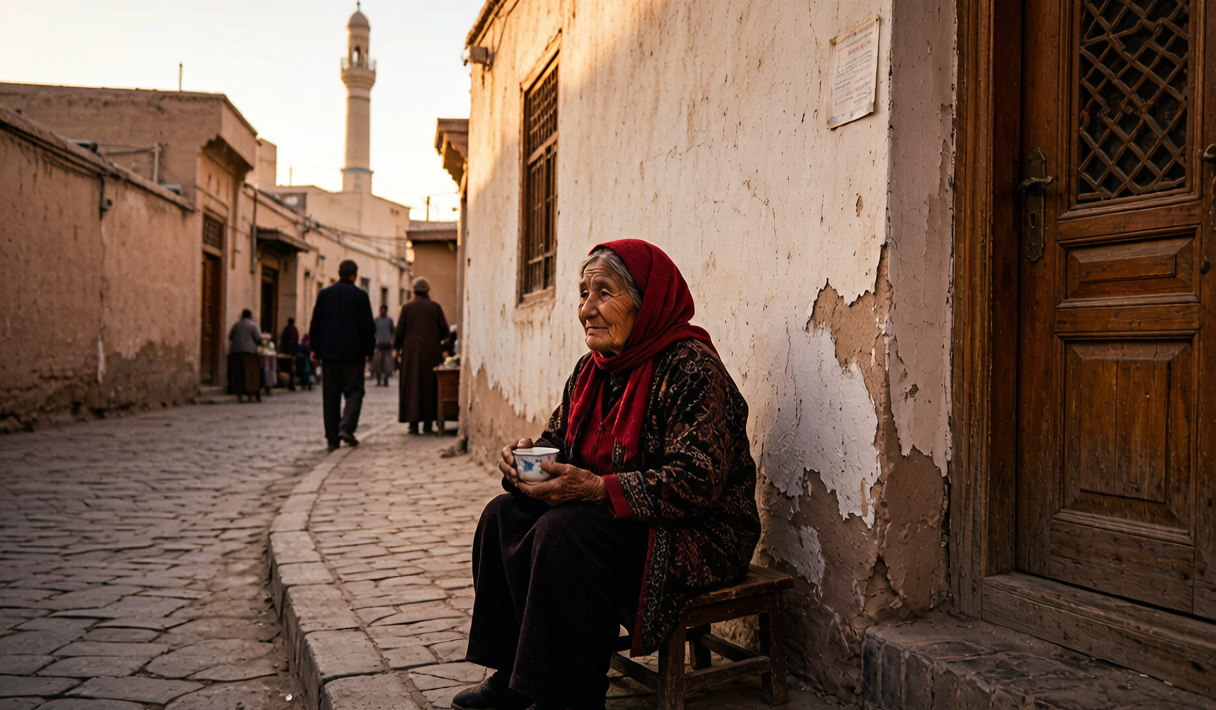
Working through the Hotan things to do list inevitably leads to the old town’s mud-brick lanes, the Sunday livestock market, and the food bazaars. The scale of the weekly market — camels, sheep, towering stacks of naan, and mountains of dried fruit — is a highlight for photographers and culture lovers alike, and it is free to wander.
Desert Edge and the Kunlun Foothills
On the city’s southern horizon rise the Kunlun Mountains, and a short drive delivers you to the desert’s edge, where you can watch the oasis give way to sand. Sunset here, with the dunes glowing orange, is one of the most peaceful moments in southern Xinjiang, China.
Where to Stay in Hotan
Stay in the city center near the main bazaar for walkable dining and easy taxi access to every sight. Mid-range hotels run around ¥250–450 per night, and a few international-standard chains have opened near the airport road for travelers who want familiar comfort. Budget visitors will find clean, family-run guesthouses around the old town, often with rooftop views over the lanes. Book ahead around the National Day holiday in early October, when domestic tourists fill the oasis and prices rise; choose a hotel with reliable heating if you visit in winter, and one with good air-conditioning if you come in summer. Most hotels can help arrange a car and driver for day trips.
Hotan Food and Local Specialties
Hotan’s Uyghur kitchens serve some of the best food in Xinjiang, China: hand-pulled laghman noodles, succulent mutton skewers (kawap), freshly baked naan, polo (rice with carrot and lamb), and sweet Hami melon in summer. The night bazaar is the easiest place to graze across a dozen dishes for a few yuan each, and the plum juice and yogurt drinks are a relief in the heat. For more on the region’s landscapes beyond Hotan, our Kanas Lake Xinjiang guide covers the alpine north — a useful contrast if you are building a full Xinjiang route that pairs desert and mountains.
Hotan Itinerary
A Hotan itinerary of two to three days works well:
- Day 1: Jade market at opening, old-town walk, silk workshop, and a night-bazaar dinner of skewers and naan.
- Day 2: Karakax River panning demo, nearby oasis villages, and a desert-edge sunset beneath the Kunlun foothills.
- Day 3 (optional): Day trip toward the desert highway or an early train or flight toward Kashgar.
A Hotan to Kashgar leg can be combined into a classic southern Xinjiang loop, and if you plan to swing north to the prairies afterward, our Xinjiang Nalati grassland guide shows where the green valleys begin. Together these threads make a satisfying circuit through Xinjiang, China.
Hotan Travel Tips
A few Hotan travel tips: carry small cash for the bazaars because many vendors don’t take cards, bring a scarf for dust and for mosque visits, and use a translation app when haggling over jade. The city is safe and walkable, but distances between sights favor taxis or a hired driver for the day. Sunscreen, sunglasses, and a hat are essential year-round given the desert sun, and you should drink bottled water rather than tap. Photographing people is fine with a smile and a gesture first, and bargaining is expected at the markets — start at roughly half the opening price and enjoy the ritual.
FAQ
Is Hotan worth visiting for foreign tourists?
Yes, for its jade markets, Uyghur culture, and authentic Silk Road atmosphere that feel far from China’s eastern metros.
Do I need a visa for Hotan?
Most visitors need a Chinese visa; Xinjiang, China follows standard national entry rules, so check current requirements before you fly.
How many days do I need in Hotan?
Two to three days is enough to see the markets, the river, and the old town at a relaxed pace.
What is Hotan most famous for?
Nephrite jade, handwoven atlas silk, and the dense, colorful bazaars of southern Xinjiang.
Final Thoughts
Hotan rewards travelers who like their destinations raw and real: a desert oasis where jade, silk, and spice still move the way they did a thousand years ago. Time your visit for the best time to visit Hotan in spring or autumn, and use this Hotan travel guide as the backbone of a southern Xinjiang loop. Pair the city with Kashgar and the northern grasslands for a route that captures the full range of Xinjiang, China. For season planning across the country, browse our best time to visit China guide and start building your route today.