

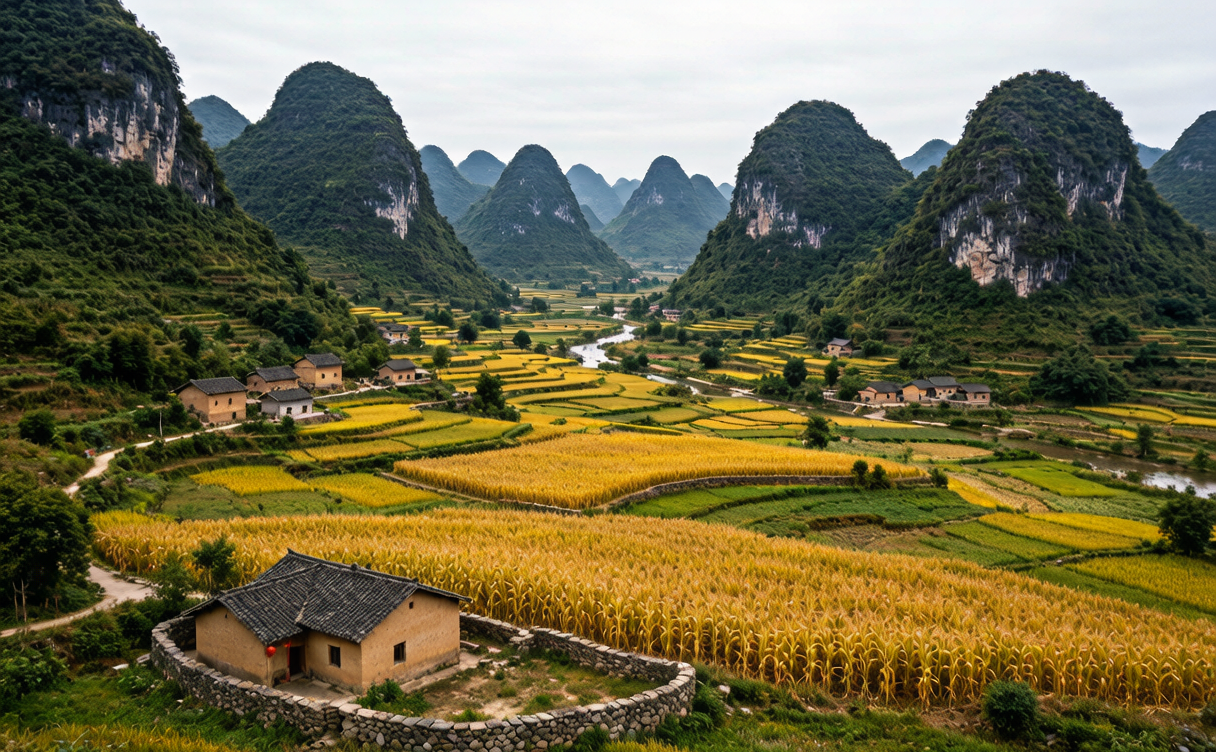
Hechi sits in the northwest of Guangxi, a region better known to foreign travellers for Guilin and Yangshuo but every bit as dramatic once you leave the main tourist trail. What sets Hechi apart is water. The rivers here cut through towering karst peaks, disappear into vast cave systems, and gather in the valleys where local people are famously long lived. This Hechi travel guide covers the Bama longevity villages, the cave networks, and the slow river scenery that makes the area worth the extra effort to reach.
It is written for visitors who already plan to be in Guangxi and want a few days somewhere quieter than the postcard towns. Hechi rewards patience: the best sights are spread out, the buses are slow, and the payoff is landscape with almost no foreign faces.
How to get to Hechi from Nanning and Liuzhou
The fastest route is the high speed train. Services from Nanning reach Hechi in around two hours, and connections from Liuzhou are similar. The city has two stations, Hechi and Jinchengjiang, and most travellers use Jinchengjiang as the main hub. If you are coming from the classic Guangxi circuit, our Nanning travel guide and Liuzhou travel guide explain the two cities most people use to enter the region.
From the station you still need local transport to reach the sights. Bama, the longevity county, is about 90 minutes south by bus. Booking a car with a driver for a day or two is the most practical way to see the scattered caves and rivers, and it is not expensive when split between a small group. Public buses exist but run on village time rather than a timetable you can plan around.
Bama and the longevity villages
The name Bama is tied to a remarkable local claim. For decades the area has recorded an unusually high number of centenarians, and the Bama longevity village visit has become the region’s best known experience. Villages such as Baijing and the riverside hamlets near Panyang attract visitors curious about the diet, the spring water and the unhurried rhythm of daily life.
You should approach this with an open but realistic mind. The longevity story is genuine in the sense that local lifespans run long, shaped by physically active days, simple food and clean air. It is also a soft tourism draw, with shops selling herbal tonics and longevity themed products. The worthwhile part is walking the villages, talking with residents where language allows, and seeing how the terraced fields meet the karst walls.
The Bama Panyang River is the green ribbon that ties these villages together. A short boat ride drifts past cliffs, hanging vines and the occasional fisherman, and the water stays clear enough to see the riverbed. Morning light is best for photos and for the calm that makes the place feel removed from the rest of the country.
Karst caves and underground rivers
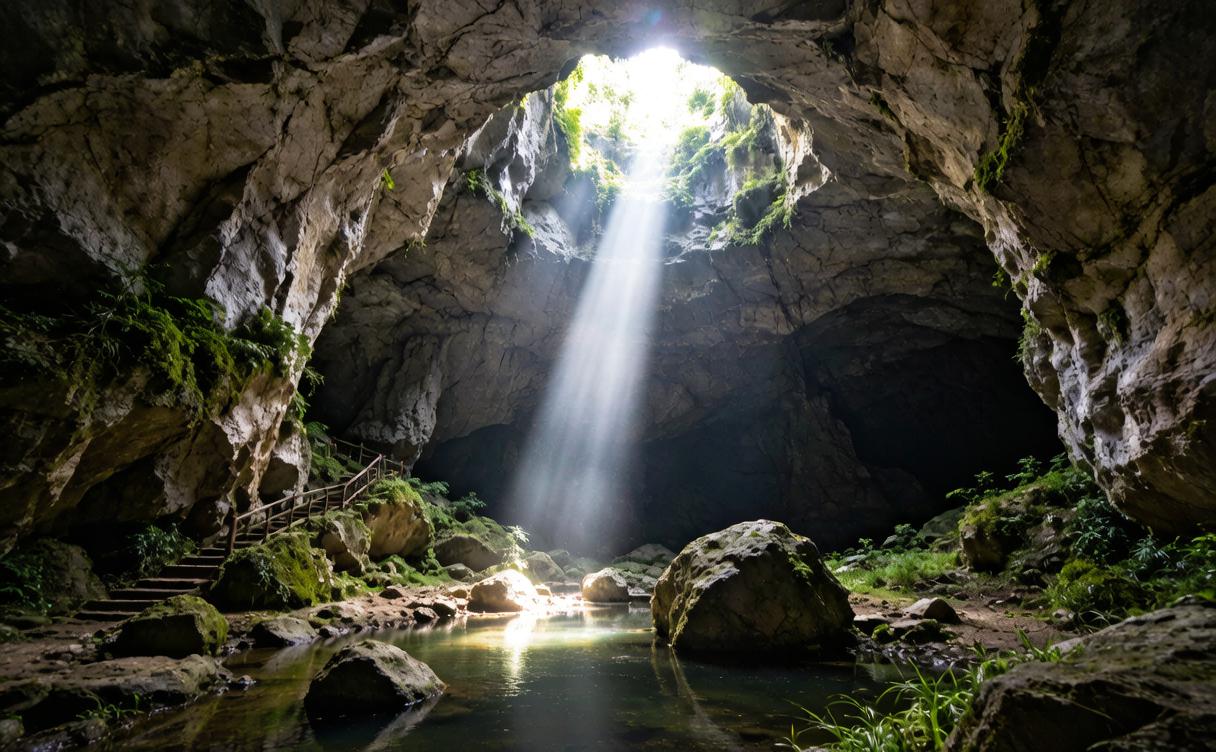
Hechi’s other signature is what lies beneath the hills. The Hechi karst caves include some of the largest explored systems in Guangxi, with chambers big enough to hold a stadium and rivers running silently through the dark. The most visited is the Bama Crystal Palace, a lit cave of milky stalactites and flowstone that stretches for well over a kilometre. It is busy on weekends but quiet midweek, and the walkways are well built.
A second cave worth the trip is the Baiyan Cave near Fengshan, where an underground river emerges at the base of a cliff. Guides lead small groups with torches into sections that feel genuinely wild, so bring shoes with grip and a jacket, because the air stays cool year round. If you enjoy this kind of terrain, our China off the beaten path guide lists other remote karst areas across the country that see few foreign visitors.
River scenery and the wider landscape
Above ground, the same karst forms gentler sights. The Sanmenhai area, shared with neighbouring Fengshan, is a cluster of sinkholes connected by underground water, sometimes called the windows to the earth. You can paddle a small boat through one opening and surface inside a closed green basin ringed by cliffs. It is one of the more unusual things to do in Hechi and a calm counterpoint to the busy caves.
For hikers, the ridgelines above the valleys give wide views of stacked peaks fading into haze. Our China hiking treks guide covers multi day routes elsewhere, but Hechi suits day walks where you return to a village guesthouse each evening. The trails are unofficial and lightly marked, so local guidance matters more than a map.
Food and where to stay
Hechi eats like the rest of Guangxi, with a heavier hand on sour and preserved flavours. River fish cooked with pickled vegetables, sticky rice steamed in bamboo, and five colour glutinous rice at festivals are staples. Bama is known for its small black pork and for the local sesame oil used in simple stir fries. Meals are cheap and portions generous, and the best food is found at roadside stops rather than hotel restaurants.
Most visitors stay in Bama town, which has the widest choice of rooms and sits closest to the villages and caves. Jinchengjiang, the main city, has better transport links and more standard hotels but less character. Either works as a base if you arrange day trips out.
For background on the region’s geology and protected landscapes, the UNESCO karst programme documents the South China karst at https://whc.unesco.org/en/list/1248/. Hechi lies within the broader karst province that the listing describes, which helps explain why the caves and peaks here look the way they do.
A sample three day plan
Day one is travel and arrival in Bama, with an easy walk through a longevity village and the riverside in the late afternoon. Day two combines the Crystal Palace cave in the morning with a Panyang River boat ride after lunch. Day three heads to Sanmenhai or a Fengshan cave before the bus or train back toward Nanning or Liuzhou.
That pace leaves room for the slow moments that make Hechi memorable, like sitting by the river as mist lifts off the water. The region does not perform for visitors, and that is exactly the appeal.
When to visit
Spring and autumn are the most comfortable seasons, with mild temperatures and clear river views. Summer brings heavy rain that can swell the rivers and close some cave sections, though the landscape turns vivid green. Winter is cool and quiet, good for caves and villages without crowds. Avoid the first week of May and October, when domestic holidays fill the buses and the popular caves.
Practical notes
Mobile payment runs daily life here, and foreign cards seldom work with local apps, so keep cash for buses, small cafes and entrance fees. English signage is minimal outside the main caves, so a translation app and a hotel that can call drivers for you will smooth the trip. Roads into the villages are decent but winding, and motion sickness remedies are worth packing if you are prone to it.
Hechi will not hand you its beauty in a single glance. It asks for a slower schedule and a tolerance for rough edges, and it returns that effort with karst scenery, cave darkness and village life that feel untouched by the usual tourist machine. For travellers who have already done Guilin and want the deeper version of Guangxi, this is where to point the map next. Our Guilin Yangshuo travel guide pairs naturally with Hechi if you want the famous peaks as a bookend to the quiet ones.