

I will be honest: of the many monasteries I visited around Lhasa, Tibet, China, Ganden was the one that left me shortest of breath and longest in thought. Not just because of the altitude. Ganden Monastery sits at about 4,500 meters on the flank of Wangbori Mountain, roughly 45 kilometers east of Lhasa, and the white buildings spill down the ridge like a small city built for the sky. When I first saw it through the bus window, the whole complex looked weightless against the grey Tibetan plateau.
Ganden — full name Ganden Namgyeling — was founded in 1409 by Tsongkhapa, the reformer who started the Gelug school of Tibetan Buddhism, and it remains one of the three great Gelug monasteries near Lhasa. The other two, Sera and Drepung, are closer to the city; Ganden is the quieter, higher, and for many pilgrims the most meaningful. This guide is built from two visits, one in May and one in September, and from talking to monks who tolerated my slow Chinese and worse Tibetan.
Best Time to Visit Ganden Monastery
The best time to visit Ganden Monastery is late April through October, with May–June and September being my personal favorites. Winter (November–March) is brutally cold at 4,500 m, and snow can close the access road. I went once in early May when the wind was fierce but the light was clean, and once in mid-September when the sky was a depth of blue I have not seen elsewhere.
For travelers new to high altitude, timing matters as much as weather. Spend two or three nights in Lhasa (3,650 m) before driving up to Ganden so your body adjusts; the jump to 4,500 m is real. Our best time to visit China overview breaks the seasons by region, and Tibet’s window is narrower than the lowlands’. Avoid the weeks around Tibetan New Year (Losar, usually February or March) unless you specifically want festival energy — some services change and transport books out.
How to Get to Ganden from Lhasa
There is no train to Ganden. You go by road. Options from Lhasa:
- Private car or tour vehicle — the standard choice. A half-day trip (3–4 hours round trip including visit) runs about RMB 400–700 for a car depending on season and negotiation. This is what I used both times; the driver waits and handles the winding mountain road.
- Public bus — a local bus leaves from Lhasa’s East Bus Station toward Zagor (Zhatang) and passes the monastery gate, costing around RMB 20–30, but departures are early morning and return is hitch-or-wait. I tried it once and would only recommend it to confident budget travelers.
- Organized day tour — many Lhasa hostels and hotels sell a Ganden-plus-Drak Yerpa loop for RMB 150–250 per person.
Note on permits: foreign visitors to Tibet, China need a Tibet Travel Permit in addition to a Chinese visa, arranged through a registered agency before you fly in. You cannot just buy a ticket and go. Plan this at least 15–20 days ahead.
What You Actually See
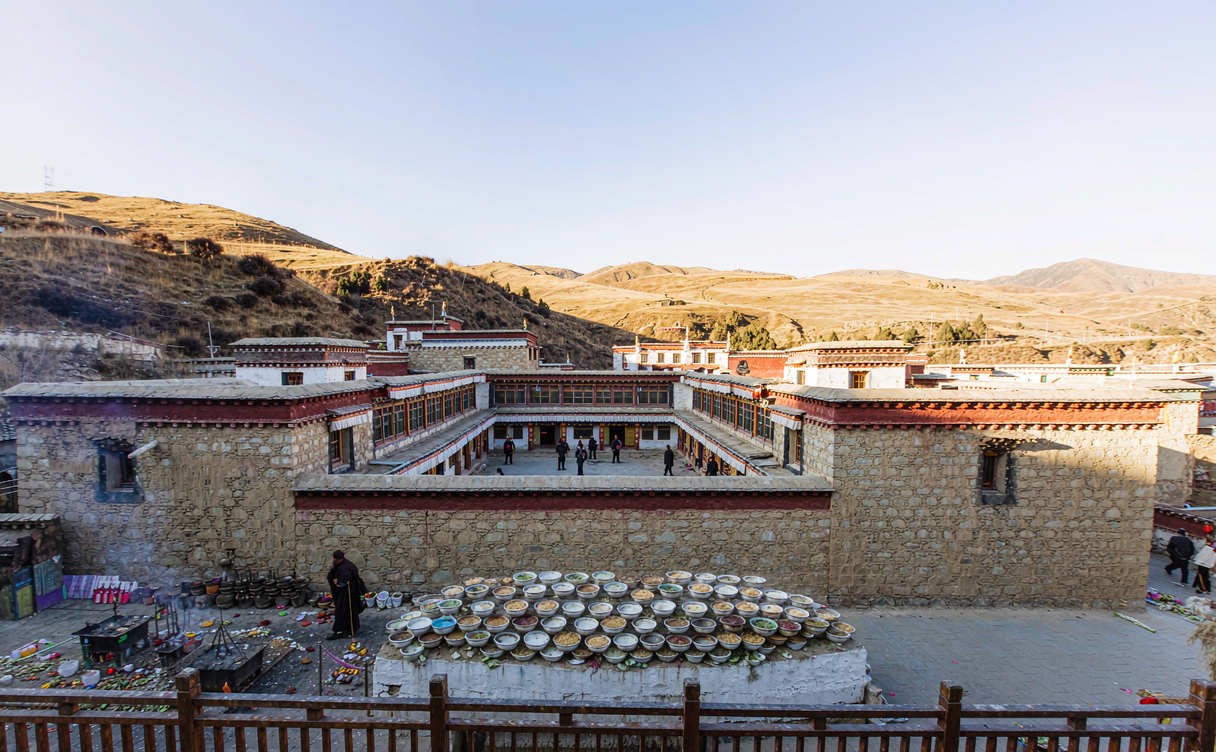
The approach road climbs to a parking terrace, then you walk (or take the short shuttle for a few RMB) up to the main assembly hall, the Tsokchen. Inside, the height of the space and the smell of butter lamps hit you first. The hall holds a large statue of Tsongkhapa and, behind, the golden reliquary stupa said to hold his remains — though the original was destroyed and what stands now is a reconstruction.
The part I remember most is the kora, the pilgrimage circuit. A path wraps the hill above the monastery, lined with prayer flags and carved mani stones, and from the high point you look back at the whole ridge of buildings with the Kyi Chu valley beyond. I walked it slowly with an old pilgrim who kept a string of beads moving and did not seem to mind my pace. Give yourself the full loop — about 40 minutes — because the view is the real prize.
Things to Do at Ganden
Beyond the hall and the kora, there are a few things worth your time:
- Debating courtyard — depending on the day, monks gather to debate in the style you may have seen at Sera. It is less performative here and more genuine, but schedules shift, so ask your driver.
- The upper chapels — smaller temples climb the hillside; the Serkhang and the protector-deity chapel have the densest wall paintings.
- Tea with a view — a basic tea stall near the entrance sells butter tea and sweet tea for RMB 5–10. Sit, acclimatize, watch the light move.
If you are building a Tibet, China itinerary, the Tibet Namtso Lake guide pairs well with Ganden as a second high-altitude day trip, and the Tibet Yamdrok Lake guide covers the famous turquoise lake to the south of Lhasa for a different kind of sky-meets-water scene.
A Ganden Monastery Itinerary
Here is the Ganden Monastery itinerary I suggest from Lhasa:
- 08:30 — Depart Lhasa after two nights of acclimatization.
- 09:30 — Arrive, buy entry ticket (about RMB 50 for the monastery; shuttle optional RMB 10–15).
- 09:45 — Main assembly hall and Tsongkhapa stupa (45 min).
- 10:45 — Walk the upper kora loop (40–60 min).
- 12:00 — Tea and photos at the ridge viewpoint.
- 13:00 — Drive back; lunch in Lhasa by 14:30.
Carry cash (small RMB notes) for offerings and tea; cards and foreign apps are not reliable at the stall. Dress conservatively — cover shoulders and knees; you will be inside active worship spaces. Photography inside the halls is usually forbidden; outside is fine.
Respect and Realities
This is a living monastery, not a museum. Keep your voice down, walk the kora in the clockwise direction with everyone else, and do not touch statues or manuscripts. If a monk waves you off a doorway, that is a closed chapel, not a slight. The altitude is the other reality: move slowly, drink water, and do not be proud about the oxygen canister sellers at the parking lot — I bought one and felt silly, then used it.
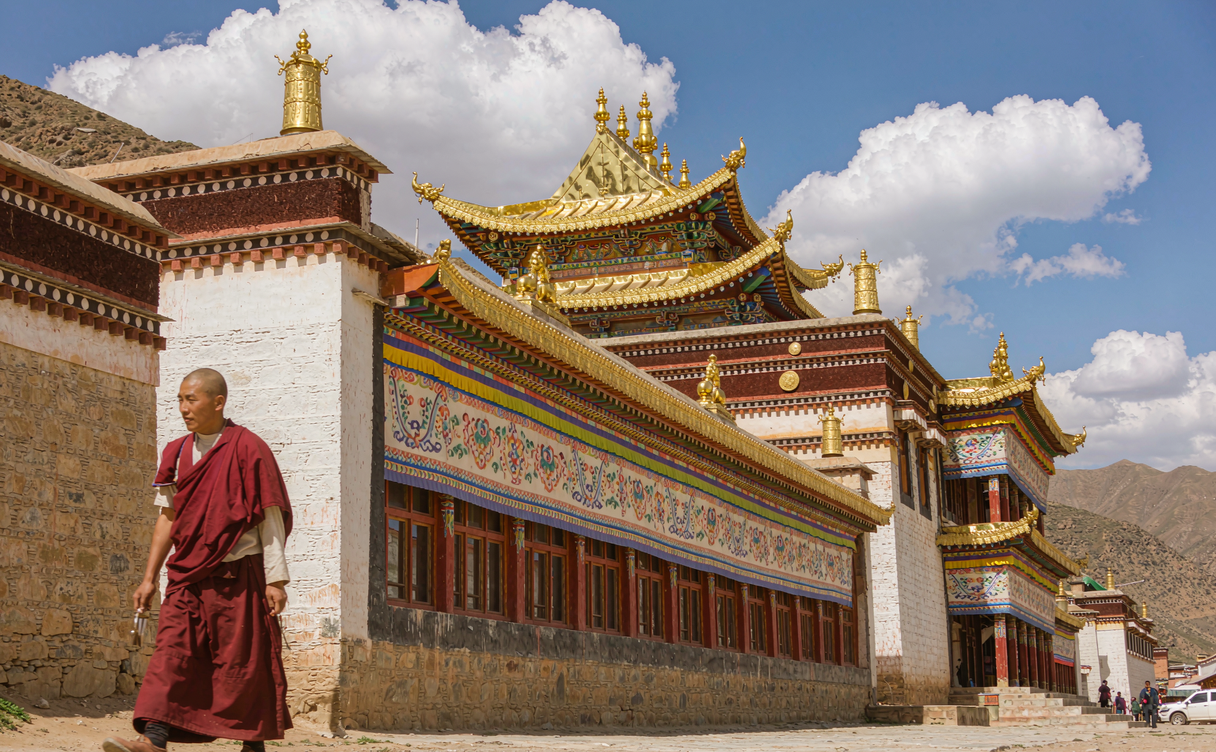
For the historical and architectural background, the Wikipedia page on Ganden Monastery is a solid, sourced starting point on Tsongkhapa, the 1409 founding, and the monastery’s later history.
If this is your first time considering the region, our China travel guide for first-timers explains permits and altitude basics, and the best things to do in China collects the headline sights from Ganden to the coast.