

The First Spoon in a Beijing Hutong
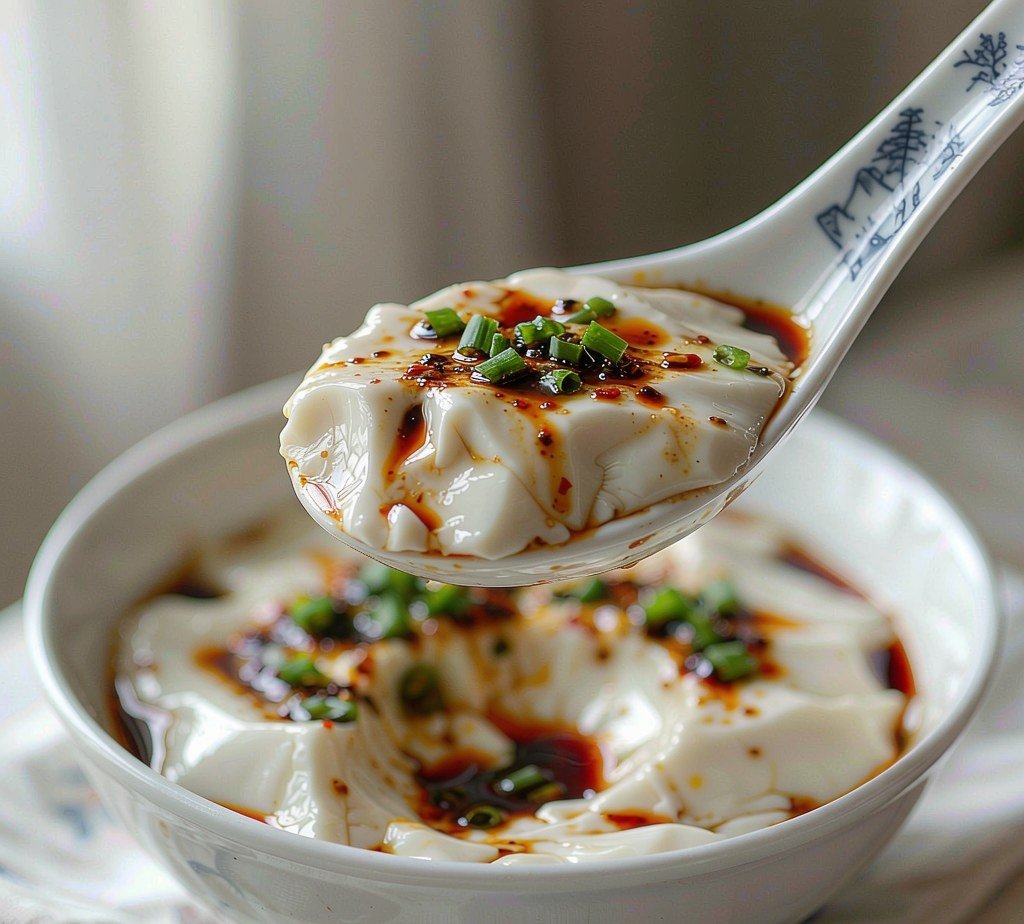
The bowl arrives with a quiet wobble. Before you taste anything, you notice the surface: pale, faintly luminous, trembling like a soft-set custard every time the vendor sets it down. This is doufunao, the savory northern Chinese tofu pudding that Beijingers eat for breakfast before the city fully wakes. You break the skin with a flat spoon rather than chopsticks, and the curds part with almost no resistance — smoother than scrambled egg, cooler and cleaner than any broth. Then the aroma hits: soy, a whisper of scallion, and the slow burn of chili oil. It is the kind of breakfast that tastes like a place, not just a food.
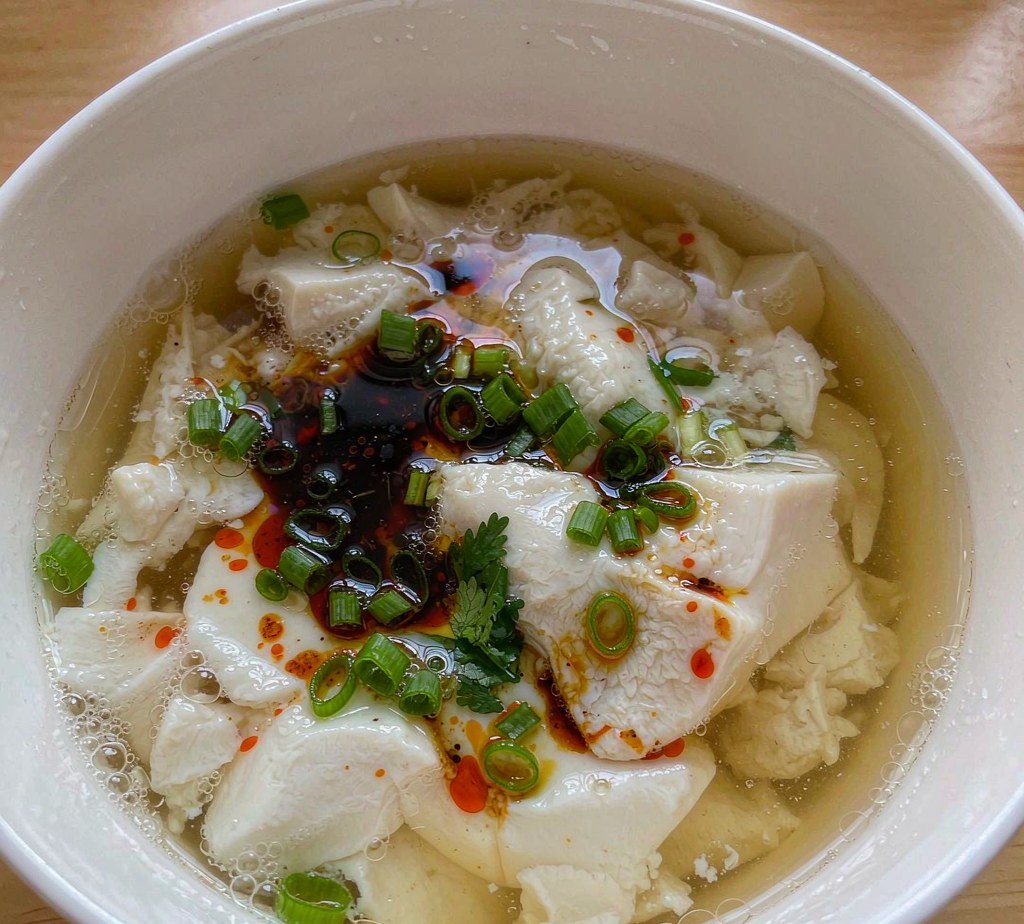
I have eaten doufunao from stainless-steel carts outside subway stations and from tiny shops tucked behind hutong walls, and the best bowls share one thing: a texture so delicate it seems wrong to call it solid food at all. That is exactly why northerners nicknamed it “tofu brain” — the soft, almost brain-like jiggle of fresh soy curds. If you have only ever met tofu as firm cubes in a stir-fry, doufunao will reset your sense of what soy can be.
What Is Doufunao, and Why Do Northerners Call It “Tofu Brain”?
At its core, what is doufunao made of is simple: fresh soy milk, coagulated into the softest possible form. Where firm tofu is pressed and drained, doufunao is barely set at all. Warm, unsweetened soy milk is stirred with a small amount of coagulant and left to rest for ten or fifteen minutes, until it thickens into a spoonable, trembling mass. Nothing is pressed; nothing is drained. The result sits between a drink and a pudding, and it is always served warm.
The Chinese name — doufu nao, literally “tofu brain” — is a compliment to that texture. The curds look and feel like something far more delicate than the tofu most travelers know. In English you will see it called “tofu pudding,” “tofu brain,” or simply “soft tofu.” All point to the same bowl. What separates doufunao from the southern sweet version is not the base but the bowlful of savory toppings poured on top.
Doufunao vs Douhua: The Savory North and the Sweet South
The single most common point of confusion for first-time visitors is the doufunao vs douhua question. They start from the same silky soy base, but the topping traditions split China in two. In the north — Beijing, Tianjin, Shandong, Hebei, Shanxi — the bowl is unapologetically savory. In much of the south, the same curds arrive sweet, submerged in ginger syrup or rock-sugar water and eaten as a cooling dessert.
This savory vs sweet tofu pudding divide is the easiest way to tell where you are. Order “doufunao” in Beijing and you get soy sauce, scallion, cilantro and chili oil. Order “douhua” or “tofu fa” in Guangzhou or Taiwan and you get sweetness and sometimes a few mung beans or taro. Neither is wrong; they are simply two breakfasts built on one ingredient. Travelers who love the northern bowl often find the southern one tastes like dessert, and vice versa.
What Does Doufunao Taste Like?
What does doufunao taste like is the question every cautious eater asks, and the honest answer is: mostly like very good soy milk, then like whatever you put on it. The curds themselves are mild, milky, faintly sweet and clean, with none of the chalky aftertaste cheap tofu sometimes has. The personality comes from the toppings.
A standard northern bowl layers flavor in this order: a clear soy-sauce broth or a starch-thickened “lu” gravy at the base, then chopped scallion and cilantro, a few drops of dark vinegar, chili oil, and sometimes a spoon of sesame paste or fermented tofu. The first spoonful is savory and warm; the chili oil arrives a beat later as heat; the scallion keeps it bright. Eaten quickly while hot, it is comforting in the way congee is comforting, but lighter and higher in protein.
Who Should Order a Bowl — and Who Might Skip It
Doufunao is one of the most accessible dishes on a northern Chinese breakfast table, but a few people should think twice. It is naturally vegetarian and, when made without meat gravy, fully vegan, which makes it a dependable option for plant-based travelers — a theme we cover in our guide to vegetarian and Buddhist-influenced Chinese cooking.
People who do best with it: vegetarians, anyone wanting a light but protein-rich start to the day, and travelers who enjoy savory soy flavors. People who might skip it: those with soy allergies, anyone sensitive to very soft or “slippery” textures, and chili-avoiders who forget to say “bu la” (no spice) — northern vendors are generous with the oil. Because the base is so mild, spice level is the one thing worth specifying when you order.
Doufunao Ingredients: What Goes Into the Bowl and the Toppings
The beauty of doufunao ingredients is how few you need for the base, and how much you can improvise for the topping. For two bowls of the soft tofu itself:
- 500 ml fresh, unsweetened soy milk (store-bought works; homemade tastes cleaner)
- 1.2–1.5 g glucono delta-lactone (GDL), or about 1 g food-grade gypsum (calcium sulfate), dissolved in a tablespoon of warm water
- A pinch of salt, optional
For a simple northern topping sauce:
- 2 tablespoons light soy sauce
- 1 teaspoon dark soy sauce (for color)
- 1 teaspoon Chinkiang vinegar
- 1 tablespoon chili oil, plus more to taste
- 2 tablespoons finely chopped scallion
- 1 tablespoon chopped fresh cilantro
- Optional: 1 teaspoon toasted sesame paste, thinned with warm water
The coagulant is the only “special” item, and both GDL and gypsum are inexpensive and sold at Asian grocers and online. GDL gives a cleaner, more neutral set; gypsum gives a slightly firmer, more traditional curd. Either works for a home bowl.
How to Make Doufunao at Home, Step by Step
If you want how to make doufunao at home, the method is shorter than most recipes and needs no special equipment. Follow this doufunao step by step routine and you will have a credible northern bowl in about twenty minutes.
- Step 1 — Warm the soy milk in a small pot to roughly 80–85°C (just below a simmer). Do not let it boil hard, or the texture turns grainy.
- Step 2 — Dissolve your coagulant in a tablespoon of warm water and swirl it into the bottom of a heatproof bowl.
- Step 3 — Pour the hot soy milk into the bowl in one steady stream from a small height, then stop touching it.
- Step 4 — Cover the bowl with a lid or plate and let it sit undisturbed for 10–15 minutes. Resist stirring; the curds set as they cool slightly.
- Step 5 — Meanwhile, mix the soy sauce, dark soy, vinegar and a splash of water into a thin broth. Warm it briefly if you like a hot bowl.
- Step 6 — Once the surface trembles like custard, spoon the broth over the top, then add scallion, cilantro and chili oil.
- Step 7 — Eat immediately with a flat spoon. The curds are at their best in the first few minutes.
The Coagulant Choice: Gypsum vs GDL
Gypsum (calcium sulfate) is the old-school choice and yields a tender, almost creamy curd with a faint mineral note — the texture most Beijing vendors use. GDL (glucono delta-lactone) is the modern, foolproof option; it sets reliably and tastes neutral, which is why many home cooks prefer it. Start with GDL if this is your first batch, then experiment with gypsum once you trust the timing.
Regional Twists: Beijing, Tianjin and Shandong Bowls
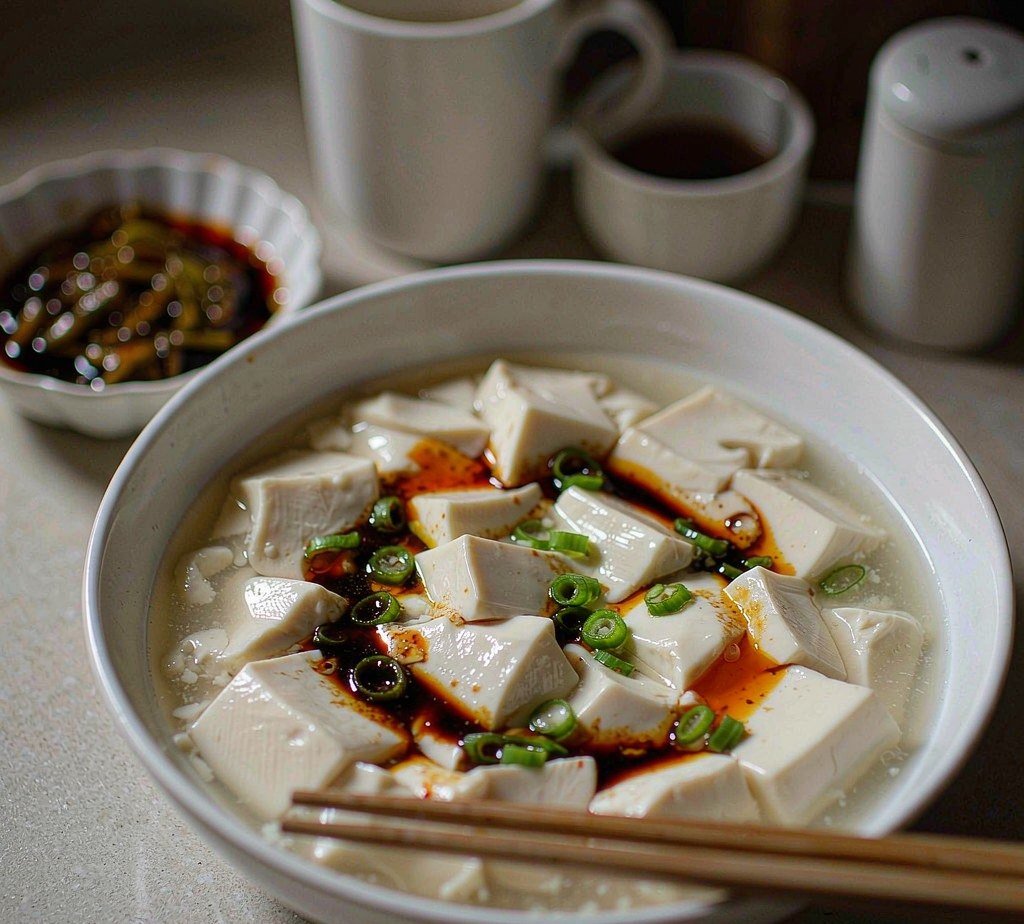
Even within the north, doufunao in Beijing is not quite the bowl you find in Tianjin or Jinan. Beijing vendors favor a light, clear soy broth with scallion, cilantro and chili oil, sometimes a few drops of fermented garlic water (luisuan) for tang. Tianjin turns the dial up: sesame paste, fermented tofu (furu), pickled vegetable and a thicker gravy, making a richer, funkier bowl. Shandong versions often come with a more substantial starch-thickened “lu” studded with daylily, wood-ear fungus and tiny bits of mushroom.
All of them belong to the broader world of the morning-market breakfast known as zao fan, where doufunao shares the table with buns, pancakes and fried bread. If you are traveling through northern China, the fastest way to read a city’s character is to order its breakfast tofu and note what the vendor reaches for first.
Frequently Asked Questions
Is there an easy doufunao recipe for beginners?
Yes. The easiest route is to heat store-bought unsweetened soy milk, stir in a small amount of GDL coagulant, cover and wait fifteen minutes, then top with soy sauce, scallion and chili oil. Skipping the homemade-soy-milk step removes the only fiddly part and still gives you a genuinely good bowl.
How many calories are in a bowl of doufunao?
Plain doufunao is low in calories — roughly 50 to 80 kcal per 100 g of curds, almost all from soy protein. The count climbs once you add chili oil, sesame paste and a meat-based gravy, but a basic savory bowl still lands well under a typical fried breakfast. It is a rare comfort food that is also light.
How do you eat doufunao the right way?
Use a flat spoon, not chopsticks, because the curds fall apart. Break the surface gently, fold the toppings into the curds as you go, and eat it hot. Say “bu la” if you want no chili oil. Many northerners dip fried bread or a sesame bun into the leftover broth, though the tofu itself is the point.
How is doufunao different from soy milk?
Soy milk is the liquid; doufunao is that same soy milk gently coagulated into soft curds. Think of the difference between milk and soft yogurt. You drink soy milk, but you spoon doufunao. Both come from the same ingredient, which is why they so often appear side by side at the same breakfast stall.
Where can I find the best doufunao near me?
Outside China, look for it at northern-style breakfast shops, especially those run by Beijing or northeastern immigrants, often listed as “tofu pudding” or “tofu brain.” Inside China, the most reliable bowls are at humble morning stalls rather than restaurants — follow the locals queuing before work, and you will usually find the best one on the block.
How old is doufunao — what’s its history?
Tofu itself traces back roughly two thousand years to the Han dynasty, and soft-set soy curds have been part of Chinese breakfasts for centuries. Doufunao as a named street breakfast grew popular in northern cities during the Qing dynasty, sold by peddlers who carried the warm soy base and toppings separately and assembled each bowl to order. The “tofu brain” nickname has stuck ever since.
A Bowl Worth Chasing
Doufunao rewards the traveler who slows down for breakfast. It is cheap, deeply local, and impossible to fake well — the texture is the whole point, and you can taste immediately whether a vendor cares. Order it savory in the north, chase the regional differences from Beijing to Tianjin to Shandong, and if you get hooked, the home version is easier than you think. A bowl this gentle does not shout, but it is one of the clearest windows into how northern China actually eats.