

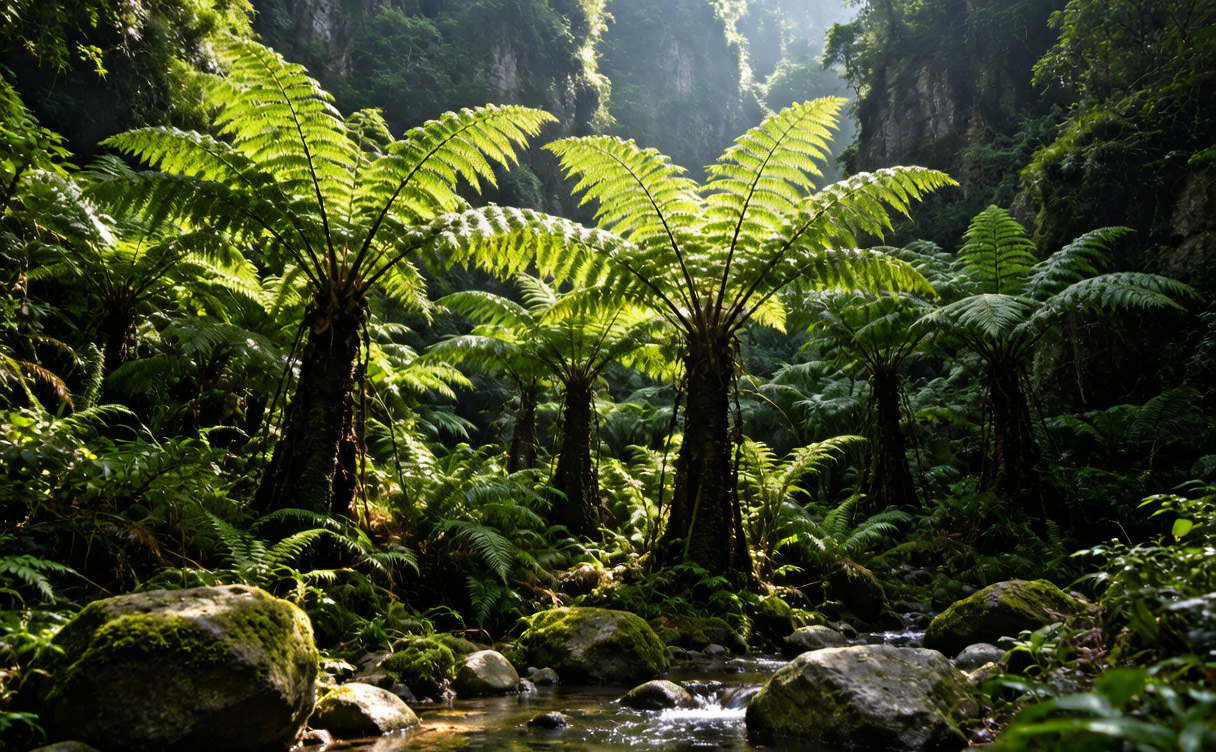
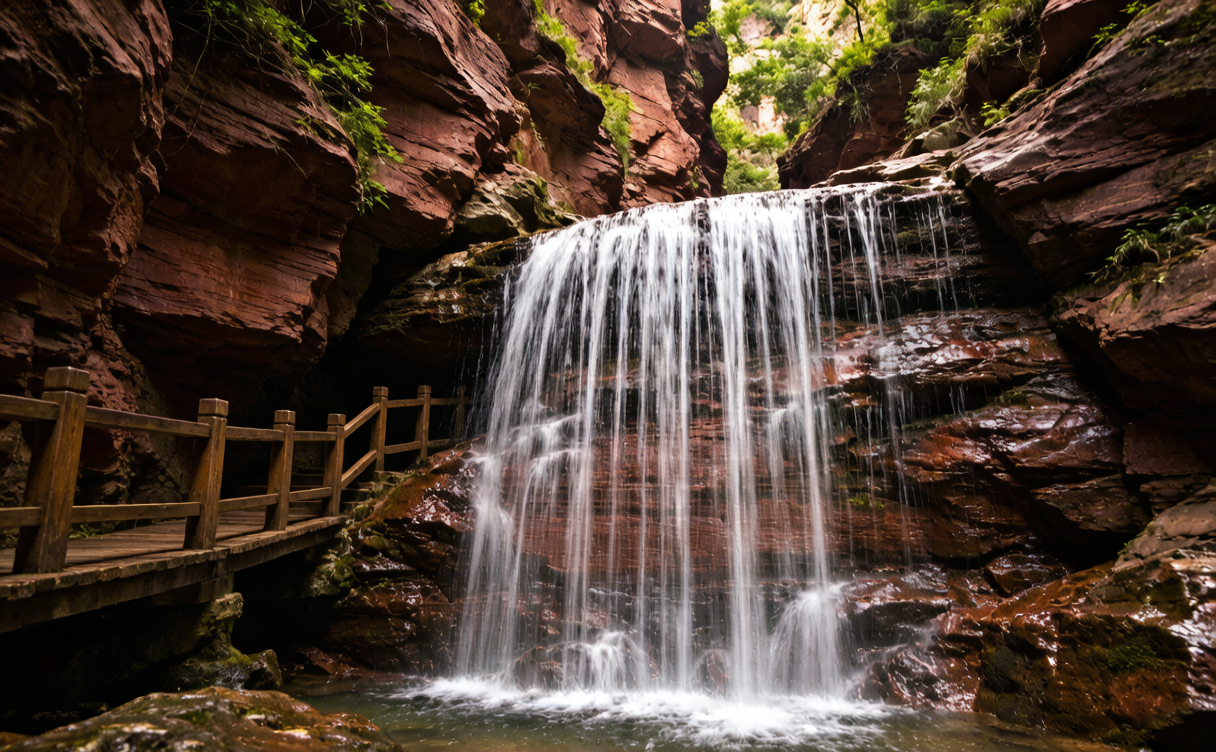
The rock here is the colour of dried blood. Water comes off it in white sheets, dozens of metres at a time, into ravines so densely green they feel prehistoric — which, in one specific and literal sense, they are: the valleys below the falls hold groves of tree fern, a plant that has been doing exactly this since dinosaurs walked past it. Chishui sits in the far northwest corner of Guizhou, pressed against the Sichuan border, and it calls itself the city of a thousand waterfalls without much exaggeration. This Chishui waterfall travel guide covers the four scenic areas worth your time, how to reach a town with no railway station, and what everything costs.
Why Visit Chishui
Chishui’s red sandstone is Danxia landform — soft, iron-rich rock that erodes into cliffs, domes and overhangs — and the Chishui block is one of six areas inscribed by UNESCO as the China Danxia World Heritage Site in 2010. What makes Chishui different from the dry Danxia country further north is water. Northwest Guizhou catches enormous rainfall, so the red rock is not bare: it is draped in bamboo, moss and subtropical broadleaf forest, and hundreds of streams pour off the plateau edge.
The result is a compact area where you can stand behind a 76-metre waterfall in the morning, walk a stream-side trail past four more before lunch, and end the day under a red cliff nearly 400 metres high. Add tree ferns, vast moso bamboo forests and stilted river towns, and you have one of the more rewarding two-day stops in an already generous province. Our Guiyang travel guide is the natural starting point.
Best Time to Visit Chishui
May to September — maximum water. The rainy season, and the falls are at full volume. This is when Chishui looks like the photographs. Expect 24–34°C, heavy humidity, and rain on most days. Boardwalks get slippery and the spray zone near the big waterfall will soak you.
April and October — the sweet spot. The best time to visit Chishui if you want a balance. Still decent water flow, temperatures of 15–26°C, clearer skies, fewer domestic tour groups. Late October brings colour to the broadleaf forest against the red rock.
November to February. Low water. Some smaller falls thin to trickles, though the Great Waterfall still runs. Temperatures of 4–13°C, frequent grey drizzle and mist, which is atmospheric in the bamboo forest and disappointing at the viewpoints.
Avoid the 1–7 October national holiday and the first three days of May Day, when domestic visitor numbers make the shuttle bus queues genuinely painful.
How to Get to Chishui
The honest answer: Chishui has no high-speed railway station of its own, and that is the main reason it stays quieter than Huangguoshu. Every route involves a bus or a car for the last stretch.
| From | Mode | Typical duration | Approx. cost |
|—|—|—|—|
| Guiyang (Jinyang bus station) → Chishui | Expressway coach | 4 hr – 4 hr 30 min | ¥130–160 (US$18–22) |
| Guiyang → Zunyi → Chishui | High-speed rail 45 min + coach 3 hr | around 4 hr | ¥80 + ¥90 (US$24 total) |
| Chongqing (Chenjiaping) → Chishui | Expressway coach | around 3 hr | ¥100–120 (US$14–17) |
| Luzhou, Sichuan → Chishui | Coach or car | 1 hr 30 min | ¥40–60 (US$6–8) |
| Chishui bus station → Great Waterfall | Tourist shuttle | around 1 hr | ¥18–25 (US$2.50–3.50) |
For most international travellers the cleanest routing is Guiyang by air or rail, then the direct coach. A Chishui day trip from Guiyang is technically possible but brutal — eight to nine hours on the road for perhaps four hours of sightseeing. Stay two nights. Coming from Chongqing is faster and often overlooked. Once in Chishui, tourist shuttle buses run from the city bus station to each scenic area gate between about 07:30 and 16:00; a chartered car for the day is ¥400–600 and saves a lot of waiting.
What to See in Chishui
Chishui Great Waterfall (赤水大瀑布)
Also called Shizhangdong, this is the headline: roughly 76 metres high and 80 metres wide, the largest waterfall on the Yangtze’s upper tributaries and second in China only to Huangguoshu. What sets it apart is the approach — a walkway curls around and partly behind the curtain, so you get the full pressure-wave of noise and spray on your face. In July there is no staying dry. Allow two to three hours including the shuttle from the gate.
Sidonggou (四洞沟)
The best walking in the area and, for many visitors, the better half-day. Sidonggou is a stream valley with four waterfalls strung along about four kilometres of stone path, each with its own character: a broad low curtain, a plunge into a jade pool, a stepped cascade, and a final 60-metre drop. The gradient is gentle, the path is well made, and the bamboo shade means you can walk it comfortably even in August.
Foguangyan (佛光岩)
A red cliff amphitheatre nearly 400 metres high and several hundred wide, with a thin waterfall dropping down its face — geologists call it one of the finest single Danxia walls in China. The loop trail takes two to three hours with a real climb in the middle. Come in late afternoon when low sun turns the rock genuinely luminous.
Bamboo Sea National Forest Park (竹海国家森林公园)
Hundreds of square kilometres of moso bamboo, with a cable car and ridge boardwalks. Cool in summer, eerie in mist, and a complete change of texture after two days of rock and water.
The Tree Fern Reserve and Bing’an Old Town
At Jinshagou, a protected valley of Alsophila spinulosa — tree ferns that predate flowering plants. Small, quiet and rarely busy; an hour is enough. Downstream, Bing’an (丙安古镇) is a stilted village clinging to the riverbank behind a suspension bridge, with timber houses standing on posts above the water. Good for an evening meal and photographs.
Chishui Hiking Trails and Routes
Nothing here is technical, but the cumulative stair count is high. The best Chishui hiking trails and routes, in order of effort:
- Sidonggou four-falls walk. 4 km each way, mostly level stone path, 3–4 hours return. Easiest and arguably prettiest.
- Great Waterfall loop. 1.5 km of steps from the shuttle drop-off, 2 hours. A lift saves the steepest climb for about ¥50.
- Foguangyan circuit. 5 km loop with 300 metres of ascent, 2.5–3.5 hours. The hardest and the most rewarding.
- Bamboo Sea ridge trail. 3–6 km; cable car up and walk down is the sensible version.
Two full days covers the Great Waterfall, Sidonggou and one of Foguangyan or the Bamboo Sea. Three days does the lot at a civilised pace. For comparison with Guizhou’s other headline cascade, see our Huangguoshu waterfall guide; for the province’s sacred mountain, the Fanjingshan guide covers the summit stairway.
Where to Stay Nearby
Chishui city centre — ¥140–350 (US$20–49). Chinese business chains and independent hotels, ten minutes from the bus station. The practical base: all shuttles start here, and there are river-front restaurants.
Scenic-area guesthouses — ¥120–280 (US$17–39). Family-run places at the Sidonggou and Great Waterfall gates. Basic, but let you be first through the turnstile.
Bamboo Sea and riverside resorts — ¥400–900 (US$56–126). Higher-end lodges in the bamboo forest and above the river, popular with Chongqing weekenders. Book ahead in summer.
Confirm your hotel can register foreign passports; city-centre chains always can, rural guesthouses frequently cannot.
Chishui Tickets and Opening Hours
Each scenic area is ticketed separately and shuttle buses inside the gates are usually compulsory and charged on top.
| Site | Entry | Shuttle / extras |
|—|—|—|
| Chishui Great Waterfall | ¥80–90 (US$11–13) | Shuttle ¥20; sightseeing lift ¥50 |
| Sidonggou | ¥70–80 (US$10–11) | Shuttle ¥20 |
| Foguangyan | ¥60–70 (US$8–10) | Shuttle ¥15 |
| Bamboo Sea Forest Park | ¥50–60 (US$7–8) | Cable car ¥30–50 |
| Tree Fern Reserve | ¥40–45 (US$6) | None |
Chishui tickets and opening hours run roughly 08:00 to 17:30 from April to October and 08:30 to 17:00 in winter, with last entry about 90 minutes before closing. Combined multi-site passes appear in peak season and can save 15–20 per cent. Students and over-60s get discounts on production of ID; bring your passport. Buy at the gate or through the site’s WeChat mini-program, which is often cheaper but Chinese-only.
Practical Tips
- Waterproofs, not umbrellas. A packable rain jacket handles the weather and the spray; umbrellas are useless in the wind near the big fall.
- Grippy shoes. Wet red sandstone and mossy steps are slick — the most common cause of tourist injury here.
- Dry bag for electronics. Non-negotiable at the Great Waterfall in summer.
- Start early. Gates open at 08:00; tour groups arrive from 10:00.
- Cash and QR codes. Alipay and WeChat Pay cover shuttle tickets and accept foreign cards. Carry ¥200 for village stalls.
- Language. Almost no English outside the main ticket offices. Save site names in Chinese characters.
- Heat, not altitude. Chishui is low, so no altitude concerns — but summer humidity is punishing. Drink more than you think you need.
- Combine with Zunyi. The city three hours east is a logical rail connection point; see our Zunyi travel guide.
FAQ
How many days do I need in Chishui?
Two full days minimum, three ideally. One day is only viable if you have a private car and accept seeing a single scenic area.
Is Chishui better than Huangguoshu?
Different. Huangguoshu is bigger, more famous and far more crowded. Chishui offers more variety — waterfalls, hiking, bamboo forest, tree ferns — with a fraction of the visitors.
Can I do a Chishui day trip from Guiyang?
Not comfortably: eight to nine hours of road time. Treat Chishui as an overnight destination, or approach from Chongqing.
When is the water strongest?
June through September, peaking in July and August. By February the smaller cascades are much reduced.
Is it suitable for children or older travellers?
Sidonggou and the Great Waterfall are manageable, with lifts and shuttles reducing the climbing. Foguangyan is better skipped by anyone unsteady on steps. See also our China national parks guide.
Written by Karl, China Travel Places — updated August 2026.