

You check out of a Beijing hotel at noon, your overnight train leaves at 21:40, and you are standing on the pavement with a 23 kg suitcase and nine hours to fill. This is the most common logistical problem on any China itinerary, and it has several good solutions — none of which are obvious, and one of which is free. Luggage storage in China is cheap and widely available if you know where to look, but it is also inconsistent: the same rail operator runs a 24-hour counter at one station and nothing at all at the next. This guide covers stations, airports, hotels and apps, with real prices and the rules that catch people out.
Content Preview
- Storing bags at railway stations, and where the counter hides
- What every option costs
- Step-by-step: using an automated locker
- Airport left luggage
- Hotel storage before check-in and after checkout
- Apps, malls and attraction cloakrooms
- What you cannot store, practical tips and FAQ
Luggage Storage in China Train Stations
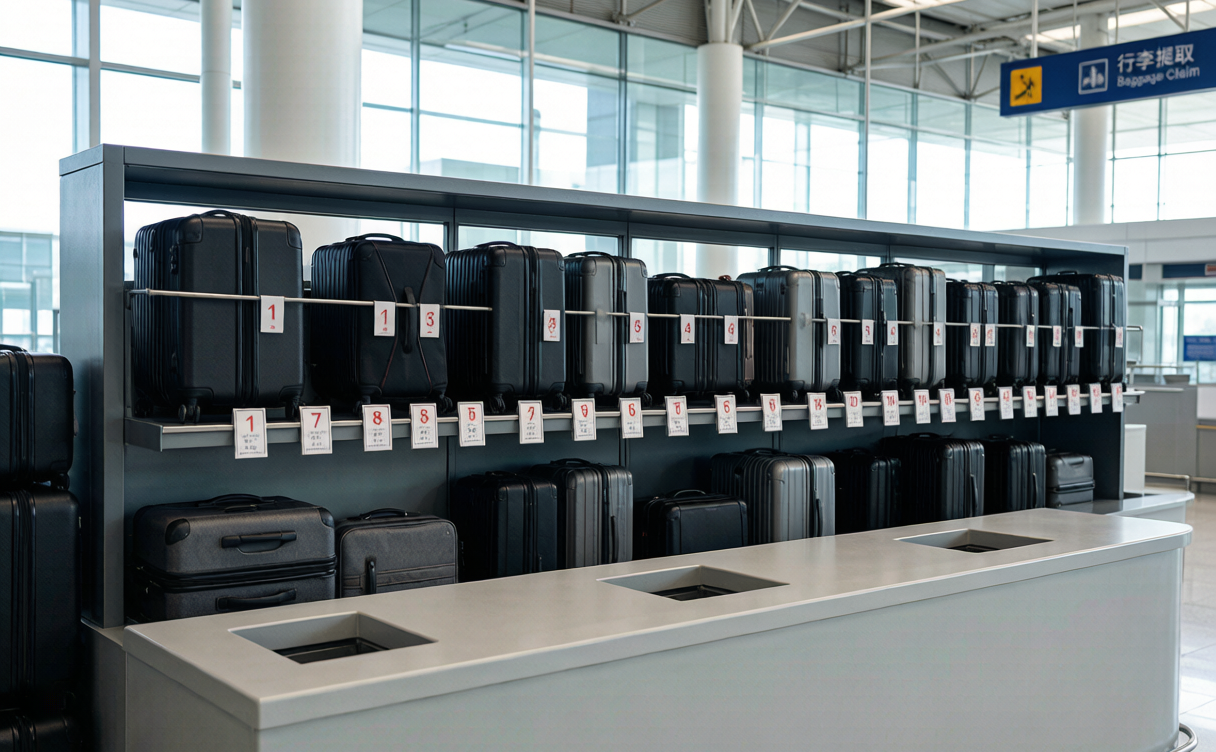
Most large and medium railway stations have a left-luggage office (行李寄存处, xíngli jìcún chù), an automated locker bank (自助寄存柜), or both. The catch is location. At high-speed stations the storage is almost always outside the security line — on the arrivals level, at one end of the concourse, or in a side hall near the taxi rank. If you have already gone through the X-ray into the departure hall, you have gone too far, and you will have to exit and re-enter.
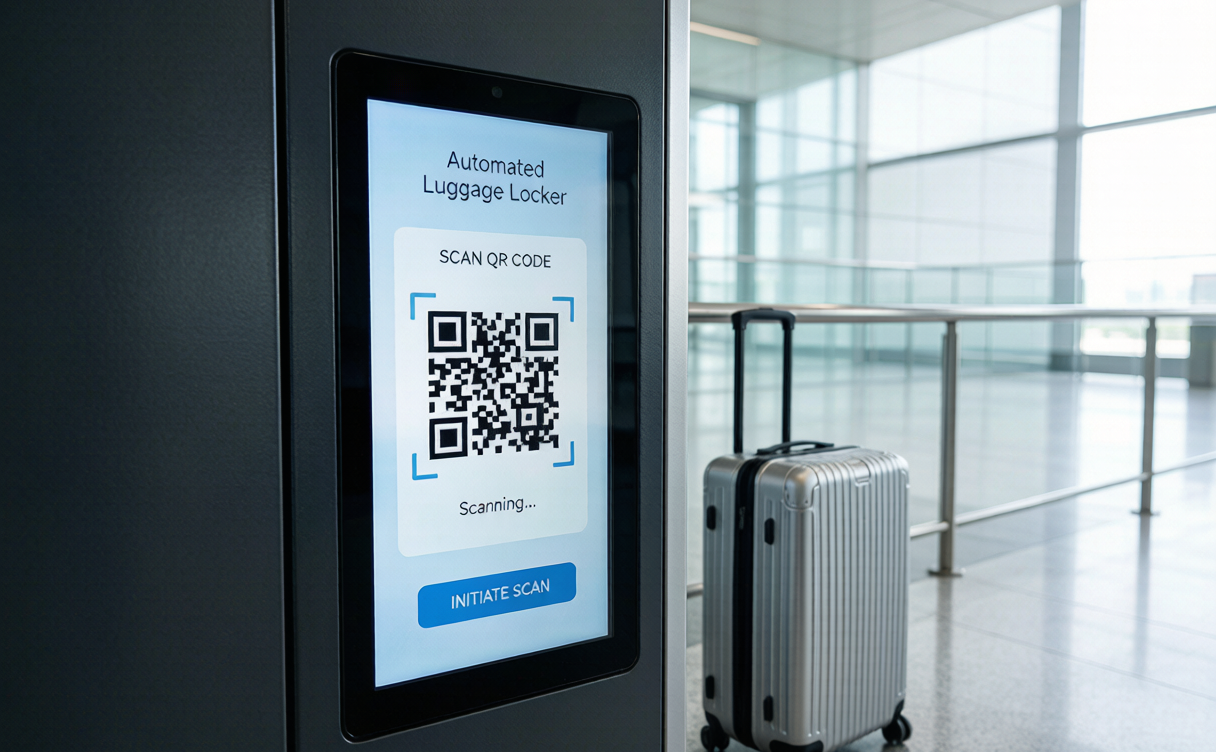
Staffed counters want your passport, hand you a numbered claim slip, and charge per bag per day. Lockers are self-service and increasingly cashless: you scan a QR code on the screen, pay through WeChat Pay or Alipay, and the door pops open. Older coin-operated units still exist in smaller cities.
Two things to check before you build a day around this. First, small county stations frequently have no storage at all, which matters when you are day-tripping to a scenic town. Second, counters close — often 22:00 or 23:00, occasionally earlier — while your train may leave after that. Confirm the closing time when you drop the bag, not when you come back for it. Station facilities and opening hours are listed on China Railway’s official 12306 service, and the service desk inside any station will confirm in person.
Metro stations, incidentally, almost never have lockers. Do not plan around them.
Luggage Locker Price in China
| Where | Typical price | Notes |
|—|—|—|
| Station locker, small | ¥15–25 per 24 hr | Fits a backpack or cabin case |
| Station locker, medium | ¥25–35 per 24 hr | Fits one large suitcase |
| Station locker, large | ¥35–60 per 24 hr | Two cases, or one oversized item |
| Staffed left-luggage counter | ¥10–20 per bag per day | Cheapest option; passport required |
| Airport left luggage | ¥20–60 per item per day | Varies by airport and bag size |
| Hotel storage | Free | Guests only, before check-in or after checkout |
| Museum or attraction cloakroom | Free to ¥20 | Same-day only, closes with the site |
| App or shop-based storage | ¥15–30 per bag per day | Tourist districts of big cities |
Nothing here should break a budget. Even a full day of large-locker storage costs less than a taxi across town, and the staffed counters are so cheap that they are the default choice for anyone watching costs on a long trip — see our China budget backpacking guide for the wider daily maths.
How to Use an Automated Locker: Step by Step
1. Find the bank. Look for 自助寄存 on overhead signage, usually near the station’s main entrance or arrivals exit.
2. Choose a size on the touchscreen. Options are typically 小 (small), 中 (medium), 大 (large). The screen shows how many of each are free.
3. Scan to pay. Open WeChat or Alipay, use the scan function on the QR code displayed, and authorise. Some machines charge on collection instead of upfront.
4. Load the bag into the door that opens, and push it shut until it clicks.
5. Save the code. The screen shows a pickup code or sends one to the mini-programme. Screenshot it. Do not rely on remembering the locker number.
6. Collect. Enter the code, or scan again in the same app, and the door releases. Overstaying accrues another day’s charge, payable before the door opens.
If the screen is Chinese-only, use your phone’s camera translation. The sequence never varies, so once you have done it once you can operate any of them.
China Airport Left Luggage Service
Every major Chinese airport runs staffed left luggage, usually in the arrivals hall or on the departures level near the far end of the check-in rows. Beijing Capital, Beijing Daxing, Shanghai Pudong, Shanghai Hongqiao, Guangzhou Baiyun, Shenzhen Bao’an, Chengdu Tianfu and Xi’an Xianyang all have them, and the big hubs operate around the clock.
Expect ¥20–60 per item per 24 hours depending on size, passport required, and a printed claim ticket you must not lose. Rates are per calendar day rather than per rolling 24 hours at some airports, so a bag left from 22:00 to 09:00 can count as two days. Ask when you drop it.
This is the right option for a long layover, or when you have a domestic flight in the evening and want to see the city first. It is a poor option for storing a bag while you travel elsewhere for a week — the cost adds up, and a hotel will usually do it for nothing.
Hotel Bag Storage After Checkout
The free answer that most travellers forget: your hotel will hold your bags, before check-in and after checkout, at every property from hostel to five-star. This is standard practice across China and nobody expects a tip.
How it works: bring your bags to reception, they tag them or write your room number on a slip, and the bags go into a storeroom behind the desk. Collection is until the desk closes, which at a 24-hour hotel means any time. Many hotels will also hold a bag for several days if you are coming back through the same city — ask directly, and expect a yes if you have a return booking.
Two rules. Do not leave a laptop, camera, passport or medication in a stored bag; storerooms are rarely locked and rarely monitored. And take a photo of the tag and the bag together, which resolves any confusion when a different shift is on duty.
If you are planning a Beijing stay around this — checkout at noon, night train later — our guide to where to stay in Beijing covers which districts leave you near a station with good storage.
Apps, Malls and Attraction Cloakrooms
Western-style booking platforms that place your bag in a local shop have limited coverage in China, but domestic equivalents exist. Search 寄存 inside WeChat’s mini-programme directory or on Meituan and you will find shop-based storage in the tourist districts of Beijing, Shanghai, Xi’an, Chengdu, Chongqing and Guilin, typically ¥15–30 per bag per day, booked and paid in-app. Coverage outside those areas is thin, so treat luggage storage apps in China as a convenience rather than a plan.
Two more options worth knowing:
Shopping malls. Large malls near transport hubs often have self-service lockers on the basement or ground floor, same pricing as station lockers, and no queue.
Attractions. Major museums and palace complexes run free or ¥10–20 cloakrooms, and theme parks have locker banks at the gate. These are same-day only and close when the site does, so they solve the “I have a suitcase and a museum ticket” problem, not the overnight one.
What You Cannot Store
Station and airport storage runs under the same rules as transport security. Staff will refuse, and lockers are not exempt:
- Flammable liquids, aerosols and lighter fuel
- Loose lithium batteries and, at some counters, power banks
- Perishable food, and anything already leaking
- Live animals
- Valuables, cash and documents — accepted at your own risk, and not insured
Bags are sometimes X-rayed on the way into the station regardless, so anything that would fail a train security check will fail here too.
Practical Tips
Store before you enter the gates. At high-speed stations, drop the bag on arrival, then go through security. Doing it the other way costs twenty minutes.
Photograph the claim ticket and the locker screen. Paper slips get lost and pickup codes expire from your notifications.
Check closing time against your departure time. A counter that shuts at 22:00 is useless for a 23:30 train.
Carry small notes. A minority of older lockers are coin-operated and take ¥1 coins or ¥5 notes only.
Prefer the hotel. It is free, it is safe enough for clothes, and it is usually closer to where you will spend the day.
FAQ
Do all Chinese train stations have luggage storage?
No. Large and medium stations almost always do; small county stations and some newer high-speed stations do not. Check before you commit to a day trip that ends back at that station.
Do I need my passport to store a bag?
At staffed counters and airport left luggage, yes. Automated lockers need only a phone with WeChat Pay or Alipay, which is one reason they are worth learning to use.
Is it safe to leave a bag at a Chinese hotel after checkout?
Yes for clothes and ordinary belongings — it is routine practice nationwide. Keep passports, electronics, medication and cash with you, since storerooms are rarely locked or monitored.
How much does a locker cost for one day?
¥15–25 for a small locker, ¥25–35 for a medium, ¥35–60 for a large, per 24 hours. Staffed counters undercut all of these at ¥10–20 per bag.
Can I store a bag for several days?
At an airport or station, yes, though charges accumulate daily and some counters cap storage at seven days. For anything longer than two days, ask a hotel you have booked before or after — most will hold it free.
Written by Karl · Updated August 6, 2026