

If you are hauling two checked bags between Beijing, Xi’an, and Chengdu, China luggage shipping is the shortcut most first-time visitors never hear about until they are sweating on a subway escalator with a 28-inch case. We have sent travelers’ suitcases ahead on the Shanghai to Hangzhou line and across three provinces, and the relief on their faces when they step off the train with nothing but a daypack is worth every yuan. This guide walks through the couriers that actually work for foreigners, the real prices in RMB, how long delivery takes, and the small mistakes that turn a simple shipment into a lost-baggage headache.
Why send your bags ahead instead of carrying them
China’s high-speed trains allow each passenger 20 kg of free luggage and a maximum size of 130 by 70 by 60 cm per item, and those limits get enforced at busy stations during holidays. Subway transfers, uneven sidewalks, and older hotels without elevators make a rolling case a genuine burden. Shipping a bag from your Shanghai hotel to your Chengdu hotel means you ride the bullet train hands-free, skip the checked-baggage queue at airports, and arrive at the next city ready to explore.
We have also found that shipping saves money on flights. Domestic carriers charge roughly 50 to 150 RMB per extra checked bag depending on route and season, while sending the same bag by ground courier often costs less and frees you from the airport weigh-in stress. For a two-week trip with a heavy winter coat or dive gear, the math is obvious.
The ways we actually use to ship luggage in China
In our experience, four options cover almost every foreign traveler’s needs. The right one depends on distance, speed, and whether you can read a Chinese app.
SF Express (顺丰)
SF is the premium choice and the one we recommend most. It handles individual suitcases without boxing, offers door-to-door pickup from your hotel (book via the SF app or by calling 95338), and gives real-time tracking in Chinese with in-app translation. For a 20 kg suitcase shipped Shanghai to Guilin, expect about 120 to 180 RMB with next-day delivery. SF is reliable enough that we trust it with expensive camera gear.
China Post EMS
China Post is the budget and rural-reach option. Its EMS arm ships bulky items to nearly every town in the country, including places SF will not serve. Prices run lower, around 80 to 130 RMB for the same Shanghai to Guilin case, but delivery takes three to five days. The official service details sit on the China Post site, which is worth a look if your destination is off the tourist trail. We use EMS when time is not tight and the final stop is a remote county.
JD Logistics and same-day couriers
JD offers next-day and even same-city same-day service in major cities through its app. For intra-city moves, say your Beijing hotel changes mid-trip, a JD run or a local flash-courier (闪送) costs roughly 30 to 60 RMB and arrives within hours. These are great for short hops but less useful for cross-province hauls.
Hotel concierge and luggage-forwarding apps
Many four- and five-star hotels in Beijing, Shanghai, and Shenzhen will arrange shipping for you at the front desk, sometimes at a markup. A newer wave of apps and WeChat mini-programs, often branded “luggage butler,” let you ship luggage in China and pay with an international card, which solves the Chinese-app problem for visitors. If you would rather not deal with couriers at all, our China luggage storage guide covers short-term holding when you only need to ditch a bag for a day.
Step-by-step: shipping a suitcase from your hotel
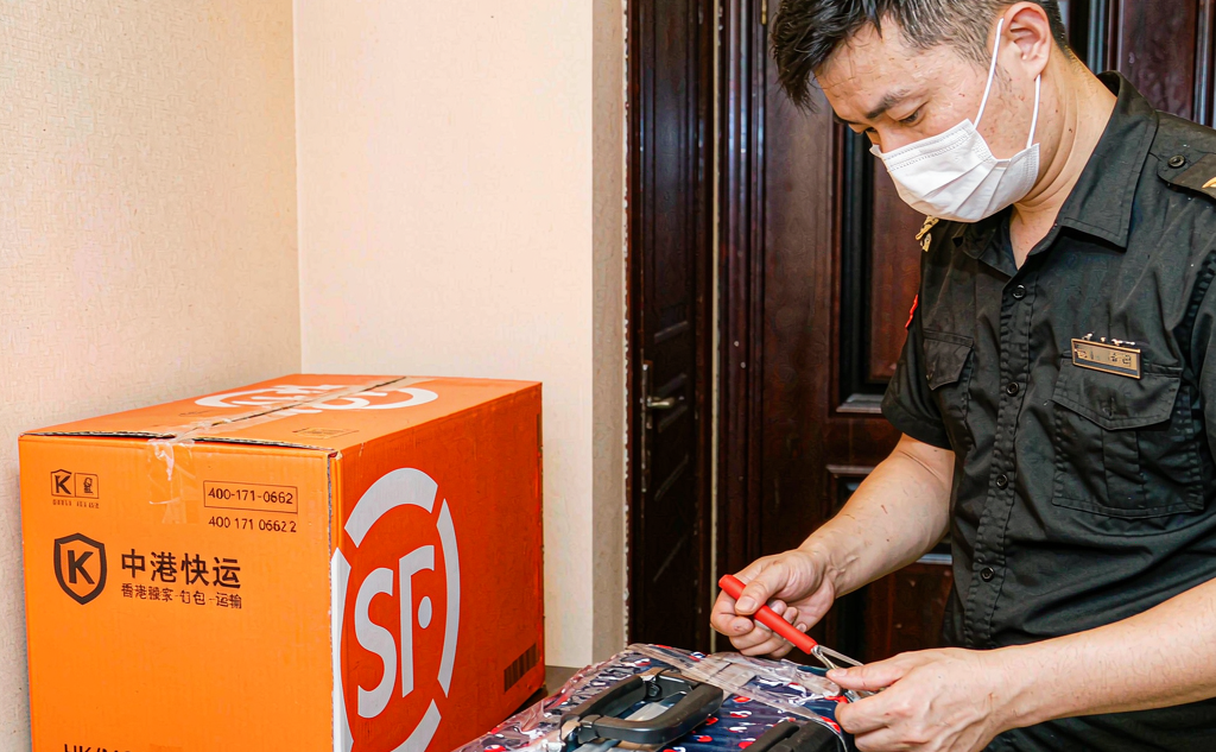
The process is simpler than it looks. First, photograph your empty and packed bag for insurance. Second, call or book pickup; the courier arrives, weighs the case on a handheld scale, and prints a label. Third, keep the tracking number, it appears in the app and as a sticker on the receipt. Fourth, message your next hotel that a bag is arriving so the front desk holds it. We tell travelers to ship at least two days before they need the bag, three days around National Day or Spring Festival when networks jam.
Real costs and delivery times
To plan a budget, here is what we see on the ground in 2026. A 20 kg suitcase sent intra-city, within Beijing for example, runs 30 to 60 RMB and lands the same or next day. Inter-city within one region, Shanghai to Hangzhou, is 60 to 100 RMB, next day. Cross-province long haul, Beijing to Guangzhou at about 2,000 km, costs 150 to 220 RMB with SF next-day, or 100 to 140 RMB with EMS in three to five days. Oversized or over-weight items add 20 to 40 RMB per step. None of these prices include insurance beyond the standard 100 to 300 RMB default, so declare high-value contents if you ship electronics.
These numbers are why we treat shipping as a normal part of itinerary planning rather than a panic measure. It belongs on your list of things to know before visiting China, right alongside SIM cards and payment apps.
How to pack and label a box or suitcase for transit
Couriers prefer a hard-shell case wrapped in the free plastic they provide, but a cardboard box survives sorting belts better for long hauls. Tape the zippers, slip a paper inside with your name, passport number, and both hotels’ addresses in Chinese, and stick the courier label on top where it will not peel. We have recovered two misrouted bags purely because the inside paper had a working phone number.
One of our China travel tips for couriers is to write the destination city in large Chinese characters on a luggage tag even if the courier labels it. Station staff and hotel clerks read Chinese faster than pinyin, and a clear 北京 or 成都 prevents a bag from riding the wrong truck.
Common mistakes we see travelers make
The biggest error is shipping too late. A bag sent the morning of a same-day train will not beat you there; we have had to reroute luggage to a third city. The second is underestimating rural delivery, EMS reaches villages, but SF may only get you to the nearest county town, where you pay a local van the last miles. The third is skipping the inside paper; without it, a peeled label means a lost bag with no return address. None of these are disasters if you build a buffer day.
We also remind people that shipping is not a substitute for a sensible packing list. Send the heavy stuff, but keep medicines, passports, and one change of clothes in your daypack. A good first-timer guide lays out exactly what stays on your person versus what can travel separately.
When shipping beats storage
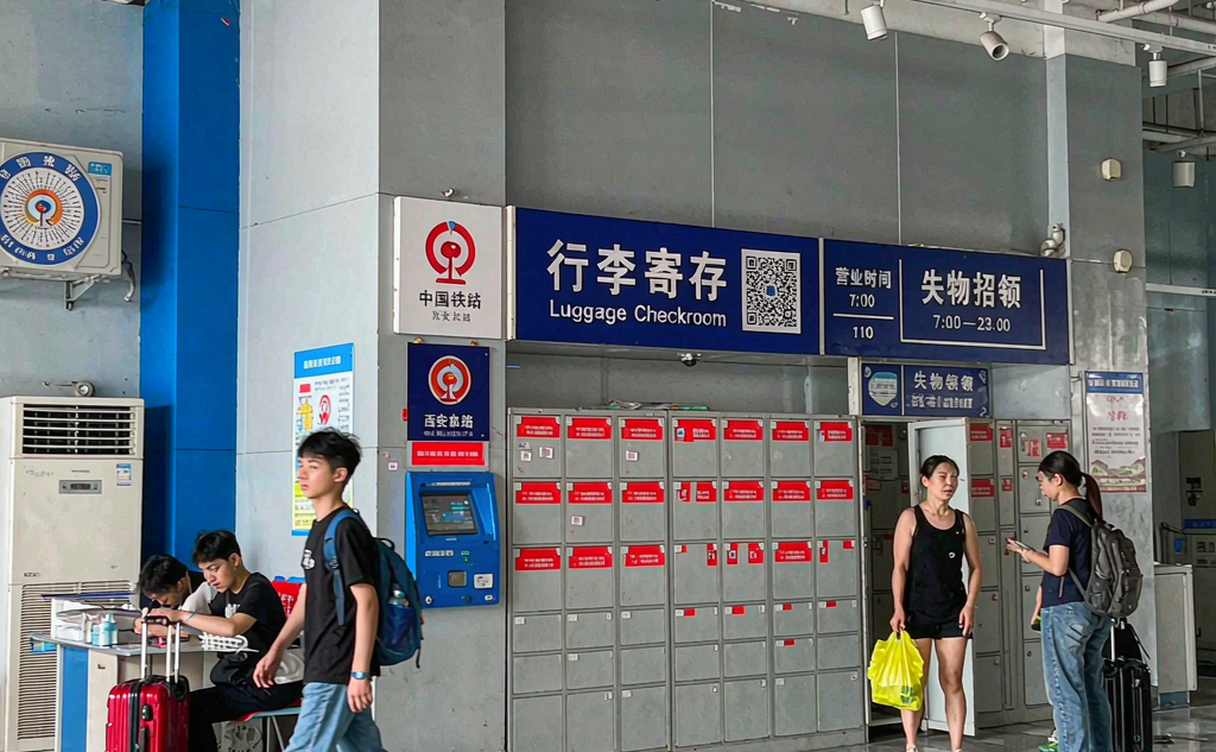
Short layovers call for storage, not shipping. If you have six hours in a city between trains, a station locker or the storage options we reviewed will cost 20 to 50 RMB for the day and save a full shipment. Ship only when you are moving hotels or cities and will not see the bag for a day or more. That line is the one we draw with every traveler we brief.
Traveling light changes how a trip feels. You walk the Great Wall without a sweaty drag behind you, you hop the metro without elevator anxiety, and you end each day with one less thing to worry about. Done right, China luggage shipping turns three heavy transfers into one easy tap on an app.