

The first time I drifted down the Li River at dawn, the limestone peaks rose from the mist like teeth from a green gum, and our boat’s only sound was the putter of the engine and a kingfisher diving for breakfast. That view — the one on the twenty-yuan note — is why any China karst landscape guide has to begin on the water, not the overlook, because the karst of China is best understood from below, where the mountains meet their own reflection.
Guilin is the gateway, and the karst peaks here are the textbook example. A four-hour Li River cruise from Guilin to Yangshuo costs RMB 210–360 depending on the boat class, and I would pay the extra for the upper deck every time — the lower cabin windows fog and you miss the best light. The journey passes Nine Horse Fresco Cliff and Yellow Cloth Shoal, and ends in Yangshuo, a backpacker town ringed by even sharper pinnacles. I took the RMB 360 upper-deck cruise and spent the last hour on the open stern with no one else, the peaks sliding past like a slow scroll painting.
Yangshuo is where you actually live the landscape. Rent an e-bike for RMB 30 a day and ride past the Moon Hill and the Big Banyan Tree, or climb the karst itself — beginner routes like Swiss Cheese cost RMB 80 with a local guide and a harness. I spent a week here and never repeated a view: morning mist on the Yulong River, afternoon light on the rice paddies, evening cormorant fishing demonstrations (RMB 60, but it is staged — enjoy it as theater). The surrounding countryside is flat enough to cycle drunk on scenery, and the riverside guesthouses (RMB 200–400 a night) put you steps from the water.
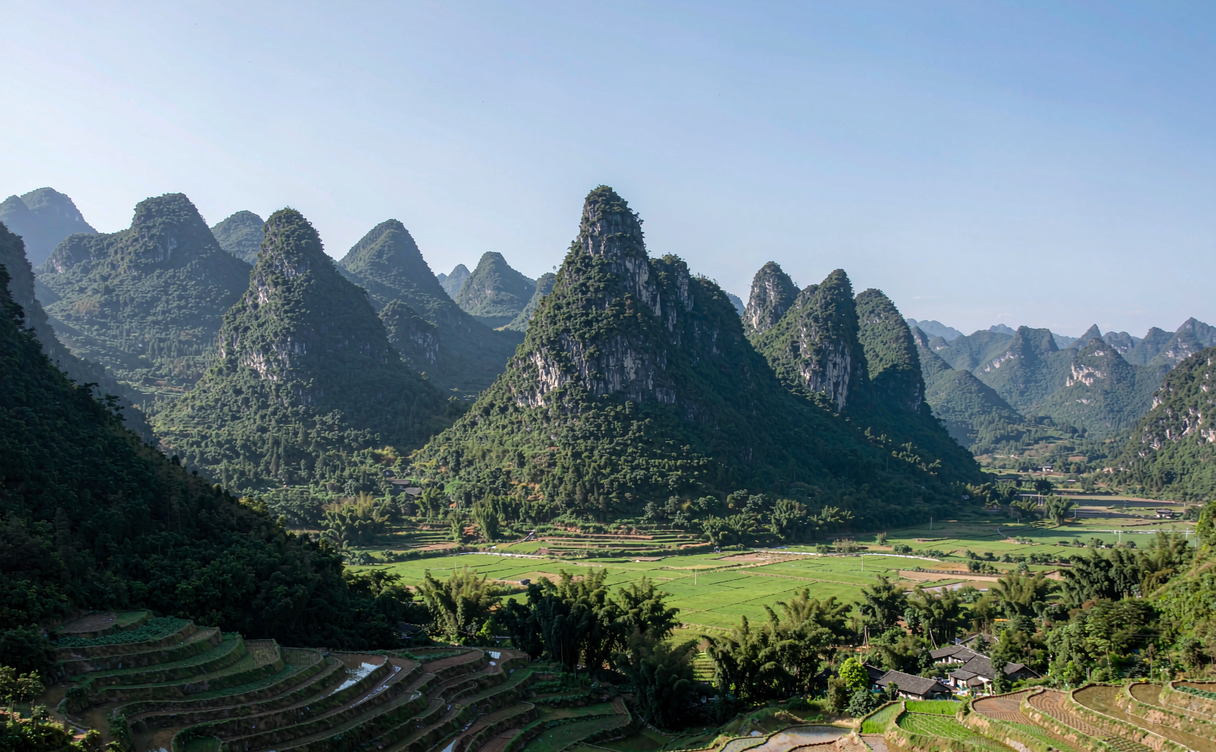
Then there is Zhangjiajie, in Hunan, which is karst of a different order — quartz-sandstone pillars, not limestone, but the same dramatic verticality that spawned the “Avatar mountains” nickname. The Tianzi Mountain cable car costs RMB 72 one way, and the glass-bottom bridge over the Zhangjiajie Grand Canyon is RMB 138 with a timid shuffle across. I went in October and the sea of clouds filled the valleys by 7am; by noon it had burned off and the pillars stood bare and orange. It is crowded, but the early cable car beats the tour buses by a full hour, and the Yuanjiajie shuttle drops you at the Avatar HallelujahMountain viewpoint before the selfie sticks arrive.
Getting between these regions is a rail story. Guilin links to major cities by high-speed train (Guangzhou–Guilin is about 3 hours, RMB 212), and Zhangjiajie has its own station on the fast lines from Changsha (about 2 hours, RMB 145). Our foreigner high-speed train guide explains booking and the passport check at the gate. Booking the karst experiences is mostly walk-up, but the Li River cruise and Zhangjiajie tickets sell out on holidays, so buy a day ahead on the official WeChat mini-programs or through a hotel concierge who knows the system.
Timing is everything for the best karst in China. Spring (April–May) and autumn (September–November) bring clear air and manageable crowds; summer is lush but hot and prone to afternoon storms that flatten the mist; winter is empty and cold with rare snow on the peaks. For the full national picture, our China weather-by-month guide flags the foggy weeks that actually improve the photos. I planned my Guilin trip for late October and got mist every morning — exactly what I wanted, and the post-holiday lull meant empty trails.
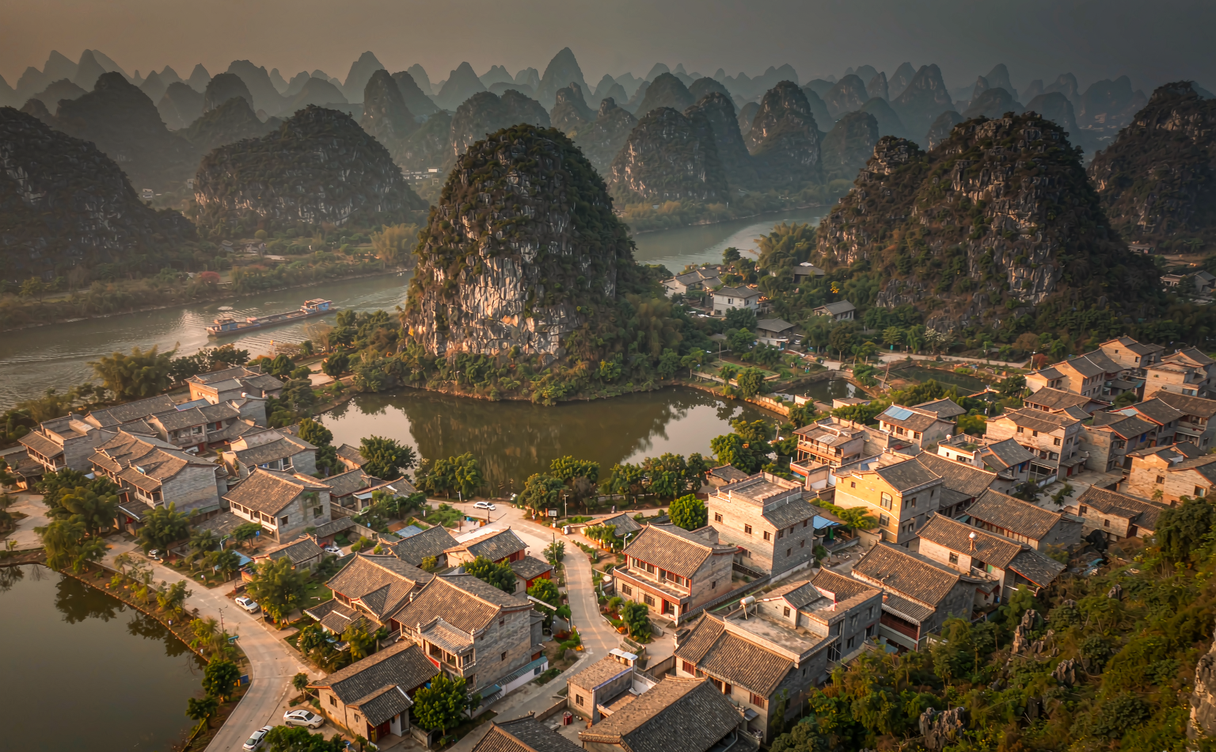
Beyond the famous names, the limestone mountains of China hide quieter gems. Libo in Guizhou protects pristine karst forest and the turquoise Wolong Pond (RMB 120 combined ticket), and Shilin (the Stone Forest) in Yunnan is a maze of eroded limestone spikes an hour from Kunming (RMB 130). Both are less crowded than the headline sites and just as strange. For a broader itinerary that links landscapes with cities, our best things to do in China overview strings the peaks into a southern loop that also takes in Chengdu’s pandas and the rice terraces farther west.
Photography makes or breaks the karst memory. I shoot the Li River at first light from the Xianggong Hill overlook (RMB 60 entry, a 20-minute climb) rather than the crowded riverbank, and I wait for the mist to lift just enough to show the peaks’ feet. In Zhangjiajie the Avatar viewpoint is best at 6:30am before the clouds burn; by 9am it is a selfie scrum.
A mistake I made was rushing Guilin into a single day. The city itself has the Reed Flute Cave (RMB 90) and the folded Elephant Trunk Hill (RMB 70), but the real payoff is the slow river. Give Guilin and Yangshuo together at least three nights; the landscape needs time to stop looking like a poster and start feeling like a place.
Boat versus bike is the daily question in Yangshuo: I split it, cruising the Yulong on a bamboo raft (RMB 100–160) one morning and cycling the next, and never regretted the slow pace.
Practical notes from the field. In Yangshuo, the impromptu “free” tea ceremonies and photo sessions can end in a sales pitch — smile and walk on. In Zhangjiajie, buy the multi-day pass (RMB 225 for four days) if you want to see Tianmen Mountain too, and book the cable car up Tianmen early. Carry layers: a misty Guilin morning can be 14°C while a Yangshuo afternoon hits 28°C. And download offline maps — signal drops in the gorges. None of this is hard, but the karst rewards the traveler who slows down and lets the weather set the schedule.
Where you sleep shapes the trip. In Yangshuo I stayed in a riverside guesthouse (RMB 220–400) where I could step from the balcony into the mist each morning, while in Zhangjiajie the practical base is Wulingyuan town, a 10-minute bus from the east gate, with rooms from RMB 200. Avoid staying inside the scenic area unless you buy multi-day passes, since re-entry adds cost. The crowds thin dramatically after the 5pm day-trippers leave, and that is when the karst belongs to you again — another reason to sleep close and rise early.
If you have only a week, do not try to bolt Guilin and Zhangjiajie into one rushed loop — they sit three hours apart by fast train via Changsha and each deserves its own trip. I treat them as two halves of one karst story: Guilin for water and reflection, Zhangjiajie for height and cloud. The contrast is the whole point, and hurrying either leaves you with postcards instead of memories, so I would rather return twice than see both once.
For the geologic and heritage context, the UNESCO inscription of the South China Karst at UNESCO explains why these pinnacles are among the most studied karst formations on Earth. My own take after three trips: the karst of China rewards patience more than itinerary. Wake before the crowds, take the slow boat, and let the mist do the work — the mountains have been standing for 200 million years, and they are in no hurry for you to see them clearly.