

A few kilometers northwest of Shexian town in Anhui, the Chengkan Ancient Village is the finest place in the Huizhou region to see a traditional settlement laid out by strict fengshui rules. Where Hongcun and Xidi draw the big tour buses, Chengkan stays calmer and, to our eyes, more authentically lived-in. The village plan follows the bagua, the Eight Trigrams, with streets and streams arranged to channel energy through eight directions, and locals still repeat the old line that “once you visit Chengkan, you will know no hardship for the rest of your life.” We’ve sent travelers here as a quiet alternative to the crowded headline villages, and the reaction is always the same: the stone alleys, the carved doorways, and the still-working rice paddies feel like a working museum rather than a stage set.
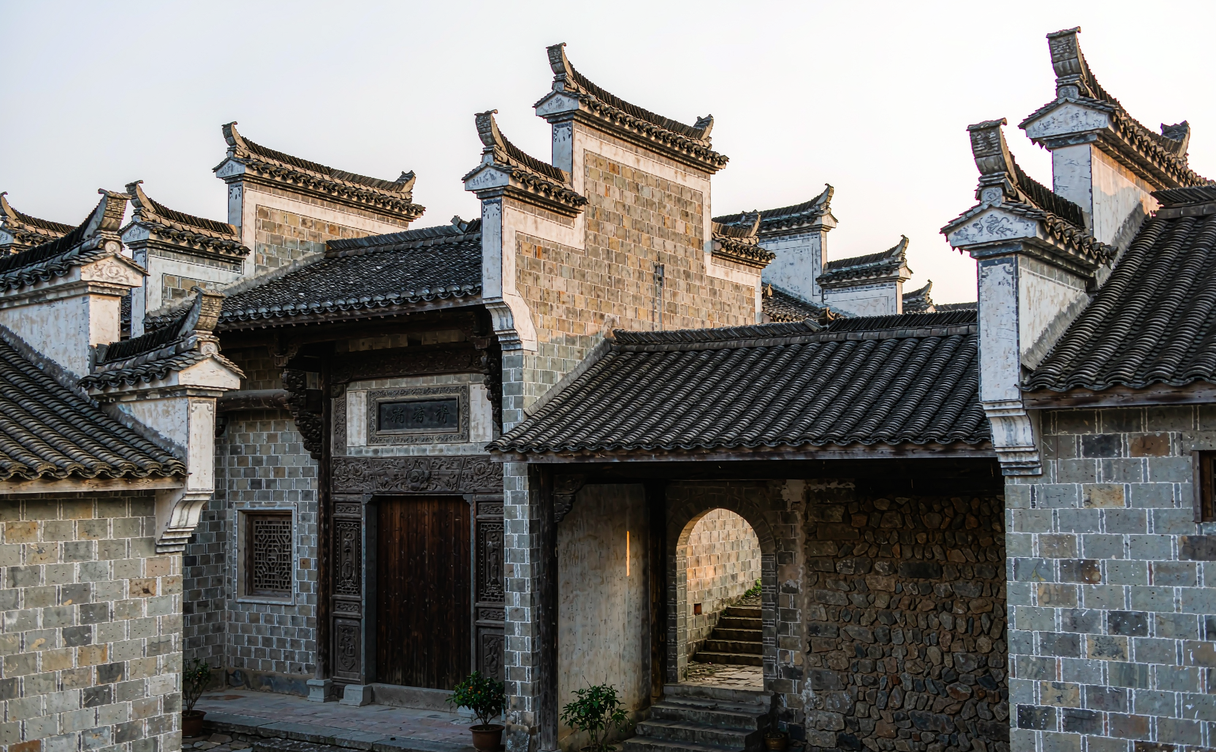
The Chengkan Ancient Village was first settled in the Eastern Han dynasty and took its present form under the Luo family during the Tang and Song periods. What sets the Chengkan Huizhou layout apart is its symmetry: the founders built the village as a perfect yin-yang map, with two hills as the “yin” and “yang” anchors and a winding stream as the boundary line. Eight lanes radiate toward the eight trigram directions, and every bridge, well, and ancestral hall was placed to balance water and mountain. This is not decoration for tourists; it is a functioning plan that has shaped daily life here for a thousand years. Walking in, you notice the famous horse-head gables, the stepped brick walls whose tops look like the heads of horses, built to prevent fire from jumping between houses.
Things to do at Chengkan
The best things to do at Chengkan start at the Luo Dongshu Ancestral Hall, the largest and most decorated building in the village and a protected national treasure. Its carved beam brackets, stone columns, and painted caisson ceiling take a good half hour to appreciate properly. From there, follow the ring of lanes clockwise, the direction locals say brings good fortune, past the Changchun Dashe, an old earth-god shrine, and the Huanxiu Bridge, a slender stone span over the stream that makes the classic postcard photo. Climb to the small hill at the village edge for a bird’s-eye view of the bagua plan; on a clear morning the geometry is obvious from above.
Slower pleasures matter here. Sit by the water with a cup of Huizhou Maofeng tea, watch an old man mend a bamboo basket, or step into one of the courtyards where families still dry chilies and rice. Our guides encourage travelers to join a short paper-blocking or woodcarving demo at a restored workshop, usually ¥30 to ¥50 ($4 to $7 USD) including materials. On our last visit, a village grandmother invited our group into her kitchen to taste freshly pressed rice cake, and that unplanned moment turned out to be the guests’ favorite memory of the day.
Best time to visit Chengkan
The best time to visit Chengkan is March through May, when the terraced fields around the village turn bright yellow with rapeseed flowers and the weather is mild, and again in October and November, during the rice harvest when the paddies glow gold and the air is crisp. Spring brings the occasional drizzle that makes the grey walls slippery, so wear proper shoes. Summer is hot and humid, with afternoon thunderstorms, and winter is cold but beautifully empty. For travelers planning a wider Anhui and Huangshan route, our best time to visit China guide maps the season month by month.
How to get to Chengkan
Knowing how to get to Chengkan saves stress, because the village is not on the main Huangshan shuttle circuit. The nearest high-speed station is Shexian North, about 15 kilometers away, or Huangshan North, about 35 kilometers, both reached by bullet train from Hangzhou in roughly two hours. From either station a taxi to the village costs ¥40 to ¥80 (about $6 to $11 USD); we usually arrange a private car so the driver waits for the return. If you are already staying in Tangkou at the foot of Huangshan Mountain, Chengkan is about a 50-minute drive and makes an easy rest-day outing. Our China high-speed train guide for foreigners walks through booking those Anhui rail segments step by step.
Costs and the surrounding Huizhou villages
Admission to Chengkan is ¥107 per adult in peak season and about ¥80 in the low season, which includes entry to the main halls and the riverside lanes; children under 1.2 meters are free. A local guide who can decode the fengshui plan costs around ¥100 ($14 USD) for a small group. Chengkan pairs naturally with the two UNESCO villages nearby. The neighboring villages of Xidi and Hongcun explain how to combine all three over two or three days without backtracking. For the base town itself, the Shexian travel guide has where to sleep and eat.
Food and a Hui cuisine angle
Chengkan sits inside Huizhou cuisine country, one of China’s eight great regional styles, known for pickling, smoking, and the famous stinky mandarin fish (chou guiyu). A plate of it at a village restaurant runs about ¥68 to ¥98 ($9 to $14 USD), and a simpler braised pork with dried bamboo is ¥48 to ¥68 ($7 to $9 USD). We send every food-minded traveler to Huizhou cuisine background before they come so they can order with confidence and avoid the tourist-trap menus near the big scenic gates.
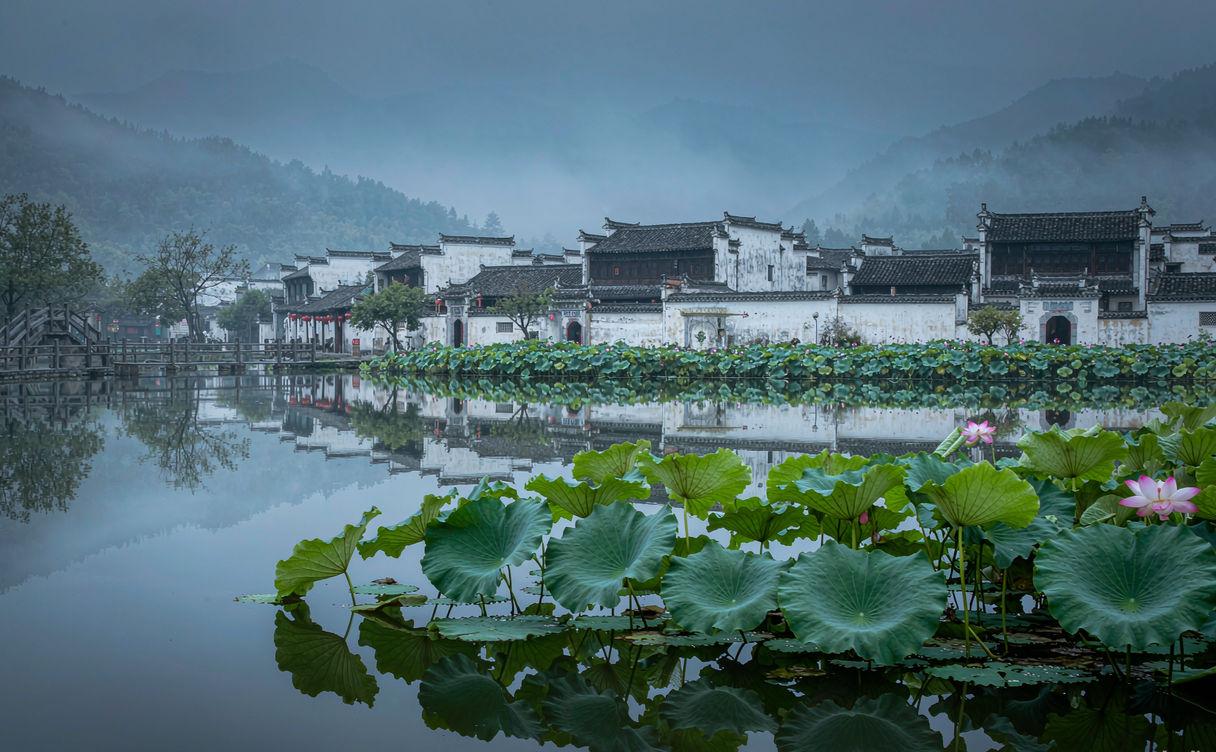
Chengkan rewards slow walking more than the headline villages. A practical tip from our guides: enter through the west gate and follow the lanes counterclockwise if you want the empty alleys before the midday coach groups arrive, then loop back through the riverside path for the best reflections of the horse-head gables. The village shopkeepers mostly take cash or mobile pay, and there is no ATM inside the walls, so draw money in Shexian before you come. Give yourself a full half day if you want the ancestral hall, the bridge, and the hill viewpoint without rushing, and carry a light rain shell in spring because the drizzle here is frequent and sudden. The single best photograph in the village is the Huanxiu Bridge at golden hour, when the grey walls and the still water read as one mirrored image, and you will have it nearly to yourself if you stay past 4 p.m.
Why we keep sending travelers here
On our last visit in mid-April, the rapeseed fields around Chengkan were at peak yellow and a light mist sat on the hills, the kind of scene that sells itself without filters. The Chengkan Anhui experience rewards travelers who like to understand a place. The Chengkan Huizhou layout is the real draw, and our favorite things to do at Chengkan are the Luo hall and the riverside bridge. Time your Chengkan Ancient Village visit for spring or autumn. We’ve sent travelers there as a half-day stop between Huangshan hikes and the headline villages, and it consistently rates higher for atmosphere than the busier sites because the streets are still home to real residents. A comfortable plan is to arrive at 9 a.m., hire a guide at the gate, walk the ring lanes for two hours, eat Hui cuisine for lunch, and move on by early afternoon. The Chengkan Anhui experience rewards travelers who like to understand a place rather than just photograph it.
The Huizhou vernacular architecture you see here is documented by the UNESCO World Heritage Centre, which inscribed the neighboring villages of Xidi and Hongcun for exactly this building tradition.