

Sichuan is the beating heart of southwest China, and no journey captures its range quite like a run from the provincial capital into the high valleys of the northwest. A well-planned Chengdu Jiuzhaigou itinerary lets you meet sleepy pandas in the morning, ride past terraced farmland by noon, and watch alpine light spill across turquoise lakes by dusk. This is a trip of contrasts: the noisy, noodle-scented streets of Chengdu give way to silent forests, snow-dusted peaks, and the kind of water you normally only see in a screen saver.
Most travelers begin in Chengdu because it is the region’s transport hub. The city has an international airport, a fast metro, and enough good food to justify arriving a day early. From there, the road north climbs through the Min Mountains, crosses the plateau edge, and deposits you in a landscape that feels like a different country. The classic route also loops in Huanglong, a travertine wonderland of calcified pools, which is why so many people search for a Chengdu Huanglong Jiuzhaigou loop when they start planning.
Day 1: Settle Into Chengdu
Arrive in Chengdu and give yourself permission to move slowly. The first afternoon is about orientation and food, not sights. Wander the wide avenues of the city center, find a teahouse, and let the humidity and the chatter settle in. Chengdu’s relaxed pace is famous for a reason, and it works as a gentle primer for the altitude and long drives that follow.
For dinner, head to a neighborhood hotpot joint where the broth bubbles with peppercorns and the tables hum with conversation. If you want a deeper read on what to order, our Chengdu food guide walks through the dishes that define the local table, from mapo tofu to cold noodles dressed in chili oil.
Day 2: Pandas, Then the Road North
The obvious first stop is the panda base on the city’s northern edge. Get there when the gates open, because the bears are most active in the cool early hours. You will see cubs tumbling in grass, adults stripping bamboo with casual focus, and the slow choreography of an animal that has mastered doing very little. A Chengdu panda base then Jiuzhaigou pairing works beautifully: the pandas are the soft opening, the valley is the main event.

After the pandas, you have a choice. Many visitors spend a second night in Chengdu and leave at dawn on day three. Others push north the same afternoon, breaking the journey in a smaller town. Either way, this is the day the trip shifts from city to wilderness.
If you have extra time and a taste for the wild, the Wolong panda reserve guide explains a more remote alternative where pandas live closer to their natural habitat, and where the drive itself becomes part of the adventure.
Day 3: The Drive and the First Glimpse of the Valley
The question every planner asks is how to get from Chengdu to Jiuzhaigou. There are two real answers. The fastest is to fly from Chengdu to Jiuzhaigou Huanglong Airport, which lands you about an hour from the valley entrance and spares you a long mountain drive. The more rewarding option is the overland route, roughly eight to ten hours by private car or bus, with stops at gorges, Tibetan villages, and roadside noodle stalls along the way.
The drive is not a hardship. The road follows rivers that carve through red rock, passes towns with fluttering prayer flags, and gains altitude in a way your ears will notice. By late afternoon you reach the entrance town, check into a hotel, and rest. The next two days belong to the parks.
For where to sleep, our best hotels in Jiuzhaigou roundup covers options from budget guesthouses to comfortable resorts within shuttle range of the gates, which matters because the valley opens early and crowds build fast.
Day 4: Jiuzhaigou Valley
Jiuzhaigou is the reason this whole trip exists. The park is a string of valleys holding more than one hundred lakes, each one a different shade of blue, green, or glass-clear. Wooden boardwalks keep you close to the water, and shuttle buses move you between the main stops so you can walk the prettiest sections on foot.
Start at the top of the main valley and work downhill. Highlights include the multi-tier Nuorilang Waterfall, the mirror-still Five Flower Lake, and the long, reflective sweep of the Primeval Forest boardwalk. The colors come from mineral-rich water and submerged limestone, and they shift with the light, so the same lake looks different at every hour.
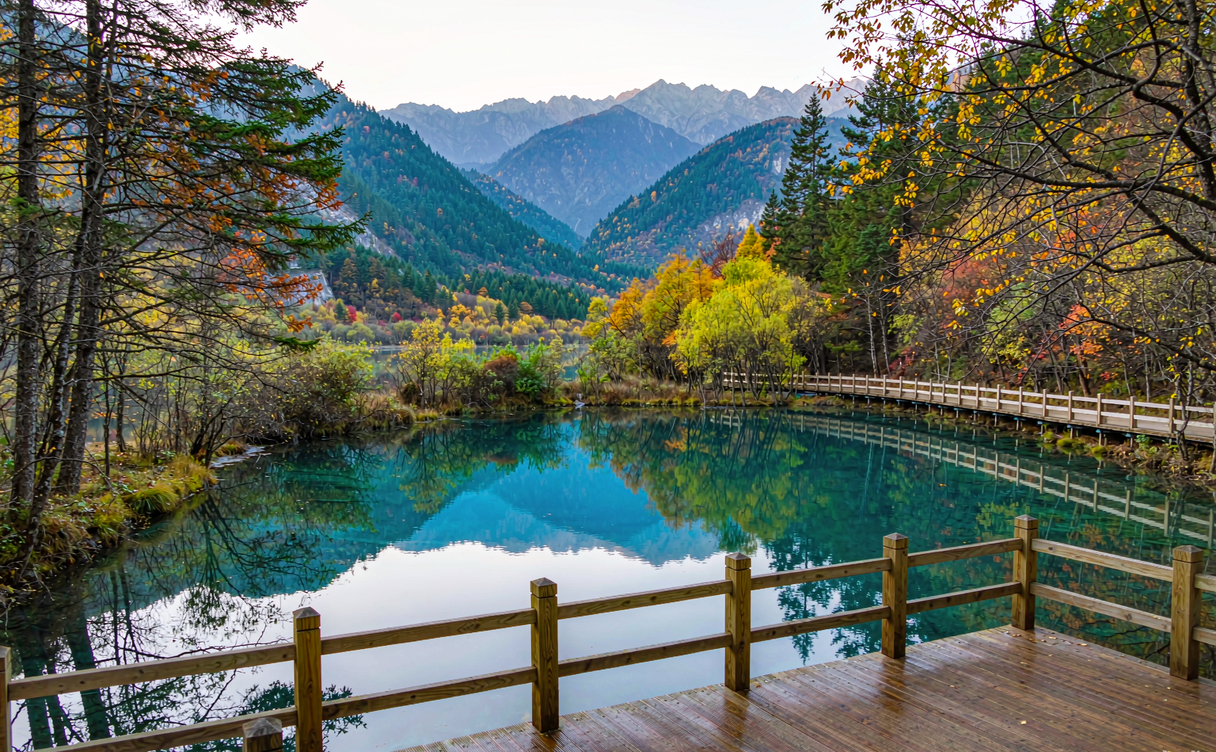
Give yourself the full day. The valley is large, and rushing it defeats the purpose. Our Jiuzhaigou valley guide maps the shuttle routes and the short walks that deliver the biggest payoff for the least effort.
Day 5: Huanglong, Then Home
On the final day, loop west to Huanglong, a terraced landscape of calcified pools that step down the mountainside like a frozen waterfall of cream and turquoise. The walk to the top is steep, and the altitude here is higher than the valley, so take it slow and carry water. A cable car saves the climb if your legs are tired.
After Huanglong, you can fly out from Jiuzhaigou Huanglong Airport or drive back to Chengdu. A five-day Chengdu Jiuzhaigou itinerary 5 days plan like this one balances the city, the pandas, the valley, and the high plateau without feeling like a race. If you want more buffer, add a night in Chengdu on either end.
Planning Notes That Actually Matter
The best time for Jiuzhaigou is autumn, roughly October through early November, when the leaves turn gold and red against the blue lakes and the summer crowds thin. Spring is quiet and green, summer is lush but busy and rainy, and winter is stunning but cold, with some sections closed. Aim for the shoulder seasons if you want photos without crowds.
Altitude is the other factor. Chengdu sits low; Jiuzhaigou and Huanglong sit high. Most people adjust fine, but the first day at elevation is not the time to sprint. Hydrate, sleep, and let the mountains set the tempo.
This whole route is also a solid Sichuan northwest road trip plan if you extend it. You can add smaller towns, longer stays in Tibetan villages, or detours to quieter reserves. The backbone, though, is the same: pandas, peaks, and blue lakes, threaded together by one of China’s most scenic drives.
Along the way, the cultural texture shifts as you climb. Chengdu is Han Chinese and Sichuanese to its core, but the northwest is home to Tibetan and Qiang communities whose white stone towers, monasteries, and festival calendars add a layer the photos never quite capture. Stopping for butter tea in a roadside village is a small detour that pays off in stories. Carry some cash for these moments, since card readers and payment apps are far from universal once you leave the city, and a flexible attitude about timing will serve you better than any strict schedule.
For official background on the region’s protected sites and travel advisories, the Ministry of Culture and Tourism of China publishes visitor information in English that is worth a look before you book.
A Chengdu Jiuzhaigou itinerary rewards the planner more than the improviser. Book the panda base early, reserve transport in advance during peak season, and keep your days loose enough to enjoy the unexpected. The mountains will still be there, the lakes will still be blue, and the pandas will still be eating bamboo at opening time.