

Chengdu moves at a different tempo — teahouses, slow afternoons, and a food scene that people cross the country for. It’s also one of China’s most livable travel bases: compact, cheap to sleep in, and blessed with a metro that actually reaches the things you want. The trap is assuming “Chengdu” means one center; the city has a few distinct cores, and picking wrong means long subway slogs to the pandas or the hotpot. This guide walks the neighborhoods that work, what they cost, and how to book without the usual faff. You can book a Chengdu hotel at Tianfu Square or any area below on the same platform you’ll use for trains and flights.

Tianfu Square — best central base
Tianfu Square is the literal heart of Chengdu, built over the old imperial city and wrapped by Metro Lines 1, 2, and 3. From here you reach Kuanzhai Alley, the panda base transfer, and the train stations without changing habits. Rooms run $30–$75 for solid mid-range. It’s my default recommendation for a first Chengdu trip: central, connected, and surrounded by cheap eats. Our Kuanzhai Alley guide picks up the detail on that neighborhood specifically.
From Tianfu Square you can walk to the Sichuan Provincial Museum’s satellite exhibits and the giant LED screen that locals gather under at night, and it’s a straight Line 1 or 2 hop to the panda transfer or the riverfront Anshun Bridge. The square itself is a bit sterile — a vast open plaza — but as a transit spine it’s unbeatable, and the surrounding blocks hide some of the city’s best low-key noodle shops.
Kuanzhai Alley — best for heritage and atmosphere
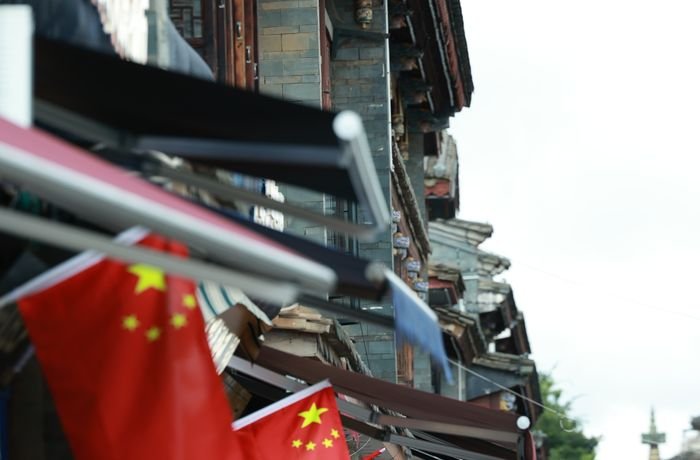
Kuanzhai (Wide and Narrow Alley) is a restored Qing-dynasty lane district: teahouses, courtyard guesthouses, and lantern-lit evenings. It’s touristy but genuinely pretty, and staying just off the main lanes gives you character without the daytime crowds. Expect $35–$80. If you want to step out of a courtyard into a tea ceremony, book a Chengdu hotel near Kuanzhai Alley and you’re already inside the old city’s charm.
The three alleys each have a personality: Kuan (Wide) is the lively bar-and-shop lane, Zhai (Narrow) the quiet teahouse strip, and Jing (Well) the residential one where you’ll find the best courtyard guesthouses. Picking a room on Jing Alley gives you the heritage feel without the 11 p.m. karaoke. The whole district is an easy walk from Tianfu Square, so you get character and connectivity at once.
Chunxi Road — best for shopping and nightlife
Chunxi Road is Chengdu’s retail spine, a pedestrian stretch packed with malls, neon, and the famous IFS rooftop panda sculpture. It’s lively into the night and sits on Metro Line 2 and 3, so you’re well connected. Rooms are $35–$85, leaning upscale. Good for shoppers and anyone who wants the city’s energy at the doorstep. For where to eat between purchases, our Chengdu restaurants guide covers the hotpot joints worth the wait.
Don’t miss the IFS rooftop panda climbing the building — it’s free and the best photo in town — and the adjacent Taikoo Li, an open-air luxury lane district that’s pleasant for an evening stroll even if you’re not buying. Chunxi gets crowded on weekends; build in buffer time if you’re meeting people there, and note that the cheapest rooms on this strip are often the oldest, so read recent reviews before committing.
Near the Panda Base — best for early risers
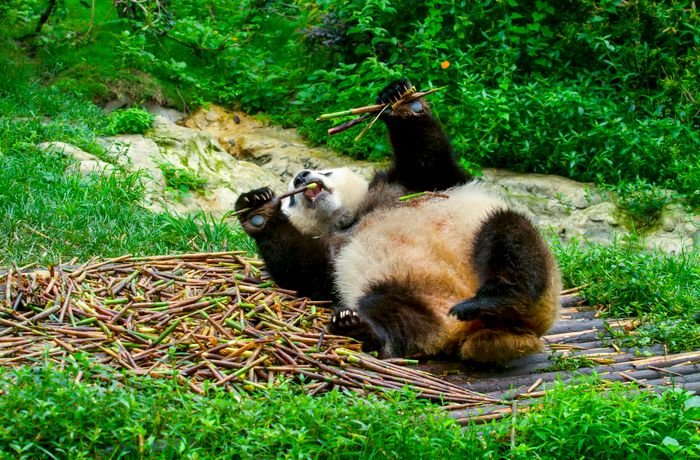
The Chengdu Research Base of Giant Panda Breeding is best visited at opening (7:30 a.m.) when the pandas are active and the crowds thin. Staying nearby (in the northern Chenghua area) means you can be at the gates for feeding time — but there’s little else out there, and rooms are modest at $28–$55. For most travelers it’s better to stay central and arrive early by metro plus a short taxi. If you’re a wildlife photographer on a mission, though, book a Chengdu hotel near the Panda Base and beat the tour buses.
Near Chengdu East Railway Station — best for HSR transit
Chengdu East (Chengdu Dong) is the high-speed gateway, with bullet trains to Xi’an (3–4 hours), Chongqing, and Kunming. A hotel here ($30–$65) is a smart move if you’re arriving late or continuing by rail — you’re checked in within minutes. It’s a sprawling, functional transport zone rather than a destination. To plan onward legs, book a Chengdu hotel near Chengdu East Railway Station and keep the rest of your trip central.
Best neighborhoods at a glance
| Area | Who it suits | Vibe | Approx $/night |
|---|---|---|---|
| Tianfu Square | First-timers, central seekers | Connected, calm, central | $30–$75 |
| Kuanzhai Alley | Heritage, couples | Courtyards, teahouses, charm | $35–$80 |
| Chunxi Road | Shoppers, nightlife | Neon, malls, energy | $35–$85 |
| Near Panda Base | Early risers, photographers | Quiet, functional, north | $28–$55 |
| Chengdu East Railway Station | HSR transit | Practical, connected | $30–$65 |
Practical booking tips
- Pick a Line 1, 2, or 3 hotel. Those three lines cover Tianfu Square, Kuanzhai, Chunxi, and the panda transfer. Single-line spots limit you.
- Book the panda trip for opening. Rooms fill the night before holidays; reserve early if you want a base near the gate.
- Check for “non-smoking” explicitly. Some Chengdu hotels still default to smoking floors; request clearly if it matters.
- Spring and autumn are best. March–May and September–November have mild weather and reasonable rates ($30–$70).
- Grab a Chengdu metro map app before arrival. The network is clean and English-friendly, and the Line 3 panda transfer plus a short taxi is the smoothest way to reach the base early.
- One app, less hassle. Booking your Chengdu room on the same platform as your trains keeps changes and cancellations in one place, with one login and one set of cancellation terms to learn.
Mistakes to avoid
- Booking far south or east “because it’s cheap.” Chengdu’s attractions cluster in the center-north; a bargain room out there costs you an hour each way.
- Underestimating the panda morning. Sleep in and you’ll face tour buses by 9 a.m. Either stay near the base or leave central by 7 a.m.
- Mixing up the stations. Chengdu has East, South, and North stations. Confirm which your train uses before booking nearby.
- Forgetting the deposit pre-auth. A refundable card hold at check-in is standard across China.
- Skipping the teahouse plan. Chengdu’s slow culture is the point — pick a hotel near a good teahouse lane so you actually slow down.
Frequently asked questions
Which Chengdu area is best for a first visit?
Tianfu Square or Kuanzhai Alley. Tianfu is the transport hub; Kuanzhai gives you heritage and teahouses. Both put you central and on the metro.
Should I stay near the Panda Base?
Only if you’re a serious early riser or photographer. For most travelers, central Chengdu plus a 7 a.m. departure works better and gives you nightlife and food.
Is Chengdu a good budget destination?
Yes — comfortable rooms run $30–$70 and street food and hotpot are cheap and excellent. It’s one of China’s best value cities for travelers.
How do I reach the Panda Base from the center?
Take Metro Line 3 to Panda Avenue, then a short bus or taxi to the gate. The full trip from Tianfu Square is about 45–60 minutes.
Which station do high-speed trains use?
Most HSR services use Chengdu East. Some use South or North, so always check your ticket’s station before booking a nearby hotel.
Do Chengdu hotels include teahouse access?
Not usually, but many courtyard hotels near Kuanzhai have their own teahouses, and public ones are everywhere. It’s a few yuan for a pot, not a booking perk.