

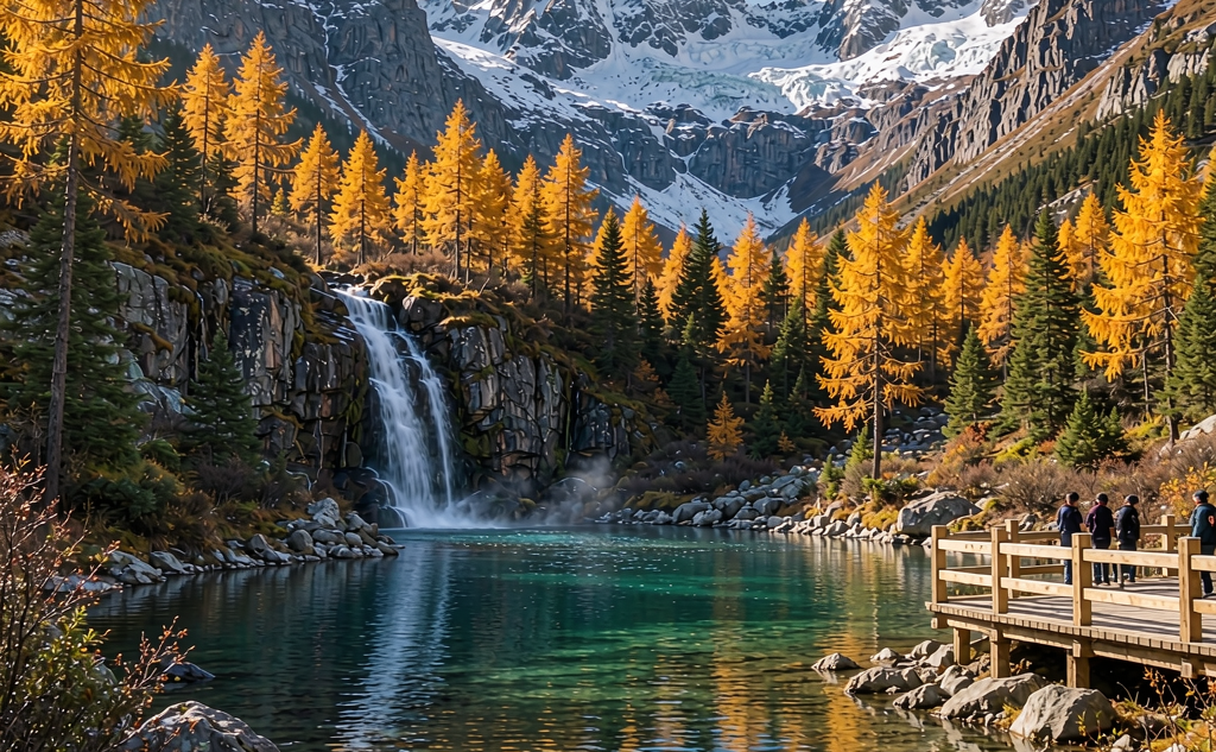
If you have seen the photos of Sichuan in October—a U-shaped valley lit with red ivy, gold birch, and a turquoise lake under snow peaks—there is a fair chance the shot was Bipenggou. A proper Bipenggou valley guide has to start with the season, because this glacial valley in Aba Prefecture is famous above all for its autumn colour, and the window is short and specific. We have sent travelers who caught the exact week and others who missed it by ten days, and the difference is the difference between a good trip and a staggering one.
Bipenggou (毕棚沟) sits in Li County, about 200 kilometers northwest of Chengdu, on the eastern edge of the Tibetan plateau and beside the Mount Siguniang range. The valley runs roughly 35 kilometers from the entrance up to a snow line and several alpine lakes, with a river, boardwalks, and cable cars along the way. It is a national park and a 4A scenic area, less famous abroad than Jiuzhaigou but, in our experience, easier to reach from Chengdu and far less crowded in the right week. It works as a day trip or an overnight from the city.
How to Get to Bipenggou from Chengdu
The first thing to settle is how to get to Bipenggou from Chengdu, because there is no train to the valley. The drive is about 3 to 4 hours northwest on the Chengdu–Wenchuan expressway, then up the valley through Li County (Lixian). The simplest option is a private car or Didi-style transfer from Chengdu, which runs 600 to 900 RMB one way and drops you at the entrance. Shared tourist buses also run from Chengdu’s Chadianzi Bus Station to Li County, then a local minibus or taxi the final 30 minutes to the gate (total around 70 to 100 RMB per person, but with a change and uncertain timing).
We usually recommend a private car for a first visit, because it lets you leave Chengdu early—aim to reach the gate by 08:30—and beat the midday coach crowds. For the wider Sichuan plan, our Chengdu travel guide explains how to base yourself in the city, and our Mount Siguniang Sichuan guide covers the higher range next door, which pairs naturally with Bipenggou.
Bipenggou Autumn Colours Best Week
The headline question is the Bipenggou autumn colours best week, and the honest answer is late October to early November. The valley’s red ivy (红叶) typically peaks between the last week of October and the first week of November, varying a little with altitude and that year’s first frost. Below 3,000 meters the birch and maple turn gold first; higher up, the ivy flares red a touch later. We tell travelers to target the final five to seven days of October and to check local “red leaf index” reports before booking, because the peak can shift by a week.
Miss the peak and the valley is still beautiful—summer is green and cool, spring has wildflowers—but it is the autumn colour that makes Bipenggou a name. Avoid the National Day week at the start of October; the coaches fill the shuttle buses and the boardwalks jam.
Bipenggou Tickets and Shuttle Bus
The Bipenggou tickets and shuttle bus are sold as a package at the entrance. Entry plus the mandatory scenic shuttle is around 130 to 170 RMB (the exact figure shifts by season), and the shuttle is not optional—the valley is too long to walk from the gate. The shuttle runs the paved road up to the upper lakes, with stops you can hop on and off. Two cable cars serve the higher viewpoints (Panyang Lake and the snow ridge above), each about 60 to 100 RMB round trip. Buy at the gate or the official mini-program; foreign passports are accepted.
We tell travelers to take the shuttle to the top and walk back down via the lakes and boardwalks, which is easier than climbing. Budget a full day inside: gates open around 08:00 and the last shuttle down is typically 17:00.
Bipenggou Hiking Trail Map
Inside the valley the walking is mostly flat boardwalk and lakeside path, not mountaineering. A useful Bipenggou hiking trail map divides into three zones: the lower river and waterfall section near the entrance, the middle lakes (such as Balang Lake and Panyang Lake) reached by shuttle, and the upper snow-view ridge accessed by cable car. A fit traveler can walk 8 to 12 kilometers of boardwalk in a day at altitudes of 2,900 to 3,600 meters.
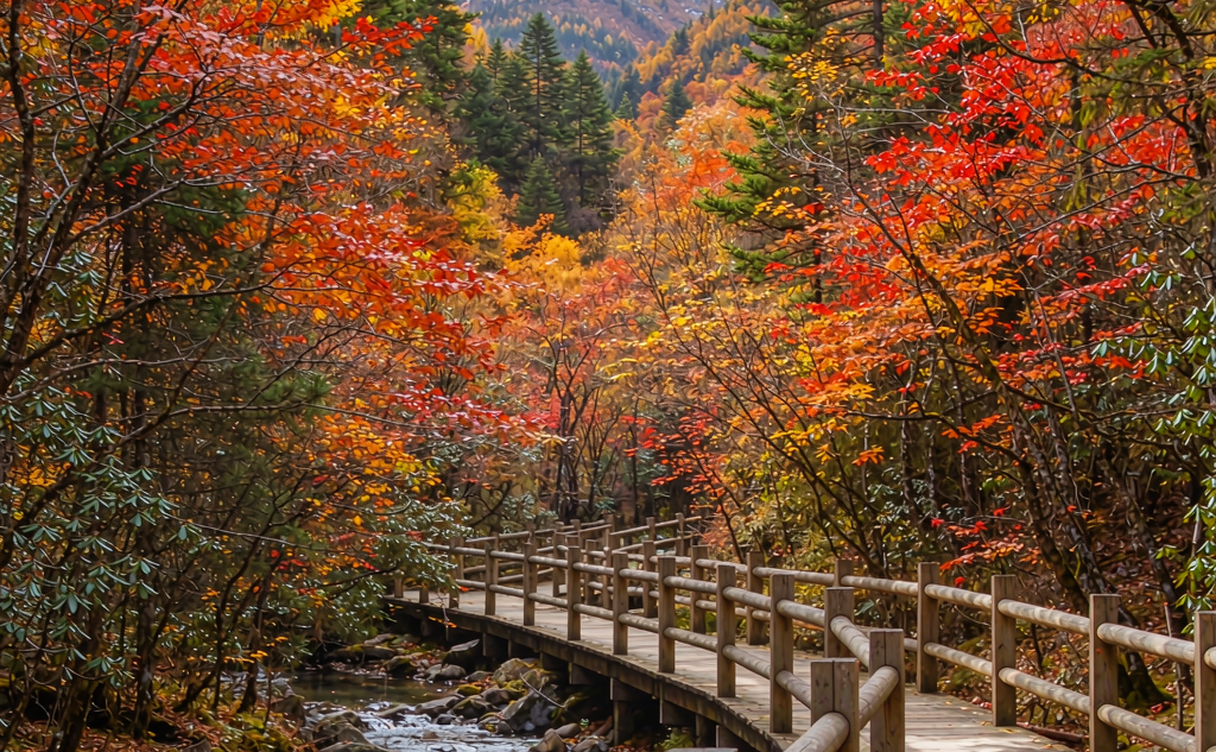
Take it slowly—the altitude is real, and first-timers from Chengdu (500 meters) feel it. We have had readers get light-headed on the upper ridge and recover with a slow walk and water. The boardwalks are well built and safe; stay on them, because the river banks are unstable. For more serious trekking in the region, our China hiking treks guide compares Bipenggou’s easy walks with longer routes, and the Hailuogou glacier guide covers a snow-and-ice valley a day’s drive east.
Bipenggou Winter Snow Trip
A Bipenggou winter snow trip is the quiet alternative to autumn. From late December to February the valley is a still, white world—frozen lakes, snow-laden pines, and clear views of the peaks with almost no crowd. The shuttle and one cable car usually run, and the entrance is cheaper in the low season (around 80 to 120 RMB). Dress for minus 5 to minus 15°C, with crampons or grippy shoes for the icy boardwalks. We like winter for photographers who want the mountains without the colour and the people.
A Suggested Bipenggou Itinerary
A Bipenggou itinerary is a long day from Chengdu or an overnight in Li County. Day trip: leave Chengdu at 06:30, gate by 09:00, full day in the valley, back to Chengdu by 20:00. Overnight: stay in Li County (rooms 200 to 400 RMB) and enter at first light, which also lets you add the nearby Mount Siguniang if the weather holds. Our best autumn destinations in China guide ranks Bipenggou among the top leaf-peeping valleys, and our best things to do in China list includes it for alpine scenery.
Where to Stay and What to Eat
Inside the park there is no lodging, so you stay in Li County or Chengdu. Li County has hot-spring hotels (250 to 500 RMB) that are perfect after a cold valley day. Food in the valley is limited and priced for tourists—bring snacks and water—while Li County has Tibetan and Qiang cuisine: butter tea, yak meat, and hearty noodles (25 to 50 RMB a bowl). A hotpot dinner for two in Li County is 120 to 200 RMB.
Background and Practical Notes
Bipenggou lies in the high country of western Sichuan, where the plateau meets the Sichuan basin; you can read about that geography and its mix of Han, Tibetan, and Qiang communities on the Wikipedia page for Sichuan, which explains why the province packs both subtropical lowlands and snow peaks into a short drive. On the ground, the valley has 4G at the entrance but patchy signal up high, so download an offline map and tell your hotel your plan. Mobile payment works at the gate; carry cash for the upper snack stalls. Altitude sickness is the main risk—ascend slowly, hydrate, and skip the top cable car if you feel off.
English signage is limited, so have your driver or hotel write “毕棚沟” in Chinese, and confirm the shuttle times the day before, because winter schedules shorten.
Is Bipenggou Worth It?
A Bipenggou valley guide should be honest that it is a scenic drive plus a shuttle, not a wilderness trek. But for the easiest world-class autumn colour and alpine lakes within a day of Chengdu, it is hard to beat. Hit the last week of October and you will understand the photos.