

When people picture Jilin Province, they usually imagine the snowy pines of Changchun or the misty gorges of Jilin City. A proper Baicheng travel guide has to correct that image, because the far west of the province is something else entirely: a wide, wind-shaped land of shallow lakes, reed beds, and some of the best birdwatching in Northeast China. Baicheng (白城) is the gateway to that world, and for travelers who care about cranes, wetlands, and open sky, it is one of the most underrated stops in the region.
Baicheng sits in the western corner of Jilin, bordering Inner Mongolia to the west and Heilongjiang to the north, on the edge of the Horqin grassland and the Songnen Plain. It is a small city of around 1.5 million people, but what matters to visitors is not the urban core. It is the protected wetlands that ring it: Xianghai and Momoge, both national nature reserves and both part of the international East Asian–Australasian Flyway for migratory birds. We have sent birders here in spring and autumn and watched them tick off red-crowned cranes, white-naped cranes, and demoiselle cranes within a single morning.
How to Get to Baicheng
The most practical way to understand how to get to Baicheng is to accept that it is off the main high-speed trunk. The city has Baicheng Station (白城站) on the conventional rail network, with direct overnight and daytime trains from Changchun (about 4.5 to 6 hours, 50 to 90 RMB in a hard seat or sleeper) and from Harbin (around 5 to 7 hours). There is also Baicheng Ulanhot Airport (DQA), with limited flights, mostly connecting through Changchun or Hohhot; for most foreign travelers the train-plus-transfer route is simpler and cheaper. From Changchun, you can also take a long-distance bus, but we do not recommend it when the train exists.
If you are building a Northeast itinerary by rail, our China high-speed train guide for foreigners explains how to book conventional trains too, not just the G-class lines. For context on the provincial capital you will likely start from, our Changchun travel guide lays out where Baicheng fits in a wider loop. We once arranged a reader’s trip where they took an afternoon train from Changchun, arrived at dusk, and were at the Momoge reserve gate by 07:00 the next morning—proof that the slow approach is part of the charm rather than a drawback.
Best Time to Visit Baicheng
The best time to visit Baicheng depends entirely on what you want to see. For birds, the two windows are April to May (northbound migration) and September to October (southbound migration). These are the months when the reserves fill with cranes, geese, and shorebirds, and the reed flats glow at sunrise. For pleasant weather and green wetlands, July and August are warm (highs around 28–31°C) but can be buggy and occasionally rainy. Winter is harsh and quiet, with temperatures that drop past minus 20°C; the frozen lakes have their own stark beauty, but most reserve facilities scale back.
We generally tell first-timers to target late April or early May. The cranes are most visible then, the mosquitoes have not yet peaked, and the light is clean. Avoid the Chinese National Day holiday in early October if you can—domestic crowds at the reserves jump, and the small eco-lodges fill up.
Things to Do in Baicheng
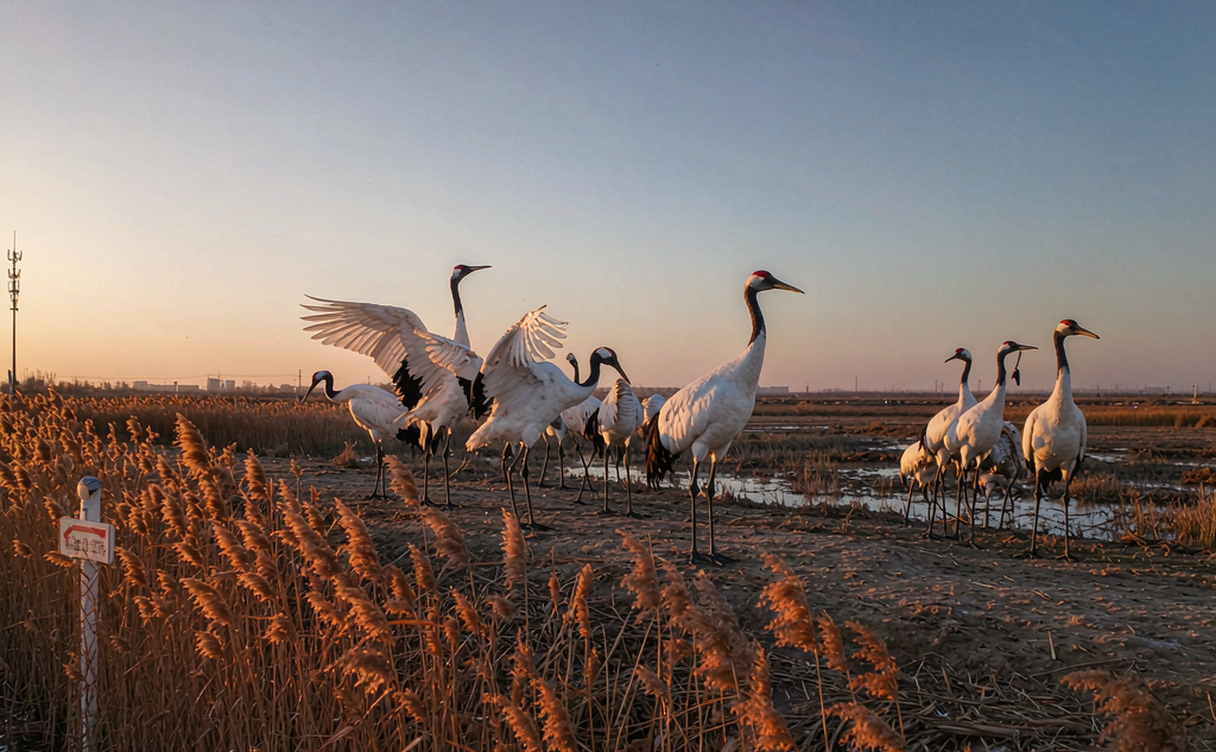
The headline attraction is Xianghai National Nature Reserve (向海国家级自然保护区), roughly 70 kilometers from the city. Xianghai protects a mosaic of lakes, marshes, and fixed sand dunes, and it is famous for the red-crowned crane, the sacred bird of East Asia. There is a breeding and reintroduction center where you can watch juvenile cranes being conditioned for the wild, and a network of viewing platforms over the reed sea. Entrance is modest, around 60 to 90 RMB including the shuttle, and a half-day visit is the minimum; serious birders spend a full day with a local guide (200 to 400 RMB).
Momoge National Nature Reserve (莫莫格国家级自然保护区) lies further north toward the Heilongjiang border and is equally important, especially for white-naped and hooded cranes. Its wetland boardwalks and observation towers are well maintained, and in autumn the sky above the reed beds can hold thousands of migrating geese at once. We once arranged a dawn boat ride on the Momoge backwaters for a photographer; he came back with a frame of a crane lifting off into pink mist that he later called the best shot of his trip.
Beyond the reserves, things to do in Baicheng include the city’s own Nenjiang River park, the local museum with its grassland and Mongol cultural exhibits, and short drives into the surrounding Horqin sandy land where you can see how farming, herding, and desert meet. The food reflects the border position: hand-pulled noodles, lamb from the grasslands, and freshwater fish from the lakes. A hearty bowl of hand-pulled noodles with lamb runs about 18 to 30 RMB; a fish feast for two at a lakeside spot is 120 to 200 RMB.
A Suggested Baicheng Itinerary
A realistic Baicheng itinerary needs at least two full days, because the reserves are spread out and the best wildlife is at dawn and dusk. Day one: arrive, rest, and drive to Xianghai for the late afternoon light and the crane center. Day two: a pre-dawn departure to Momoge for sunrise viewing, a midday rest, then a second short session at Xianghai or the Nenjiang park. Day three: a relaxed morning in the city museum before your train out.
We always build in buffer time, because birding is weather-dependent—wind and fog can close viewing platforms. Our China travel guide for first-timers has a section on rural transport and why you should not over-pack a single day in places like this. If you want a winter contrast after Baicheng, the Harbin Ice Festival is a natural next stop northeast, though it is a long train ride away.
Where to Stay and What It Costs
Baicheng is budget-friendly. A central business hotel runs 160 to 300 RMB per night; near the reserves, simple eco-lodges and guesthouses cost 120 to 250 RMB, and some include meals. Book ahead in peak migration weeks. Taxis start at 6 RMB, and hiring a car for a reserve day trip is the smart move—budget 300 to 500 RMB for a full-day private driver, which splits cheaply between a small group.
For a broader sense of the province, our Jilin City travel guide covers the river city several hours east, and our list of the best things to do in China includes wetland and wildlife experiences worth comparing against the rest of the country.
Background and Conservation Notes
Both Xianghai and Momoge are recognized internationally for their ecological value; Xianghai is part of UNESCO’s Man and the Biosphere Programme, a designation that underscores how globally significant these quiet Jilin wetlands are. You can read more about the biosphere network on the UNESCO Man and the Biosphere page, which explains why protecting stopover sites like these matters for birds that migrate across continents. The reserves operate under strict rules: stay on boardwalks, keep noise down, and never feed wildlife. Drones are usually prohibited near nesting areas, and rangers enforce it.
Connectivity is improving but still patchy outside town, so download offline maps and carry cash for small entrance and shuttle fees. Mobile payment works at most lodges, but the remote reserve kiosks sometimes prefer cash.
Is Baicheng Worth It?
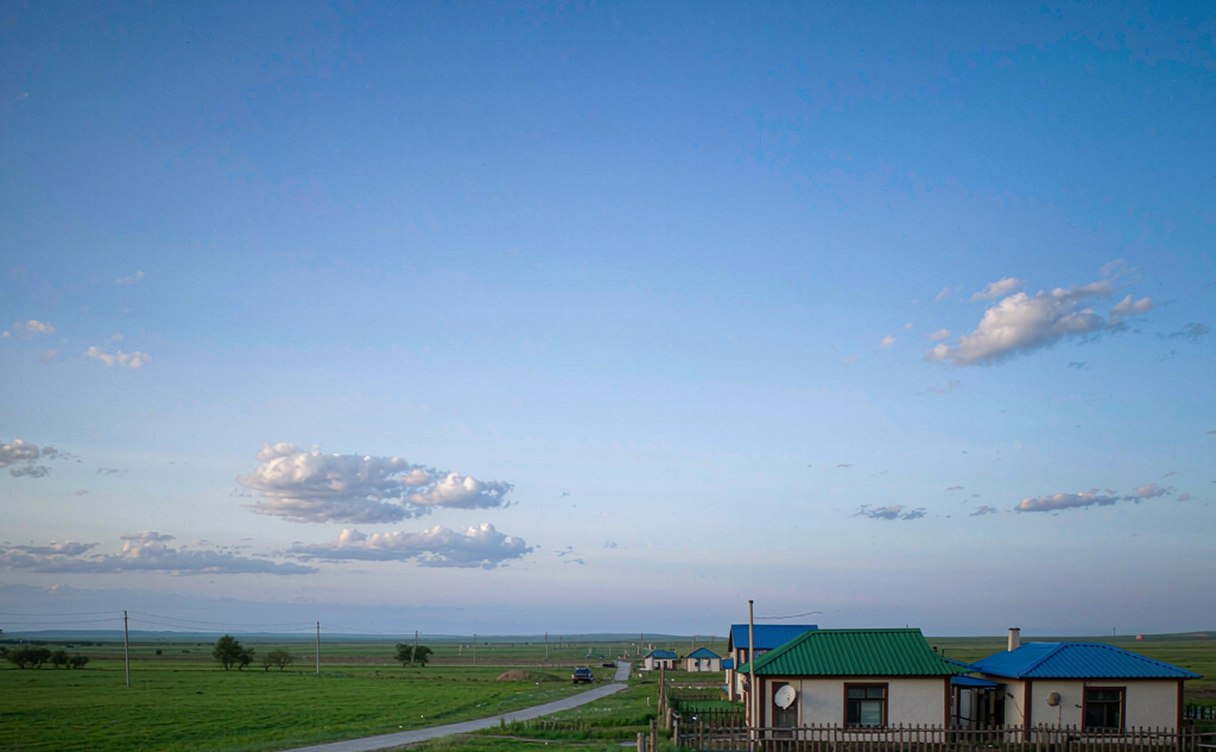
A Baicheng travel guide should be honest that this is not a city for nightlife or shopping. It is a city for anyone who loves the natural world and does not mind trading convenience for cranes on the wind. The wetlands of western Jilin are shrinking and changing, which makes seeing them now all the more meaningful. If your idea of a good trip includes a quiet platform at 5 a.m. and a thermos of tea while the mist lifts off the reeds, Baicheng will reward you far beyond its modest size.