

Anxi travel guide is a phrase that only made sense to me once I stood on a terraced hillside near 800 meters and watched a farmer’s hands turn a mound of dark green leaf. Anxi is the county in southwest Fujian that gave the world Tieguanyin, the oolong so carefully roasted and so softly scented that it turned tea drinking into a way of life. It belongs to Quanzhou and sits 60 to 90 km inland, making it one of the few places in China where a landscape, an economy and a whole town’s identity are built from a single leaf. What follows is the briefing I give travelers: how to arrive, which hills to walk, where the tasting rooms sell good leaf instead of souvenirs, and how to fit the county into a wider Fujian loop.
Geography first, because it explains everything else. Locals divide the county into Neianxi, the inner highlands, and Wai’anxi, the outer basin around the county seat. The outer area is warm, low and busy, where the workshops, warehouses and tea markets cluster. The inner area is a folded belt of mountains above 800 to 1,000 meters, covered by townships such as Shangqing, Gande and Xianghua, where cloud lies in the valleys most mornings and the bushes grow slower and leaf more thickly. That vertical difference is why two cups of the same cultivar can taste entirely different a few kilometers up the road. If you are starting from the coast, our Quanzhou travel guide is the natural anchor for the first night of any Fujian itinerary.
Tieguanyin Tea Planting in Anxi: Where the Leaf Comes From
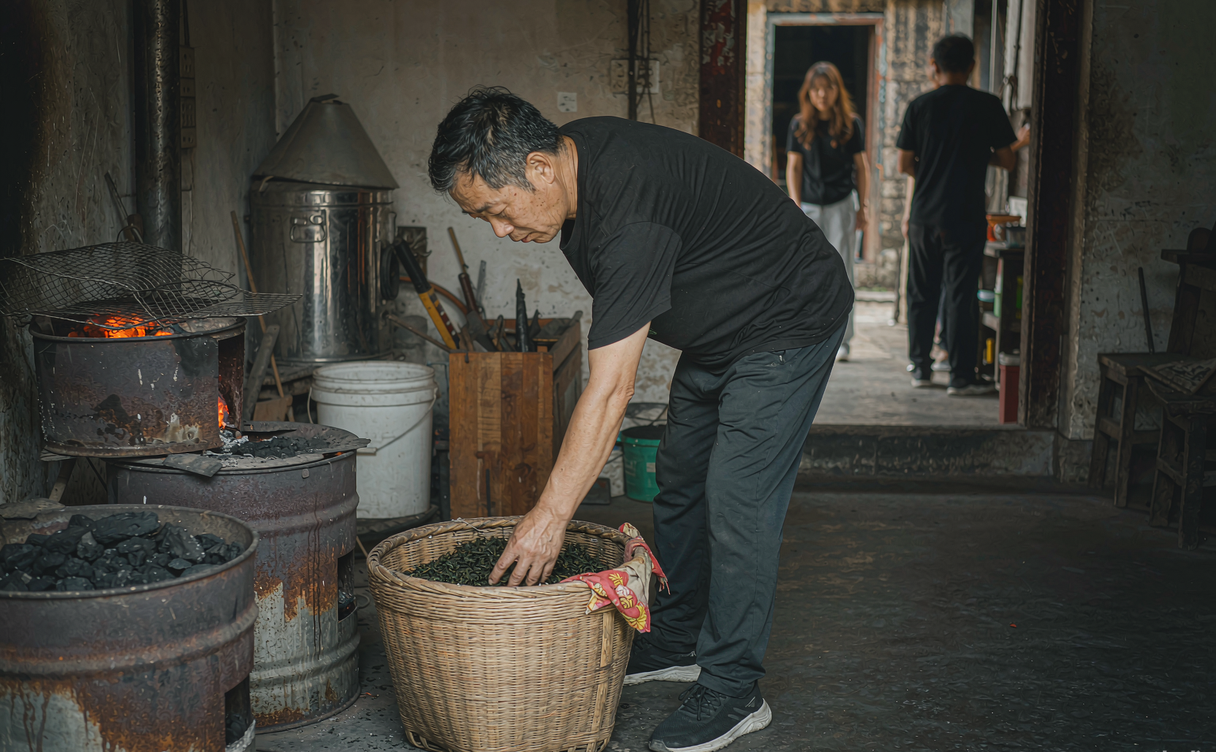
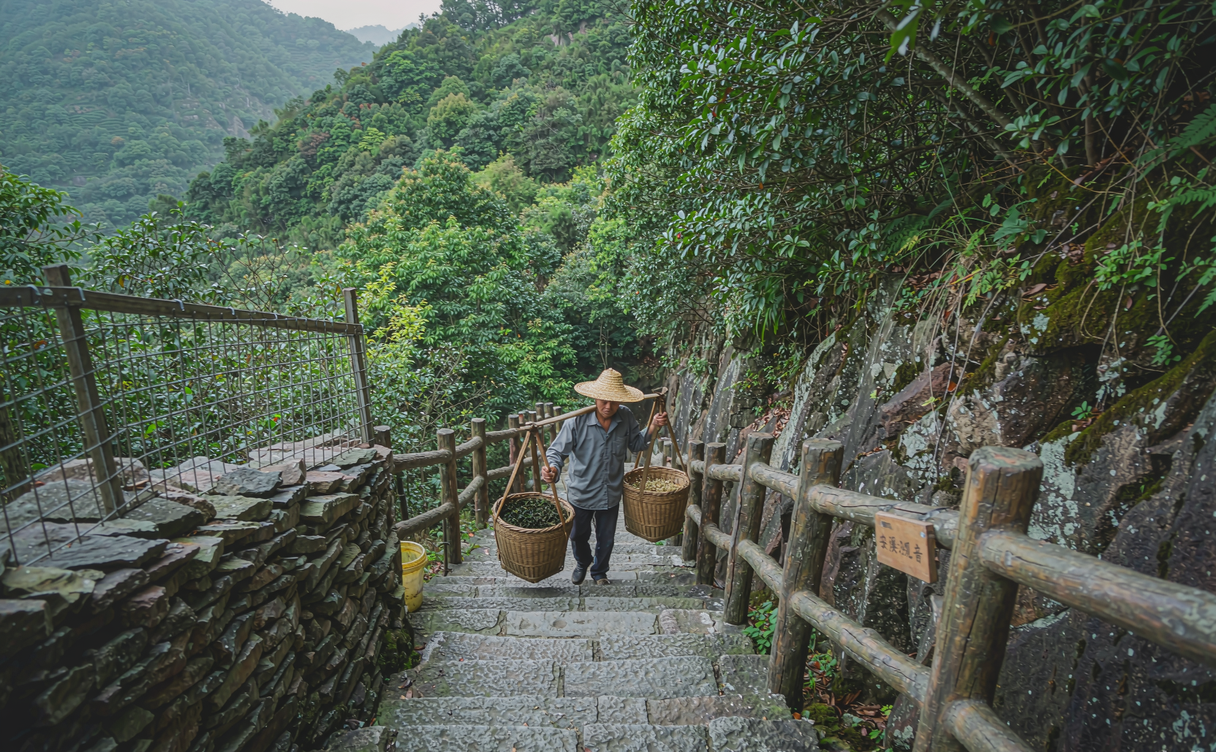
Tieguanyin tea planting Anxi is not a single sight but a seasonal cycle, and understanding it changes how you plan. The bushes are small and shrubby, set in rows that follow contour lines cut into the slope, and they are pruned hard each winter so the spring flush comes up dense and tender. Picking runs from late April, peaks around the Qingming festival, and can stretch to early November for the autumn flush, which many locals rate second only to spring. On a working farm the process is withering, shaking or bruising the leaf so it begins to oxidize, pan-firing it in a hot iron wok, rolling it into tight pellets, and finally roasting it over charcoal embers for hours. That last step is what separates a supermarket tin from a cup tasting of orchid and sweet potato at once.
The highest, most photogenic fields are in the inner mountains, and Shangqing and Gande are the two names to know. Roads climb and switch back, so hire a car or join a small group rather than relying on buses. Xianghua produces a brighter, more grassy style that brews pale and keeps well, while Gande is known for a heavier roast. Walking the rows on foot is usually free, so ask before photographing people and buy something at the roadside afterwards. Anxi tea market tasting rooms line the roads between these townships, and they are both the best reason to come and, honestly, the easiest thing to get wrong.
Anxi Tea Market Tasting Room: How Not to Be Fooled
An Anxi tea market tasting room is a workshop with a long wooden table, a row of small clay pots, a kettle, and somebody who will not stop pouring. The ritual is real: rinse the leaf once, brew at near boiling point, decant into tiny cups, then keep tasting from the first infusion to the fifth. What matters is sitting through four or five samples before anyone names a price, and asking the grade out loud. A genuine spring Tieguanyin from the inner hills costs a multiple of the valley-leaf stuff sold in the same room, and an honest merchant will say so. Tasting is free in most houses but not all, so ask before you sit.
Buy in the workshop where the leaf was grown rather than at county-seat souvenir shops, and judge the dry leaf by smell, not the label. Good leaf smells faintly toasted and floral at once; stale leaf smells flat. Packaging and mailing services are common and cheap, and most dealers will ship if you ask.
Sip your way across the province? Start with Anxi, then follow the same leaf trail north into the cliff tea gardens of Wuyishan.
The Tea Horse Trails and the Folk Park
Long before Anxi tea reached teacups in Europe, it moved on foot. The old routes ran from the inner hills down to the coast, joining the trade corridors that fed the ports of Quanzhou and, later, the markets of Hong Kong, China and Macao, China further south. Iron pots, salt and cloth came back up into the hills, and the caravan towns along the way grew tea kitchens and inns that still stand. The pack-animal stretches through Fujian and neighbouring Jiangxi are grouped under the broad umbrella of the southern tea horse roads, and Anxi is where they converge on the sea. The FAO Globally Important Agricultural Heritage Systems site documents the Anxi Tieguanyin Tea Culture System as a designated agricultural heritage, which tells you how seriously the terraces and the old cultivars are now protected.
For a modern version of that story, head to the Xihe Tieguanyin Folk Park in Xiping, in the inner highlands. It is a curated village rather than an ancient one, but it lays the whole trade out in a compact, walkable area: traditional houses, a tea culture museum, small workshops where you can watch rolling and roasting, and teahouses where the cup is poured for you. It works well as a rainy-day option and is the easiest place in the county for a non-drinker to grasp what all the fuss is about. Xiping itself is worth the detour regardless — it is widely described as the birthplace of the cultivar, and the old lanes above the park are calm in the morning.
How to Get to Anxi from Quanzhou
How to get to Anxi from Quanzhou is the question almost every visitor asks, and the answer is easier than it used to be. Anxi has no high-speed rail station of its own, so take the train into Quanzhou — Quanzhou station or Quanzhou East on the coastal line — then continue by road. Buses and coaches from the Quanzhou long-distance terminals to the Anxi county seat run frequently and are budget-friendly, and a taxi or ride-hail covers the same distance at a modest cost. From Xiamen the drive is roughly two hours via the G72 Quanzhou–Nanning expressway, which cuts southwest out of the city and climbs into the hills; the last stretch through the tea country is slow and green.
Driving yourself is worth considering if you plan to visit the inner townships, because the fields spread over dozens of kilometers of mountain road. Entrance to the hills is generally free, so budget for fuel and tolls rather than tickets. Within Anxi, local buses connect the county seat with Shangqing, Gande and Xianghua at very low fares, but services thin out after mid-afternoon, so plan your return.
Best Time to Visit Anxi
Best time to visit Anxi is spring, without much argument. Late March to early May brings the first quality flush, new green on the terraces and pleasant walking weather in the mountains; it is also the busiest period for dealers, so the tasting rooms are full and planning ahead helps. Autumn, roughly September to November, gives the second flush and far emptier roads at the mountains’ clearest. Summer is hot and humid in the outer basin but cool above 800 meters, which is exactly why hillside guesthouses fill with people escaping the coast. Winter is the quietest season and the roasting season, when workshops keep charcoal fires burning late and the air up in the hills smells of toasted leaf. Rain is possible any month, so pack a light raincoat rather than an umbrella.
Eating in Anxi
Eating in Anxi is unglamorous and excellent. The county signature is Hutou rice noodles, a thick, silky dish from the town of the same name, served with braised pork, mushrooms and a dark broth. Anxi also has its own bean tea, a roasted soybean infusion poured in small cups, plus dried radish, wild fern shoots and ginger-braised mountain chicken. Grilled tea-flavored skewers and sticky rice appear at night markets in the county seat, and a meal for two at a plain restaurant costs around the low tens of yuan.
Two days is enough for the hills and the market — make it three and you will sit down for a long tasting without rushing.
A Sensible Two- or Three-Day Loop
Things to do in Anxi need a minimum of two days, and three is true luxury. Day one: arrive from Quanzhou, check in near the county seat, and spend the afternoon in a tasting room where you sit through five samples and buy one small bag. Day two: hire a car up to Shangqing or Gande for a morning walk on the terraces, come back down for lunch, then finish at the Xihe Folk Park in Xiping. Day three, if you have it, pushes deeper into Xianghua and takes the mountain road slowly, or swings north to the Tianluokeng tulou guide and the Fujian tulou villages, about two hours away and a natural pairing with an inland Quanzhou circuit.
Anxi also slots into a coast-to-mountains loop: drop south to the Xiamen travel guide for the ferry ports and the island, or continue with our China tea tour guide if the leaf trail is the whole point of the trip. For a broader plan, the best things to do in China roundup is where most travelers start.
Practical Notes
Bring layers even in spring — the inner hills are genuinely cool in the morning. Wear shoes with grip, because the terraces are often wet and the paths are stepped. Cash is useful in small mountain workshops, though WeChat and Alipay cover almost everything else. Skip the biggest souvenir tins in the town center and the “antique” tea chests, which are rarely what they claim. One last tip: drink water between tastings, because even the fifth cup of a Tieguanyin session carries far more caffeine than visitors expect.
Book a guesthouse in the inner hills for one night and you will hear the roasting fires working long after dinner is over.
Anxi is not a county of monuments. It is a working plantation the size of a small country, a landscape of contour lines and charcoal smoke, and a tasting table where the conversation runs longer than the cup. Come for the hills, stay for the leaf, and leave with one bag you can actually taste the difference in.