

The dish that made me miss a train out of Haikou was coconut chicken hotpot. I had planned a quick lunch; two hours later I was still dipping Wenchang chicken into a broth that tasted like sweet clear coconut water with a whisper of ginger, wondering why nobody had told me Hainan, China was this good. This is my Hainan coconut chicken guide, written after eating it in hole-in-the-wall spots and polished chain restaurants from Haikou to Sanya.
Coconut chicken — “ye zi ji” (椰子鸡) in Mandarin — is a hotpot, not a stir-fry. You simmer free-range Wenchang chicken in a pot of young coconut water, often with a few slices of mature coconut meat and goji berries, then eat the chicken first and cook vegetables and noodles in the now-rich broth second. It is clean, light, and nothing like the numbingly spicy hotpots of Sichuan. On a warm Hainan evening it is exactly right.
Best Hainan Coconut Chicken: What to Look For
The best Hainan coconut chicken comes down to three things: the chicken, the coconut, and the dip. The chicken should be Wenchang breed — a small, yellow-skinned, slow-grown bird from Wenchang county in eastern Hainan, China, prized for firm, slightly sweet meat. The broth should be real young coconut water, not powder; you can tell because it stays clear and smells like a fresh coconut, not like syrup. The dip is the soul: usually a mix of crushed garlic, fresh lime or small green citrus (the local “small orange”), soy, and sometimes bird’s-eye chili. I order extra dip everywhere I go.
Price runs about RMB 88–138 for a half-chicken pot for two at a mid-range chain, and RMB 50–80 per person all-in once you add vegetables, a drink, and noodles. High-end branches in Sanya resort areas charge RMB 150–220 per person. For the money it is one of the better-value meals on the island.
Where to Eat Coconut Chicken
The honest answer to “where to eat coconut chicken” is: almost anywhere on Hainan, China, because it is the island’s signature dish. But a few patterns help:
- Haikou — the capital has the most old-school versions. Look around Haixiu Road and the area near the Qilou Old Street; many locals point to long-running spots where the broth is coconut-water only. I ate a memorable version near the old town for RMB 65 per person.
- Sanya — the tourist south is dominated by chains like “Qiong Tsun” (琼乡) and “Wenchang Chicken” branded houses. They are consistent, air-conditioned, and English-menu friendly. For a deeper stay plan, the Sanya travel guide maps the districts so you can pick a restaurant near your hotel.
- Wenchang county — if you want the source, the small city of Wenchang itself serves the bird at its most local. It is a half-day trip east of Haikou.
For beach-based trips, the Sanya Yalong Bay guide notes several coconut-chicken restaurants within reach of the resort strip, handy after a day on the sand.
How the Meal Actually Goes
Understanding the rhythm helps on your first try. When the pot arrives it is mostly clear coconut water with the raw chicken; the staff lights the burner and in about six to eight minutes the chicken is just done — do not overcook it, or the texture tightens. Skim nothing; the foam is just protein. Pull out the chicken, dip in your sauce, eat. Then add greens, tofu, and a handful of the local thin noodles to the broth, which by now tastes of chicken and coconut at once. Finish with that noodle bowl as your soup course.
I learned the hard way to order the coconut meat (the white flesh from mature coconuts) added at the start — it softens into something between a vegetable and a sweet. Also: the young-coconut water broth is lightly sweet, so do not expect salt until you hit the dip. That contrast is the point.
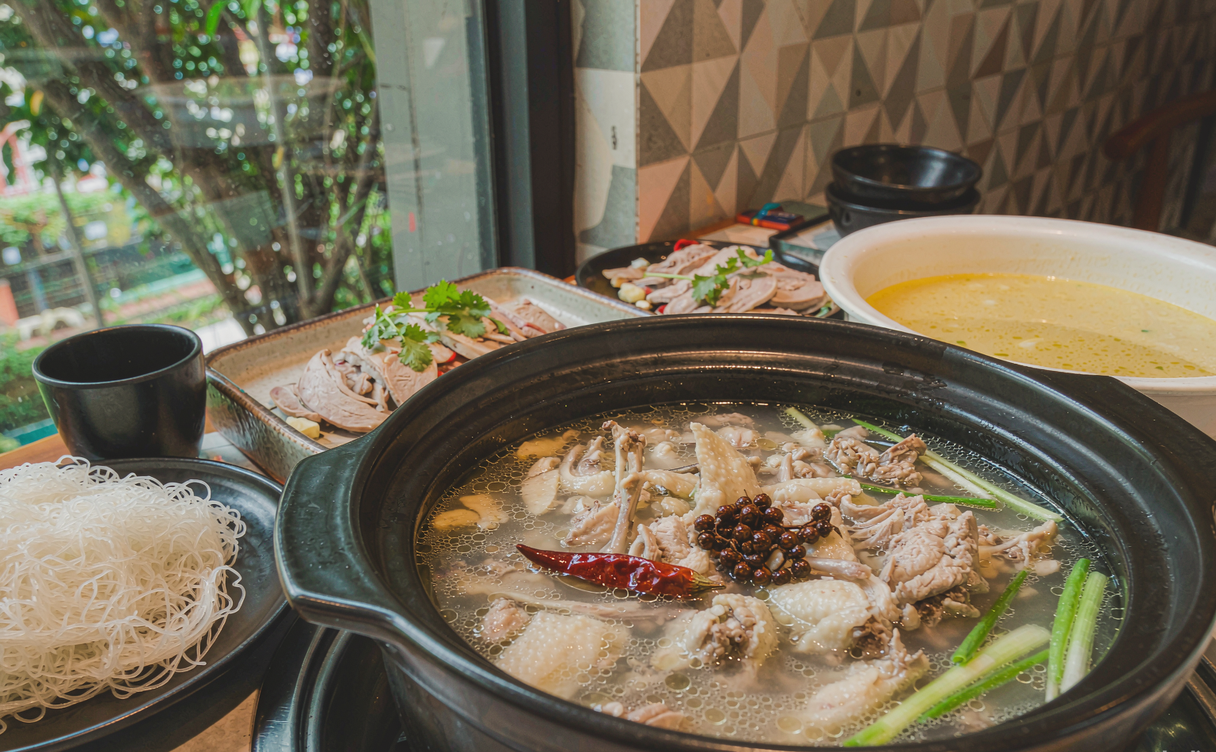
Hainan Coconut Chicken Hotpot: A Food-Guide Plan
If you want a Hainan food guide centered on this dish, here is the route I suggest:
- Day 1, Haikou — lunch at a local coconut-chicken house near the old town; dinner on Wenchang chicken prepared plainly (steamed with garlic) to compare.
- Day 2, travel south — high-speed train Haikou to Sanya (1.5–2 hours, RMB 80–120) lets you eat a different branch the same week. Train booking is covered in our China high-speed train guide for foreigners.
- Day 3, Sanya — a resort-area coconut-chicken dinner, then walk the beach.
This is also a good anchor for a wider trip: the best things to do in China list includes Hainan’s beaches and the coconut-chicken stops that pair with them.
Best Time to Visit Hainan for This Dish
You can eat coconut chicken year-round, but the best time to visit Hainan for the full experience is November through March, when the rest of China is cold and Hainan, China sits at a pleasant 20–28°C. That is peak season, so restaurants are lively and reservations help in Sanya. I went in February and the open-air branches were full of mainland families escaping winter — fun, but book ahead.
Summer (June–September) is hot, humid, and typhoon-prone, but prices drop and you will have the nicer branches to yourself. Either way the dish works; it is as much a cooling meal as a warming one.
Practical Tips for First-Timers
- Order by half or full chicken — a half pot (about 1 kg of chicken) feeds two with sides; a full pot feeds three to four.
- Ask for “qing shui” broth — meaning coconut-water only, no added stock, if you want the purest version.
- Dip is everything — mix it at the table; the default garlic-citrus-soy is adjustable with chili.
- No pork-heavy sides needed — keep it light: greens, corn, tofu, noodles. The point is the clean broth.
- Pay with cash or a Chinese app — foreign cards are spotty at smaller Haikou spots; chains take more.
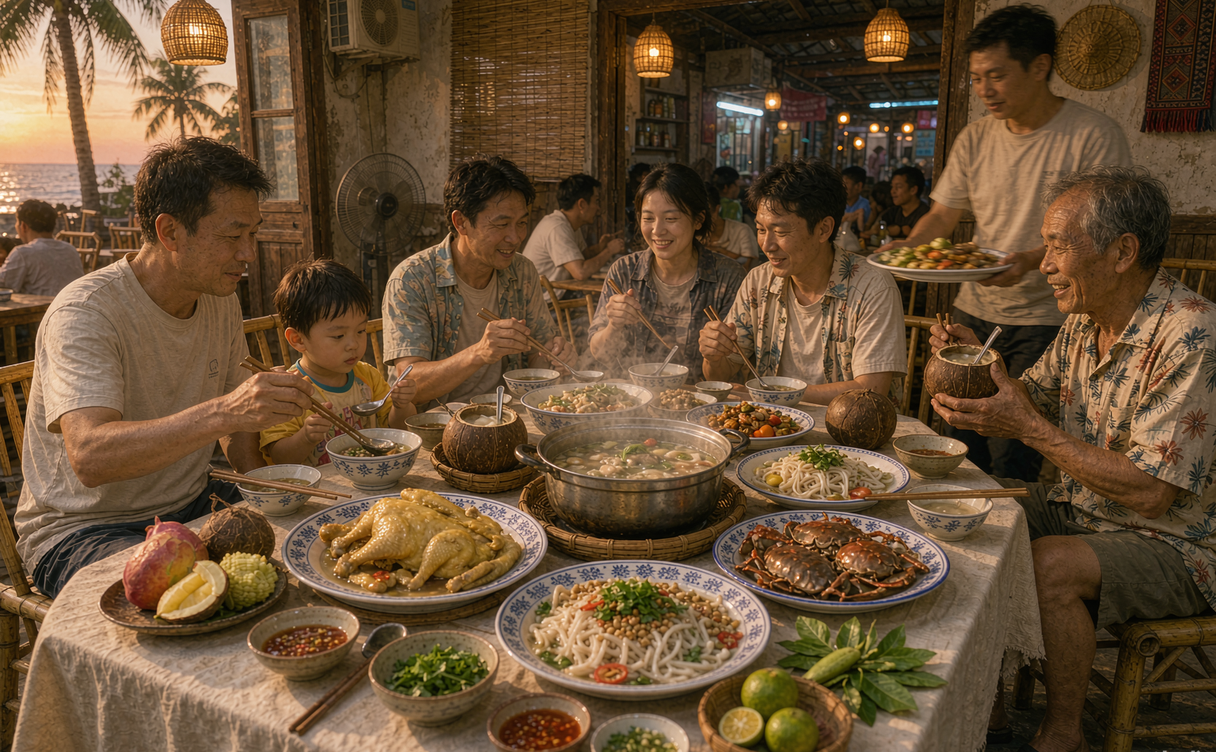
The chicken at the heart of the dish has its own story: Wenchang chicken is one of the “four famous chickens” of Hainan, China, and the Wikipedia entry on Wenchang chicken traces the breed and why its meat is suited to gentle cooking like this hotpot.
If Hainan is your first China stop, our China travel guide for first-timers explains payments, the apps you need, and how island transport fits a national route.