

Most visitors to Zhangye, Gansu, China come for the Rainbow Mountains — the Linze side of the Zhangye Danxia Geopark, where the hills look like someone spilled paint. I did that too, and it is spectacular. But on a friend’s insistence I also went to Binggou Danxia, about 40 kilometers north of the city, and I will say plainly: if you only have time for one, and you like weird over pretty, Binggou is the one I would keep.
Binggou Danxia is the “castle” danxia. Instead of broad striped slopes, here the erosion has carved the red sandstone into towers, palaces, and fortress walls — some pale cream, some deep red — that stand alone in the desert like a ruined city no one built. The Chinese name, Binggou, means “ice valley,” and on a cold morning the pale rock does look frosted. I visited in late September and again in May, and the difference in light alone changed the place completely.
Best Time to Visit Binggou Danxia
The best time to visit Binggou Danxia is May–June and September–early October. Gansu’s Hexi Corridor has hard winters (down to -15°C) and a summer that is hot and glary, often above 30°C by July. I went in late September and the temperature sat around a perfect 18–22°C, with clean low sun that made the red rock glow.
Our best time to visit China guide places the northwest’s comfortable window firmly in spring and autumn, and Binggou fits that exactly. Avoid July–August if you dislike heat and domestic crowds; avoid November–March unless you are equipped for serious cold and possible road ice. The light is best in the first two hours after the 07:30 opening and again in the last two hours before the 18:00 close, so plan your drive to arrive early.
How to Get to Binggou Danxia
Binggou is not on the same ticket as the Rainbow Mountains, and it is farther out, so transport needs thought:
- Private car / driver from Zhangye — the realistic choice. A half-day return (with waiting) costs about RMB 300–500. The drive is 50–70 minutes each way depending on whether you start from Zhangye city or from the Linze rainbow side.
- Combo tour — many Zhangye hostels sell a “Rainbow Mountains + Binggou” day trip for RMB 180–280 per person including both entries. This is the easiest way to see both without driving yourself.
- Public bus — there is no clean public bus to Binggou’s gate; the Rainbow Mountains have more options, and Binggou is usually reached from there. I do not recommend buses for a first visit.
Trains: Zhangye has two stations, Zhangye West (high-speed) on the Lanzhou–Xinjiang line. From Lanzhou, high-speed trains take about 3–4 hours; from Xi’an about 6–7 hours. Our China high-speed train guide for foreigners covers how to book these long-haul trains as a visitor.
What You Actually See at Binggou
Unlike the Rainbow Mountains, where you view from wooden boardwalks above the slopes, Binggou lets you walk among the formations on sandy paths. The park is laid out in loops, each with a name: “Palace of the Queen,” “The General,” “Lock Mountain Temple.” Some formations are 20–30 meters tall and shaped, honestly, like crenellated castle walls. I spent most of an hour just in the first loop taking the same pale tower from different angles as the sun moved.
There are shuttle buses between the loops (included or RMB 20–30 extra depending on ticket), and a short hike to the high viewpoint that looks back over the whole field of red towers against the blue Gansu sky. That viewpoint is the shot everyone comes for, and it earns it.
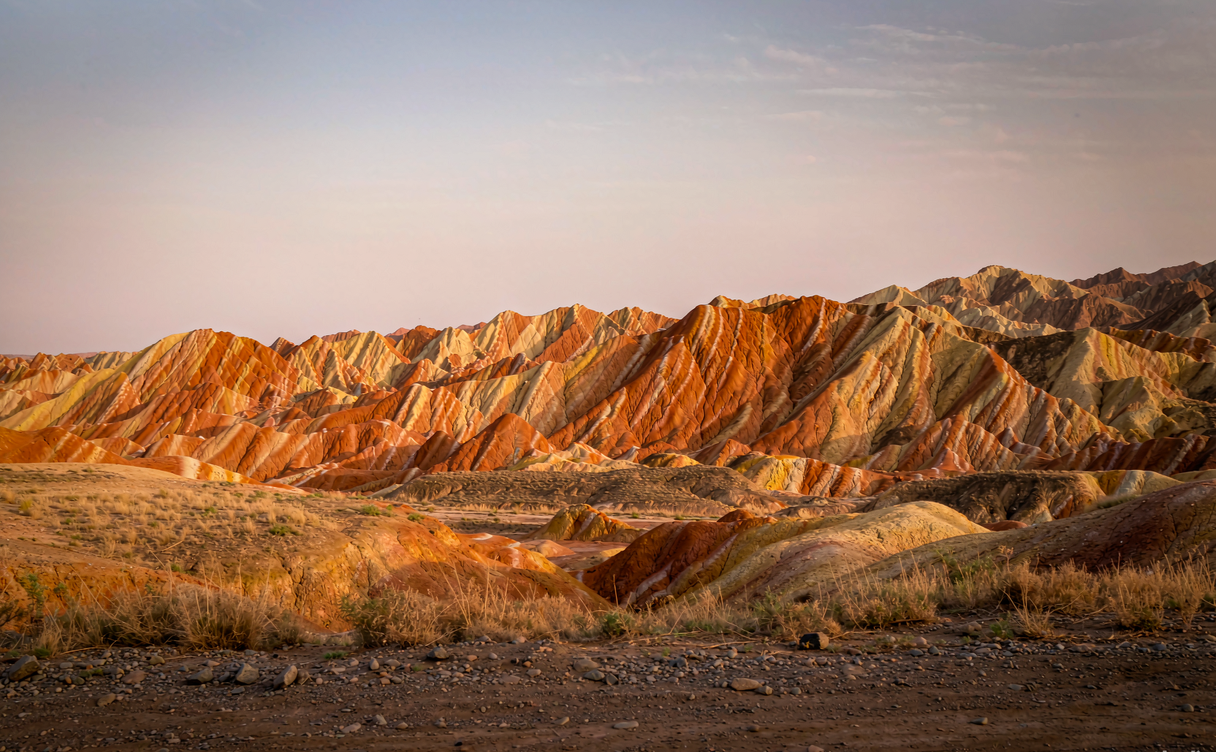
Binggou vs the Rainbow Mountains
People ask me which to choose. They are different experiences five kilometers of geology apart:
- Rainbow Mountains (Linze) — broad, colorful, striped hills viewed from above. Best at sunrise/sunset. Busy, iconic, photographic.
- Binggou Danxia — three-dimensional towers and palaces you walk among. More sculptural, quieter, stranger.
If you have a day, do both on a combo ticket. If you have half a day and like form over color, do Binggou. My Zhangye Danxia Rainbow Mountains guide goes deep on the colorful side so you can decide.
Things to Do at Binggou Danxia
- Walk all three loops — the third loop has the densest “palace” formations and the fewest people. Budget 2.5–3 hours total.
- Climb to the north viewpoint — a 15-minute sandy climb, worth it for the overview.
- Photograph the pale towers — the light-colored rock reads best in morning; the red reads best late afternoon.
- Combine with Jiayuguan — if you are driving the corridor west, the Gansu Jiayuguan Fort guide covers the western end of the Great Wall, about two hours farther on.
A small practical note: the sandy paths between loops have almost no shade, and the pale rock throws light back at you, so sunglasses and a brimmed hat matter more than I expected on a bright Gansu afternoon. I also found the second loop noticeably quieter even on a busy day, because most tour groups stop at the first viewpoint, take their photos, and turn back.
A Binggou Danxia Itinerary
A workable Binggou Danxia itinerary from Zhangye:
- 07:30 — Driver picks you up in Zhangye (or join the combo tour).
- 08:30 — Arrive at Binggou gate; buy ticket (about RMB 60 for entry, plus RMB 20–30 shuttle if not bundled).
- 09:00 — Loop 1 (Palace of the Queen) — 45 min.
- 10:00 — Loop 2 and the north viewpoint climb — 60 min.
- 11:15 — Loop 3 (the densest towers) — 45 min.
- 12:30 — Lunch at the gate area (RMB 30–50 for noodles or lamb skewers).
- 13:30 — Drive to the Rainbow Mountains (if combo) or back to Zhangye.
Carry water and a hat — shade is almost none and the sandy paths are exposed. Wear closed shoes; the sand gets into everything. Tickets are bought at the window with your passport; foreign cards are not accepted at the stall, so bring cash (RMB) or a Chinese payment app.
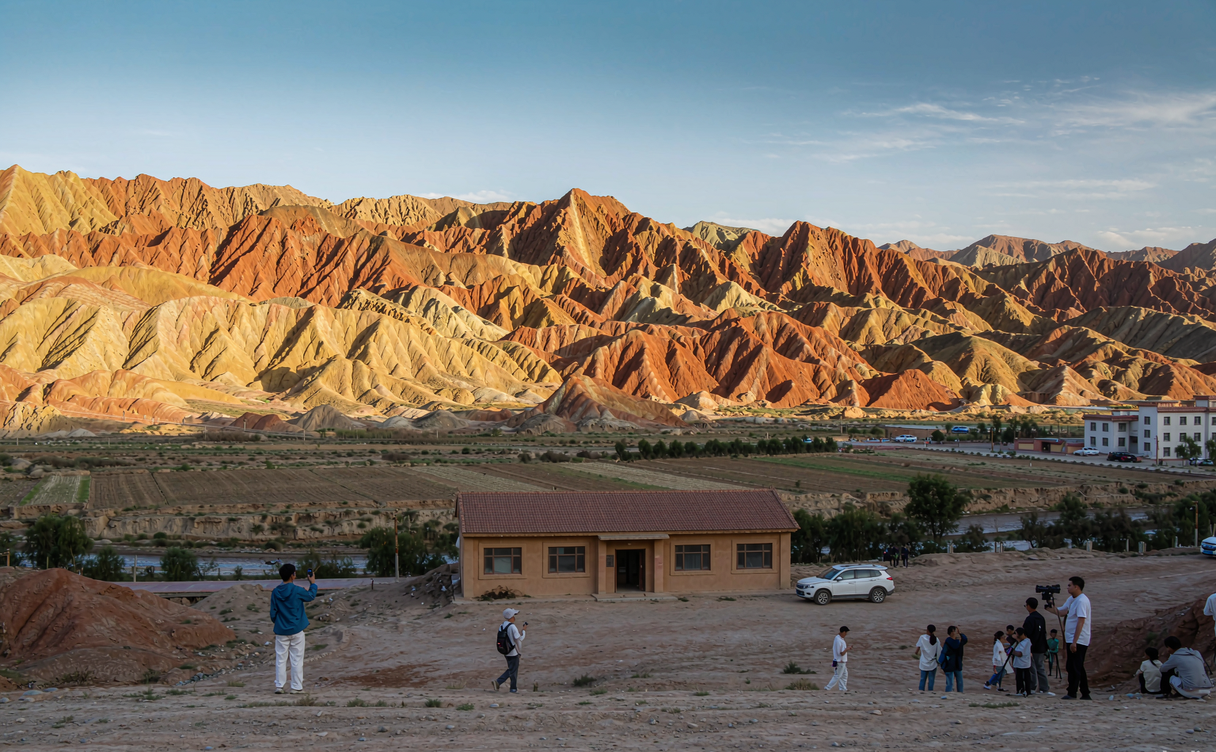
The “China Danxia” landform that includes Binggou and the Zhangye Rainbow Mountains is inscribed by UNESCO, and the UNESCO China Danxia listing explains why these red-bed cliffs were judged of universal value — useful reading before you go so the shapes mean more when you stand among them.
The danxia landscape is not unique to Gansu; the Taining Danxia guide covers a greener, river-cut version in Fujian if you want to compare formations across the country, and our China travel guide for first-timers helps you plan the long rail hops to reach the northwest.