

Zhangye, Gansu, China is the Silk Road city most travelers reach for one reason — the Zhangye Danxia, the layered “rainbow mountains” that glow at sunrise — and then stay longer than planned for the Giant Buddha Temple and the quiet oasis charm. We have sent travelers who booked a single night and wished for three, and others who chased the Danxia light from a city hotel an hour away and missed the soft morning colors. This guide to the best hotels in Zhangye covers where to stay by budget, the city-versus-scenic-area trade-off, and the booking and transport realities that make or break a Danxia visit. For the wider corridor, our Jiayuguan travel guide continues the Wall-and-desert route west.
Luxury and upper-mid: chain comfort in the new town
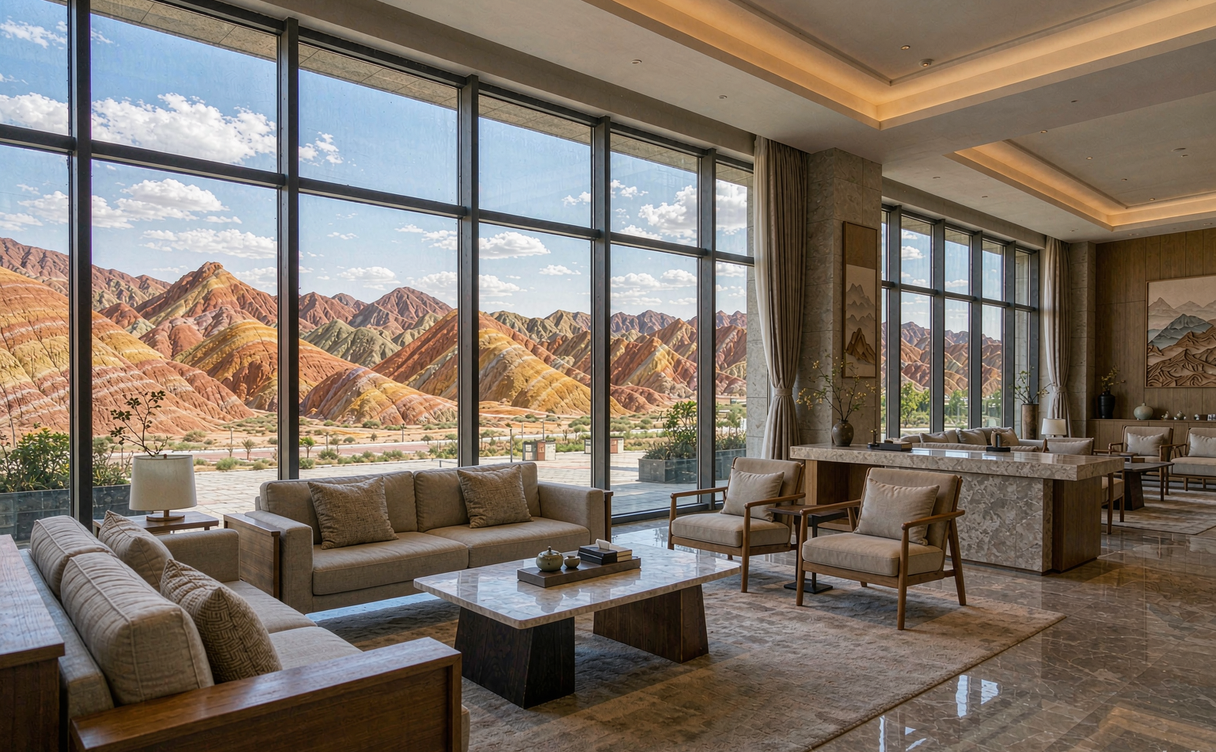
Zhangye’s most reliable upscale rooms cluster in the new town near the high-speed rail station and the main avenues, where national chains — Hilton, Crowne Plaza, Atour, and Vienna among them — offer consistent heating, breakfast, and English-friendly front desks from roughly ¥400 to ¥800 per night. These are the properties we recommend for a first visit: after a dawn Danxia trip you want a hot shower and a real bed, not a rustic guesthouse. Book three to four weeks ahead in summer and early autumn, when domestic tourism peaks and the better hotels fill first, and confirm that your rate includes the breakfast buffet before you commit.
Mid-range: central Ganzhou for food and temples
The Ganzhou district, the old city core, is where you want to be for walkable meals and the Giant Buddha Temple. Mid-range hotels here run ¥250 to ¥450 and trade some polish for location — step out to noodle stalls and night markets within minutes. We like this tier for travelers who plan a relaxed evening in town and a dawn departure to Danxia; it splits the difference between comfort and character. Look for listings that specifically mention “near the Giant Buddha Temple” if walkability matters more to you than brand consistency, and check recent reviews for quiet, since the core can be lively on weekend nights. If you are traveling as a family, the Ganzhou mid-range hotels are the best value, since many offer connecting rooms and easy lift access for luggage and strollers. We suggest confirming a room above the second floor — quieter — and away from the street-facing side if you are a light sleeper, because the old core stays lively into the evening and the desert wind can rattle older window frames.
Budget: clean, simple, well placed
Budget hotels and guesthouses in Zhangye, Gansu, China cost ¥120 to ¥220 for a private room, with hostels a little less. They are perfectly serviceable for the traveler who spends daylight at the Danxia and Mati Temple and needs only a clean, warm base. The main watch-outs are inconsistent heating in older buildings and variable wi-fi, so filter reviews for “warm” and “quiet.” Unlike Shangri-La or Lhasa, Zhangye sits at a gentle ~1,500 meters, so altitude is not a booking factor here — a relief if you are looping in from the plateau to the south or the high desert to the west.
Stay at the Danxia scenic area or commute from the city?
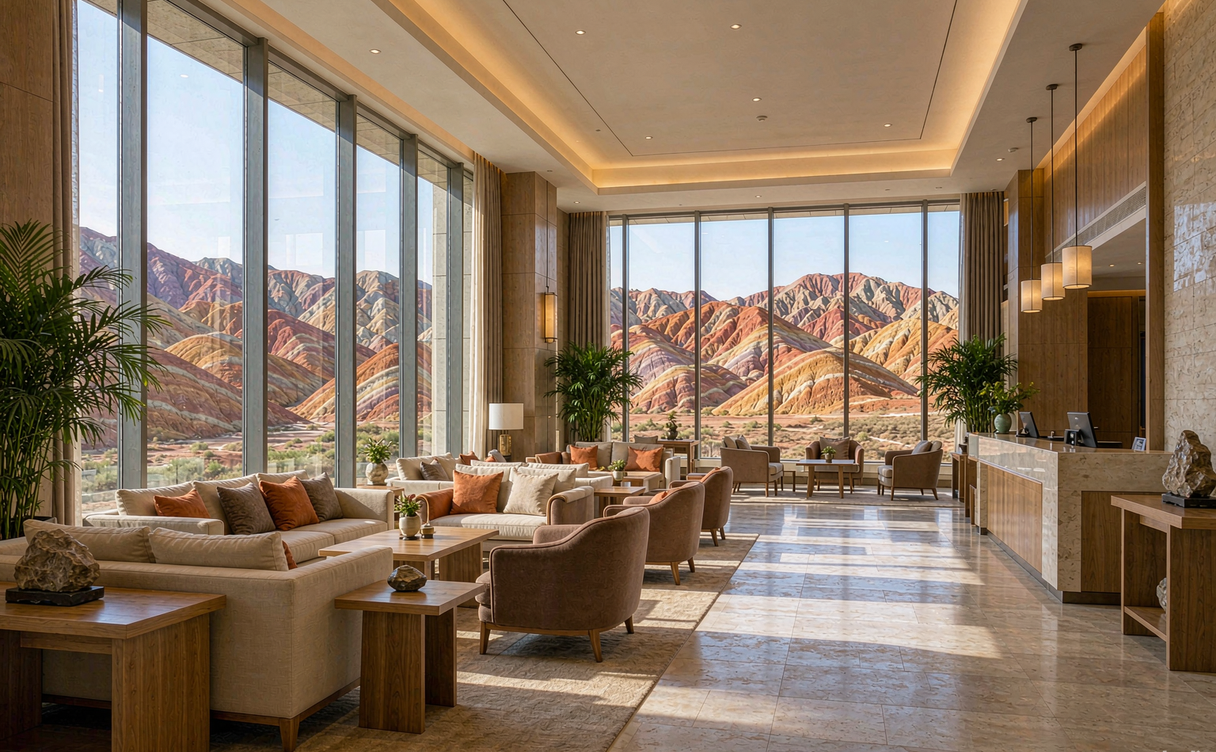
The key Zhangye decision is whether to sleep near the rainbow mountains or in the city. Scenic-area guesthouses and a few newer hotels sit 5 to 15 minutes from the park gates and run ¥200 to ¥400; the payoff is reaching the viewing terraces before the 6 a.m. coach crowds for the best light. The downside is fewer dining options and thinner amenities. Commuting from the city takes about 40 minutes by car or tour, which is fine for sunset but risky for sunrise. Our advice: if photography or a calm dawn matters, stay at the Danxia; if you want food and comfort, base in the city and do an early tour, and simply accept that sunrise means a pre-4:30 a.m. pickup.
What to book and when to go
Reserve lodging before your train tickets, not after — Zhangye’s good rooms are limited and holidays (National Day in early October especially) sell out. The city also fills during the occasional good poplar-golden week in late October, when domestic photographers descend on the nearby groves, so watch the calendar and book the moment your dates are firm. Confirm heating and a window that closes well, since desert nights swing cold even in summer. Most hotels take scan-to-pay and international cards at the chains; smaller places may want cash, so keep some on hand, and save your hotel’s name in Chinese characters in your phone to show taxi drivers. A taxi from Zhangye West railway station to the city center is about ¥15 to ¥25, and to the Danxia about ¥80 to ¥120 by private car, a worthwhile spend if you are lugging camera gear for sunrise.
Food near your hotel
Wherever you base, eat the local noodle and lamb routine. A bowl of Gansu-style beef lamian or hand-pulled noodles runs ¥10 to ¥18, and cumin lamb skewers are ¥3 to ¥6 a stick at the night market near the old town. The Ganzhou core has the best spread of Halal grills and noodle shops, while the scenic area has only basic cafeterias — another reason to keep at least one night in the city. We suggest a big noodle breakfast before the Danxia run, since the park’s food outlets are pricier and limited.
Danxia photography and the best light
The rainbow mountains change color with the sun, and your hotel choice decides whether you catch them at their best. Sunrise (roughly 6 to 7 a.m. in summer) paints the ridges deep red and gold with few crowds, while sunset is more reliable for saturated color but busier. Midday washes the stripes flat, so plan park time for the edges of the day and save midday for the Giant Buddha Temple or a long lunch. If photography matters, the scenic-area hotels are worth the premium for those first-light minutes; if you only want a look, the city base and a guided sunrise tour cost less and still deliver the view.
Nearby sights worth an extra night
Zhangye, Gansu, China rewards a second day beyond the Danxia. The Giant Buddha Temple in the city center holds a 34-meter reclining Buddha and is an easy walk from the mid-range hotels. About an hour south, Mati Temple (Horse Hoof Temple) carves cliffside grottoes into a dramatic canyon, and the nearby Biandukou pass bursts with rapeseed flowers in July. We suggest keeping one buffer night in your plan so a delayed train or a sudden sandstorm does not cost you the Danxia entirely — the weather here is dry but windy, and flexibility is the cheapest insurance you can book.
Getting there and the regional loop
Zhangye is on the high-speed line that continues west toward Xinjiang, China, with fast trains from Lanzhou (about 3 hours) and Xi’an (about 6 to 7 hours), and it pairs naturally with Dunhuang to the west — see our Mogao Caves guide for that leg — and with the deserts beyond, covered in our travel guide to Xinjiang, China. The most comfortable seasons are May to June and September to October, when the light on the Danxia is clearest and the heat is manageable, and when the nearby poplar groves (in a good year) turn gold.
The rainbow mountains themselves are part of the China Danxia UNESCO World Heritage, which is why the protected viewing routes and early gates matter for your hotel timing and your photos alike.