

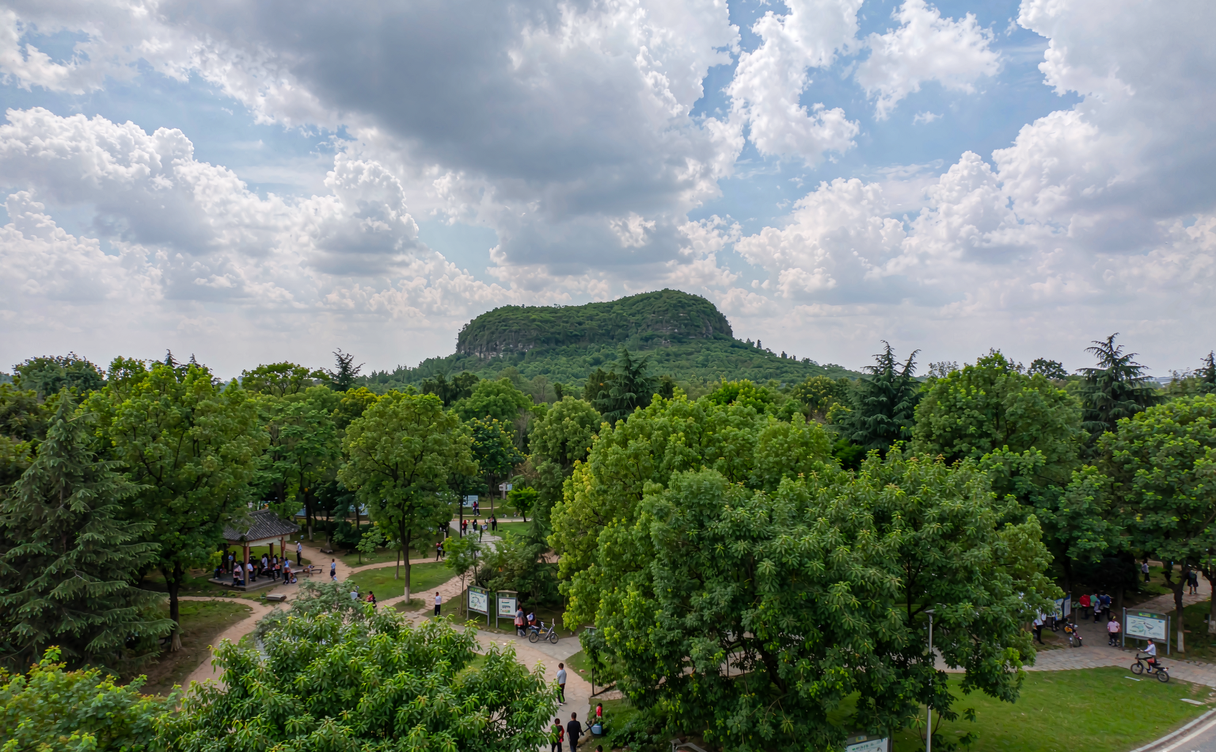
Guilin Seven Star Park is the oldest and largest of the Guilin city parks, and it is the place I point first-time visitors to when they want the famous karst landscape without leaving the urban core. Tucked at the foot of the seven peaks that give it its name, the park packs limestone cliffs, a lit cave, a winding river, and enough quiet paths to fool you into thinking you have left the city entirely. I have spent lazy afternoons here watching mist settle on the crags, and it remains my favorite low-effort dose of the scenery Guilin, China is famous for.
Guilin Seven Star Park tickets and hours
Start with the practical: Guilin Seven Star Park tickets run about RMB 55–75 for the combined entry that includes the Seven Star Cave, with slight seasonal variation. Children and students usually get a discount on presentation of ID, and the ticket covers the grounds, the cliffs, and the riverside walks — the cave is the main add-on worth paying for. The gates open around 7am and the park stays lively until roughly 6:30pm in summer, a little earlier in winter. You can buy at the entrance or through the major Chinese travel apps, and there is rarely a queue outside holiday weeks. If you only want the outer park and not the cave, some side entrances sell a cheaper grounds-only pass, but most visitors find the cave justifies the full ticket.
How to get to Seven Star Park
Learning how to get to Seven Star Park is straightforward because it sits just east of central Guilin. Public buses 11, 18, and 30 all stop within a short walk of the main gate, and the ride from the city center is only about 15–20 minutes for a couple of yuan. A taxi or ride-hail from the train station or the riverside hotels costs roughly RMB 15–25 and drops you at the entrance. If you are staying near the Li River, it is even walkable along the water in about half an hour. The park is large, so enter through the gate closest to what you want to see — the east gate near the cave, or the north gate near the zoo and the cliffs.
Things to do Seven Star Park
The things to do Seven Star Park spread across three zones. The headline is the Seven Star Cave (Qixing Yan), a floodlit limestone cavern with the usual parade of stalactites given poetic names — the best part is simply the scale and the cool air after a hot Guilin day. Above ground, the Camel Hill is the park’s mascot, a karst outcrop that genuinely resembles a kneeling camel and is the classic postcard frame. The park’s cliffs are studded with carved poetry from scholars of the Tang and Song dynasties, and a slow walk along the river that threads the peaks is the most pleasant hour you can spend in the city. There is also a small zoo and a panda enclosure, which families with children tend to love.
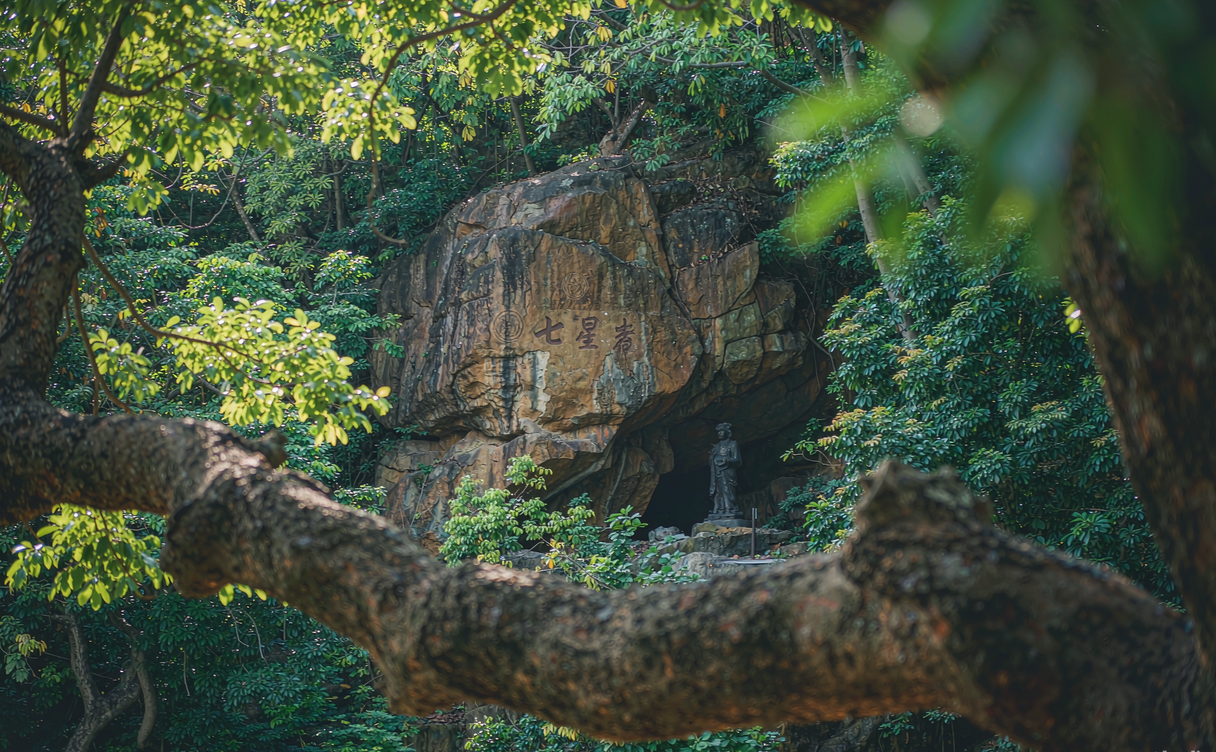
Worth slowing for are the cliff inscriptions scattered across the park’s rock faces — verses and dedications carved by officials and poets who traveled here centuries ago, when Guilin was already a celebrated destination. Unlike a museum, the carvings sit in the open, weathered and half-hidden by moss, and finding them on a quiet path is a small reward for walking instead of rushing to the cave.
Guilin city parks in context
Among Guilin city parks, Seven Star is the most complete — it has the cave, the cliffs, the river, and the history in one ticket, whereas nearby pockets like the riverside greenways are free but flatter. I like to think of it as the sampler plate: if you only have one afternoon in the city, this park shows you every element of the Guilin landscape — peak, cave, water, and carved stone — without the boat ride or the long drive to the countryside. For that reason it pairs naturally with a morning at the Elephant Trunk Hill, the city’s other signature rock, a short hop away.
Best time to visit Guilin
The best time to visit Guilin is April to May and September to October, when the rivers are full, the air is clear, and the mist that makes the karst so photogenic lingers in the early mornings. I would avoid the two big holiday spikes — May Day in early May and National Day in early October — when every park in the city swells with domestic tourists. Summer is lush and green but hot and humid, with afternoon thunderstorms; winter is cool, crisp, and crowd-free, and on a still day the reflections in the park’s river are mirror-clean. For photography, arrive at opening and you may have the cliffs to yourself for an hour.
A Guilin itinerary built around the park
A sensible Guilin itinerary uses Seven Star Park as the urban anchor and fans out to the icons. Spend a morning here, then take the Li River guide route downstream to the countryside for the big landscape, and circle back for the Reed Flute Cave, the city’s other famous cavern. If you have an extra day, the terraced rice fields a few hours north turn the same karst country into stepped green and gold, and the Guilin region is one of China’s most painted landscapes for a reason.
Practical notes before you go
Wear good shoes — the cave is flat but the cliff paths and the walk to Camel Hill involve steps and some uneven stone. Bring water; the park is large and the summer sun is strong on the open stretches. There are snack stalls and tea houses inside, but prices are a little higher than outside the gates, so I usually grab a bun before entering. Allow at least three hours to do the cave and a full loop without rushing; a half-day is comfortable if you want to sit by the river. If you arrive by bus, the east gate puts you closest to the Seven Star Cave, while the north gate is the better entry if Camel Hill and the cliff carvings are your priority for the day.
Final thoughts
Seven Star Park is the gentlest introduction to why Guilin, China has been a travel destination for over a thousand years. You do not need a boat or a guide or a long drive — you walk in through a city gate and the mountains are simply there, carved by water and time, with poets’ words still etched in the stone. For the traveler on a tight schedule, it is the single best hour-for-yuan investment in the whole city.