

The Kunming Western Hills, known locally as Xishan, are the green crescent that curves above the western shore of Dianchi Lake, and they are the closest thing Kunming, China has to a backyard mountain sanctuary. On my first visit I took the cable car up expecting a viewpoint and found instead a half-day of forest temples, carved cliffs, and a panorama that explains why locals call the ridge the “Sleeping Beauty” — from the lake it really does look like a reclining woman. If you want altitude and fresh air without leaving the city limits, this is where you go.
Kunming Western Hills tickets and hours
Understanding Kunming Western Hills tickets is the first practical step. The scenic area charges a base entry of about RMB 30, and the Dragon Gate (Longmen) grottoes — the must-see cliff carvings — add roughly RMB 20–30 on top, so budget RMB 50–60 all in. The cable car from the lakefront up to the ridge is a separate ride, around RMB 60 one way or RMB 100 return, and it is worth the splurge for the lake crossing alone. Most ticket offices open around 8am and stop selling by 5pm, with the last cable car down around 6pm in summer. Buy at the gate or through the major Chinese travel apps; there is no need to pre-book outside of the busiest holiday weeks.
How to get to Western Hills Kunming
Knowing how to get to Western Hills Kunming saves a confusing afternoon. The simplest public route is bus 6, 51, or 94 from the city to the Western Hills stop, followed by the short walk to the lower cable car station — the ride costs a few yuan and runs frequently. A taxi or ride-hail from central Kunming takes 30–45 minutes and runs RMB 40–70 depending on traffic. If you are already visiting Dianchi, the hills rise directly across the water, and many travelers combine the two: arrive by the Dianchi lakeside road, take the cable car up, and descend into the forest trails. Avoid driving yourself; parking near the gate is limited and the access road jams on weekends.
The cable car itself is half the fun and worth the separate ticket even if you plan to walk down. The cabin creeps out over the water and then climbs the wooded face, and for a few minutes you hang between Dianchi and the green ridge with the whole city laid out behind you. I always take it up and walk down, which spares the knees and lets me stop at the temples on the descent.
Things to do Western Hills
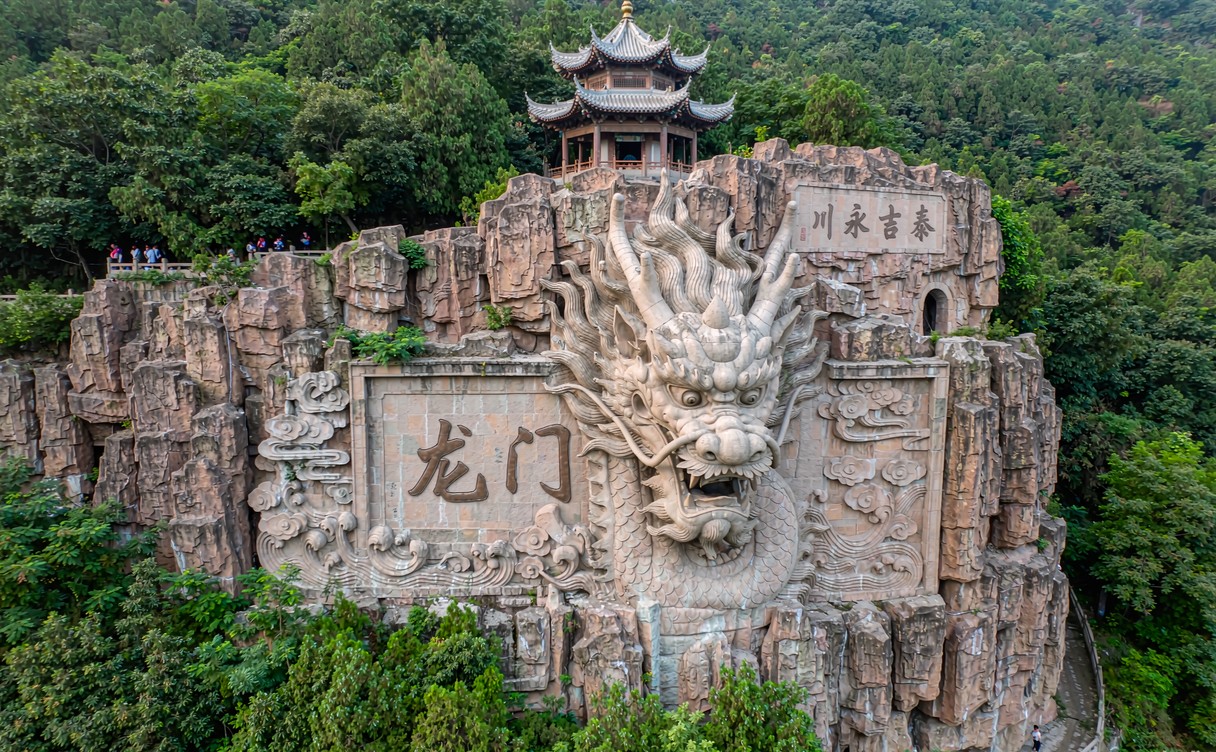
The things to do Western Hills break into three layers. At the base, the Huating Temple and Taihua Temple are working monasteries with quiet courtyards and old cypress trees, perfect for a slow hour. Above them, the Dragon Gate path is the headline: a series of Taoist grottoes and a narrow tunnel carved into the cliff face in the late Qing period, ending at a ledge where the whole of Dianchi opens below you. It is not for anyone with a fear of heights — the final stretch is a stone corridor chiseled into the rock with a long drop on one side — but the craftsmanship is remarkable. Between the temples, marked forest trails weave through pine and camellia, and on a clear morning you can walk for an hour and meet almost no one.
Kunming viewpoints
The Kunming viewpoints from the ridge are the real prize. The Dragon Gate ledge looks straight down the full length of Dianchi, the largest freshwater lake in Yunnan, with the distant mountains hazing into blue. Go early — by late morning the lake often fogs, and by afternoon the light flattens. A second, gentler view comes from the Taihua Temple terrace, where you get the sleeping-beauty profile of the range itself. On the rare clear winter day you can see snow on the far peaks, which is when I tell people to drop everything and go up.
Best time to visit Kunming
The best time to visit Kunming is a moving target because the city is nicknamed the “Spring City” for good reason — temperatures stay mild most of the year. The standout windows are March to May, when the camellias and azaleas bloom across the hills, and September to November, when the air is clearest for those Dianchi views. Avoid the rainy peak of July and August if you can; the trails get slick and the lake fogs daily. Even in winter, days are often sunny and cool, which is why the Western Hills work as a year-round half-day.
A Kunming itinerary that includes the hills
A relaxed Kunming itinerary pairs the hills with the city’s other green anchors. Spend a morning in the Western Hills, come down for a lakeside lunch by Dianchi Lake, and save a calm afternoon for Green Lake, where the city slows to a stroll. For a wider frame, the hills are the gentle introduction to Yunnan’s mountains before you head north, and the China national parks guide helps you compare protected landscapes across the country. On the way down, the small tea houses near Huating Temple serve Yunnan green tea and a plate of fried pine nuts for a few yuan — a calm counterpoint to the cliff-edge drama above, and the kind of unhurried pause that makes the Western Hills feel like a full morning rather than a checklist.
Practical notes before you go
Wear proper shoes — the Dragon Gate steps are steep and polished in places, and the forest paths can be muddy after rain. Bring water and a light layer; the ridge sits a few degrees cooler than the city and the wind off Dianchi is real. There are simple noodle and tea stalls near the temple entrances, but nothing fancy, so eat before you ascend or plan a lakeside meal after. The Dianchi Lake itself is the focal point of the whole western skyline and worth a slow circuit once you come down.
Final thoughts
The Western Hills are the kind of place that rewards a traveler who is not in a hurry. You do not race to the Dragon Gate and back; you let the cable car haul you over the water, wander a temple courtyard, lean on a railing above Dianchi, and wonder why more people do not know about Kunming, China’s greenest escape. For a half-day that costs little and delivers a lot, I have yet to find a better city-edge mountain in the country.