

Lijiang is the Yunnan most travelers dream of before they arrive — a maze of stone lanes and canals beneath a wall of snow, where the Naxi people have lived for eight centuries. We have planned dozens of Yunnan routes, and Lijiang rewards those who slow down: the famous old town is only the beginning, and the real magic is in the quieter villages and the mountain that looms over all of it. A Lijiang travel guide is for travelers who want both the postcard and the unphotographed hours around it.
The Old Town and its layers
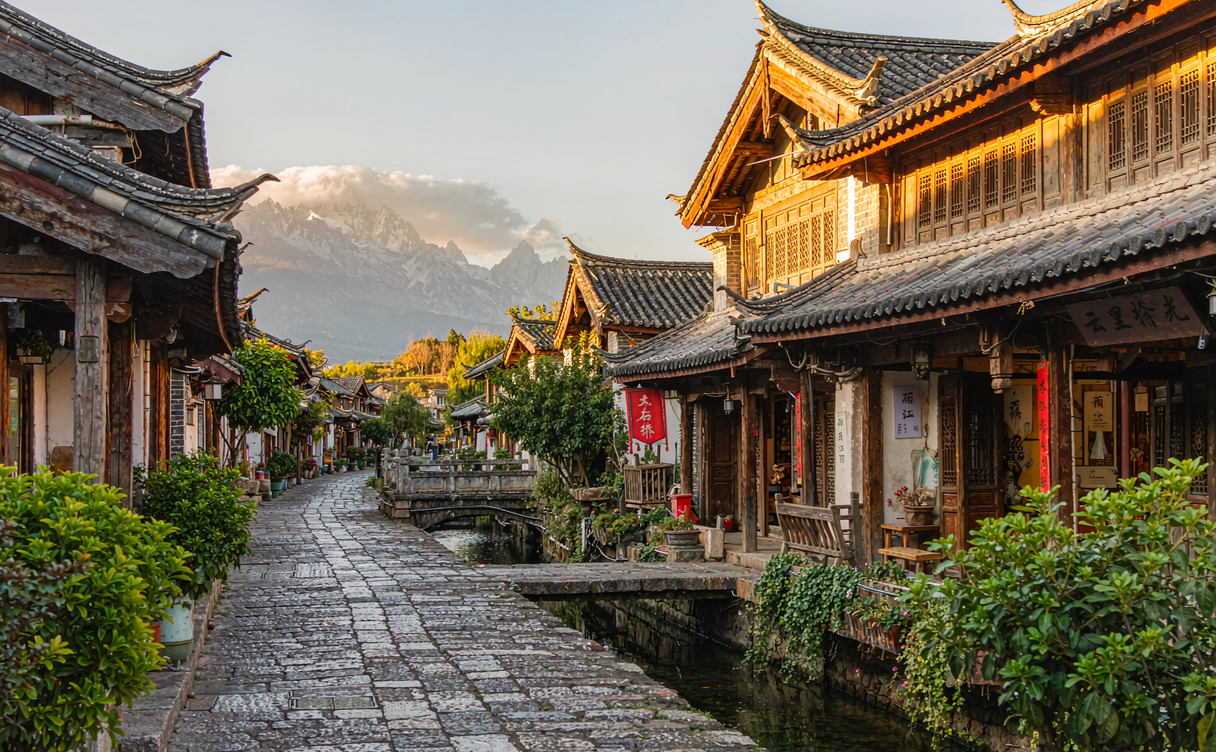
The Lijiang Old Town (Dayan) is a UNESCO-listed labyrinth of wooden houses, runneled streams, and humpback bridges, free to enter but requiring a same-day reservation through the town’s system. Arrive before 8 a.m. and you will have the main square to yourself; by ten it is a flowing river of tour groups. We always tell travelers to drift away from the central Sifang Square toward the northern lanes, where washing hangs between balconies and old women sell dried persimmons from low stools, and the only music is a Naxi orchestra warming up in a teahouse.
Things to do in Lijiang
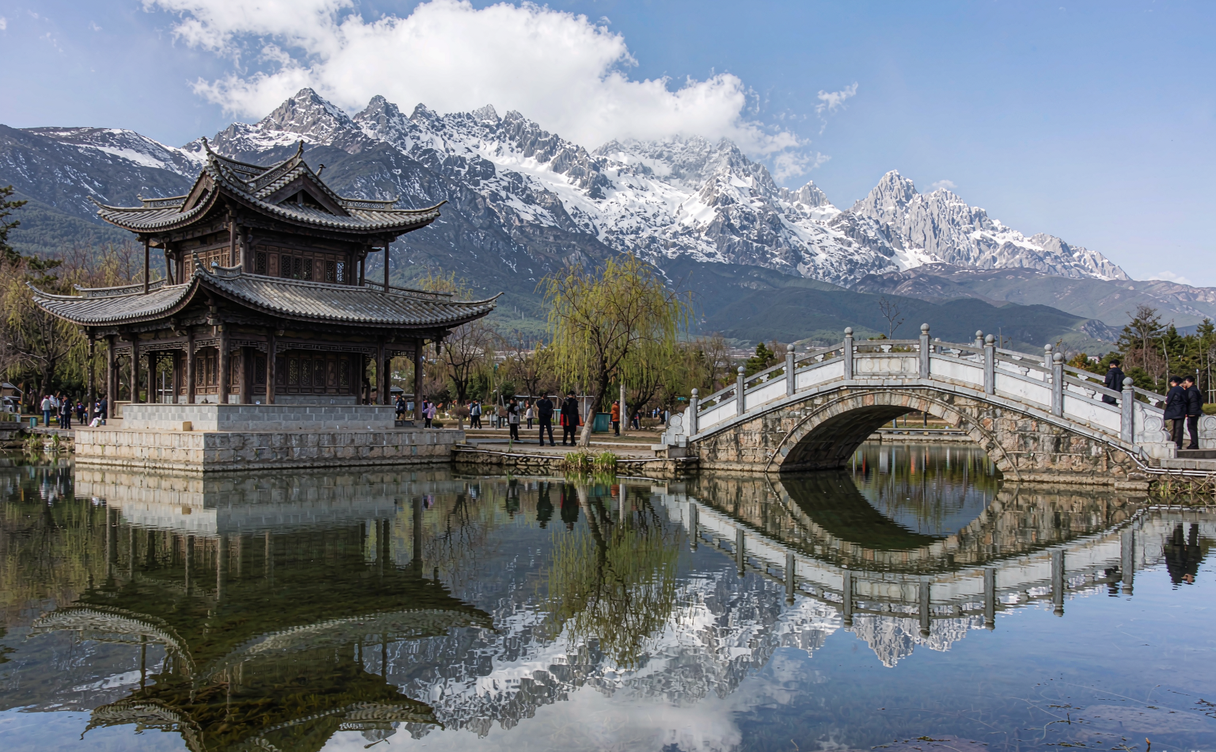
The Jade Dragon Snow Mountain (Yulong Xueshan) is the region’s spine. The cable car rises to roughly 4,500 meters to the Glacier Park, with a combined ticket and cable-car fare around ¥280. Take it slow at altitude — the thin air surprises fit travelers, and the park sells oxygen canisters for ¥30–¥50. The mountain also hosts the open-air Impression Lijiang song-and-dance show, staged on a natural amphitheater with the peaks as backdrop; tickets run about ¥280, and the scale of the performance against the real mountain is genuinely stirring.
For a calmer day, Shuhe Old Town, 6 km north, keeps the same Naxi character with a tenth of the crowds, and Baisha Village further up the valley offers the best unobstructed view of the summit plus faded Dongba murals in its small temple (¥20). We send photographers to Baisha for sunrise, when the first light hits the snow and the village is still asleep, and the only sounds are a water wheel and a distant rooster.
Adventurous travelers base themselves in Lijiang for Tiger Leaping Gorge, a two-hour drive away and one of the deepest river gorges in the world, with a celebrated two-day hiking trail. A guesthouse bunk on the trail is ¥60–¥100, and the mid-gorge viewpoints are free, with the river a thunderous silver thread far below. Pack trekking poles; the high path is narrow in places and exposed to the wind.
Food here is Yunnan mountain cuisine. The Lijiang baba (a crisp stuffed flatbread, ¥8) is the street staple; Naxi grilled fish and yak-meat hotpot (¥90–¥140 for two) anchor the evening table. In summer and autumn, wild-mushroom hotpots appear everywhere — a bowl of songrong or chicken-liver fungus broth is ¥60–¥120 per person and a genuine regional treat. Our Lijiang food guide lists the specific lanes and stalls we trust, from the baba makers near the north gate to the mushroom houses up the Baisha road.
In the evenings, the Naxi Ancient Music performances in the old town are worth a seat. An ensemble of mostly elderly musicians plays melodies said to descend from the Song and Tang courts, on instruments you will not hear elsewhere, and the singing draws on a tonal tradition found only here. Tickets run ¥80–¥120 and the shows start around 8 p.m.; arrive early for a front-row bench. It is the clearest window into a culture that the souvenir stalls only gesture at, and a calm counterpoint to the day’s hiking. The best venues are the small teahouses off the northern lanes, where the audience is mostly local and the applause is genuine.
How to get to Lijiang
Lijiang Sanyi Airport has direct flights from Kunming, Chengdu, Shanghai, and Shenzhen. The high-speed railway from Kunming takes about 3 hours (second class ¥220) and from Dali under 2 hours, making a Kunming–Dali–Lijiang rail loop the easiest way to see northern Yunnan. Within town, the old quarter is pedestrian-only, so plan to walk or use the small electric carts; taxis stop at the edges, and the walk in from the parking lot is part of the arrival ritual.
Where you sleep shapes the trip. Our best hotels in Lijiang guide compares chain hotels versus courtyard stays, and the right choice depends on whether you want tile roofs and courtyard birdsong or a predictable buffet breakfast. The provincial capital’s table is a useful primer before the train north, and the regional food only gets more interesting as you climb toward the snow.
Best time to visit Lijiang
The best time to visit Lijiang is March through May and September through early November. Spring brings blooming peaches along the lanes and clear mountain views; autumn is our favorite, with dry air, golden light, and the snow line low on Jade Dragon. Summer (June–August) is lush but rainy, with afternoon storms that often hide the peak and turn the old-town stones slick. Avoid the Golden Week holidays (early May and the first week of October), when the old town becomes comfortably the most crowded place in Yunnan. Winter is cold at night (near freezing) but sunny by day and wonderfully empty, with the cheapest rooms of the year.
Lijiang itinerary and travel tips
A practical Lijiang itinerary runs three full days: day one in the old town and Shuhe, day two on Jade Dragon Snow Mountain with the Impression show, day three at Baisha and, for the fit, a transfer to Tiger Leaping Gorge. Carry a layer for altitude even in summer, and a rain shell for afternoon storms. The old town’s stone is slick when wet, so skip smooth-soled shoes, and wear something with grip for the gorge path.
Book the mountain cable car and the show online in advance during peak season — same-day tickets sell out by mid-morning. Keep small cash for village temples and street snacks; cards work in the town’s restaurants and inns, but the Baisha murals and the occasional tea house are cash-only. A courtyard room in the old town runs ¥200–¥400 a night, while the newer hotels just outside the gates start around ¥300.
Where Lijiang fits in a China trip
Lijiang is the northern anchor of a Yunnan loop and pairs naturally with Dali and Kunming. If your wider plan compares China’s landscapes, our Guilin travel guide offers a southern karst contrast — limestone peaks instead of snow ones, but the same sense of a place shaped by water and stone, with rice terraces rather than glacier parks.
For the heritage context, the Old Town of Lijiang is inscribed by UNESCO as a World Heritage site, recognized for its blend of Naxi, Han, and Bai building traditions and its still-living old-town fabric.
A note on the food trail
Yunnan eats differently town to town, and the northern plateau rewards a deliberately slow table — the kind where a mushroom hotpot stretches across two hours and nobody checks the time.