

Most China itineraries skip Qitaihe entirely, and in our experience that is a mistake. This small city in the heart of Heilongjiang Province does not appear on postcards, yet it has produced more Olympic short-track speed skating medalists per capita than anywhere else in the country — a fact the locals mention with quiet pride. We have sent winter-sports travelers here for the past few seasons, and the draw is simple: genuine ice culture without the crowds and prices of the famous resort towns. A Qitaihe travel guide is for people who want to feel a northeastern Chinese city rather than photograph one.
Why Qitaihe matters
The city’s identity is built on the rink. The Qitaihe Winter Sports Center trains China’s national short-track team, and its public skating sessions are open to visitors most afternoons for around ¥30 including skate rental. Watching a dozen eight-year-olds drill corners at speed is a better introduction to Chinese winter sport than any broadcast. The adjacent Speed Skating Hall is open year-round thanks to its refrigeration system, so you can lace up even in August, when the rest of the province is humid and green and the idea of skating sounds absurd.
Things to do in Qitaihe
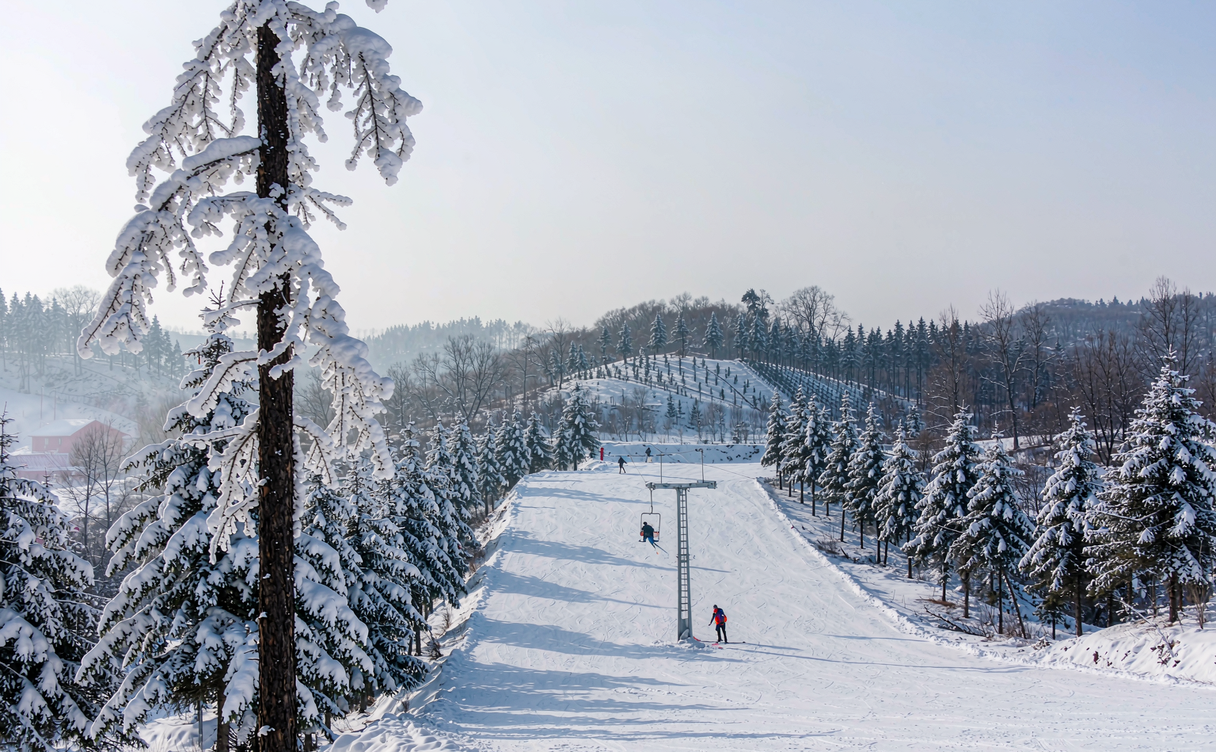
Beyond skating, the Qixing Lake (Seven Star Lake) Scenic Area is the city’s green lungs. In summer the lakeside paths are busy with evening walkers and the occasional paddle boat (¥40 an hour); in winter the surface freezes solid and becomes a vast natural skating sheet free to the public. We recommend renting a pair of traditional double-edged skates from the lakeside vendor for ¥20 and joining the locals at dawn, when the steam rises off the ice and the only sound is blades.
The Xinxing Forest Park on the city’s western edge offers gentle hiking through Korean pine stands, with a modest entry fee of ¥15. In autumn the birch and maple turn the slopes gold, and it is a calm half-day escape from the concrete center. For a dose of local history, the small Qitaihe Museum (free, closed Mondays) covers the city’s coal-mining origins and its surprising rise as a skating powerhouse, with a wall of photographs of hometown Olympians that the locals treat like a shrine.
Food is hearty Dongbei style. A hotpot of frozen tofu, pork, and cabbage for two runs ¥80–¥120, and the street-corner guobaorou (sweet-and-sour pork) at ¥38 is the dish to order. Morning markets sell roasted sunflower seeds and smoked sausage by the string, and in winter the roasted sweet potatoes from pushcarts (¥6 each) are the perfect antidote to the cold. A filling noodle lunch is ¥15–¥25, and the milk tea stands near the rink are a local ritual after a skate.
A typical winter day here starts at the rink around 9 a.m., when the morning session has the ice to itself and the coaches run the junior squad through drills you can watch from the warming hut with a ¥5 thermos of soy milk. By noon the sun is high enough to soften the bite, and that is the moment to walk Qixing Lake’s frozen rim, where families tow children on plastic sleds and vendors sell candied hawthorn on sticks (¥5). We tell travelers to plan one full afternoon on the natural ice and one morning at the indoor hall; the contrast between the two surfaces — one rough and wind-scoured, the other glassy and climate-controlled — is its own quiet lesson in how this small city became a skating factory. The sports center café, open to the public, is the best place to eavesdrop on the coaches’ banter.
How to get to Qitaihe
Qitaihe has no commercial airport, so most travelers connect through Harbin, about 360 km west. A long-distance bus from Harbin’s main station takes 4–5 hours and costs ¥95–¥120; faster and more comfortable is the train to nearby Jiamusi or Mudanjiang followed by a connecting bus, but the direct coach remains the simplest door-to-door option. Driving yourself on the G11 expressway is smooth in good weather and takes about four hours, though winter snow can slow the route considerably, and chain laws occasionally apply.
Because Harbin is the natural gateway, we steer first-time visitors to our best hotels in Harbin guide for a comfortable base before the onward bus. Once you are in the northeast, our Harbin food guide explains the regional eating culture you will meet again in Qitaihe’s kitchens, just cheaper and more local, with the same love of pickled cabbage and pork.
Best time to visit Qitaihe
The best time to visit Qitaihe depends entirely on your aim. For ice and snow, come between December and February, when temperatures sit around −15°C to −22°C and the lakes and rinks are in peak condition. The city’s winter sports festivals run through January, with public races and ice-sculpture displays around Qixing Lake. If you prefer hiking and milder weather, June through September is pleasant, with highs of 24–28°C and long evening light. We avoid the muddy spring thaw (late March–April) and the brief, dusty autumn wind in October, when the parks are pleasant but the skating is gone.
Qitaihe travel tips from the field
A few notes we always pass on. Dress in genuine winter gear if you visit between November and March — the cold here is dry and penetrating, and a thin jacket will fail by midday. Indoor rinks are warm, but the walk between them is not, so layer. Book the Harbin–Qitaihe bus a day ahead in January, when winter-holiday demand fills coaches, and aim for a morning departure so you reach the rink before the afternoon session crowds.
Carry cash for the small skating vendors and market stalls; cards work at the sports center and larger restaurants. A standard room in Qitaihe runs ¥120–¥200 a night, with the newer business hotels near the bus station at ¥220–¥300 including breakfast. And give yourself two nights minimum — Qitaihe rewards slowness, and the best skating sessions are the informal dawn and dusk ones the tour buses never reach.
Where Qitaihe fits in a China trip
Qitaihe works best as a quiet add-on to a Harbin-centered Heilongjiang trip, or as a stop on a longer northeastern loop. If your wider plan leans toward China’s iconic landmarks, our Great Wall of China guide helps you balance famous history with these under-the-radar cities. For a coastal counterpoint after the inland cold, a seaside city a long but doable rail ride south offers a different rhythm entirely.
For a factual overview of the city’s location and administration, Qitaihe is documented on Wikipedia, including its place within Heilongjiang Province.
A note on seafood and the coast
Qitaihe’s cooking is landlocked and meaty, quite different from the shore. If your route bends toward the sea, a coastal city like Qingdao on the Shandong coast covers a completely different eating tradition, worth saving for a later leg.