

Tucked into the tropical southwest of Yunnan, against the Myanmar border, Gengma Yunnan is one of those counties most foreign travelers never reach — and that is precisely its charm. Gengma Dai and Wa Autonomous County (耿马傣族佤族自治县) blends two very different cultures: the Buddhist, rice-growing Dai (Tai) of the warm river plains, and the animist Wa hill communities who farm the cooler slopes. In our experience, a few days here gives you a far more textured picture of Yunnan than another crowded Old Town can. This Gengma travel guide is for travelers who like borders, markets, and cultures that haven’t been polished for tour buses.
Where Gengma is, and what “border county” means
Gengma sits in Lincang Prefecture, in the far southwest of Yunnan. The county’s low, hot core is the Mengding plain (孟定坝), a fertile flatland of banana groves, rubber plantations, and rice paddies, while the surrounding hills rise into Wa territory. A crossing point to Myanmar sits at Qingshuihe, but ordinary visitors should treat it as a viewpoint, not a gateway — crossing requires the correct visa and paperwork. Within China, the area is safe, relaxed, and friendly, but you are in a sensitive border zone, so avoid photographing fences, guards, or bridges, and always carry your passport.
How to get to Gengma
The practical answer to how to get to Gengma is to aim for Lincang first. The Dali–Lincang railway now links Kunming and Dali to Lincang city, cutting what used to be a brutal bus ride to about 4–5 hours from Kunming by train (second class ¥140–¥200). From Lincang bus station, frequent coaches run to Gengma town (¥45–¥60, 2.5–3 hours) and on to Mengding (another 40 minutes). If you prefer to fly, Lincang airport has daily flights from Kunming for ¥400–¥700 depending on season, followed by the same bus connection. Driving from Kunming is possible but long (around 9–10 hours), so we recommend the train-and-bus combo for nearly everyone.
Best time to visit Gengma
For a best time to visit Gengma call, the dry season from November through April is clearly best. Daytime temperatures sit in a comfortable 22–30°C, the skies are clear, and the humidity drops enough to make walking pleasant. This also lines up with the biggest festivals (see below). The rainy season (May–October) is hot, sticky, and prone to the occasional road washout in the hills; mosquitoes are fierce and many forest trails close. We’d only visit in summer if you specifically want green plantations and don’t mind sweating.
Things to do in Gengma
The heart of things to do in Gengma is cultural, not scenic in the postcard sense. In the county town and across the Mengding plain, Dai Buddhist temples (奘房) combine Burmese-style tiered roofs with local flourishes; the Gengma General Buddhist Temple is the largest and worth an hour of quiet wandering. Villages around it still keep the rhythm of Theravada Buddhist life — alms-giving at dawn, temple fairs on holy days.
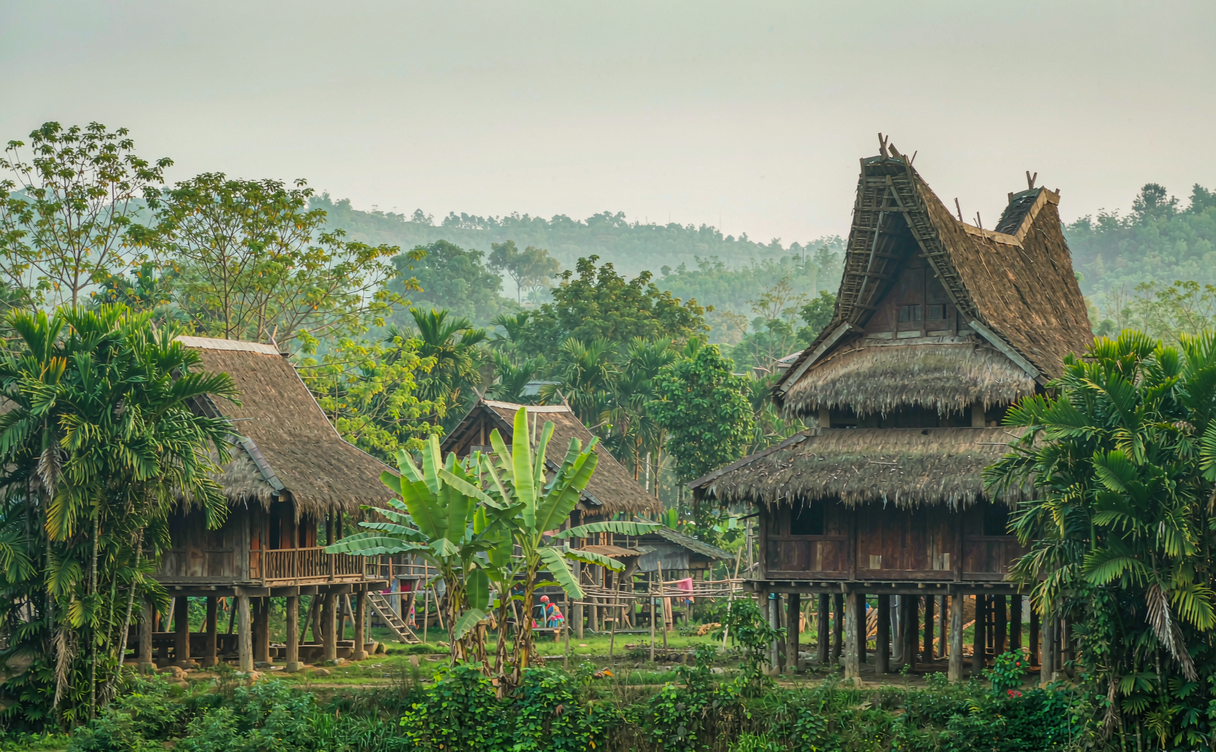
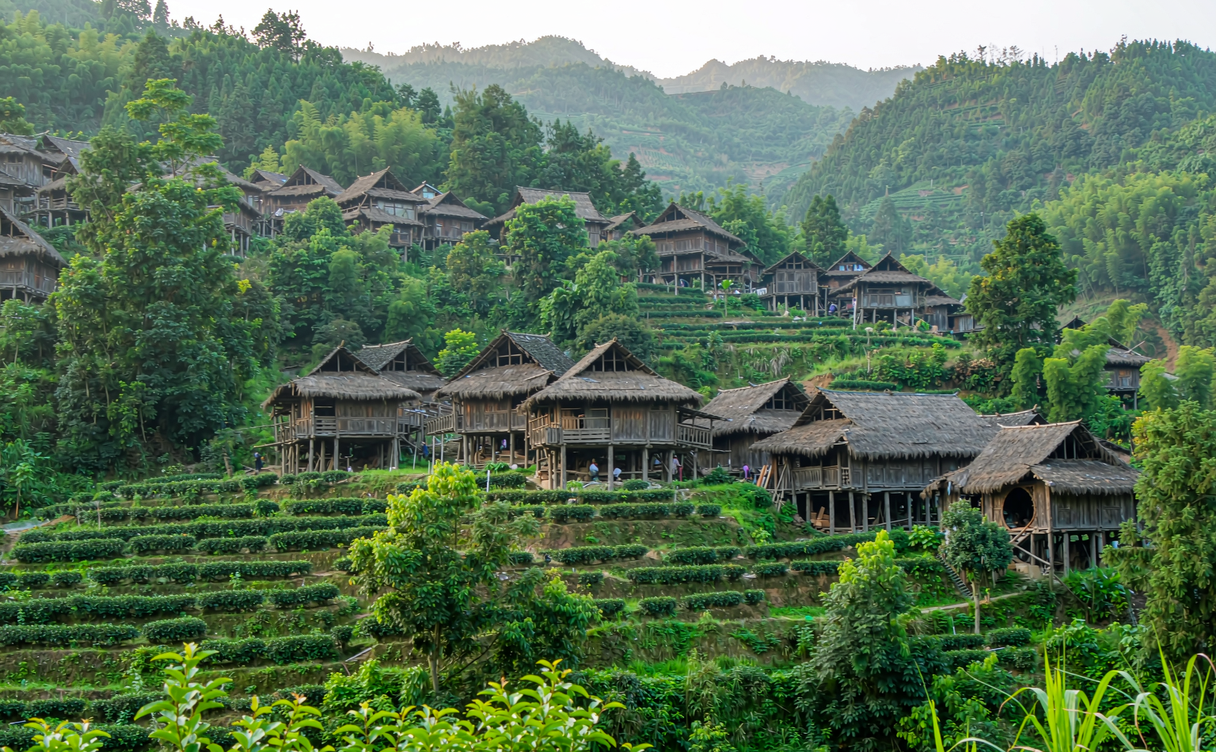
North and west of the plain, Wa villages offer the county’s most distinctive experience. The Wa are known for their wooden drums (木鼓), once central to village rituals, and for the exuberant “hair-swinging dance” performed at festivals. A respectful visit with a local guide — arranged through your guesthouse — might include a cup of bitter Wa tea and a look at a stilt house built for the hills. Always ask before photographing people or homes.
Nature lovers should not miss the Nangunhe National Nature Reserve (南滚河国家级自然保护区), a slice of tropical forest protecting Asian elephants, gibbons, and a riot of birdlife. You can’t freely roam, but ranger-led day visits from Mengding can be arranged, and the nearby river valleys are lovely for a slow drive. Back in Mengding, the riverside evening market is the place to eat and people-watch.
Festivals worth timing
If your dates are flexible, two events define Gengma. The Dai Water-Splashing Festival (泼水节), usually in mid-April, turns the streets into a joyous water fight and is the county’s biggest party. The Wa New Rice Festival (新米节), around October, celebrates the harvest with drumming, dancing, and communal feasts. Both are far more intimate here than in the commercialized versions nearer the tourist trail, and we’ve sent travelers who planned their whole Yunnan loop around catching one.
A relaxed Gengma itinerary
A sensible Gengma itinerary runs three to four days. Day 1: arrive Lincang, bus to Gengma town, settle, evening temple walk. Day 2: morning market, the General Buddhist Temple, afternoon bus down to Mengding and the riverside. Day 3: guided Wa village visit and/or Nangunhe reserve day trip from Mengding. Day 4: return to Lincang and connect onward. If you have a fifth day, the Qingshuihe border viewpoint and the surrounding banana country make a low-key loop.
Getting around the county and staying connected
Within Gengma town and Mengding you can walk or take a ¥8–¥15 taxi, but the Wa villages and the nature reserve sit out on poor roads, so a chartered car (¥300–¥500/day) is the practical choice. Buses run but infrequently, and many leave at first light. Mobile coverage is good in the towns and patchy in the hills, so download offline maps before you set out and tell your guesthouse where you’re headed. Burmese, Dai, and Wa are all heard in the markets alongside Mandarin; a translation app smooths most transactions, and a friendly point-and-smile works for the rest.
Gengma also makes a relaxed base for slow travel between the cooler Yunnan highlands and the steamy borderlands. If you’ve come from the mountain air of the northwest, the sudden heat and jungle-green valleys here feel like another region entirely — which, culturally, they rather are. Give yourself a day to simply sit in a Mengding roadside teahouse and watch the banana trucks roll by; some of the best travel memories here are the unplanned ones.
Food, stay, and practical tips
Gengma eats are a highlight. Dai cuisine here is sour, herbal, and refreshing: try sapi (撒撇), a bracing dip of bitter herb and meat served with rice noodles; pineapple purple rice (菠萝紫米饭); sour-bamboo-shoot fish soup; and pounded chicken feet (舂鸡脚). Wa food is heartier — chicken-and-rice porridge (鸡肉烂饭), fermented red pork, and bitter tea. A filling street meal is ¥10–¥18; a shared dinner for two runs ¥60–¥100. Our Yunnan first-timer guide has a broader primer on the province’s food regions that pairs well with a Gengma stop.
Lodging is simple and cheap: a clean double in Gengma town or Mengding runs ¥100–¥200, with the occasional newer hotel at ¥250–¥350. Book ahead around the April festival. Practical notes: bring mosquito repellent and light long sleeves year-round; carry cash for village purchases; and remember this is a border area, so keep your passport on you. For a wider sense of the province’s mountains after the heat, the Ailao Mountain guide shows a very different, forest-clad side of Yunnan.
Pairing Gengma with the rest of Yunnan
Because Gengma is far from the classic circuit, most travelers combine it with Lincang city or push on to the Yunnan Three Pagodas at Dali for a contrasting dose of Bai history. The nearby Nuodeng Village is another slow, ham-curing corner of the province worth a detour; our separate best-time guide helps you slot Gengma’s dry season into a national route.
Background on the county’s geography and peoples is available from Wikipedia’s Gengma Dai and Va Autonomous County page, a useful read before you go.