

A Jiayuguan travel guide has to start with the geography: this is where the Ming Great Wall runs out of empire and meets the Gobi. Jiayuguan, Gansu, China sits at the narrow passage of the Hexi Corridor, the only gap wide enough for an army or a caravan to slip between the Qilian Mountains and the desert. On our last trip we stood on the pass at sunset and watched the wall dissolve into nothing but gravel and sky — and understood why they called it the “First and Greatest Pass Under Heaven.”
We’ve sent clients here as the western anchor of a Gansu-Qinghai loop, and it is the kind of place that reframes the whole trip. The city itself is gritty and industrial; the fortress and the wall are the reason to come, and they deliver.
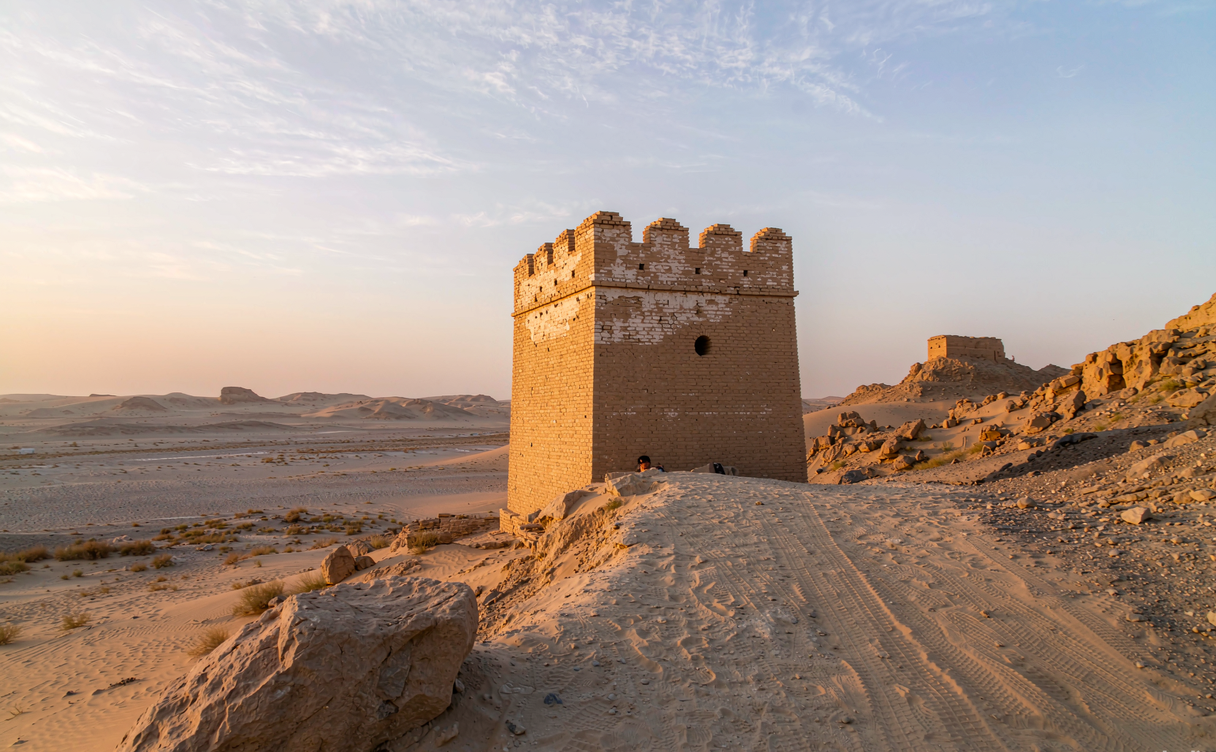
Why Jiayuguan matters on the Silk Road
The Jiayuguan Pass is the western terminus of the Ming Great Wall, built in the 1370s to seal the corridor. Unlike the touristy sections near Beijing, this is a full garrison fortress: outer and inner walls, corner towers, a moat, and the narrow “gate of return” through which, legend says, only a fraction of departing soldiers ever came back. The scale is honest. You can walk the ramparts, climb the towers, and look west into the open desert with nothing between you and Central Asia but distance.
Our closer look at the structure is in the Jiayuguan fort guide, which maps the towers and the best climb for photos. If you are new to China’s rail-and-road rhythm, our China travel guide for first-timers covers the booking apps and payment tools that make reaching a remote Gansu town painless.
Best time to visit Jiayuguan
Spring (May to June) and autumn (September to October) are the windows. Daytime highs sit around 18–26°C, the light is clean, and the desert wind is manageable. We avoid July and August, when the Hexi Corridor bakes at 35°C plus and the UV is brutal, and we warn against deep winter (December–February), when lows hit −15°C and the wind cuts through every layer. The bonus of shoulder season: the Gobi storms that can close the open-air sections are rarer.
For the broader climate picture, the best time to visit China page lays out the regional bands, but Jiayuguan runs on pure desert time — huge day-night temperature swings, little rain, and endless sun. Bring a hat and two wardrobe layers even in May.
How to get to Jiayuguan
The train is the clean win. The Lanzhou–west high-speed line put Jiayuguan on a fast axis: from Lanzhou it’s roughly 4–5 hours (second class 250–320 RMB), from Zhangye about 1.5–2 hours, and from Dunhuang around 2 hours. Jiayuguan South station is 10 kilometers from the fort; a taxi runs 30–45 RMB.
Flights serve Jiayuguan Jiuquan Airport (JGN) from Xi’an, Lanzhou, and a few seasonal cities; useful if you are short on time and linking to Dunhuang. Inside the city, buses 4 and 6 reach the fort for 2 RMB, but most visitors take a taxi or a booked car for the 20-minute hop.
Jiayuguan is the logical western pivot of a loop, and our Qinghai Gansu loop itinerary shows how to string it with Zhangye, Dunhuang, and Qinghai Lake. If you want more Gansu before or after, the Gansu Maijishan Grottoes guide covers the Buddhist cliff art near Tianshui to the southeast, and the Kongtong Mountain Gansu guide adds a Taoist-leaning hike near Pingliang.
Things to do in Jiayuguan
Jiayuguan Fort. The main event. Entry is about 110 RMB and includes the fort and the nearby Overhanging Great Wall (Xuanbi Changcheng), a steep restored stretch that climbs the ridge like a staircase to the sky. Allow 3–4 hours for both.
Overhanging Great Wall. About 10 kilometers northwest, this section is the best workout and the best panorama — you are literally walking the wall as it tilts up the slope. Shuttle buses link it to the fort for a small fee.
The First Beacon Tower (Shiguan Pass). Further west still, where the wall finally breaks against the desert, this is the quieter, more atmospheric end. A combined ticket covers it, and a taxi here from the fort runs about 60–80 RMB.
Weijin Art Museum (underground tombs). On the city’s edge, a handful of 3rd–4th century tombs show brick murphouse paintings of daily life. Entry is around 30 RMB and it is cool literally and figuratively — you descend below ground.
City food. Jiayuguan does lamb well: skewers (kao yangrou) at 3–6 RMB a stick, hand-pulled noodles, and stuffed flatbread. A filling meal is 40–80 RMB. The night market near the old town is the move after the fort closes.
A sample Jiayuguan itinerary
Day 1: arrive by rail, afternoon at the fort and Overhanging Wall, sunset from the ramparts. Day 2: morning at the First Beacon Tower and the Weijin tombs, afternoon train onward to Dunhuang or Zhangye. We’ve run this as a tight one-and-a-half-day stop that slots perfectly between Zhangye’s rainbows and Dunhuang’s caves on the classic westbound route.
Desert practicalities
Jiayuguan is honest desert, and the open sections punish the unprepared. We tell clients to carry at least a liter of water per person for the fort-plus-wall walk, a brimmed hat, and sunscreen — the UV at 1,500 meters elevation burns fast even on a cool day. The wind is the wildcard: spring brings sandstorms that can close the beacon tower, so we check the forecast the morning of and reorder the day if needed. Wear closed shoes with grip; the rampart steps are steep and worn, and the Overhanging Wall’s ridge is exposed on both sides. Local drivers at the station lot quote 30–45 RMB to the fort; insist they use the meter or agree the fare before you get in, because the unmetered ones pad the ride. None of this is dangerous with a little care, but the travelers who enjoy it most are the ones who dressed like they meant to be in the Gobi.
Where to stay and what’s bookable today
Jiayuguan city has solid mid-range hotels at 200–450 RMB a night and a few four-stars at 500–700 RMB. Stay near the South station or the city center; both are a short ride from the fort. Tickets are sold online and at the gate, but the combined fort-plus-wall pass is cheaper booked ahead. Trains on the Lanzhou–west line fill on summer weekends, so reserve a few days out.
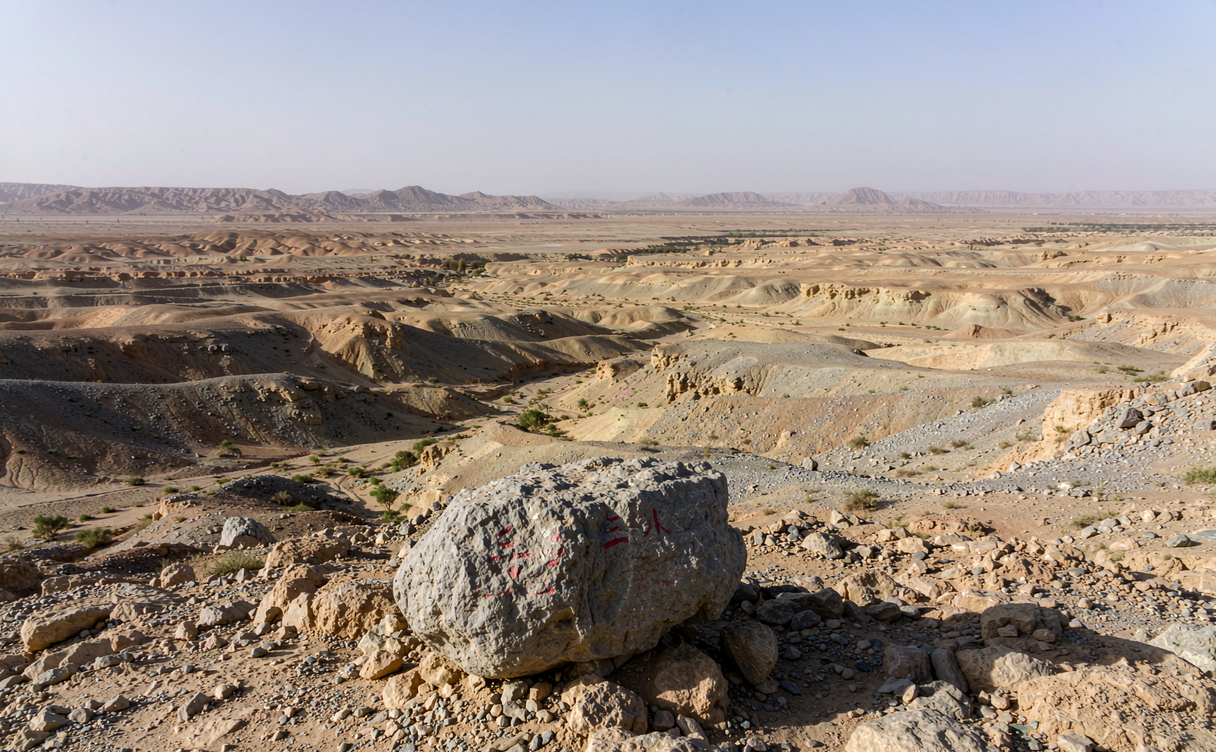
The one mistake we see is the half-day rush: clients who treat Jiayuguan as a two-hour photo stop miss the quiet of the beacon tower and the scale of the wall tilting into the Gobi. Give it a night and the desert earns its place in your trip.
Before you go / References
Jiayuguan is a desert destination — water, sun protection, and a wind layer are non-negotiable, and the open sections close in severe sandstorms. For the historical frame, see the Jiayuguan entry on Wikipedia, which traces the pass from the Ming garrison to today’s corridor town.