

I first went to Xichang almost by accident — a Chengdu client wanted to escape the August heat and a local friend said, “Go to the lake.” I took the high-speed train west and stepped off into a cooler, slower Sichuan I didn’t know existed. Xichang sits at 1,500 meters on the shore of Qionghai Lake (邛海), backed by the wooded slopes of Lushan (泸山), and it has become my favorite low-effort mountain-lake retreat in the province. This best hotels in Xichang guide is the one I give anyone flying or training in from Chengdu.
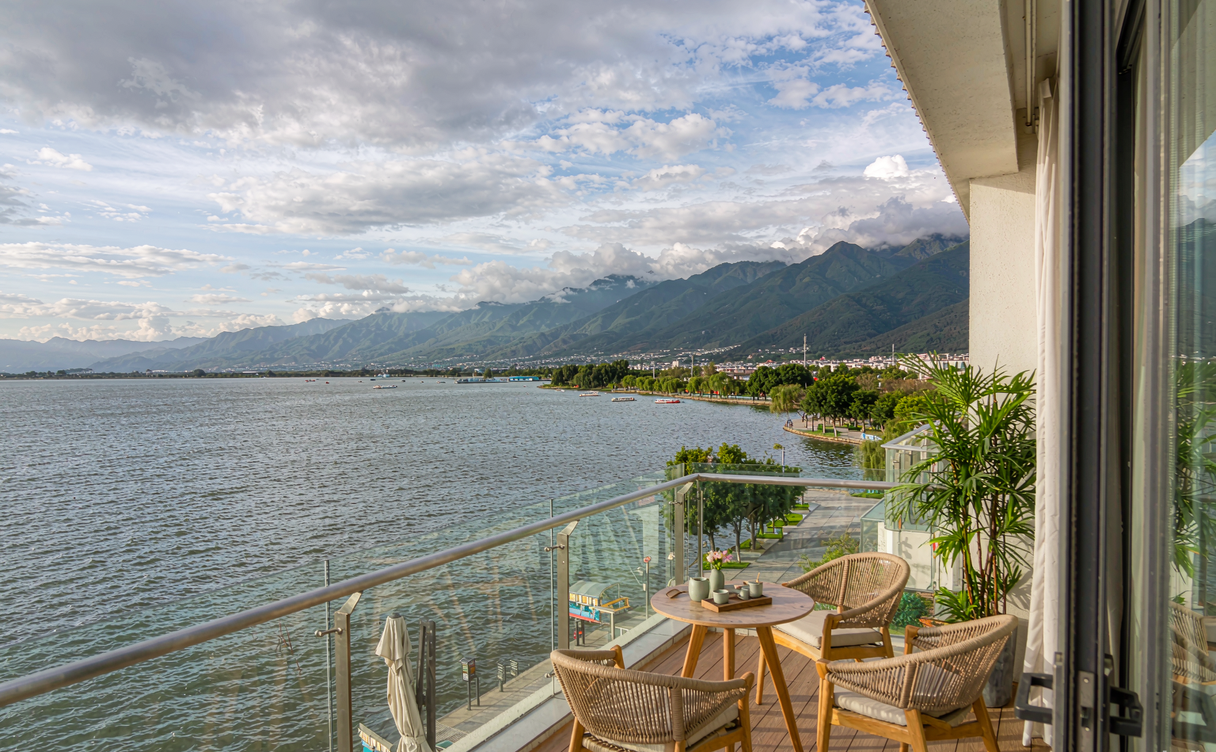
Xichang is the capital of the Liangshan Yi Autonomous Prefecture in southwestern Sichuan, about 450 km from Chengdu. The train from Chengdu takes roughly three hours (RMB 140–220, second class), which makes it an easy add-on to a Sichuan trip — the Chengdu travel guide is where most of my clients start before heading west. If you’re building a longer route, the Sichuan 7-day itinerary can slot Xichang in as a relaxing finale.
Where to stay: lakefront vs. old town
“Where to stay in Xichang” comes down to two choices, and they feel like different trips:
- Qionghai Lakefront: Resorts and guesthouses strung along the northern and western shore, with lake views, bike paths, and quiet mornings. Best for relaxation.
- Jianchang Ancient City (建昌古城): The rebuilt old town in the city center, walkable to night markets and the Lushan cable car. Best for food and atmosphere.
I usually tell first-timers to do two nights lakefront and one in or near the old town. The hotel booking guide for foreigners covers how to reserve either type with a passport.
Xichang lakefront hotels: the Qionghai strip
The signature stay is the historic Qionghai Hotel (邛海宾馆), a lakeside guesthouse compound that has hosted visiting dignitaries for decades. I stayed there in September and loved the mature gardens and the private-ish lake access; rates ran RMB 700–1,200 a night depending on building and view. It’s not slick, but the location is unbeatable — you walk out the gate onto the lakeside path.
For a more modern resort feel, the cluster of Xichang resorts Qionghai Lake on the western shore includes a few large properties with pools, spas, and lakeside restaurants. I toured one in July where a deluxe lake-view room was RMB 900–1,400 in peak summer (the busiest season, when Chengdu flees the heat) and RMB 500–800 in the quiet winter months. Book lake-view explicitly — the “garden view” rooms often face a parking area.
If you’re visiting in July or August, reserve your lakefront room at least three weeks ahead; Xichang is a beloved Sichuan summer escape and the best rooms sell out. Traveling in November–March gets you the same view for nearly half the price and almost no crowds.
The hotel chains comparison guide is useful here because several national chains (Kaiyuan, Holiday Inn Express, Atour) have opened Xichang branches near the city center and the lake’s east gate. They run RMB 350–600 a night and give you reliable standards if the lakeside resorts are full or over budget. I’ve put cost-conscious clients in an Atour by the east gate and they biked to the water in ten minutes.
Boutique and character options
Xichang’s boutique scene is young but growing, and the best boutique hotels in China list now includes a couple of design-led stays near Jianchang Ancient City. One I scouted converted a courtyard house into 18 rooms around a planted atrium; RMB 480–720 a night, with a café serving single-origin Yunnan coffee. It put me within a five-minute walk of the night market and the Lushan foothill temples — my favorite combination.
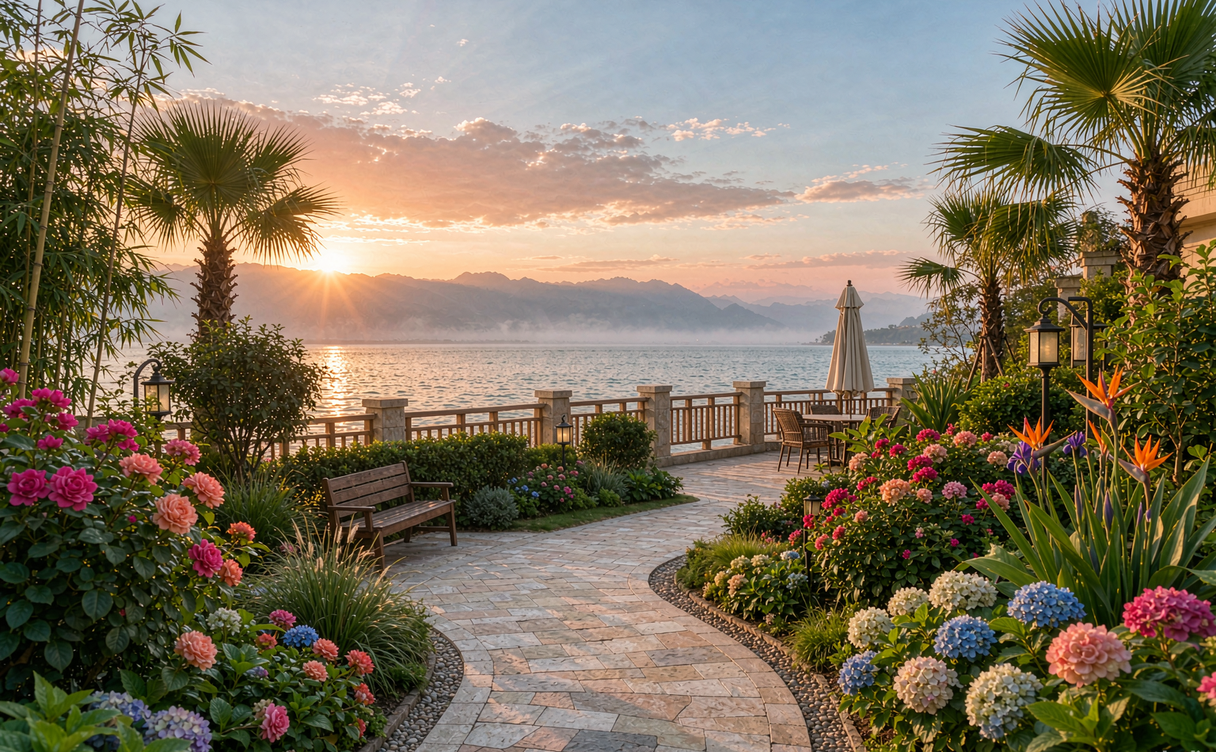
Smaller lakeside guesthouses (农家乐 / minsu) dot the southern shore near the wetland park. I spent a night at one for RMB 260 — basic but clean, with a grandmother-run kitchen turning out RMB 40 per-person dinners of lake fish and picked vegetables. Perfect if you want local texture over luxury.
What to do between stays
Qionghai Lake is the point. The 30 km ring road (环湖路) is flat and scenic, and renting a bike (RMB 20–40 a day from stalls near the east gate) lets you circle it in three to four hours with stops for photos. I did it at sunrise and had the path almost to myself. The Lushan cable car (RMB 45 one way) climbs to temples and a monkey zone; give it a morning. And the rebuilt Jianchang Ancient City is best in the evening, when the lanterns come on and the snack stalls open — try 火盆烧烤 (fire-bowl barbecue, RMB 60–100 per person) and the local 醉虾 (drunken shrimp).
Per the lake’s overview, Qionghai covers about 34 square kilometers and is one of the larger freshwater lakes in Sichuan, which is why the shore feels so open and calm. A half-day on the water plus a half-day in the old town is the right daily rhythm.
Build your Xichang stay as three nights: two lakefront for slow mornings and bike rides, one in the old town for food and the Lushan temples. Then train back to Chengdu — the Chengdu hotels guide will help you book your return-city base without a second thought.
Getting to Xichang and getting around
Reaching the lake is straightforward once you’re in Sichuan. The high-speed train from Chengdu’s South Station runs roughly every hour and takes three to three and a half hours (RMB 140–220 second class, RMB 230–350 first class); I book the morning departures so I’m lakeside by lunch. Flights into Xichang Qingshan Airport take about an hour from Chengdu and 90 minutes from Kunming, useful if you’re combining Yunnan. Inside the city, DiDi is cheap (RMB 15–40 across town) and the lake’s east gate has shared bikes. I rarely used a car at the lake — the flat ring road is made for cycling, and the occasional pedicab covers short hops for RMB 10–20.
Food, seasons, and practical notes
Xichang eats are a blend of Sichuan heat and Yi minority flavors. Beyond the barbecue, look for 邛海鱼 (Qionghai lake fish, steamed or braised, RMB 50–90 a fish), 凉山腊肉 (Liangshan cured pork), and 苦荞 (bitter buckwheat) products — the area grows buckwheat at altitude. A good dinner for two runs RMB 120–220.
Seasons matter more here than in many Chinese destinations. Summer (June–August) is peak: cool, green, crowded, and priciest. Autumn (September–November) is my favorite — clear skies, warm days, cheap rooms. Winter is cold but quiet; spring (March–May) brings blossoming along the shore. I’d budget three to four days; any less and you rush the lake, any more and you run low on sights.
Booking tips for foreign travelers
As with everywhere inland, pre-register your passport when booking, and confirm breakfast inclusion. The foreigners’ hotel booking guide explains the platforms that accept international cards; I’ve seen Xichang front desks struggle with walk-up foreign passports, so book ahead. Flights also reach Xichang Qingshan Airport from Chengdu and a few other hubs if you’d rather not train.
Don’t treat Xichang as a pass-through. It’s the rare Sichuan destination that’s about doing less, not more — a lake to cycle, a mountain to climb slowly, and a night market to graze. Pick one good lakefront hotel, and let the altitude and the water do the rest.
Closing
The best hotels in Xichang share one thing: a view of or a short walk to Qionghai Lake. Whether you choose the historic Qionghai Hotel, a modern western-shore resort, or a courtyard stay in the old town, this Xichang hotel guide should help you match the room to the trip you want. Three nights, a bike, and a lakeside breakfast — that’s the Xichang I keep going back for.