

Most visitors to Shanxi rush from Taiyuan straight to Pingyao or Datong and skip the provincial capital entirely. That’s a mistake, because about 25 kilometers southwest of the city center sits Jinci Temple — one of the oldest and most atmospheric temple complexes in northern China. In our experience, a morning at Jinci is the perfect gentle introduction to Shanxi’s architecture before the bigger, busier sites further north. This Jinci Temple Taiyuan guide explains why the shrine matters, what to see, and how to fit it into your route.
The site is older than most travelers expect. It began more than 1,400 years ago as a memorial temple to Shu Yu of Tang, a younger son of the founder of the Zhou dynasty, and to his son Xie, who became the first ruler of the State of Jin — the kingdom that gives Shanxi (“Jin” for short) its name. The buildings you walk through today, though, are anchored by a structure from the early 11th century, making this a rare place where you can stand inside a genuine Song dynasty hall.
Jinci Temple history in brief
The heart of the complex is the Holy Mother Hall (Shengmu Dian), built between 1023 and 1032 during the Northern Song dynasty and dedicated to Yi Jiang, wife of Shu Yu. It is one of the oldest surviving wooden halls in China and, for architecture lovers, the single best reason to come. In front of it sits the Fish Pond Flying Bridge (Yuzhao Feiliang), a cross-shaped stone and wood bridge laid over a square pond — the only example of its kind left in the country. Together with the Nanlao Spring (“Never Ages Spring”), which has flowed here for millennia, these form the trio locals call the “three wonders” of Jinci.
The Jinci Temple history is less a single story than a layer cake of additions. Successive dynasties — Jin, Yuan, Ming, and Qing — kept building, so the grounds hold pavilions, gates, and side halls from many periods. That makes Jinci a kind of open-air museum of Chinese construction: you can compare a Song dynasty main hall, a Ming dynasty bridge approach, and Qing dynasty decorative work without leaving the park.
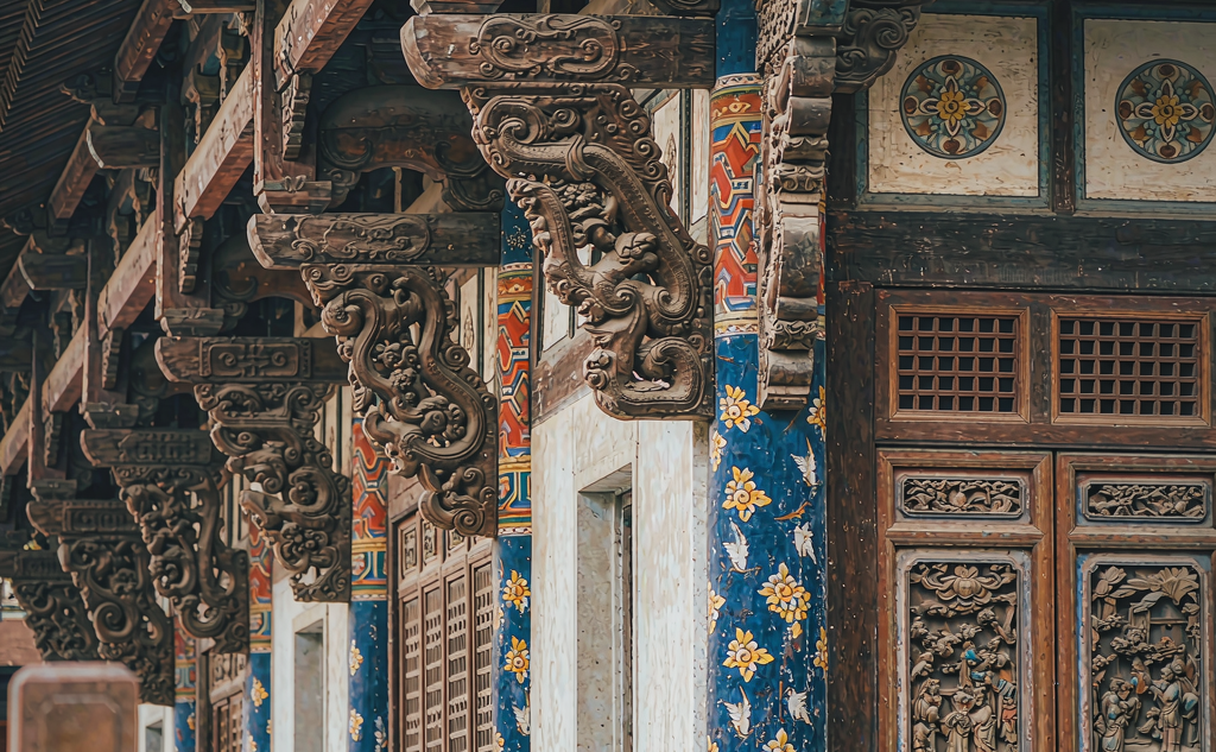
Jinci Temple architecture highlights
If you only have two hours, spend them on these:
- The Holy Mother Hall. Look up at the bracket sets (dougong) and the gently sloping roof — then walk around to the front pillars, where eight wooden dragons coil the columns, a feature found almost nowhere else. Inside, the hall holds the famous painted clay statues of forty-plus court ladies, each with a distinct face and posture. In our experience, travelers who linger on these figurines find them more moving than the building itself.
- The Fish Pond Flying Bridge. Stand at the center of the cross and look down the arms; the geometry is oddly modern for something built a thousand years ago.
- The Nanlao Spring and the waterside pavilions. Water runs through the whole complex, and the spring-fed streams keep the courtyards cool even in summer. The waterside pavilions are the best spot for a break.
- The ancient cypress. A gnarled tree beside the hall is said to date back over 3,000 years; whether or not you believe the count, it frames the architecture beautifully.
- The side galleries and steles. Ming and Qing steles and the long covered walkways give a sense of how the site was used as a place of worship, study, and gathering for centuries.
These Jinci Temple architecture highlights reward a slow walk more than a checklist dash. We tell travelers to budget at least two hours, and three if they want to sketch, photograph, or simply sit by the water.
Things to do at Jinci
Beyond the headline buildings, Jinci is a lovely place to simply wander. The tree shade, the running water, and the distance from Taiyuan’s traffic make it one of the calmest heritage sites in the region. Things to do at Jinci include:
- Photograph the reflections. Early morning light on the pond and the hall is superb; bring a polarizer if you have one.
- Trace the Jin heritage connection. The name “Jin” ties directly to Shanxi’s identity, so Jinci is a good place to begin a province-wide trip with context.
- Combine with a Taiyuan city half-day. The Taiyuan travel guide covers the provincial museum and food streets that pair well with a Jinci morning.
- Picnic discipline. Eating inside the halls isn’t allowed, but there are benches near the outer courtyards where you can rest with water and snacks.
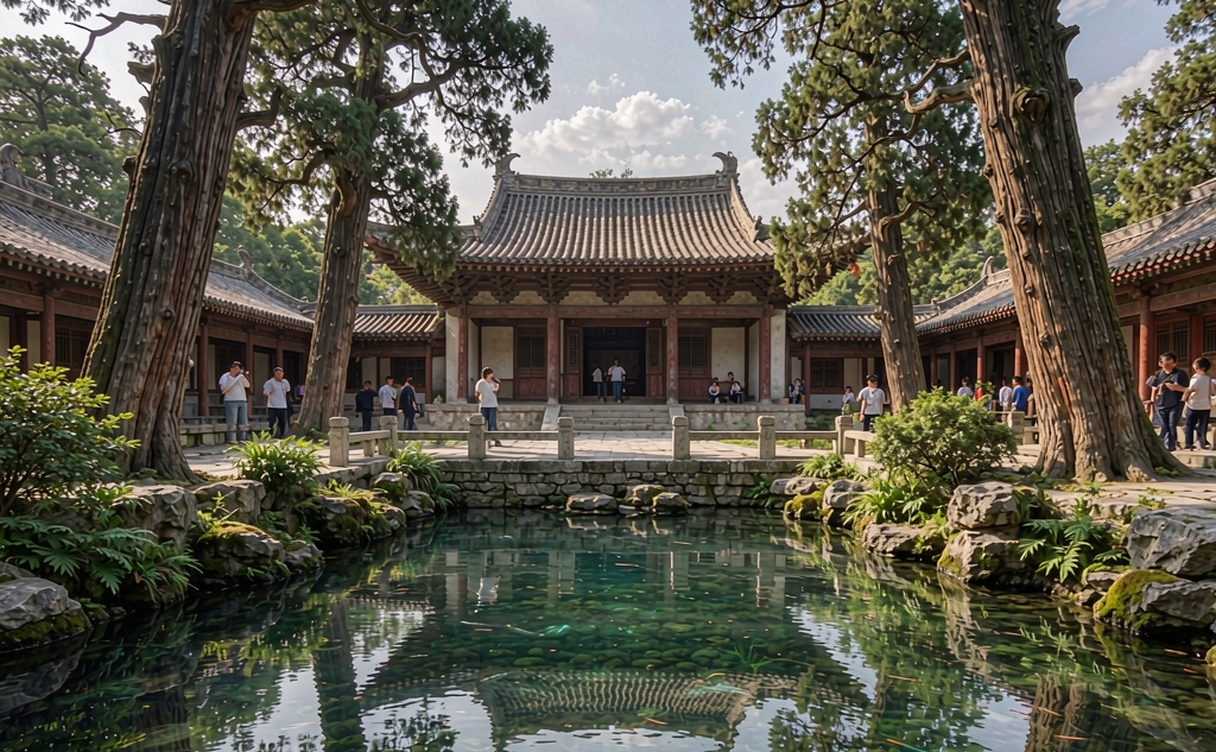
Photography is a big part of Jinci’s draw, and the light changes the building through the day. Morning sun rakes across the Holy Mother Hall’s brackets and makes the coiling dragon pillars readable; late afternoon warms the water and the cross-shaped bridge. If you want people-free shots, the opening hour is essential — by 10 a.m. the main court is busy and the reflections are broken by tour groups.
A natural pairing is the Shanxi Museum in central Taiyuan, which holds artifacts that explain the very dynasties represented at Jinci, including Song dynasty sculpture and Jin-era bronzes. We usually suggest doing Jinci in the morning and the museum in the afternoon if the weather turns, or vice versa. The two together turn a pleasant temple visit into a genuine crash course in northern Chinese art, and they sit only about 40 minutes apart by car. For travelers with a single free day in the capital, that pairing is the most efficient way to understand Shanxi’s past.
Practicalities and a Jinci to Pingyao trip
Getting there. Jinci is in Jinyuan District, about 40 minutes from central Taiyuan by bus (routes 308 or 804) or taxi. If you arrive at Taiyuan South railway station, it’s closer — roughly 30 minutes by car. From the Pingyao ancient town it’s about 80 km south; many travelers do Jinci in the morning, return to Taiyuan, and take an afternoon high-speed train to Pingyao (around 30–40 minutes). That Jinci to Pingyao trip is one of the easiest heritage double-headers in Shanxi.
Tickets and hours. Expect to pay roughly 65–80 RMB depending on season. Summer hours are about 8:30–18:00; winter is shorter, around 9:00–17:00, with last entry roughly an hour before closing. Buy at the gate or via a ticketing app.
Crowds. Weekends and the May and October holidays are busy, but the grounds are large enough to spread out. Arriving near opening gives you the Holy Mother Hall almost to yourself.
Best time to visit Jinci. Spring (April–May) and autumn (September–October) are ideal — the ginkgo and cypress are at their best and the weather is comfortable. The best time to visit Jinci for photography is late afternoon in autumn, when low light hits the hall’s brackets. Winter is cold and quiet; summer is green but can be humid.
For the wider region, Jinci slots neatly onto a Shanxi loop. Heading north, the Yungang Grottoes are the big draws, while the sacred peaks of Mount Wutai suit travelers who want mountains with their temples. If you’d rather base near the north, our Datong hotel guide helps you plan that end of the trip.
For authoritative background, the entry at Wikipedia’s Jinci page summarizes the site’s history and main structures well before you go.
Make Jinci your Shanxi warm-up — read our Taiyuan travel guide to pair the temple with the city’s museums and noodle shops in one easy day.
Planning to continue north after Taiyuan? Build the next leg with our Yungang Grottoes guide and see the best Buddhist carving in northern China.
Want a calm, sacred-mountain finale to your Shanxi trip? Our Mount Wutai guide covers temples, trails, and where to stay among the peaks.