

If you want to understand how Shanxi merchants — the “Jin shang” — built their fortunes and their homes during the Qing dynasty, there is no better single stop than the Qiao Family Compound. We’ve sent travelers there as a half-day trip out of Pingyao for years, and almost everyone comes away surprised by how grand a “family home” could be. Tucked into Qixian County about 30 kilometers north of Pingyao ancient town, this grey-brick fortress of courtyards is one of the most complete and best-preserved merchant residences in northern China.
This Qiao Family Compound Shanxi guide covers what the mansion actually is, how to get there, what you’ll see, what it costs, and how to pair it with nearby highlights. In our experience it works best as a morning visit followed by an afternoon in Pingyao, or as the first stop on a longer Shanxi heritage loop.
The story behind the walls
The compound was started in 1756, during the Qianlong reign, by Qiao Guifa, a local trader who made his money in tea, grain, and later the family’s famous draft-banking (remittance) business. Over five generations the Qiaos expanded the estate into the layout you see today: six large courtyards strung along a central axis, with around twenty smaller courtyards and more than 300 rooms enclosed behind a single high grey-brick wall. Standing inside, you quickly realize this was less a house than a self-contained village built to keep wealth, family, and business under one roof.
The Qiao Family Compound history is really the story of Shanxi commerce at its peak. The Qiaos were part of a network of merchant families who ran the overland tea trade to Russia and operated the “piaohao” — the private banks that moved silver across the empire before modern finance existed. That background matters when you walk the rooms: the carved screens, the heavy doors, the defensive layout all reflect a merchant class that had money but wanted to display restraint and Confucian respectability rather than flamboyance.
The mansion became nationally famous in the 1990s and 2000s through Chinese television and film, which used its intact courtyards as a stand-in for the entire merchant era. Today it is managed as a museum, and the rooms are filled with period furniture, lanterns, and exhibits on Jin merchant life. For travelers who find the Forbidden City overwhelming, the Qiao compound is a more intimate way to see how an elite Chinese family actually lived.
Things to do at Qiao Compound
Most visitors spend two to three hours. The route is linear enough that you won’t get lost, but the detail is what rewards a slower pace.
- Walk the six main courtyards. Each is built on a strict north-south axis with rooms arranged by hierarchy — ancestors and the family head at the back, guests and business at the front. Notice how light, privacy, and decoration all change as you move deeper in.
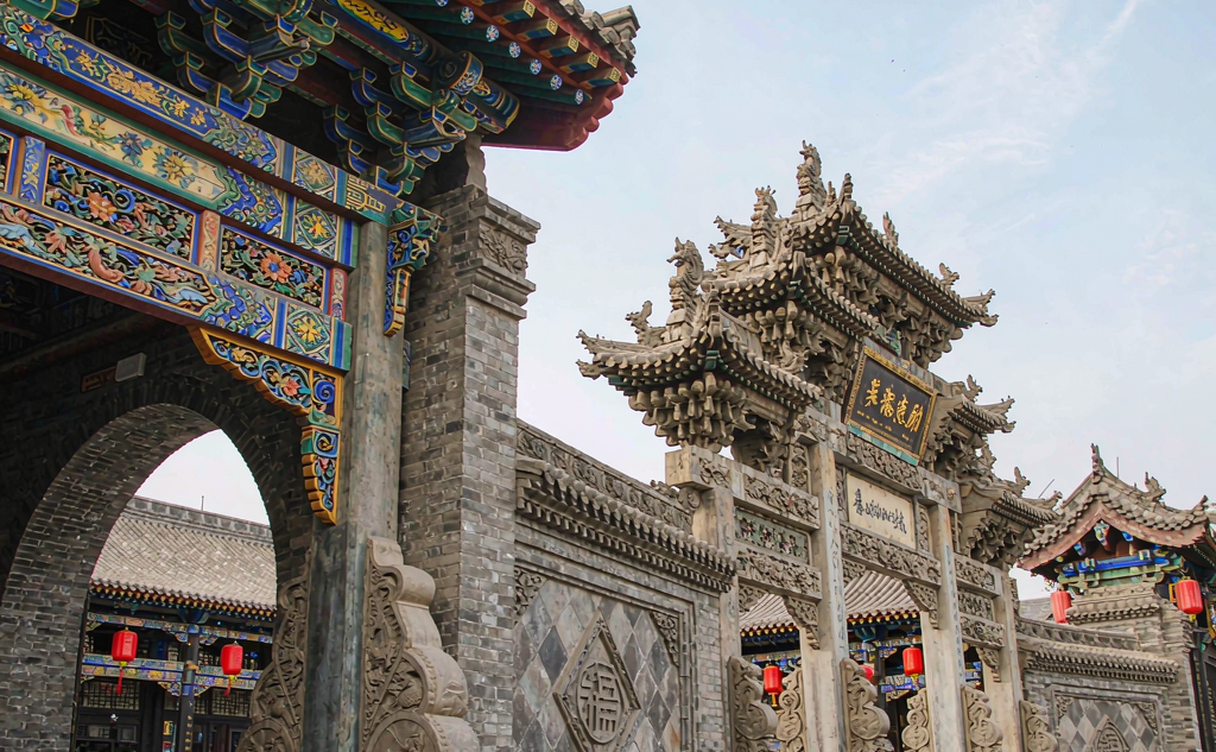
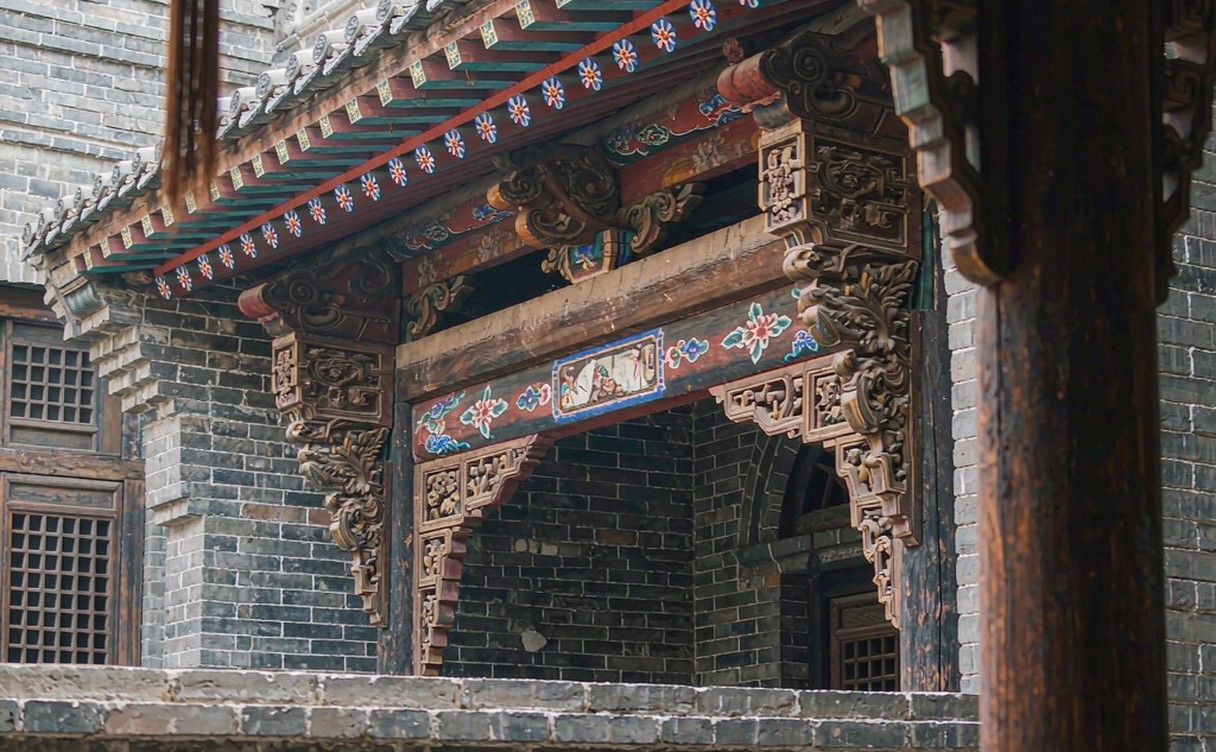
- Study the “three carvings.” Shanxi merchant houses are famous for brick, wood, and stone carving, and the Qiao compound is one of the best places to see all three at once. Look for the screen walls (yingbi), the bracket sets under the eaves, and the stone drums flanking the doorways.
- See the lantern collection. The family’s corridors once held hundreds of red lanterns, and a reconstructed display shows the styles used for festivals and weddings. It is one of the most photographed corners of the site.
- Visit the museum rooms. Furniture, wedding sedan chairs, accounting ledgers, and banking artifacts explain how the piaohao actually worked. In our experience, travelers interested in economic history enjoy this far more than they expect.
- Climb to the rooftop viewing point (where open) for a sense of the compound’s scale — a sea of grey tiled ridges enclosed by a single wall.
If you are deciding between the two big Shanxi courtyards, the Qiao Family Compound vs Wang Family comparison usually comes down to size and polish. The Wang Family Compound (in Lingshi County, near Pingyao) is larger and more scattered, almost a small fortified town; the Qiao compound is smaller, tighter, and more beautifully maintained. We typically recommend Qiao for first-timers and a half-day budget, and Wang for travelers who want the bigger, rougher “fortress” feel.
In our experience, the compound rewards a particular rhythm. Go straight to the back courtyards first, before the tour groups pile in, then work forward toward the main gate where the most elaborate carving sits. A local guide, hired at the entrance for roughly 80–120 RMB, makes a real difference here: the family’s banking ledgers, the symbolism of the lantern shapes, and the story of how the Qiaos lost and rebuilt parts of the estate under changing dynasties are easy to miss on your own. If you’re traveling independently, the on-site museum panels are well translated and worth reading slowly.
One often-overlooked bonus is the surrounding Qixian County seat, a living county town of grey-brick lanes and a restored city wall just ten minutes from the compound. We sometimes add an extra hour here so travelers can see Shanxi merchant architecture not as a museum piece but as a place people still live. It also has better, cheaper lunch options than the tourist strip at the compound gate, and a wander through the morning market is a nice counterpoint to the polished halls.
Practicalities: tickets, hours, and getting there
Location and transport. The compound sits in Qixian County, roughly 30 km from Pingyao and 50 km from Taiyuan. From Pingyao ancient town you can hire a taxi or take a local bus (around 40 minutes, depending on traffic). From the high-speed rail station at Pingyao, buses and taxis run regularly. Driving from Taiyuan takes about an hour, making it an easy add-on if you’re starting your Shanxi trip in the provincial capital.
Tickets. Expect to pay roughly 100–138 RMB for a standard adult ticket (prices are a little higher in peak season). Children, students, and seniors usually get discounted or free entry with valid ID. Buy at the gate or, in our experience, through your hotel or a ticketing app to skip the worst of the queue on busy weekends.
Hours. Roughly 8:00–18:00 in summer and 8:30–17:30 in winter, with last entry about an hour before closing. Arrive at opening if you can — the courtyards are far more atmospheric before tour groups arrive around 10 a.m.
Crowds. This is one of Shanxi’s most popular sites, so it does get busy. Midday in July and August and the National Day holiday (early October) are the worst. A Qiao Compound to Pingyao trip works well if you do Qiao at 8 a.m. and reach Pingyao for a late lunch, beating both the heat and the group buses.
Best time to visit and how to build a Shanxi loop
The best time to visit Qiao Compound is spring (April–May) and autumn (September–October), when the light is soft and the courtyards aren’t baking under summer sun. Winter is cold but wonderfully empty, and the snow on the grey tiles makes for striking photos if you don’t mind the chill.
For a broader trip, the compound sits naturally on Shanxi’s central heritage route. Most travelers combine it with Pingyao, then head north toward Datong to see the Yungang Grottoes and the city of Datong itself, or east to the Buddhist peaks of Mount Wutai. If you want to compare merchant compounds directly, slot in the Wang Family Courtyard on the same Pingyao base — they’re only about an hour apart.
For deeper background on the site and its place in Chinese architectural history, the overview at Wikipedia’s Qiao Family Compound entry is a handy pre-trip read.
Ready to walk these courtyards yourself? Plan a half-day Qiao Compound to Pingyao trip with our complete Pingyao ancient town guide and we’ll help you time the buses and beat the crowds.
Building a longer Shanxi route? Pair the compound with the north’s headline sights using our Yungang Grottoes guide for a seamless Datong-and-Pingyao itinerary.
Want a comfortable base between Taiyuan and Pingyao? Check our Taiyuan travel guide for transport tips and where to stay before heading into the merchant-country courtyards.